
مدونة
7 Common Singles Padel Court Size Mistakes to Avoid
المقالات الأخيرة
جدول المحتويات
مقدمة
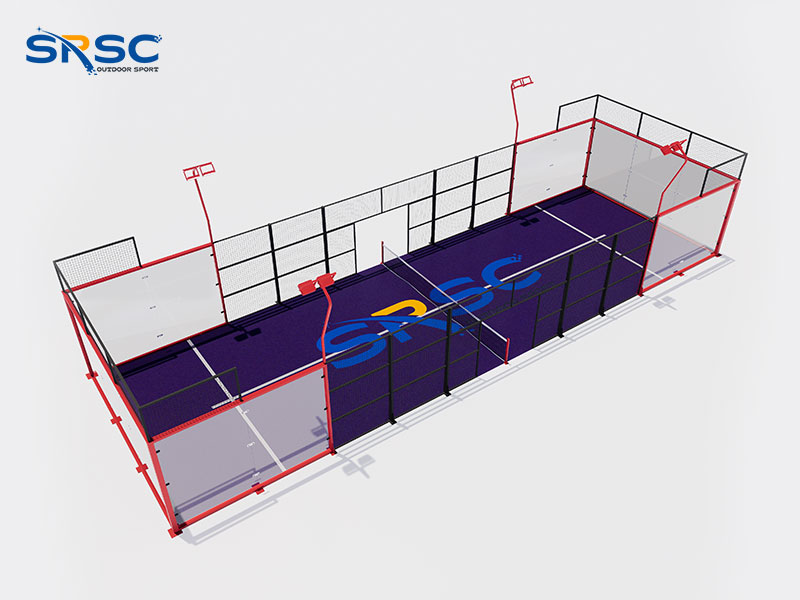
بناء singles padel court is more than just marking lines on the ground. For investors, clubs, or private owners, understanding the singles padel court size and related construction standards is essential. Mistakes in size, clearance, materials, or infrastructure can result in poor gameplay, higher maintenance costs, or even safety hazards.
This guide provides 7 common mistakes, detailed construction insights, real-world examples, and actionable tips for anyone planning to build a high-quality singles padel court.
Mistake 1: Ignoring Official Singles Padel Court Size Standards
Understanding Standard Dimensions
The official singles padel court size recommended by the International Padel Federation is 20 meters long and 6 meters wide, with at least 2 meters of free space on all sides. This space ensures players can move safely and freely while preventing injuries.
- Smaller courts reduce reaction time, increase collisions, and limit ball movement.
- Overly large courts can unnecessarily increase construction and maintenance costs.
Real-World Implications
In Spain, a club attempted to reduce court width by 0.5 meters to save on materials. Within the first season, complaints about cramped movement and frequent ball interference increased by 40%, showing that even small deviations from recommended singles padel court size can negatively affect usability.
Construction Tip
Always measure the court layout precisely before construction. Laser-leveling equipment can help ensure both length and width comply with official standards, preventing costly rework.
Mistake 2: Neglecting Surrounding Clearance and Safety Zones
Importance of Clearance
Proper surrounding clearance is crucial for player safety. Experts recommend at least 2 meters of open space around the court, with additional room for:
- Net adjustments
- Ball retrieval
- Seating and maintenance access
Insufficient clearance can lead to player injuries and complicate maintenance work.
Construction Recommendations
- Provide at least 2–3 meters of additional clearance for high-traffic areas.
- Include a clear path for maintenance personnel and equipment.
- Plan fencing, lighting poles, and spectator areas without encroaching on the singles padel court size.
Case Example
An indoor Italian club increased surrounding space by 1 meter on all sides. The result was a 30% reduction in minor injuries and improved player satisfaction during recreational and competitive matches.extra meter on all sides. Result: a 30% decrease in minor injuries and better player comfort.
Mistake 3: Choosing the Wrong Flooring Material
Types of Flooring
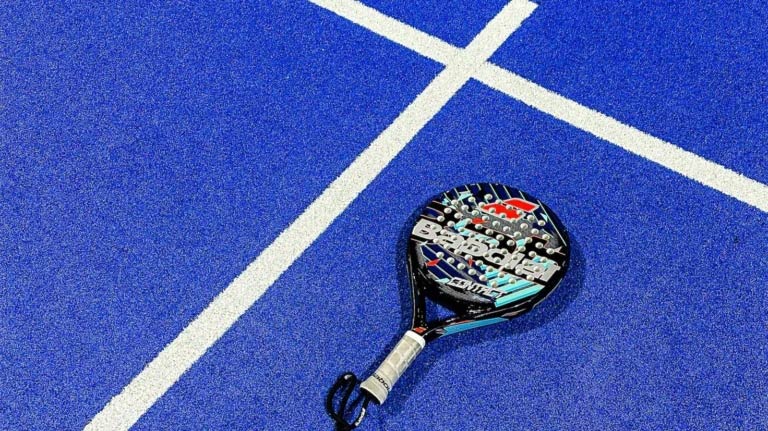
The right flooring protects players and enhances performance. Popular options include:
- Synthetic Turf with Sand Infill – Best grip, moderate cost, low injury risk.
- Concrete with Acrylic Coating – Durable for outdoor courts but harder on joints.
- Rubberized Surfaces – High shock absorption but higher upfront cost.
Technical Specifications
- Drainage slope: 1–1.5% away from court center
- Level tolerance: ±2 mm across the entire singles padel court size
- Perimeter drainage: 100 mm pipes to avoid water accumulation
Builder Tip
For private or recreational courts, synthetic turf is recommended due to its safety, playability, and moderate maintenance requirements. Ensure infill is evenly distributed to prevent uneven ball bounces.
Real-World Insight
A mid-sized club in Portugal switched to synthetic turf with proper infill and drainage. Within 2 years, player complaints about slipping decreased by 50%, demonstrating the impact of proper flooring choices.
Mistake 4: Inadequate Lighting
Lighting Levels
- Recreational play: 300–500 lux
- Professional tournaments: 500–800 lux
Best Practices
- يستخدم قاد lights to reduce energy consumption by up to 40%.
- Place 6–8 poles outside the court perimeter to prevent glare and shadows.
- Adjustable lighting allows night play and professional-grade illumination.
Real Data
Clubs that switched to LED lighting reported a 35% reduction in electricity costs compared to halogen lamps, while maintaining consistent illumination across the entire singles padel court size.
Mistake 5: Overlooking Fencing and Wall Placement
Fencing Guidelines
- Minimum height: 4 meters
- Material: UV-coated galvanized steel mesh
- Posts: Embedded in concrete pads (40x40x80 cm)
Practical Tips
- Misaligned fencing reduces usable court space by 5–10%.
- Secure attachment and tensioning prevent sagging over time.
- Rebound walls must align with official singles padel court size to ensure proper ball behavior.
Real Example
A construction project in Spain misaligned the fencing by 15 cm. Adjustments required a full reinstallation, increasing cost by 8%, highlighting the importance of accurate planning.
Mistake 6: Ignoring Drainage and Water Management
Drainage Importance
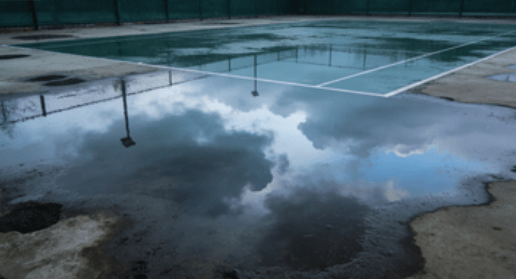
Improper drainage leads to puddles, turf degradation, and injuries.
- Minimum slope: 1–1.5% away from court
- Perimeter drainage: 100 mm pipes
- Bedding: Gravel or sand beneath turf to improve runoff
Case Study
A new court in Indonesia incorporated proper slope and drainage, reducing water-related maintenance costs by 30% and extending turf lifespan by 3–5 years.
Builder Recommendation
Always verify slope uniformity across the singles padel court size using laser tools before laying turf. This prevents long-term water damage and uneven surfaces.enance costs by 30% after implementing proper slope and drainage.
Mistake 7: Miscalculating Budget Based on Court Size
Estimated Costs
| غرض | Cost (USD) | ملحوظات |
|---|---|---|
| Excavation & Foundation | 3,000–5,000 | Leveling and base prep |
| Flooring (Synthetic Turf) | 4,000–5,500 | Includes infill |
| Fencing | 2,000–3,000 | 4 m galvanized mesh |
| إضاءة | 1,500–3,000 | LED recommended |
| Net & Accessories | 500–700 | Standard tension net |
Investor Tip: Misjudging court dimensions by 10% can increase material costs by 15–20%. Accurate planning ensures cost efficiency and avoids rework. Proper consideration of singles padel court size is key for budget and long-term operational planning.
Additional Considerations for Builders
Court Orientation
- North-south alignment minimizes sun glare.
- East-west alignment can hinder visibility during afternoon play.
Seasonal Maintenance Planning
- In rainy climates, double drainage and turf infill are recommended.
- Regular inspection ensures no pooling water or turf deformation.
Turf Longevity
- Synthetic turf lasts 7–10 years with proper maintenance.
- Incorrect slope or drainage accelerates wear.
الامتثال للمعايير الدولية
- Follow International Padel Federation dimensions and markings.
- Ensures eligibility for official competitions and tournaments.
Accessibility & Infrastructure
- Plan walkways, seating, and electrical access for future upgrades.
- Emergency access for maintenance personnel is mandatory.
Construction Workflow Tips
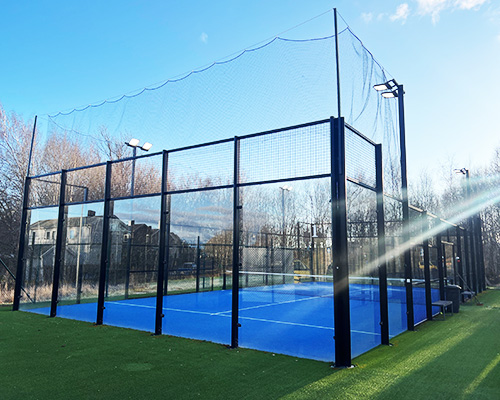
Excavation & Foundation
- Compact soil to ±5 mm across the 20 m court.
- Concrete slab thickness: 10–15 cm for reinforcement.
Flooring Installation
- Synthetic turf applied after leveling, infill distributed evenly.
- Ensure proper edge tensioning to prevent peeling or uneven bounces.
Fencing & Poles
- Embed posts in concrete pads and align precisely.
- Mesh tension must prevent sagging or deformations.
Lighting Setup
- LED poles 6–8 m high outside the court perimeter.
- Ensure uniform lux coverage and minimal glare.
Nets & Accessories
- Install tension-adjustable nets.
- Check alignment with court dimensions before first game.
خاتمة
بناء singles padel court requires attention to dimensions, materials, safety, and long-term maintenance. Avoiding common mistakes ensures player safety, optimal gameplay, and cost efficiency. Proper planning for court size, clearance, flooring, fencing, lighting, drainage, and maintenance creates a court that lasts for years and delivers professional-level performance.
التعليمات
ما هو المعيار singles padel court size?
20 m long × 6 m wide, with at least 2 m free space on all sides.
Can a court be smaller due to limited space?
Slight reductions are possible, but less than 18×5 m compromises safety and gameplay.
How much fencing is needed?
Approximately 88 linear meters of 4 m high mesh fencing.
What lighting is recommended for tournaments?
LED lights, 500–800 lux, installed outside the court to minimize glare.
Why is slope and drainage critical?
Proper slope prevents water pooling, extends turf life, and reduces slip injuries.