
مدونة
Cost-Effective Padel Court Design Tips: Maximizing Performance and Budget
المقالات الأخيرة
Building a padel court is a major investment, whether for a private club, school, or commercial facility. Many owners struggle to balance budget constraints with long-term playability, durability, and safety. A well-thought-out padel court design ensures that the court is functional, attractive, and financially sustainable.
The key is strategic planning: selecting materials that offer the best value over time, optimizing court layout to minimize land and construction costs, and integrating preventive maintenance to reduce future expenditures. According to the International Padel Federation (FIP), efficient padel court design can cut lifecycle costs by up to 35% while maintaining professional-level play conditions.
Concept: Investment vs. Cost Savings
Cost-effective design is about making decisions that maximize long-term value rather than simply reducing upfront expenses. This includes material selection, layout efficiency, modular construction, and energy-saving technologies.
جدول المحتويات
Key Takeaways
- Understand the fundamentals of padel court design for cost-effective projects.
- Learn how to balance quality, durability, and budget when planning a court.
- Explore indoor vs outdoor cost-efficient design strategies.
- Discover advanced surface materials, wall constructions, and lighting options.
- Learn preventive maintenance strategies that reduce long-term costs.
- Compare high-end vs budget-friendly design choices with real-world data.
- Get expert insights, case studies, and ROI analysis.
- Find answers to common FAQs for padel court design planning.
تصميم ملعب البادل Fundamentals
Court Dimensions and Standard Layouts
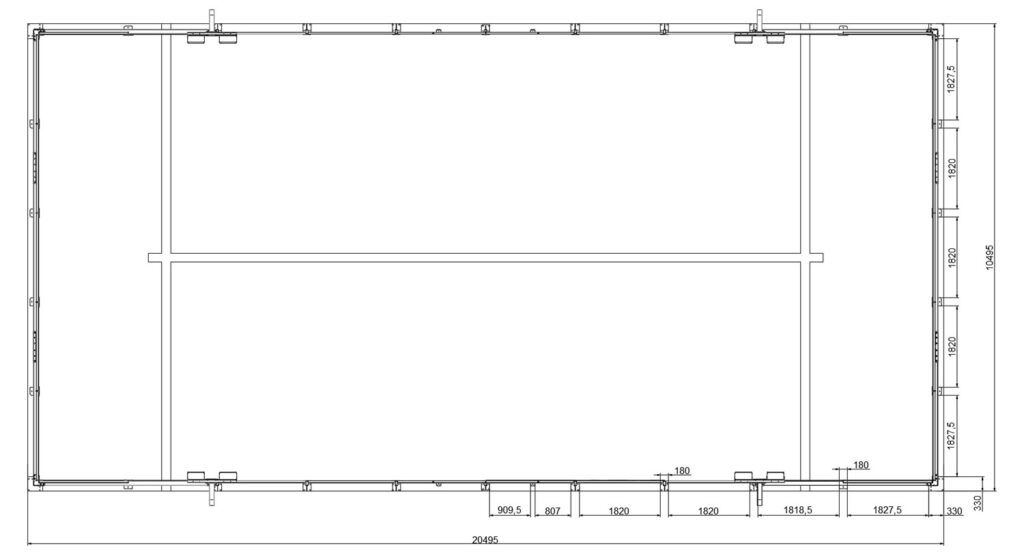
A standard padel court measures 20m x 10m, with walls playing a critical role in gameplay. Incorrect dimensions can lead to overspending, non-compliance with regulations, or suboptimal player experience.
- Full-size courts: Follow official dimensions and fencing guidelines.
- Modified courts: For smaller spaces, careful planning ensures safety and playability.
Concept: Space Optimization
Optimizing space reduces land acquisition costs, ensures safe player movement, and allows additional features like seating, practice walls, and shading structures without increasing expenses.
Expert Insight
Juan Martín Díaz, a professional padel coach:
“Optimized court layouts not only save money but also improve ball visibility, reducing blind spots and enhancing player satisfaction.”
Surface Materials for Cost-Effective Padel Court Design
The surface impacts both gameplay quality and long-term costs. Common options include:
- Synthetic Turf: Moderate installation cost, low maintenance, good playability, and suitable for outdoor climates. Rubber or sand infill improves safety and bounce.
- Acrylic Surfaces: High durability, professional feel, and reduced long-term maintenance. Higher upfront cost, often ideal for indoor courts.
- Concrete Base: Cheapest initial cost, but requires coatings to reduce injury risk and improve ball behavior.
Concept: Life-Cycle Cost Analysis
Life-cycle cost includes initial installation, ongoing maintenance, and eventual replacement. Acrylic courts may cost more upfront but save money long-term by reducing repair frequency.
Case Study
A Madrid club installed an acrylic court and a synthetic turf court side by side. Over seven years:
- Acrylic: $28,000 installation + $1,500 yearly maintenance
- Turf: $20,000 installation + $3,500 yearly maintenance
Outcome: Acrylic court saved $10,500 over 7 years due to durability and lower maintenance costs.
Wall and Fencing Considerations
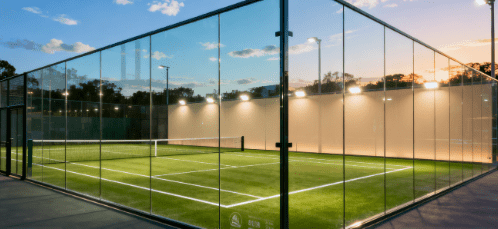
Padel courts require durable walls and fencing for both playability and safety.
- Glass Walls: Professional look, excellent visibility, higher cost.
- Metal Mesh Walls: Lower cost, suitable for non-critical areas.
- Hybrid Approach: Glass in key play zones + mesh elsewhere can save 20–25%.
Concept: Strategic Wall Placement
Smart wall placement ensures optimal ball rebound while minimizing material costs, a key element in cost-effective padel court design.
Indoor vs Outdoor Padel Court Design


Indoor Courts
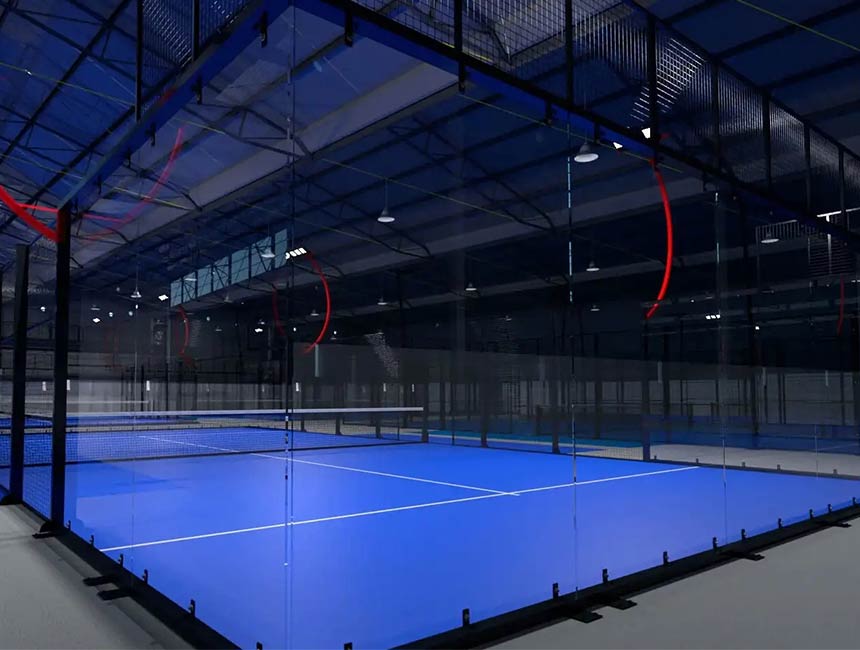
Indoor courts offer controlled environments, allowing year-round play. Benefits include:
- Protection from rain, wind, and sun
- Consistent playing surface conditions
- Extended lifespan of materials
Challenges: higher construction costs due to building structure, HVAC systems, and lighting.
Outdoor Courts
Outdoor courts are cheaper upfront but require:
- UV-resistant surfaces
- Weatherproof fencing
- Drainage systems to prevent water damage
Concept: Climate-Adapted Design
Material and structural selection should match local climate to avoid premature wear and reduce maintenance costs.
Expert Insight
Maria López, sports facility architect:
“Ignoring environmental factors often leads to court deterioration within 2–3 years, resulting in unexpected repair costs. Adapting padel court design to climate is critical.”
Cost-Saving Construction Techniques
Hybrid Wall Design
Combining glass and mesh reduces costs while maintaining player experience.
- Glass in high-impact zones
- Mesh in corners or low-impact areas
- Savings: up to 25% of fencing costs
Efficient Lighting Solutions

LED floodlights are energy-efficient, long-lasting, and provide uniform illumination. Proper placement can reduce the number of fixtures needed, cutting installation and operational costs.
Modular and Prefabricated Construction
- Prefabricated panels reduce labor costs and construction time
- Modular design allows easy expansion or relocation
Concept: Preventive Design
Design features that reduce wear, such as drainage, UV coatings, and anti-slip surfaces, minimize maintenance costs and extend court lifespan.
Advanced Material and Technology Innovations
Eco-Friendly Materials
- Recycled synthetic turf reduces installation costs and supports sustainability
- Low-energy LED lighting and solar options cut operational expenses
- Low-VOC paints and coatings improve indoor air quality
Surface Coatings
- UV-resistant coatings extend surface life
- Anti-slip coatings improve safety
- Scratch-resistant coatings reduce wall maintenance
Expert Opinion
“Eco-friendly solutions in padel court design save money over time while attracting environmentally conscious players,” says Maria López.
Financial Planning and ROI
Revenue Potential
Courts can generate revenue through:
- Memberships and lessons
- Court rentals
- Tournaments and events
Revenue estimates: $1,500–$3,000 per month per court depending on location and usage.
Payback Period
- Outdoor budget courts: 3–5 years
- Indoor premium courts: 5–8 years
Expert Insight
Luis Hernández, sports facility consultant:
“Optimizing court usage, preventive maintenance, and revenue strategies is key for cost-effective padel court design ROI.”
Maintenance and Long-Term Savings
- Weekly cleaning of surfaces
- Annual inspection of walls, fencing, and lighting
- Drainage system checks before rainy seasons
- Preventive coating re-application every 3–5 years
Concept: Long-Term Value
Proper maintenance reduces repair frequency, lowers costs, and extends the life of courts by 5–10 years.
Comparing High-End vs Cost-Effective Padel Court Design
| ميزة | High-End Design | Cost-Effective Design |
|---|---|---|
| سطح | Premium acrylic | Synthetic turf / hybrid |
| Walls | Full glass | Partial glass + mesh |
| إضاءة | Smart LED + automation | Standard LED |
| Indoor Roof | Climate-controlled | Simple insulated roof |
| صيانة | Professional cleaning | DIY preventive maintenance |
| Sustainability | معيار | Eco-friendly options |
Market Trends and Growth
- Global padel market projected to grow 12% CAGR through 2030
- Increase in private clubs and community courts drives cost-effective solutions
- Integration of technology (sensors, smart lighting) in budget-friendly padel court design is increasing
Concept: Future-Proofing
Designing with scalability, modularity, and eco-friendly solutions ensures long-term relevance and cost savings.
خاتمة
Cost-effective padel court design requires strategic planning, material selection, preventive maintenance, and revenue optimization. By prioritizing essential features, making smart trade-offs, and planning for long-term usability, owners can create courts that are safe, durable, enjoyable, and financially sustainable.
Investing time in thoughtful padel court design ensures long-term savings, sustainability, and an enhanced player experience.
التعليمات
Q1: How much does a budget-friendly padel court cost?
A: Outdoor courts: $15,000–$30,000 USD; indoor premium courts: >$50,000 USD.
Q2: Can eco-friendly materials reduce overall costs?
A: Yes, recycled turf, LED lighting, and solar-powered options lower both upfront and operating expenses.
Q3: How long does a cost-effective court last?
A: Synthetic turf outdoor courts: 10–15 years; indoor acrylic: 15–20 years.
Q4: Should I mix glass and mesh walls?
A: Partial glass walls reduce costs by 20–25% while maintaining aesthetics and functionality.
Q5: Can these courts generate revenue?
A: Yes, through rentals, memberships, lessons, and events. ROI: 3–5 years.
Q6: Indoor vs outdoor: which is more cost-effective?
A: Outdoor cheaper upfront but requires weatherproofing; indoor higher upfront but longer lifespan and year-round usability.