
مدونة
Parts of a Tennis Court: Complete Guide From a Professional Manufacturer
المقالات الأخيرة
جدول المحتويات
Understanding the parts of a tennis court is essential for anyone involved in court construction, renovation, or maintenance. Whether you are a sports club owner, contractor, school administrator, or project developer, knowing how each tennis court component functions helps ensure performance, safety, and long-term durability.
As a professional manufacturer of tennis court parts, we provide reliable, high-quality solutions for a wide range of applications—from professional sports facilities to educational and residential projects. This guide explains every major part of a tennis court while helping you make informed purchasing decisions directly from a manufacturer.
Overview of the Parts of a Tennis Court
A tennis court is made up of several functional parts that work together to create a standardized and safe playing environment. These parts include court markings, net systems, surfaces, fencing, lighting, and supporting accessories.
Understanding these components is not only important for players, but also for buyers and installers who want to ensure compliance with international standards and long-term performance.
Key benefits of understanding tennis court parts:
- Improved player safety
- Better game performance
- Lower maintenance and replacement costs
- More efficient project planning
Tennis Court Layout and Court Zones Explained
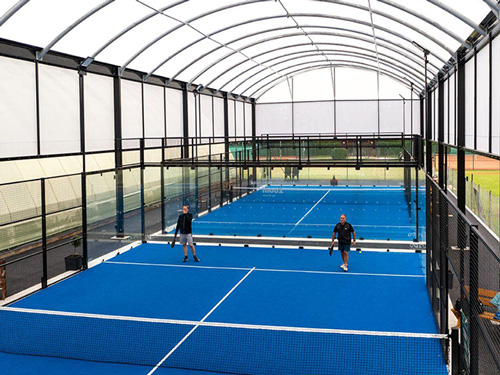
The layout of a tennis court is designed to ensure fair play and consistency across matches.
A standard tennis court includes:
- Playing area
- Service boxes
- Baselines and sidelines
- Net and center area
There are differences between singles and doubles courts. Singles courts are narrower, while doubles courts include additional alleys on both sides. Proper layout planning is critical during construction, especially for multi-purpose sports facilities.
A well-designed court layout ensures accurate ball bounce, correct player positioning, and compliance with competition standards.
Tennis Court Lines and Markings
Court lines define the playable areas and are among the most visible parts of a tennis court. These include:
- Baseline
- Sidelines (singles and doubles)
- Service lines
- Center service line
- Center mark
Line accuracy and durability directly affect gameplay and officiating. As a manufacturer, we produce line systems designed for long-term visibility and weather resistance.
Common Tennis Court Line Specifications
| Line Type | Standard Width | Function |
|---|---|---|
| Baseline | 2 inches | Defines court depth |
| Singles Sideline | 2 inches | Singles play boundary |
| Doubles Sideline | 2 inches | Doubles play boundary |
| Service Line | 2 inches | Service box limit |
| Center Mark | 2 inches | Service positioning |
High-quality materials and precise installation ensure lines remain clear and compliant with regulations over time.
Net System and Net Post Components

The net system is one of the most critical tennis court parts. It includes:
- Tennis net
- Net posts
- Center strap
- Net tension mechanism
Net height and positioning must follow international standards to ensure fair play. Poor-quality net systems often lead to sagging, corrosion, or frequent replacement.
As a manufacturer, we offer net systems made from durable materials such as galvanized steel and weather-resistant fabrics, suitable for both indoor and outdoor courts.
Court Surface and Foundation Structure
The surface is one of the most influential parts of a tennis court, affecting ball speed, bounce, and player movement.
Common tennis court surfaces include:
- Hard courts
- Clay courts
- Artificial grass courts
Each surface type requires a stable foundation structure, including base layers, drainage systems, and surface coatings. Choosing the right materials during manufacturing ensures better shock absorption, reduced injury risk, and longer service life.
Fencing, Lighting, and Auxiliary Tennis Court Parts
In addition to the playing surface, auxiliary components play an important role in usability and safety.
Key auxiliary tennis court parts include:
- Perimeter fencing
- Lighting systems
- Wind screens
- Court accessories
Fencing prevents ball loss and improves security, while lighting systems enable night-time play. Manufacturing quality directly affects corrosion resistance, wind load capacity, and maintenance costs.
Standard Dimensions and Specifications of Parts of a Tennis Court
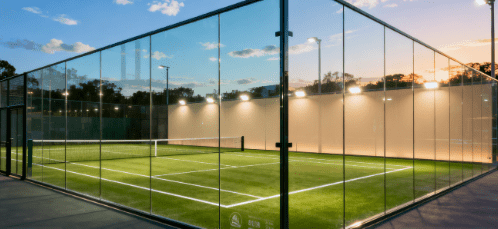
All professional tennis court parts must comply with standard measurements to ensure consistent play.
Key considerations include:
- Court length and width
- Net height
- Line placement accuracy
- Post positioning
Manufacturers with experience in international projects understand the importance of producing components that meet ITF and club-level standards.
Common Tennis Court Parts That Require Replacement
Over time, certain parts experience more wear due to constant use and environmental exposure.
Common replacement items include:
- Tennis nets
- Net posts and hardware
- Line tapes or coatings
- Fencing components
- Lighting fixtures
Using manufacturer-grade materials significantly reduces replacement frequency and long-term costs.
Materials and Manufacturing Quality of Tennis Court Parts
Material selection is one of the most important factors affecting durability.
High-quality tennis court parts are typically made from:
- Galvanized or powder-coated steel
- Aluminum alloys
- UV-resistant polymers
- Weatherproof fabrics
As a manufacturer, we implement strict quality control processes to ensure corrosion resistance, structural strength, and consistent performance in various climates.
How to Choose a Reliable Tennis Court Parts Manufacturer

Choosing the right manufacturer directly impacts your project’s success.
Key factors to consider:
- Customization capabilities
- Bulk production capacity
- Quality certifications
- Technical support and after-sales service
Working directly with a manufacturer allows better pricing, stable quality control, and tailored solutions for specific project needs.
Applications of Professional Tennis Court Parts
Professional tennis court parts are widely used in:
- Schools and universities
- Sports clubs and training centers
- Government and commercial facilities
- Residential tennis courts
Each application has unique requirements, making manufacturer-level customization an important advantage.
Why Buy Tennis Court Parts Directly From a Manufacturer
Buying directly from a manufacturer offers several benefits:
- Reduced costs by eliminating middlemen
- Better quality consistency
- Faster communication and technical support
- Custom production options
For contractors and project developers, this approach improves efficiency and long-term value.
Custom Tennis Court Parts Solutions
As a professional manufacturer, we offer:
- Custom sizes and specifications
- OEM and private labeling options
- Project-based supply solutions
- Global shipping support
Custom manufacturing ensures every tennis court part fits your project requirements precisely.
خاتمة
Understanding the parts of a tennis court is essential for building, upgrading, or maintaining a high-quality playing environment. From court layout and line systems to net assemblies, surfaces, fencing, and accessories, every component contributes to safety, performance, and durability.
As a professional tennis court parts manufacturer, we provide reliable, customizable solutions for clubs, schools, contractors, and commercial projects worldwide. By sourcing tennis court parts directly from a manufacturer, you benefit from better quality control, competitive pricing, and long-term reliability.
Contact us today to discuss your project and receive a customized tennis court parts solution tailored to your needs.
التعليمات
What are the main parts of a tennis court?
The main parts of a tennis court include the playing surface, court lines and markings, net system, net posts, fencing, lighting, and auxiliary accessories. Each part plays a key role in ensuring proper gameplay, safety, and durability.
What materials are commonly used for tennis court parts?
Tennis court parts are typically made from galvanized steel, aluminum, UV-resistant polymers, and weatherproof fabrics. High-quality materials improve corrosion resistance and extend the service life of the court.
Are the parts of a tennis court the same for singles and doubles?
Most parts are the same, but singles and doubles courts differ in court width and sideline placement. Doubles courts include additional alleys on both sides, which affects line markings and layout dimensions.
Which parts of a tennis court need replacement most often?
The most frequently replaced parts include tennis nets, net hardware, line tapes or coatings, fencing components, and lighting fixtures due to wear and outdoor exposure.
Why buy tennis court parts directly from a manufacturer?
Buying directly from a manufacturer ensures better quality control, competitive pricing, customization options, and reliable technical support, especially for large or professional tennis court projects.
Need Help Choosing the Right Tennis Court Parts?
If you’re unsure which parts of a tennis court are best for your project, our experienced manufacturing team is here to help. We provide expert guidance, custom solutions, and reliable products designed to meet professional standards for clubs, schools, and commercial facilities.
Contact us today for a personalized consultation and discover how our high-quality tennis court parts can enhance performance, safety, and long-term durability. Don’t compromise on quality—get in touch now and build your tennis court with confidence.