
مدونة
Step-by-Step Padel Tennis Court Installation Process: Complete Guide
المقالات الأخيرة
Padel is one of the fastest-growing sports worldwide. In Europe, the sport has grown over 350% in the last 5 years, and countries like Spain and Italy are investing heavily in professional courts. For investors, sports clubs, hotels, and private property owners, padel tennis court installation is a strategic decision that can generate revenue, increase property value, and attract a loyal player community.
However, building a padel court is not just about laying turf and erecting fences. A professional installation ensures regulation-compliant dimensions, optimal playing surfaces, player safety, and long-term durability. Mistakes in installation can lead to uneven ball bounce, water accumulation, or structural failures, which are costly to fix.
This comprehensive guide covers every step of padel tennis court installation, from planning to finishing touches, along with examples, cost data, and expert recommendations.
Key Takeaways for Padel Tennis Court Installation
Before diving into technical details, here’s what this guide covers:
- Complete step-by-step installation process for outdoor and indoor ملاعب البادل.
- أفضل site selection, foundation, and surface materials.
- Fence, glass wall, and net installation techniques for safety and aesthetics.
- Lighting design for professional play.
- Comparison between DIY vs professional installation with costs.
- Maintenance strategies for durability.
- Case studies of professional club installations in Europe.
- Frequently Asked Questions to address typical user queries.
جدول المحتويات
Understanding Padel Tennis Court Installation
What Is Padel Tennis Court Installation?
Padel tennis court installation involves creating a professional-standard court that meets both recreational and competitive requirements. This includes:
- Ground leveling and drainage
- Concrete or asphalt foundation
- Surface application (artificial grass, acrylic, or hybrid)
- Fencing and glass walls
- Lighting and accessory setup
A properly installed court ensures consistent ball bounce, player safety, and longevity.
Official Dimensions and Standards
According to the International Padel Federation, the standard dimensions are:
- 20 meters long × 10 meters wide
- Court enclosed with 3-meter-high fencing on sides و 4-meter-high walls at the back
- Net height: 88 cm at center, 92 cm at posts
Compliance with these standards is crucial for tournament approval and professional play.
Step 1: Site Selection and Ground Preparation
Importance of Choosing the Right Site
Selecting the right location is the foundation of a successful padel tennis court installation. A poorly chosen site can lead to water pooling, uneven playing surfaces, and higher maintenance costs. Experts recommend looking for level terrain, proper sunlight orientation, and easy accessibility. For outdoor courts, it’s ideal to orient the court along an east-west axis to minimize sun glare during morning and evening play, enhancing player safety and comfort.
Environmental factors must also be considered. Avoid low-lying areas prone to flooding or sites exposed to high winds. A well-protected site extends the lifespan of the court and reduces repair costs.
Ground Preparation Process
Once the site is chosen, thorough preparation ensures stability and durability. The first step is site clearing, which involves removing vegetation, rocks, and any debris. Next, professional surveying with laser leveling equipment ensures the area is flat and slopes are appropriate for drainage. A gentle slope of 1–2% is recommended to prevent water stagnation.
The final part of preparation is constructing a compacted sub-base, typically with gravel, which provides long-term stability for either concrete or asphalt foundations.
Case Study: A Madrid-based sports club installed four outdoor courts and credited zero water-related damage over two years to careful drainage design and precise ground preparation.
Step 2: Foundation Installation
Concrete vs Asphalt Base
The foundation is critical to the long-term performance of a ملعب البادل. Two main options are used: concrete and asphalt. Concrete foundations are extremely durable and require less maintenance over time. However, they are more expensive and provide a harder playing surface, which may affect player comfort. Asphalt is more flexible and cheaper but typically requires resurfacing every 8–10 years.
| Base Type | المزايا | Disadvantages | Best Use |
|---|---|---|---|
| أسمنت | Extremely durable, low maintenance | Hard surface, higher cost | Competition courts, high-traffic clubs |
| Asphalt | Flexible, cheaper | Needs resurfacing every 8–10 years | Residential or semi-professional courts |
Foundation Thickness Recommendations
- Outdoor courts: 12–15 cm concrete slab over compacted gravel
- Indoor courts: 10–12 cm reinforced concrete to support flooring and net posts
Data Insight: According to European Sports Construction Association, courts with reinforced concrete bases last on average 15–20 years, whereas poorly prepared asphalt bases may only last 8-10 سنوات.
Step 3: Surface Selection and Installation
Surface Options
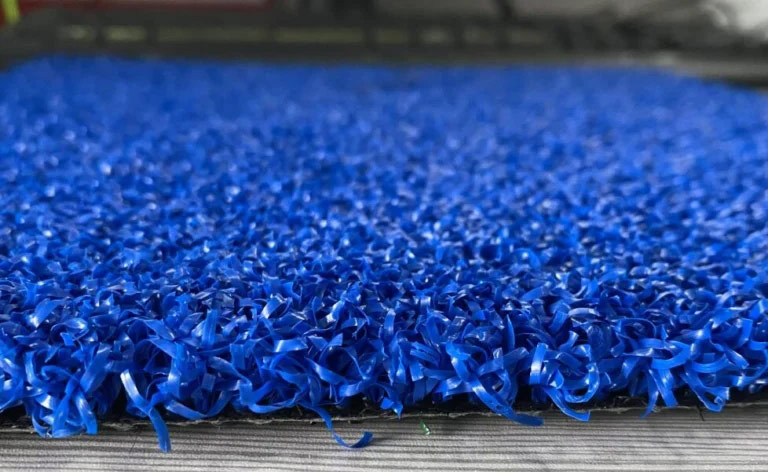
The court surface affects ball behavior, traction, and player safety. Artificial grass is soft, comfortable, and requires regular brushing and sand infill to maintain consistent play. Acrylic coatings are hard, durable, and low maintenance, making them suitable for professional and competition courts. Hybrid systems offer a balance of shock absorption and ball bounce.
Surface Thickness and Sand Infill
Artificial grass surfaces should have a pile height of 12–15 mm. Sand infill of 8–12 kg per square meter provides optimal traction and ensures consistent ball behavior. European competition guidelines recommend using non-abrasive silica sand to minimize injury risk.
Expert Tip
Selecting the surface type should consider player level and court use frequency. Clubs expecting high traffic might prefer acrylic surfaces for durability, while recreational courts benefit from softer grass surfaces for comfort.
Step 4: Fence and Glass Wall Installation
Fencing Materials and Heights
Proper fencing ensures safety and gameplay quality. Galvanized steel mesh is commonly used, with wire thickness around 3 mm and 50×50 mm openings. Side fences are typically 3 meters high, while back fences are 4 meters high. All posts should be anchored securely into concrete footings for stability and longevity.
Glass Walls
- Tempered glass: 10–12 mm thick
- Provides visibility, aesthetic appeal, and rebound surface
- Safety certification: Must withstand ball impact of 50 km/h
Installation Tips
- Align fences and glass walls with laser leveling tools
- Ensure a 3–5 cm gap between glass and posts for thermal expansion
Case Study: A private club in Valencia used tempered glass walls and reported no breakages after 3 years of heavy play.
Step 5: Net, Lighting, and Accessories

Installing the Net
The net is the most visible part of the court and affects game quality. The official height is 88 cm at the center and 92 cm at the posts. Using stainless steel or galvanized cables ensures long-lasting tension. Optional adjustable systems allow easy modifications for tournaments.
Lighting Design
Proper lighting is essential for evening play. LEDs mounted 5–6 meters above the ground provide uniform illumination of 300–400 lux. Lighting should be designed to reduce glare and shadows, improving player performance and safety.
Accessories for Enhanced Play
Additional installations such as benches, scoreboards, wind screens, and perimeter signage contribute to a professional experience. For instance, a hotel resort installed two courts with LED lighting and wind screens, increasing sports tourism by 30% in one year.del courts with قاد lighting and wind screens, attracting 30% more sports tourism.
Step 6: Maintenance Planning
Regular Maintenance Practices
Maintaining the court ensures longevity and consistent performance. Artificial grass should be brushed, cleaned, and sand refilled periodically. Acrylic surfaces require pressure washing and repainting every 5 years. Fencing and glass panels need annual inspection for bolts and structural integrity.
Cost-Saving Tip
Clubs that implement a monthly maintenance schedule have reported 30% lower repair costs over ten years. Proper maintenance not only extends the lifespan of the court but also enhances safety and player satisfaction.
Step 7: DIY vs Professional Installation
| Option | الايجابيات | سلبيات | Recommended Use |
|---|---|---|---|
| DIY | Lower initial cost, personal control | High risk of mistakes, non-compliant with regulations | Small private courts |
| Professional | Regulatory compliance, warranty, turnkey solution | Higher initial cost | Clubs, hotels, professional tournaments |
- Professional installers often provide site survey, material sourcing, and post-installation support.
- DIY installations may save $5,000–$15,000 but risk structural or surface problems.
Step 8: Cost Analysis of Padel Tennis Court Installation
| غرض | Low-End Cost | High-End Cost | ملحوظات |
|---|---|---|---|
| Foundation | $7,000 | $15,000 | Concrete, reinforced |
| سطح | $5,000 | $20,000 | Grass, acrylic, or hybrid |
| Fencing & Glass | $6,000 | $18,000 | Tempered glass + galvanized steel |
| إضاءة | $3,000 | $10,000 | LED preferred |
| Accessories | $1,000 | $5,000 | Nets, benches, wind screens |
Average total cost: $22,000 (DIY residential) → $60,000+ (professional competition courts)
Step 9: Sustainability Considerations

- Recycled sand for infill and sub-base reduces environmental impact
- LED lighting saves up to 70% electricity compared with halogen lights
- Long-lasting surfaces reduce replacement frequency and material waste
Example: A club in Barcelona installed hybrid courts with 90% recycled materials, cutting installation carbon footprint by 35%.
خاتمة
A padel tennis court installation is a multi-step, highly technical process that combines site preparation, foundation work, surface choice, fencing, and lighting. Following best practices ensures safety, durability, and optimal playability, whether for private use or professional competition.
With the sport’s explosive growth, investing in a properly installed padel court can enhance property value, generate revenue, and attract a loyal sports community. Leveraging modern techniques such as simulation software, LED lighting, and hybrid surfaces ensures installations are efficient, sustainable, and future-ready.
التعليمات
How long does installation take?
Outdoor courts: 4–6 weeks; indoor: 6–8 weeks including curing and lighting setup.
Can I install a court on uneven terrain?
Yes, but extensive leveling is needed. Costs increase with more than 2 meters of slope correction.
What is the average ROI for a professional court?
Clubs report 5–7% annual ROI from membership fees, lessons, and tournaments.
Are padel courts weather-resistant?
Professional outdoor installations handle rain, wind, and UV exposure for 15–20 years with proper maintenance.
Which surface is best for beginner players?
Artificial grass with sand infill provides softer landings and reduced injury risk.