
BLOG
Avoid Mistakes When Building a Padel Court: How to Build a Padel Court Successfully
Recent Articles
Key Points Covered in This Article
- Common mistakes to avoid when building a padel court
- Step-by-step guidance for site preparation and construction
- Detailed material selection and quality comparison
- Indoor vs outdoor padel court construction differences
- Cost breakdown and budget planning
- Drainage, fencing, lighting, and safety tips
- Maintenance tips for long-lasting courts
- Case studies of common construction errors
- FAQ addressing common questions about how to build a padel court
Introduction
Building a padel court is not just about laying down turf and fencing; it’s a substantial investment of time, effort, and money. Poor planning, substandard materials, or overlooking critical construction details can lead to safety hazards, reduced court longevity, and poor playability.
For property owners, sports clubs, and recreational facilities, understanding how to build a padel court efficiently while avoiding common mistakes is key. This guide dives deep into professional construction strategies, real-world examples, and expert tips to ensure your padel court is both high-quality and cost-effective.
Table of Contents
Common Mistakes When Building a Padel Court
Ignoring Proper Site Assessment
Concept
The foundation of any padel court is the site itself. Soil type, slope, and drainage must be evaluated before construction.
Description
Poor site assessment often results in uneven surfaces, water accumulation, and structural instability. Conducting a soil test and topographic survey ensures the ground is suitable for long-term use.
Using Low-Quality Materials
Concept
Cutting costs with inferior materials can compromise court durability and safety.
Description
From artificial turf and acrylic surfaces to fencing and tempered glass, quality matters. Low-grade turf wears out quickly, while thin glass panels can break under normal play pressure, risking injuries and increasing maintenance costs.
Incorrect Dimensions
Concept
Not following official padel court dimensions affects gameplay and compliance with regulations.
Description
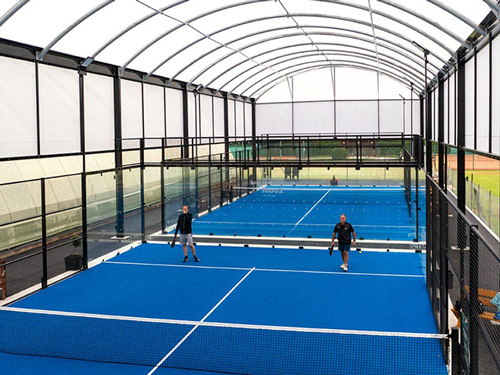
The standard padel court size is 20m x 10m, including walls. Even minor deviations can make the court feel cramped, reduce safety, and prevent the court from hosting official competitions.
Poor Drainage Planning
Concept
Water management is a critical factor for court longevity.
Description
Without proper drainage, rainwater can pool, causing slippery surfaces and degrading the foundation. A slope of 1–2% or perimeter drains is recommended to channel water away efficiently.
Inadequate Lighting
Concept
Lighting affects player performance and safety.
Description
Improper lighting can create shadows, glare, and uneven illumination. LED fixtures with adjustable angles ensure consistent lighting for indoor and outdoor courts alike.
Step-by-Step Guide on How to Build a Padel Court
Building a padel court requires careful planning, precision, and knowledge of materials and standards. Below is a detailed step-by-step guide covering everything from site preparation to final compliance checks, including practical tips, technical data, and expert recommendations.
Step 1: Site Preparation
Clear Vegetation, Debris, and Rocks
The first step in how to build a padel court is to prepare the construction site. Removing trees, shrubs, rocks, and other debris ensures a smooth surface for the foundation. Uneven terrain or leftover organic material can compromise the stability of the court over time.
Tips:
- Remove roots that may grow under the court and cause surface cracking.
- Check for underground utilities like water pipes or cables to avoid future issues.
- Consider using a mechanical brush or light excavation machinery for large areas.
Level the Ground and Compact Soil for Stability
Proper leveling ensures a flat surface, which is essential for uniform play. Uneven areas may lead to poor ball bounce and drainage problems. Once leveled, compact the soil using a vibratory roller or plate compactor to achieve uniform density.
Data Reference:
- Recommended compaction: 95% Standard Proctor density
- Acceptable slope for the main court surface: 1–2% for water runoff
Perform Soil Tests to Determine Foundation Requirements
Soil tests help identify soil type, bearing capacity, and water absorption rates. These factors determine whether a concrete slab or reinforced base is necessary. Clay soils, for instance, require more reinforcement to prevent shifting or cracking.
Key Consideration:
- Test depth: at least 50cm below proposed surface
- Check for high water tables, which may require additional drainage solutions
Step 2: Drainage Installation
Install Sloped Surfaces or Perimeter Drains
Effective drainage prevents water accumulation and surface damage. Outdoor padel courts should have a gentle slope directing water toward drainage points. For indoor courts, install perimeter drains connected to a sump pump system if necessary.
Technical Data:
- Ideal slope: 1–2% along the length and width
- Drainage pipes: 100–150mm PVC with gravel bedding for proper flow
Ensure Water Runoff Prevents Pooling on the Court
Pooling water can damage artificial turf, acrylic surfaces, and the foundation. Sloped surfaces combined with drains reduce maintenance costs and increase court longevity.
Consider Stormwater Retention Strategies
In regions with heavy rainfall, additional retention or soakaway systems may be necessary. This reduces flooding risk and protects the court surface from waterlogging.
Step 3: Foundation and Surface Layers
Concrete Slab or Compacted Base
A stable foundation is critical for long-term court performance. Most professional padel courts use a 10–15cm reinforced concrete slab, sometimes with a geotextile membrane to prevent soil movement.
Expert Tip:
- Use high-strength concrete (C25/C30) for durability
- Reinforce with steel mesh or rebar spaced 15–20cm apart
Surface Options
- Artificial Turf: Provides consistent ball bounce, player comfort, and lower maintenance.
- Recommended pile height: 12–15mm
- Shock pad thickness: 30–50mm
- Acrylic Coatings: Smooth, professional-grade surfaces ideal for indoor or multi-purpose courts.
- Concrete Coating: Durable but may require professional leveling and sealant applications.
Padding and Shock Absorption
Adding a shock pad below turf improves player comfort and reduces injury risk. Thickness should be 50–60mm for optimal cushioning.
Step 4: Fencing and Glass Walls
Fencing Installation
- Side fencing: 3m height minimum
- End fencing: 4m minimum
- Use galvanized steel frames to prevent corrosion and increase lifespan
Glass Wall Installation
- Minimum thickness: 10mm tempered glass
- Laminated glass recommended for additional safety
- Ensure panels are anchored securely with reinforced metal frames
Additional Safety Considerations
- Leave at least 50cm gap between fence and court surface to prevent ball damage
- Use rubber or plastic edging around metal frames to avoid injury
Step 5: Lighting Installation
Indoor Court Lighting
Indoor padel courts require LED lighting mounted at a height of 5–6m for uniform illumination. Avoid placing lights directly above the centerline to minimize shadows.
Outdoor Court Lighting
- Combine natural sunlight with supplementary LED lighting for evening play
- Recommended lighting intensity: 300–500 lux for amateur play, 750–1000 lux for professional courts
- Position lights on poles outside fencing to avoid glare
Shadow and Glare Management
- Use diffusers or angled fixtures to prevent direct light in players’ eyes
- Avoid shiny surfaces that reflect light and interfere with visibility
Step 6: Safety and Compliance Check
Verify Dimensions and Surface Evenness
- Measure all sides: court 20m x 10m
- Ensure walls are correctly aligned and fencing verticality is maintained
- Check surface flatness: tolerance ±5mm
Check Fencing and Glass Stability
- Apply lateral load tests to ensure glass panels do not shift
- Inspect fence anchoring bolts and ground embedment
Compliance with Local Building Codes
- Confirm structural permits and zoning approvals
- Adhere to sports standards (International Padel Federation recommendations)
- Include accessibility measures such as ramps for spectators
Indoor vs Outdoor Padel Court Construction
| Feature | Indoor Padel Court | Outdoor Padel Court |
|---|---|---|
| Weather Protection | Full protection from rain and wind | Exposed to elements, requires high-quality drainage |
| Surface Maintenance | Low maintenance | Higher maintenance due to UV and weather exposure |
| Construction Cost | Higher | Lower initial cost |
| Longevity | Longer due to controlled environment | Depends on material and drainage quality |
| Lighting | Artificial lighting always required | Daylight can suffice, supplemented with LEDs |
| Noise Consideration | Contained | May require sound barriers in urban areas |
Material Selection: Best Practices

Artificial Turf
- Durable, UV-resistant, and low maintenance
- Standard pile height: 12–15mm
- Requires proper shock pad for player comfort
Acrylic Surfaces
- Smooth and consistent ball bounce
- Often used in professional courts
- Requires periodic painting and cleaning
Fencing and Glass
- Glass: 10–12mm tempered, laminated for safety
- Metal fencing: galvanized steel, min. 2.5mm thickness
- Ensure panels are securely anchored to prevent movement
Common Cost Mistakes and Budget Planning

Underestimating Construction Costs
- Average outdoor padel court: $20,000–$35,000 USD
- Indoor courts can reach $40,000–$70,000 USD depending on structure
- Include costs for turf, lighting, fencing, drainage, and labor
Overlooking Maintenance Costs
- Turf replacement every 7–10 years
- Glass panel and fence maintenance annually
- Electrical and lighting inspection every 2–3 years
Budget Table Example
| Item | Estimated Cost (USD) | Notes |
|---|---|---|
| Ground Preparation | 2,000–5,000 | Depends on slope and soil type |
| Surface Materials | 8,000–15,000 | Turf or acrylic |
| Fencing & Glass | 6,000–12,000 | Quality and height affect price |
| Lighting & Electrical | 2,000–5,000 | LED recommended |
| Labor | 2,000–6,000 | Varies by location and experience |
Avoidable Construction Errors
- Skipping soil compaction
- Choosing incorrect fencing height
- Using non-tempered glass
- Poor drainage design
- Ignoring local building codes
Real-World Example:
A private club installed a court on poorly compacted soil. Within a year, the surface became uneven, requiring a $8,000 USD repair. Proper soil testing could have prevented this.
Maintenance Tips for Longevity
- Clean artificial turf weekly to remove debris
- Inspect fencing and glass quarterly for cracks or corrosion
- Level surface annually to maintain even play
- Check lighting and electrical systems every 6 months
FAQ
What are the standard dimensions of a padel court?
20m x 10m, including walls. Accurate dimensions ensure safety and proper gameplay.
Can a padel court be built on sloped ground?
Yes, but you must include proper leveling and drainage to prevent water accumulation.
How long does construction take?
Typically 4–8 weeks depending on site conditions and materials used.
Indoor vs outdoor: which is better?
Indoor courts last longer and are weather-resistant, outdoor courts are cheaper but need durable surfaces and drainage.
What materials should I avoid?
Avoid low-grade turf, thin glass panels, and weak fencing that compromise safety and durability.
Conclusion
Understanding how to build a padel court is more than knowing the measurements—it’s about strategic planning, proper material selection, and anticipating maintenance needs. Avoiding mistakes like poor drainage, substandard materials, and incorrect dimensions ensures a safe, high-quality, and long-lasting padel court.
Whether you are building for personal use, a club, or a commercial facility, following these guidelines guarantees better performance, player satisfaction, and ROI for your investment.