
Ratgeber
How to Choose When You Buy a Padel Court
Aktuelle Artikel
Choosing the perfect Padelplatz requires more than picking a surface; it’s an investment in play quality, safety, and long-term value. Whether for a private club, sports academy, or personal backyard, understanding the full spectrum of considerations is crucial before you buy a padel court.
Inhaltsverzeichnis
Einführung
Padel has emerged as one of the fastest-growing sports worldwide, with countries like Spain reporting a 30% annual increase in padel facility memberships according to the International Padel Federation (FIP). Unlike tennis or squash, a padel court is compact, versatile, and encourages social play, making it a lucrative addition for commercial or residential properties. However, buying a Padelplatz is a complex decision involving surface selection, location, installation, and long-term maintenance. This guide will help potential buyers navigate these decisions with insights from experts and real-world examples.
Key Factors to Consider Before You Buy a Padel Court
Before you commit to buy a padel court, there are multiple factors that significantly affect usability, player experience, safety, and return on investment (ROI). Carefully evaluating each of these elements ensures that your investment meets long-term performance expectations.
Space and Location Requirements
The physical location and available space determine the safety, accessibility, and long-term durability of your Padelplatz.
Court Dimensions and Buffer Zones
Standard padel court dimensions are 20 meters long by 10 meters wide. In addition, a minimum of 2 meters of buffer space around the court is recommended to ensure player safety and proper ball containment. Without adequate space, players risk collisions, and balls may frequently leave the play area, reducing game quality.
Indoor vs. Outdoor Courts
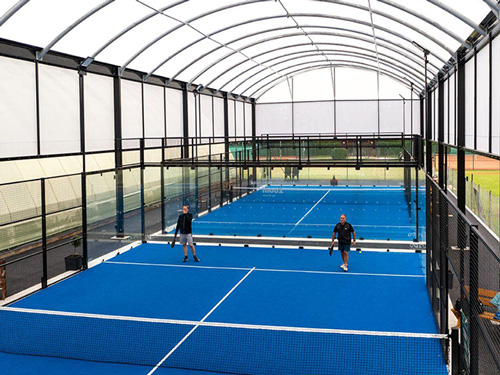
- Hallenplätze: Offer controlled lighting, temperature, and humidity, making them ideal for year-round play. However, installation costs are higher due to structural requirements, ventilation systems, and lighting infrastructure. Indoor courts are popular in northern climates or regions with heavy rainfall.
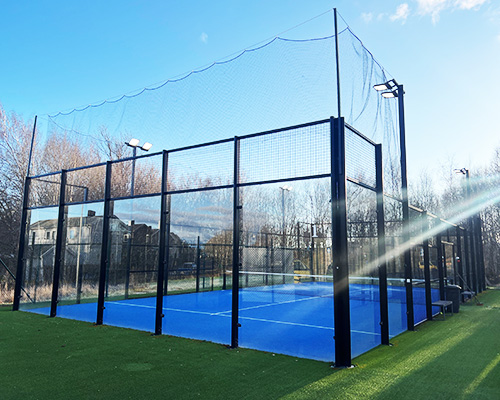
- Freiplätze: Cost-effective and easier to install, but they are exposed to weather, UV degradation, and temperature fluctuations. Regular maintenance such as surface brushing, cleaning, and protective coatings is essential to maintain performance.
Accessibility and Convenience
Location affects how often your court will be used. Courts near parking lots, public transportation, or main walkways see higher usage. For commercial facilities, increased accessibility directly translates into higher revenue and improved member satisfaction.
Ground Stability and Drainage
The stability of the foundation is critical to preventing warping, moss growth, and uneven surfaces. According to Padel Construction Insights 2022, poorly drained or unstable ground can reduce surface lifespan by up to 15%, leading to costly repairs or replacements within just a few years. Experts recommend soil compaction tests and drainage planning before finalizing court placement.
Court Surface Materials
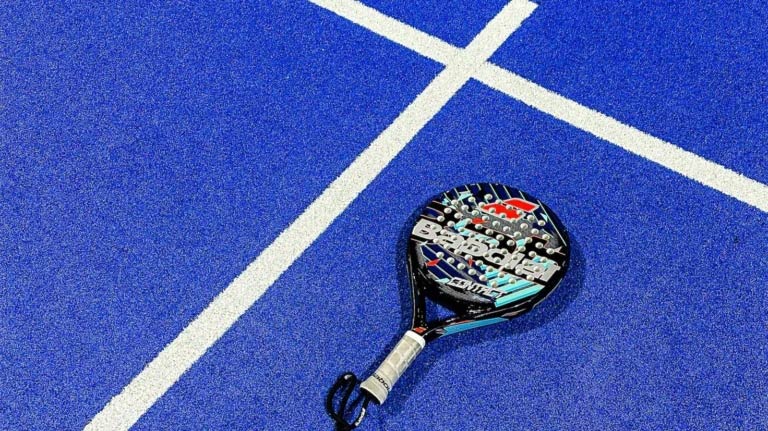
Choosing the right court surface is one of the most critical decisions for any facility, as it directly affects playability, player safety, and long-term maintenance. Different surfaces cater to different skill levels, sports types, and usage frequencies, so understanding their characteristics is essential.
Kunstrasen
Artificial grass has gained widespread popularity for both recreational and professional courts. Its surface provides a consistent bounce, excellent traction, and a forgiving feel underfoot, which reduces stress on joints and minimizes the risk of injury during play. To achieve optimal performance, experts recommend using artificial grass with a sand infill of 10–14 kg/m², which balances ball control, cushioning, and surface stability. This makes it particularly suitable for clubs, training facilities, and residential setups where player comfort and safety are priorities.
Acrylic/Concrete Surfaces
Acrylic or concrete courts are renowned for their durability and minimal maintenance requirements. They can withstand heavy usage over long periods with little wear, making them ideal for public parks or professional tournament facilities. However, these surfaces offer a faster ball speed and lower cushioning, which can be challenging for beginners or players prone to joint issues. Regular cleaning and sealing are recommended to maintain surface quality and prevent cracks or uneven areas over time.
Modular Interlocking Tiles
Modular interlocking tiles are an increasingly popular choice for multipurpose facilities and community centers. These tiles are easy to install, replace, or reconfigure, offering flexibility for courts that host multiple sports or events. Their shock-absorbing properties help reduce injuries from slips or falls, and they are suitable for high-frequency usage due to their durability. Additionally, modular tiles allow for quick drainage, reducing downtime after rain or maintenance activities.
When planning a court, it’s crucial to consider not only the type of sport and skill level of players but also climate conditions, maintenance resources, and budget constraints. For example, outdoor facilities in areas with heavy rainfall may benefit more from modular tiles or artificial grass due to better water drainage and minimal slip hazards.
Fencing and Glass Walls
High-quality fencing and glass walls ensure safety, ball containment, Und visual appeal. Proper materials and installation are crucial for both amateur and professional courts.
Tempered Glass Walls
Tempered glass is a preferred choice for professional courts.
- Durability: Minimum 10mm thickness for strength and safety.
- Performance: Provides consistent ball bounce.
- Aesthetic: Transparent design enhances viewing experience and modern court appearance.
Metal Mesh Fencing
Outdoor courts require robust fencing to contain balls Und protect surrounding areas.
- Material Options: Galvanized steel or powder-coated metal resists corrosion and weathering.
- Design Considerations: Height, mesh size, and gate placement ensure player safety and convenience.
- Maintenance: Periodic inspections prevent gaps or damages that could compromise safety.
Safety Protocols
Ensuring the court is safe for players involves proper installation and design of walls and fencing.
- Anchoring: All panels and fences must be securely anchored.
- Protective Measures: Rounded edges or padding in high-contact areas reduce injury risks.
- Compliance: Meets professional league standards for player safety.
Table: Comparison of Padelplatz Features and Benefits
| Besonderheit | Material Options | Benefits | Wartung |
|---|---|---|---|
| Court Surface | Artificial Grass, Acrylic, Modular Tiles | Player comfort, ball control, durability | Medium to Low |
| Fencing | Metal Mesh, Tempered Glass | Safety, visibility, ball containment | Medium |
| Beleuchtung | LED, Halogen | Night play, energy efficiency | Niedrig |
| Net System | Adjustable Standard Nets | Regulation-compliant, easy replacement | Niedrig |
| Accessories | Benches, Scoreboards, Shelters | Spectator experience, player comfort | Niedrig |
Budget Planning and Cost Analysis
Thorough financial planning is the foundation of a successful padel court investment. Costs vary depending on surface, fencing, accessories, and location, so it’s important to evaluate all aspects before making a purchase.
Construction Costs
The average construction cost for a standard padel court ranges from €15,000 to €50,000, depending on the choice of surface material, glass or mesh fencing, and additional amenities. Premium surfaces like high-quality artificial turf, tempered glass walls, or reinforced modular tiles may increase initial costs but provide better durability and user experience.
Maintenance Costs
Maintenance is critical to prolonging court life and preserving performance. For artificial turf and glass walls, annual maintenance typically costs 2–5% of the initial construction price. Regular upkeep includes cleaning, minor repairs, and inspection of structural elements. When you Buy a Padel Court, planning for ongoing maintenance ensures consistent playability and prevents costly repairs in the long run.
To learn more, please read the following content:《Padel Court Maintenance Cost per Year: A Complete Guide for Court Owners》
Additional Investments
Accessories such as LED lighting, seating areas, scoreboards, and shelters can add 10–15% to total costs. While optional, these investments significantly enhance player comfort, court usability, and spectator satisfaction.
ROI Considerations
Studies in the Sports Facility Management Journal 2021 show that commercial padel courts attract 200–300 weekly players on average, leading to rapid payback in high-demand areas. When you Buy a Padel Court, evaluating location, target users, and potential revenue streams is crucial to ensuring a healthy return on investment.
Installation and Contractor Selection
Choosing an experienced contractor is essential for the longevity, safety, and compliance of your court.
Expertise
Contractors with prior padel court projects understand the nuances of soil preparation, drainage systems, and surface installation, which directly impact court performance and durability.
Warranty and Support
When you Buy a Padel Court, insist on warranties covering materials, installation, and post-construction support. This protects your investment and ensures professional assistance in case of defects or unexpected issues.
Timeline Management
- Outdoor Courts: Typically require 4–6 weeks to install.
- Indoor Courts: May take 8–10 weeks due to additional structural work and specialized lighting.
Proper timeline planning ensures that your court is ready for use without unexpected delays.
Surface Maintenance and Longevity
The playing surface is the heart of a padel court. Proper maintenance prolongs lifespan and preserves performance for years.
Cleaning
- Sweep artificial grass daily to remove debris.
- Rinse weekly to prevent dust, leaves, and sand buildup.
- Avoid harsh chemicals that may degrade turf fibers.
Glass and Fence Inspection
- Inspect tempered glass and metal mesh monthly for cracks, loose panels, or corrosion.
- Replace damaged sections immediately to maintain safety standards.
UV Protection
- Outdoor courts should have UV-resistant coatings to prevent color fading and material degradation.
Expert Tip: The Padel Federation recommends a full inspection every 6 months to identify wear and prevent accidents, ensuring your court remains in top condition.
Lighting and Accessories

Lighting and amenities are critical for extended court use and player satisfaction.
LED Systems
- Energy-efficient and long-lasting.
- Adjustable brightness for daytime or nighttime play.
Scoreboards
- Digital or manual scoreboards enhance the professional experience.
- Ensure visibility from all court angles.
Shelters and Benches
- Protect players and spectators from sun or rain.
- Increase comfort and encourage longer play sessions.
When you Buy a Padel Court, considering lighting and accessories as part of your initial investment improves usability and enjoyment.
Future Trends in Padel Court Design
The padel industry is rapidly evolving, driven by technological innovation, sustainability demands, and growing player expectations. When you Buy a Padel Court, staying informed about emerging trends can ensure your investment remains modern, functional, and appealing for years to come.
Eco-Friendly Surfaces
Sustainability is becoming a key factor in court design. Eco-friendly surfaces use recycled fibers, water-based adhesives, and low-emission materials that reduce environmental impact without compromising performance.
- Durability: Modern recycled turf options match or exceed traditional artificial grass in wear resistance and ball bounce consistency.
- Maintenance: Environmentally-friendly materials often require less chemical cleaning, further reducing environmental footprint.
- Player Health: Non-toxic, hypoallergenic materials protect players from potential chemical exposure.
Investing in eco-friendly options is especially attractive for clubs, municipalities, or commercial facilities seeking green certification and long-term cost savings.
Smart Court Technology
Technology integration is transforming how players train, compete, and analyze performance. Smart courts embed sensors into surfaces, walls, or equipment to monitor detailed metrics:
- Ball Speed and Spin: Sensors provide real-time feedback on ball trajectory, rotation, and impact points.
- Player Movement Tracking: Advanced systems analyze footwork, positioning, and reaction times.
- Training Insights: Coaches can generate actionable reports for technique improvement, injury prevention, and tactical decision-making.
When you Buy a Padel Court, incorporating smart technology can differentiate your facility, attract professional players, and add value for memberships or rental fees.
Modular and Portable Courts
Modular and portable court designs offer flexibility, particularly for clubs, schools, or temporary events. These systems are pre-fabricated, easy to assemble, and can be relocated with minimal disruption.
- Adaptable Layouts: Courts can be reconfigured to accommodate multiple sports, exhibitions, or events.
- Space Efficiency: Ideal for venues with limited permanent space or seasonal demand.
- Cost Efficiency: Reduces construction and demolition costs compared to traditional permanent courts.
For facilities planning to expand or host tournaments in multiple locations, modular courts provide a practical, scalable solution.
Lighting and Amenity Innovations
Modern court design also emphasizes player comfort and aesthetics:
- LED Lighting Systems: Energy-efficient LEDs with adjustable brightness improve visibility and reduce electricity costs.
- Integrated Amenities: Built-in seating, shaded areas, and hydration stations enhance player experience.
- Digital Enhancements: LED scoreboards, automated timing systems, and Wi-Fi-enabled coaching tools make courts more interactive and professional.
By considering these features when you Buy a Padel Court, your facility stays ahead of trends, increasing both usability and attractiveness to players.
To learn more, please read the following content:《How Do You Build a Padel Court? Step-by-Step Guide for Beginners》
Regulatory and Professional Standards
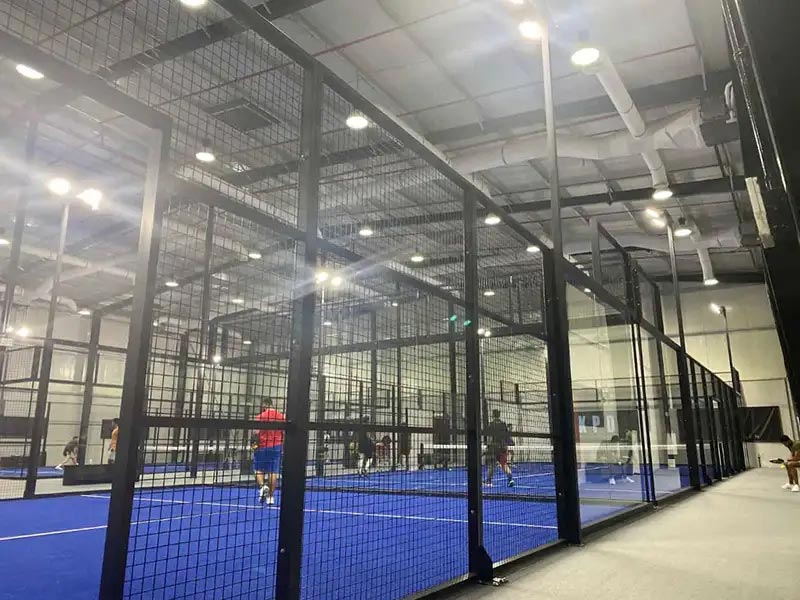
Adhering to professional standards is crucial for player safety, tournament eligibility, and long-term credibility of your padel facility. Facilities that meet these requirements can host official competitions, attract serious players, and ensure a high-quality experience.
Court Dimensions
The International Padel Federation (FIP) specifies standard court dimensions of 20m × 10m, including buffer zones. Proper spacing ensures:
- Safe ball play near walls and fencing.
- Adequate room for player movement and strategic play.
- Consistency with official tournament regulations, essential if you plan to host competitions.
When you Buy a Padel Court, confirming that dimensions comply with FIP standards is critical for long-term usability.
Glass and Mesh Specifications
High-quality glass walls and fencing are required for safety and proper ball rebound:
- Gehärtetes Glas: Minimum thickness 10mm to withstand impact without shattering.
- Metal Mesh Fencing: Galvanized or powder-coated steel resists corrosion and maintains strength.
- Anchoring and Safety: Panels must be securely fixed, with rounded edges or padding to reduce injury risks.
Investing in compliant materials ensures your court meets professional requirements while enhancing player confidence.
Lighting Levels
Competitive play requires proper illumination. FIP standards recommend a minimum of 300 lux across the entire playing surface:
- Uniform Illumination: Prevents shadows that could affect ball visibility.
- Energy Efficiency: Modern LED systems deliver high-quality lighting with lower energy consumption.
- Adjustable Settings: Allow for casual play, training, or tournament conditions.
Proper lighting is not only a regulatory requirement but also a major factor in player satisfaction and facility reputation.
Compliance and Certification
Ensuring your court meets all regulatory standards provides several advantages:
- Official Tournament Eligibility: FIP-certified courts can host national and international events.
- Enhanced Safety: Protects players, spectators, and staff.
- Market Value: Professional compliance increases the court’s resale or rental value.
When you Buy a Padel Court, choosing materials, designs, and installation methods that comply with professional standards protects your investment and maximizes long-term benefits.
Abschluss
Purchasing a padel court is a strategic investment requiring careful planning, expert advice, and attention to detail. From surface selection and construction to long-term maintenance and amenities, each decision impacts player experience, safety, and ROI. By considering professional recommendations, adhering to standards, and choosing quality materials, investors and facility managers can maximize the benefits of their padel court for years to come.
Häufig gestellte Fragen
Q1: How long does a padel court last?
A: With proper maintenance, artificial grass courts can last 8–10 years, glass walls 15–20 years, and metal fences 10–15 years.
Q2: Can I install an outdoor padel court in rainy climates?
A: Yes, provided proper drainage and UV-resistant materials are used; covered or indoor courts offer additional protection.
Q3: How often should artificial grass be replaced?
A: Typically every 8–10 years, depending on usage intensity and maintenance practices.
Q4: Is it better to buy a modular court or a permanent court?
A: Modular courts offer flexibility and relocation options; permanent courts provide durability and higher long-term stability.
Q5: What is the recommended lighting for evening play?
A: LED lighting with at least 300 lux ensures proper visibility for both training and competitive play.