Ratgeber
Padel Court Construction Cost Breakdown: A Complete Guide
Aktuelle Artikel
Padel is no longer an emerging sport—it has become a global investment opportunity. From Europe to the Middle East and North America, clubs, developers, and private investors are racing to build new padel facilities. Yet one question consistently determines success or failure:
What is the real padel court construction cost, and what does it actually include?
Many first-time investors underestimate costs by focusing only on the visible structure. In reality, padel court construction cost is a layered system involving ground works, structural engineering, playing surface technology, lighting standards, installation quality, and long-term maintenance planning.
This guide delivers a professional, data-backed, and experience-driven breakdown designed for buyers who want clarity before committing capital.
In this article, you will learn:
- What makes up the full padel court construction cost
- Real construction cost ranges across global markets
- Indoor vs outdoor court cost comparisons
- How maintenance affects long-term ownership cost
- Verified case studies from real padel projects
- Expert-backed principles for cost optimization and ROI
Inhaltsverzeichnis
Understanding the Full Padel Court Construction Cost Framework
The padel court construction cost should never be viewed as a single upfront payment. In practice, it is a long-term capital investment that combines construction expenditure with operational ownership costs over the court’s usable life.
Industry professionals generally agree that evaluating padel court construction cost without considering long-term ownership leads to inaccurate budgeting and unrealistic return expectations. As a result, experienced developers divide total cost into two clearly defined phases.
Initial Construction Cost
Initial construction cost includes all expenses required to deliver a fully playable, regulation-compliant padel court. This phase typically covers:
- Engineering design and technical drawings
- Manufacturing of steel structure and glass panels
- Transportation, import duties, and on-site logistics
- Installation, alignment, and commissioning
- Safety checks and functional testing
Depending on location and specifications, this phase usually represents 70–85% of total lifetime expenditure.
Long-Term Ownership Cost
Long-term ownership cost refers to recurring and predictable expenses incurred after the court is operational. These costs directly affect profitability and court availability.
They typically include:
- Routine maintenance and cleaning
- Minor repairs and component adjustments
- Artificial turf replacement
- Lighting system upgrades
- Periodic structural and safety inspections
From a financial planning perspective, ownership costs account for 15–30% of total cost over a 15–20 year lifecycle.
A professionally built padel court generally has a functional lifespan of 15–20 years, while surface-related components follow shorter replacement cycles that must be planned in advance.
Core Components of Padel Court Construction Cost
To evaluate quotations accurately, buyers must understand how the padel court construction cost is distributed across different technical components.
| Cost Component | Typical Share of Total Cost | Cost Sensitivity |
|---|---|---|
| Ground & Civil Works | 15–25% | High (site-dependent) |
| Steel Structure & Glass | 35–45% | Very High |
| Playing Surface System | 10–15% | Medium |
| Beleuchtung und Elektrik | 8–12% | Medium |
| Installation & Logistics | 10–15% | Medium–High |
This distribution explains why two projects with similar court designs can still have significantly different total costs.s more accurately.
Ground Works and Civil Engineering Costs
Soil Conditions and Foundation Requirements
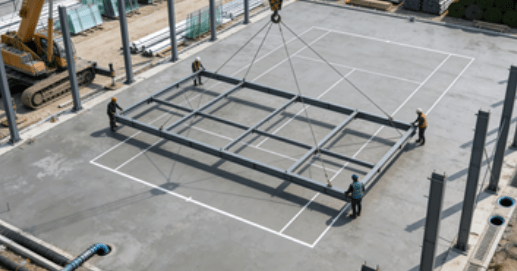
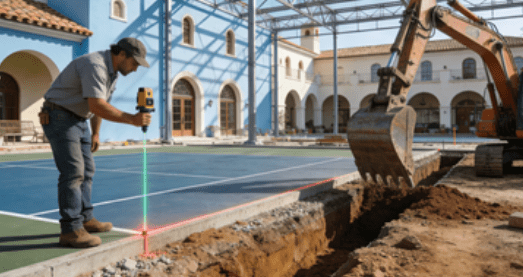
Soil quality is one of the most underestimated factors affecting padel court construction cost. Stable soil allows for standard concrete slabs with minimal reinforcement, while unstable or uneven soil may require deeper foundations, additional steel reinforcement, or soil stabilization.
Engineering benchmarks indicate that poor soil conditions can increase foundation costs by 20–40%, particularly in coastal areas or reclaimed land.
Drainage Systems for Outdoor Courts
Outdoor padel courts require efficient drainage to prevent water accumulation beneath the surface. Drainage systems often include:
- Sloped base layers
- Drainage channels or French drains
- Permeable sub-base materials
Without proper drainage, moisture damage can significantly shorten turf lifespan and increase long-term maintenance costs.
Structural System Cost Breakdown
Steel Frame Quality and Thickness
The steel frame forms the structural backbone of the padel court, supporting glass walls, fencing, lighting poles, and dynamic player loads.
Commercial-grade courts typically use hot-dip galvanized steel for corrosion resistance. Increasing steel thickness raises initial padel court construction cost but improves:
- Structural rigidity
- Resistance to deformation
- Long-term safety and noise reduction
Tempered Glass Panels
Most modern padel courts use 10–12 mm tempered safety glass, designed to withstand repeated ball impacts and player contact.
Higher-grade glass reduces vibration and enhances rebound consistency. In many projects, glass components alone represent 20–30% of total construction cost, making quality selection critical.
Playing Surface System Costs
Artificial Turf Selection
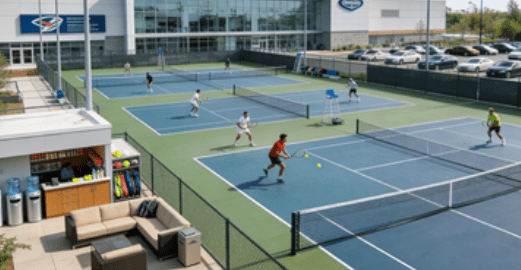
Padel-specific artificial turf is engineered to balance grip, ball speed, and player comfort. Differences in fiber density, pile height, and infill material directly influence both cost and performance.
Premium turf systems typically:
- Offer better wear resistance
- Maintain consistent ball behavior
- Last 4–6 years under commercial usage
Shock Absorption Layers
Shock pads installed beneath the turf reduce joint impact and fatigue, improving player safety and comfort. While optional in some markets, shock absorption is increasingly considered standard for clubs and professional facilities.
Indoor vs Outdoor Padel Court Construction Cost Comparison
Indoor Court Cost Characteristics
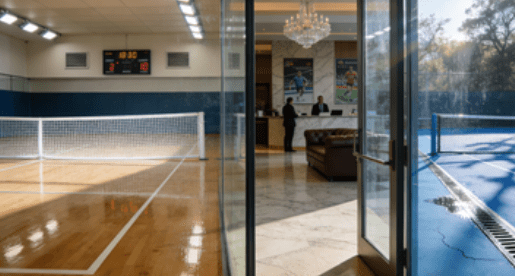
Indoor courts require additional investment in buildings, climate control, fire protection, and ventilation systems. These elements increase initial padel court construction cost but create a controlled playing environment.
Key advantages include:
- Stable year-round usage
- Reduced weather-related maintenance
- Predictable revenue streams
Outdoor Court Cost Characteristics
Outdoor courts are less expensive to build initially but face higher exposure to environmental factors such as UV radiation, rain, and temperature fluctuations.
| Aspekt | Hallenplatz | Freiplatz |
|---|---|---|
| Initial Construction Cost | Higher | Lower |
| Weather Impact | None | Hoch |
| Annual Maintenance Cost | Lower | Higher |
| Utilization Stability | Hoch | Seasonal |
Lighting and Electrical Infrastructure Costs
LED Lighting Standards
Professional padel courts typically require 300–500 lux of uniform lighting. Modern LED systems are designed to minimize glare while maximizing energy efficiency.
Compared to traditional lighting, LED solutions can reduce energy consumption by up to 50%, lowering long-term operating costs.
Electrical Compliance
Electrical installations must comply with local safety regulations. Inspection, certification, and compliance adjustments can add unexpected costs if not planned during the design stage.
Installation, Labor, and Logistics Costs
Importance of Skilled Installation
Installation quality directly affects both safety and lifespan. Glass alignment, turf tension, and structural leveling require trained teams and specialized equipment.
Industry surveys suggest that installation quality can influence up to 30% of long-term maintenance costs.
Transportation and Import Costs
Shipping steel and glass components internationally can significantly affect padel court construction cost, especially for island regions or remote markets where logistics complexity is higher.
Regulatory and Certification-Related Costs
Local Permits and Building Codes
Permit fees, inspections, and compliance requirements vary widely by region and can impact timelines and budgets.
Federation and Tournament Standards
Some operators follow federation guidelines to improve tournament eligibility and brand credibility.
Real-World Data: Average Padel Court Construction Cost by Region
Based on aggregated pricing data from contractors and operators:
| Region | Outdoor Court (USD) | Indoor Court (USD) |
|---|---|---|
| Southern Europe | $28,000 – $45,000 | $55,000 – $90,000 |
| Naher Osten | $30,000 – $50,000 | $65,000 – $110,000 |
| Nordamerika | $35,000 – $55,000 | $70,000 – $120,000 |
These figures typically exclude land acquisition and building construction.
Case Study 1: Outdoor Commercial Club in Spain
Project Overview
A padel club in Valencia installed 6 outdoor courts in a suburban commercial area.
Construction Cost Snapshot
- Average padel court construction cost per court: ≈ $38,000
- Ground works accounted for 21% due to reinforced foundations
- Lighting upgrades added ≈ 9% to total cost
Performance After 24 Months
- Average utilization: 7.5 hours per court per day
- Hourly rental rate: €28–€36
- Estimated payback period: under 3 years
Case Study 2: Indoor Padel Facility in Dubai
Project Overview
A premium indoor facility installed 4 panoramic courts in a converted warehouse.
Cost Structure
- Average construction cost per court: ≈ $92,000
- HVAC and building adaptation: ≈ 30% of total investment
- Premium turf and shock pads selected
Operational Outcome
- Year-round availability
- Maintenance costs 20–25% lower annually than outdoor equivalents
- Higher booking rates and sponsorship income
Case Study 3: Multi-Court Expansion in North America
Project Overview
A sports complex in Texas added 8 outdoor courts alongside tennis facilities.
Cost Drivers
- Labor costs increased installation expenses by 15–18%
- Local code compliance added inspection costs
- Turf replacement cycle estimated at 5 years
Strategic Advantage
Shared infrastructure reduced per-court operating costs and improved overall ROI.
Ongoing Maintenance Costs You Must Plan For
Padel court construction cost extends beyond installation.
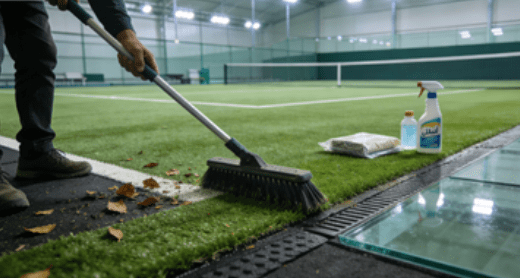
Routinewartung
- Turf brushing and infill redistribution
- Glass cleaning
- Hardware inspections
Long-Term Replacement Costs
| Maintenance Item | Typical Interval |
|---|---|
| Turf Brushing | Wöchentlich |
| Glass Cleaning | Monthly |
| Structural Inspection | Annually |
| Turf Replacement | 4–6 Years |
Operators typically allocate 3–5% of initial construction cost per year for maintenance.
Cost vs Lifespan: What the Data Shows
- Steel structures: 20+ years
- Tempered glass: 15+ years
- Artificial turf: 4–6 years
Spending 8–12% more upfront often extends lifespan by 30–40%, reducing lifetime cost per year.
ROI and Commercial Viability Considerations
Investing in padel courts is not only a sports decision—it is a business decision. The ROI (Return on Investment) and commercial viability depend on a combination of location, pricing strategy, utilization rates, and operational efficiency. Unlike many other sports facilities, padel courts often show strong revenue potential due to high demand and relatively low space requirements.
Revenue Potential
A single padel court can host 8–12 hours of bookings per day in high-demand markets, especially in densely populated cities and areas where padel is already popular. The revenue potential depends on three major factors:
1. Utilization Rate
The number of daily booking hours is directly linked to location, marketing, and local competition. In highly active markets, courts can reach 70–90% utilization, particularly during peak hours (evenings and weekends).
2. Pricing Strategy
Court rental rates vary widely based on country and city. For example:
- In European markets, hourly court rates typically range from €20 to €40 per hour
- In high-demand areas like Dubai or premium clubs, rates can reach €45–€70 per hour
3. Ancillary Revenue
Padel facilities often generate additional income through:
- Coaching programs and training camps
- Equipment sales (rackets, balls, accessories)
- Membership packages
- Sponsorship and events
This means that revenue is not limited to court rental alone—many successful clubs generate 30–50% of total revenue from ancillary services.
Cost Recovery Timeline
Well-managed facilities often recover padel court construction cost within 2–4 years, depending on pricing and utilization. This payback period is influenced by:
1. Court Utilization
Higher utilization shortens the payback period. If a court achieves 10 booking hours daily at €30/hour, the annual gross revenue can exceed €100,000, making payback in 2–3 years realistic in strong markets.
2. Operating Costs
Operating costs include staff, energy, maintenance, insurance, and marketing. Efficient management reduces these costs and improves net profitability.
3. Location and Competition
In saturated markets, courts may require lower pricing to maintain utilization, extending the payback timeline. Conversely, in emerging markets with limited competition, courts can command premium prices.
4. Seasonality
Outdoor courts may have seasonal demand, especially in climates with cold winters or heavy rain. This affects annual utilization and extends payback time.
How to Optimize Padel Court Construction Cost
A padel court project becomes commercially successful when the initial investment is controlled without sacrificing quality. Cost optimization is not just about spending less—it is about spending smarter.
Smart Design Decisions
Standardized court designs reduce customization and manufacturing costs.
Turnkey vs Component Procurement
Standardization Over Customization
Standardized court designs reduce manufacturing and engineering costs, shorten construction time, and minimize design risk. Custom designs often lead to:
- Higher engineering fees
- Increased manufacturing complexity
- Longer lead times
- Higher risk of installation errors
A standardized court layout also helps in future expansion, as new courts can be added with minimal rework.
Choose the Right Materials for Usage
Selecting materials based on expected usage is essential. For example:
- High-traffic commercial courts should prioritize durability (thicker steel, premium turf, stronger glass).
- Private or low-usage courts can use more cost-effective materials without compromising safety.
Final Conclusion
Verstehen der padel court construction cost breakdown is essential for investors, clubs, and developers aiming for long-term success. When construction quality, maintenance planning, and lifecycle costs are considered together, padel courts become not just sports facilities—but scalable, revenue-generating assets.
A well-planned padel court is an investment built to last.
Häufig gestellte Fragen
How much does a padel court construction cost on average?
Costs vary by region, design, and whether the court is indoor or outdoor.
Why do quotes differ so much between suppliers?
Differences usually reflect material quality, glass thickness, lighting systems, and installation standards.
Are maintenance costs predictable?
Yes. Most costs follow clear maintenance and replacement cycles.
Is indoor padel always more expensive?
Upfront, yes—but indoor courts often deliver better long-term cost efficiency.
Can construction cost be reduced without sacrificing quality?
Yes, through smart design, logistics planning, and professional installation.