
Ratgeber
Public Tennis Court Solutions: Design, Construction & Materials from a Professional Manufacturer
Aktuelle Artikel
Inhaltsverzeichnis
Publicly accessible tennis facilities play an important role in parks, schools, and community spaces. As demand increases for durable and cost-efficient outdoor sports infrastructure, selecting the right materials, design approach, and manufacturing partner becomes essential.
As an experienced manufacturer, we provide complete tennis court solutions—from surface materials to construction support—helping clients deliver reliable, long-lasting facilities for public use.
What Is a Public Tennis Court?

A public tennis court is a recreational sports facility open to general users, commonly installed in municipal parks, educational campuses, and residential developments. These courts are designed to withstand frequent use while remaining safe and accessible for players of all levels.
Compared with private or club-only facilities, public courts must focus more on durability, cost control, and ease of maintenance.
Why Public Tennis Courts Matter for Communities & Cities
Outdoor tennis facilities offer long-term value for communities by encouraging physical activity and social interaction. Well-planned courts enhance the usability of public spaces and support local sports programs.
For city planners, schools, and community developers, long service life and predictable maintenance costs are often more important than short-term savings.
Public Tennis Court Design Standards & Dimensions
Proper design ensures safety, performance, and compliance with recognized sports standards.
Standard Dimensions
- Playing area (doubles): 36 ft × 78 ft
- Recommended total area with run-off: approximately 60 ft × 120 ft
Design Considerations
- Adequate clearance and fencing
- Slip-resistant surfaces
- Accessibility for public users
Manufacturers with project experience can assist in aligning layouts with both functional and regulatory requirements.
Best Surface Materials for Outdoor Tennis Facilities
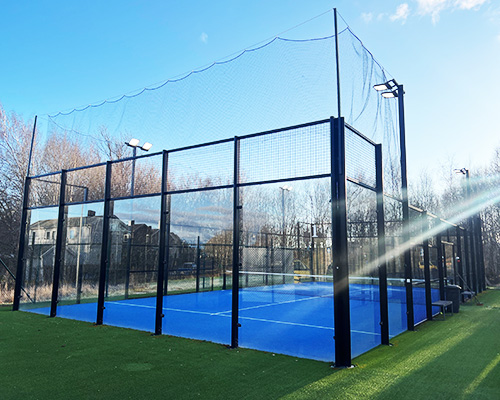
Surface selection has a direct impact on durability, play quality, and long-term costs.
Commonly Used Systems
- Acrylic sports coatings
- Concrete or asphalt structural bases
- Optional cushioning layers
Surface Material Comparison
| Surface System | Haltbarkeit | Wartung | Suitability |
|---|---|---|---|
| Acrylic coating | Hoch | Niedrig | Exzellent |
| Concrete base | Very high | Very low | Exzellent |
| Asphalt base | Mäßig | Medium | Gut |
| Cushioned system | Hoch | Medium | Very good |
From a manufacturing perspective, acrylic systems installed on concrete bases offer the best balance between performance, lifespan, and maintenance efficiency.
Construction Process Overview
A well-executed installation process ensures consistent performance over time.
Typical Steps
- Ground preparation and drainage
- Base construction
- Surface application and line marking
- Final inspection
Material consistency and technical guidance from the supplier play a key role in achieving reliable results.
Cost Factors & Budget Planning
Construction budgets vary depending on:
- Surface system selection
- Site conditions
- Quantity of courts
- Lighting and enclosure requirements
Manufacturers help control overall investment by optimizing material systems and reducing long-term maintenance needs rather than focusing only on initial cost.
Lighting, Fencing & Supporting Equipment
Additional components improve usability and safety:
- Energy-efficient LED lighting
- Durable fencing systems
- Nets, posts, and seating
All supporting equipment should be designed for outdoor exposure and frequent public use.
Maintenance & Expected Lifespan
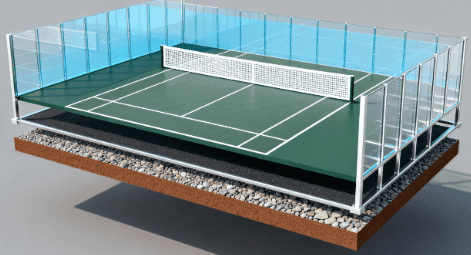
High-quality outdoor tennis courts typically remain in good condition for more than a decade when built with proper materials.
Routine Care Includes
- Surface cleaning
- Periodic repainting
- Scheduled resurfacing
Choosing manufacturer-approved materials significantly reduces repair frequency and downtime.
Solutions for Parks, Schools & Government Projects
These facilities are widely used in:
- Municipal recreation areas
- Educational institutions
- Community sports programs
Manufacturers experienced in large-scale supply can support customization, bulk production, and compliance documentation required for public projects.
Why Work Directly with a Manufacturer
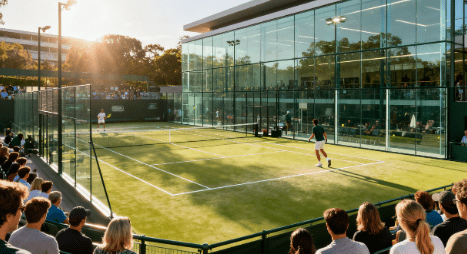
Partnering with a professional manufacturer offers:
- Stable product quality
- Customizable material systems
- Technical support throughout the project lifecycle
- Long-term cost efficiency
Direct manufacturing support ensures consistent performance from initial installation through years of use.
Abschluss
Developing a reliable outdoor tennis facility requires more than basic construction—it depends on durable materials, sound design, and a trusted manufacturing partner. By working directly with an experienced supplier, project owners can achieve better quality control, predictable maintenance, and long-term value.
If you are planning a new tennis facility for a park, school, or community space, partnering with a professional manufacturer is the most effective way to ensure lasting performance and cost efficiency.
Contact us to receive a customized solution and factory-direct support for your project.
Häufig gestellte Fragen
Are public tennis courts free to use?
Most publicly accessible tennis facilities are free or require a very low usage fee, depending on local regulations. Some locations may require reservations during peak hours.
How long does a public tennis court typically last?
With proper materials and construction, an outdoor tennis court can last 10–15 years or more. The actual lifespan depends on surface quality, climate conditions, and maintenance frequency.
What is the best surface for high-traffic tennis courts?
Acrylic surface systems installed on concrete bases are widely preferred for high-traffic environments due to their durability, weather resistance, and low maintenance requirements.
How much does it cost to build a public tennis court?
Construction costs vary based on site conditions, surface systems, and additional features such as lighting or fencing. Working directly with a manufacturer can help optimize both initial and long-term costs.
Why work directly with a tennis court manufacturer instead of a distributor?
Partnering with a manufacturer provides better quality control, customization options, technical support, and factory-direct pricing—especially important for large-scale or government-funded projects.
Need Help Choosing the Right Public Tennis Court Solution?
If you’re unsure which surface system, materials, or construction approach is best for your park, school, or community project, our manufacturing experts are here to help. Contact us today for a personalized consultation and factory-direct solution, and ensure your tennis court is durable, safe, and built to last. Don’t compromise on quality—get in touch now to bring your project to life!