
BLOG
Ideal Basketball Hoop Height?
Recent Articles
Table of Contents
Introduction

Basketball hoop height is one of the most important factors in the game of basketball. Whether you are a coach planning training sessions, a parent setting up a hoop at home, or a player working to improve skills, understanding the ideal Basketball hoop height is essential.
Professional basketball leagues, including the NBA and international competitions governed by FIBA, have standardized the official hoop height at 10 feet, or 3.05 meters. This height has been consistent for decades, ensuring players train and compete under uniform conditions.
However, for younger players, beginners, or recreational settings, adjusting the hoop height can have a significant impact on skill development, confidence, and safety. The standard 10-foot hoop is not always the most suitable height for everyone.
This article will examine recommended Basketball hoop heights for various age groups, factors influencing hoop height, the benefits of adjustable hoops, and practical recommendations for choosing the best adjustable basketball hoop for training, home, or school use.
Basketball Hoop Height in Standard Play
The official Basketball hoop height for professional competition is universally set at 10 feet (3.05 meters). This standard has been in place for over a century and is considered optimal for adult players. The 10-foot height ensures a balance between challenge and accessibility, allowing athletes to develop proper shooting mechanics, footwork, vertical leap, and competitive skills that translate across all levels of play. Training consistently at this height helps players prepare for real competitive environments, where regulation standards are mandatory.
Why the Standard Height Matters
Maintaining the 10-foot standard in professional and adult leagues is important for several reasons:
- Consistency Across Levels: Players who practice at regulation height can transition seamlessly from training to competitive games.
- Skill Development: Shooting from the correct height improves accuracy, balance, and muscle memory for jump shots, layups, and free throws.
- Physical Conditioning: Practicing at 10 feet helps athletes build strength, coordination, and vertical leaping ability required in competitive basketball.
- Competitive Readiness: Standardized height ensures fair play and comparable performance metrics across teams, leagues, and countries.
However, while the 10-foot hoop is ideal for professional adult players, it may pose challenges for younger athletes, beginners, or recreational players. Attempting to shoot at full regulation height too early can result in poor shooting form, frustration, or even injuries.
Youth Basketball Hoop Heights
To foster skill development and confidence, basketball programs often adjust hoop heights according to age and physical development:
- Children aged 5 to 8 years are recommended to use hoops set between 6 and 7 feet (1.83 to 2.13 meters). This accessible height allows children to focus on developing proper shooting technique rather than relying solely on strength. Shooting mechanics such as wrist flick, elbow alignment, and balance are easier to learn at lower heights.
- Players aged 9 to 11 years can practice on hoops between 7 and 8 feet (2.13 to 2.44 meters). By this stage, children generally have better coordination, muscle control, and strength, making it appropriate to gradually increase hoop height to challenge their growing abilities. Progressive increases in hoop height help young athletes develop vertical jumping skills and arm strength without compromising form.
Youth basketball programs commonly implement adjustable hoops during training to accommodate players with varying abilities. Coaches frequently vary hoop height for drills, alternating between slightly lower and standard heights to teach shooting, layups, and free throw technique.
Teen and Adult Hoop Heights
Teenagers and adults, particularly those preparing for competitive play, should train with a hoop close to the standard 10 feet. Practicing at regulation height ensures that:
- Techniques developed in training translate directly into official game scenarios.
- Muscle memory is built for proper jump shots, rebounds, and dunking mechanics.
- Athletes are physically prepared to compete at higher levels, including school, club, or professional leagues.
Training exclusively at lower heights during adolescence may limit skill progression, as players might not develop the strength or technique required for standard competition.
Factors Influencing Basketball Hoop Height

Several considerations determine the ideal Basketball hoop height in practice or recreational settings:
Age and Physical Development
Younger players benefit from lower hoops to improve shooting mechanics and reduce frustration.
Skill Level
Beginners need a lower height to build confidence and master basic skills before moving to higher hoops.
Training Goals
Different drills require different heights. For example, layup practice may benefit from a lower hoop to focus on technique, while dunking or competitive shooting requires regulation height.
Safety Considerations
Lower hoops reduce stress on joints and minimize the risk of injuries, particularly for young or inexperienced players.
By understanding these factors, coaches, parents, and players can make informed decisions about the most effective hoop height for training or recreational play.
Recommended Basketball Hoop Heights by Age and Purpose
| Age Group / Purpose | Recommended Hoop Height | Notes |
|---|---|---|
| Ages 5–7 (Beginner) | 6–7 ft (1.83–2.13 m) | Focus on fun and basic shooting skills |
| Ages 8–10 (Youth) | 7–9 ft (2.13–2.74 m) | Supports gradual skill development |
| Ages 11–12 (Advanced Youth) | 9 ft (2.74 m) | Transitional height toward standard |
| Ages 13+ / Adult | 10 ft (3.05 m) | Standard competitive height |
| Home & Training | Adjustable 6–10 ft | Flexible for multiple age groups |
Youth programs often adapt hoop height to ensure players practice at a level that is developmentally appropriate. Starting with lower hoops encourages proper technique, builds confidence, and prevents frustration. Gradually increasing the height as players grow stronger and more skilled prepares them for standard competition, maintaining a smooth transition to professional or adult-level play.
Using adjustable basketball hoops in training environments allows coaches to:
- Alternate heights during drills to target specific skills.
- Accommodate different player sizes and strengths.
- Provide a safe, challenging, and effective practice environment.
By tailoring the hoop height to the player’s age, skill level, and training goals, the development of proper shooting mechanics, footwork, and overall basketball ability can be maximized.
To learn more, please browse the following content:
《How Tall is a Basketball Hoop? Official Heights and Youth Adjustments》
Benefits of Adjusting Basketball Hoop Height
Using the right Basketball hoop height for training or recreational play offers multiple benefits:
Improved Shooting Mechanics
Lower hoops allow players to focus on form rather than strength.
Increased Confidence
Success at lower heights motivates young players and encourages continued practice.
Reduced Injury Risk
Age-appropriate hoop heights minimize strain on muscles and joints.
Skill Progression
Gradually increasing height helps players develop steadily toward professional-level play.
Adjustable hoops are particularly valuable in coaching environments where players of varying ages and skills share the same court.
Adjustable Basketball Hoops: Flexibility for Every Player
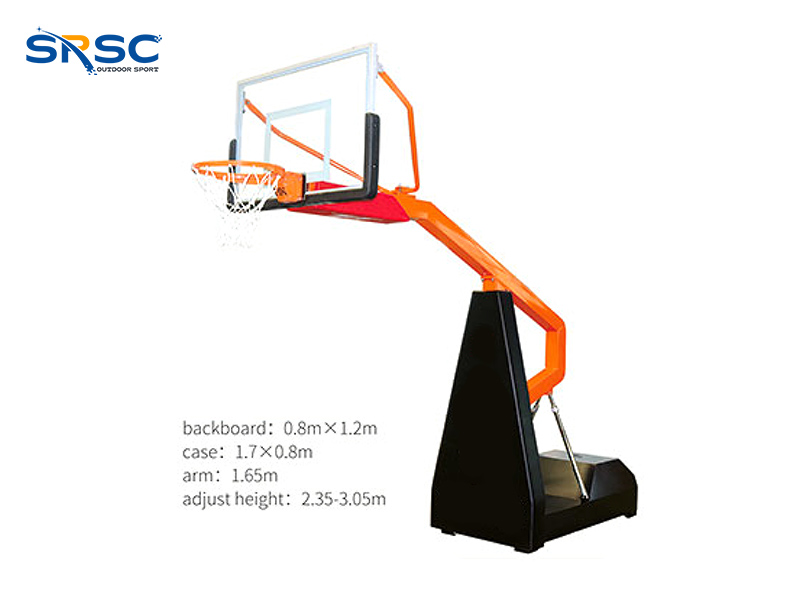
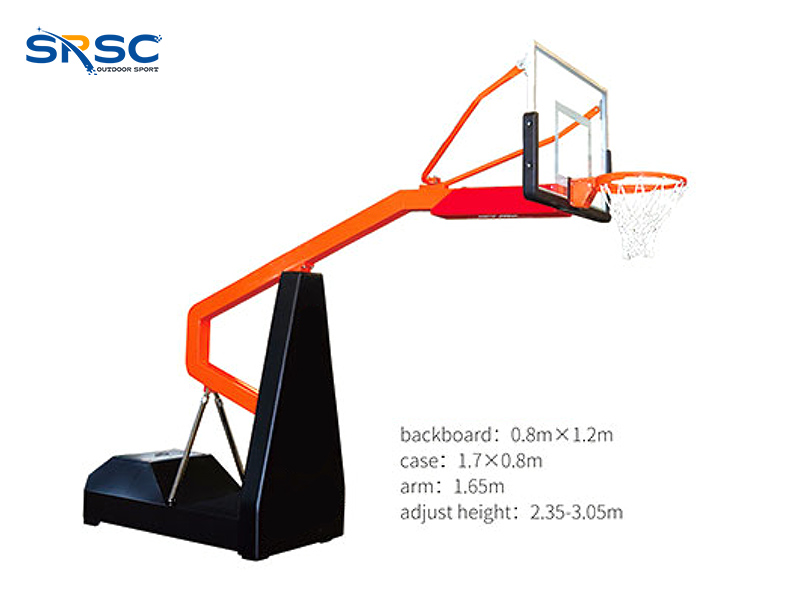
Height-adjustable basketball hoops are an ideal solution for families, schools, and training centers. They allow easy adjustment of the Basketball hoop height, accommodating users from young children to adults within a single setup.
Competition Manual Height-Adjustable Mini Basketball Hoop
The Competition Manual Height-Adjustable Mini Basketball Hoop features a hydraulic adjustment system that allows hoop heights from 2.35 meters to 3.05 meters. This range makes it suitable for both youth and adult players.
Key features include:
- Durable 1200mm x 800mm tempered glass backboard
- FIBA-certified rim for professional feel and safety
- Half-covered protective padding for safety
- Compact base suitable for indoor spaces
- Easy manual adjustment for fast height changes
This hoop is perfect for indoor training, youth games, and multipurpose gymnasiums, providing flexibility for players with varying skill levels.
Competition Electric Height-Adjustable Mini Basketball Hoop
The Competition Electric Height-Adjustable Mini Basketball Hoop offers effortless adjustment through an electric lift system. The height range of 2.35 meters to 3.05 meters accommodates players of all ages and skill levels.
Highlights include:
- Smooth electric height adjustment for fast and easy setup
- FIBA-certified rim and tempered glass backboard for performance and durability
- Compact base ideal for limited indoor spaces
- Safety padding included
Electric adjustment systems are particularly useful in school or gym environments, where multiple players may require different hoop heights throughout the day. Both manual and electric adjustable hoops provide the flexibility needed to meet the needs of diverse players.
Practical Tips for Setting the Ideal Basketball Hoop Height

To maximize performance and safety:
Start Low for Beginners
Begin with a lower height to build confidence and proper technique.
Progress Gradually
Increase height as players develop skill and strength.
Match Drills to Height
Use lower heights for skill development and higher settings for competitive practice.
Ensure Stability and Safety
Always check that the hoop is securely adjusted and that protective padding is in place.
These strategies ensure that players enjoy the game safely while improving their abilities.
Conclusion
Understanding basketball hoop height is critical for maximizing player development, safety, and enjoyment. While competitive leagues use a standard 10-foot hoop, youth and recreational players often benefit from lower or adjustable heights.
Adjustable basketball hoops, such as the Competition Manual and Electric Height-Adjustable Mini Basketball Hoops, provide the flexibility needed to accommodate multiple ages and skill levels. Their durable construction, safety padding, and professional-grade components make them ideal for training centers, schools, and homes. Investing in a quality adjustable basketball hoop ensures players of all ages can train effectively and enjoy the game safely.
FAQ
Q1: What is the official basketball hoop height?
The official hoop height for professional competitions is 10 feet (3.05 meters) from the floor to the rim.
Q2: Can younger players practice on a 10-foot hoop?
It is possible, but younger or beginner players often benefit from lower hoops to develop shooting skills and confidence.
Q3: How does adjustable basketball hoop height help training?
Adjustable hoops allow players to practice at appropriate heights, improving accuracy and technique for different age groups.
Q4: Which adjustable hoop is better, manual or electric?
Both options are excellent. Manual hoops are more affordable, while electric hoops offer faster and smoother adjustments, ideal for schools or gyms.
Q5: Can I use an adjustable hoop indoors?
Yes, adjustable hoops are designed for indoor use, with compact bases and protective padding to ensure safety in limited spaces.