
BLOG
Tennis Court Size in Feet: Official Dimensions & Construction Guide

Recent Articles
Table of Contents
Understanding the correct tennis court size in feet is the first and most critical step when planning a tennis court project. Whether you are building a professional competition court, a school facility, or a private training court, accurate dimensions directly affect playability, safety, surface performance, and long-term durability.
As a professional tennis court system manufacturer, we work closely with contractors, developers, and sports facility owners to design and supply complete court solutions based on precise court dimensions and usage requirements.
What Is the Standard Tennis Court Size in Feet?
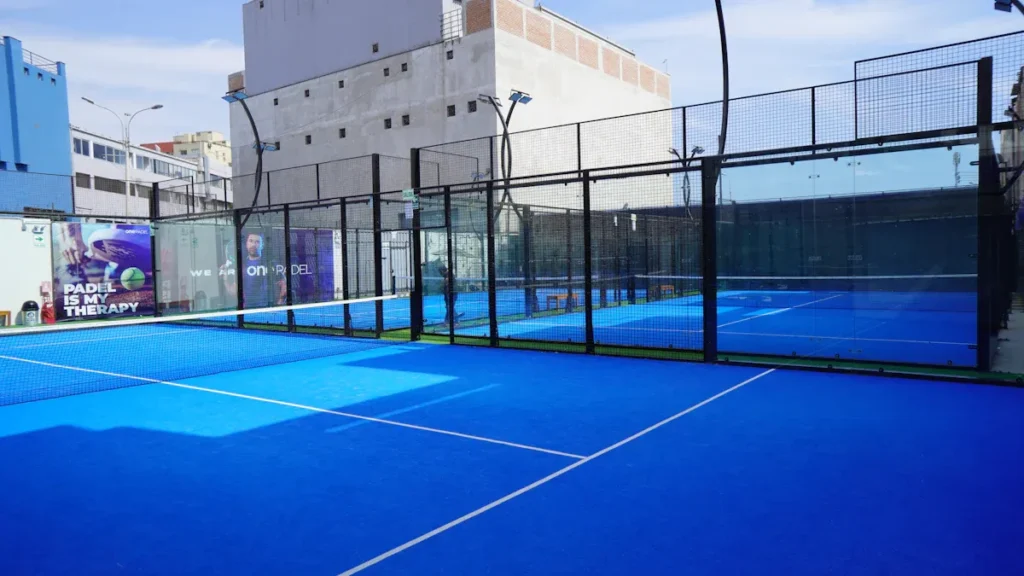
A standard tennis court follows internationally recognized dimensions defined by organizations such as the ITF and USTA. These measurements ensure consistent playing conditions across recreational and professional courts.
A regulation tennis court measures 78 feet in length. The width depends on the type of play:
- Singles court: 27 feet wide
- Doubles court: 36 feet wide
These dimensions refer only to the playing area. Additional space is required around the court for safe movement and professional use.
Tennis Court Size in Feet for Singles and Doubles
Singles Tennis Court Dimensions in Feet
A singles tennis court is designed for one-on-one play. It measures:
- 78 feet long
- 27 feet wide
This layout is commonly used for training courts, schools, and residential installations where space efficiency is important.
Doubles Tennis Court Dimensions in Feet
A doubles court includes extra alleys on both sides:
- 78 feet long
- 36 feet wide
Doubles courts are the standard choice for clubs, academies, and commercial facilities because they support both singles and doubles play.
Full Tennis Court Size in Feet Including Run-Off Area
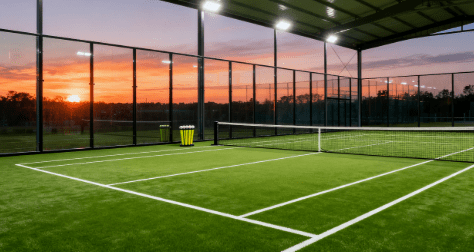
For construction projects, the total space required is larger than the playing area alone. Professional guidelines recommend clear run-off zones around the court to improve safety and player comfort.
Below is a reference table showing typical requirements:
| Court Type | Playing Area (ft) | Recommended Total Area (ft) |
|---|---|---|
| Singles Court | 78 × 27 | 120 × 60 |
| Doubles Court | 78 × 36 | 120 × 60 |
| Professional / Tournament | 78 × 36 | 120 × 66 |
Adequate run-off space is essential for high-level play and is often a requirement for tournaments and club-level facilities.
Minimum Tennis Court Size in Feet for Construction Projects
In space-limited environments, such as residential or urban projects, a full-size layout may not be possible. In these cases, a minimum tennis court size can still provide functional play.
- Reduced run-off areas may be acceptable for practice courts
- Compact courts are commonly used for training and recreational purposes
- Custom sizing should balance space constraints with safety and performance
As a manufacturer, we frequently design custom court systems to match available space while maintaining surface quality and structural integrity.
Indoor vs Outdoor Tennis Court Size in Feet

Indoor Tennis Court Size Requirements
Indoor courts require careful planning beyond floor dimensions:
- Minimum ceiling height for proper ball trajectory
- Space for lighting, ventilation, and structural systems
- Clearance for walls and safety zones
Accurate court sizing ensures that indoor facilities meet both playing and building standards.
Outdoor Tennis Court Size Requirements
Outdoor courts must account for:
- Drainage and slope tolerances
- Fence placement and perimeter access
- Environmental factors such as wind and sunlight
Proper outdoor layout improves surface lifespan and reduces maintenance costs.
Tennis Court Size in Feet for Different Applications
Different projects require different court layouts:
- Schools: Durable surfaces and standard dimensions for student use
- Clubs and academies: Full-size courts with extended run-off areas
- Residential courts: Space-optimized designs for private properties
- Multi-sport facilities: Customized dimensions to support multiple activities
Choosing the right court size ensures the facility meets its intended purpose efficiently.
How Tennis Court Size in Feet Affects Surface and Material Selection
Court dimensions directly influence material selection and system design:
- Larger courts require higher material volume and structural support
- Surface systems must match usage intensity and court size
- Proper material planning reduces waste and long-term maintenance
Manufacturer-designed systems ensure that every layer—from base construction to surface coating—is optimized for the exact court size.
Manufacturer’s Guide to Designing a Tennis Court by Size

Designing a tennis court is not just about measurements. It requires:
- Accurate site evaluation based on court dimensions
- Compliance with international standards
- Customized surface and structural solutions
- Integration of fencing, lighting, and drainage systems
Working directly with a manufacturer allows you to achieve better quality control, precise customization, and long-term reliability.
Why Choosing the Right Manufacturer Matters for Tennis Court Construction
Selecting the right manufacturer is critical to project success:
- Consistent material quality across the entire court
- Cost efficiency through optimized system design
- Technical support from design to installation
- Custom solutions based on court size and application
A professionally manufactured tennis court system delivers better performance, durability, and value over time.
Conclusion
Understanding the correct tennis court size in feet is the foundation of building a safe, professional, and long-lasting tennis court. From standard dimensions to custom layouts, every project benefits from precise planning and high-quality materials.
As an experienced tennis court system manufacturer, we provide complete solutions tailored to your court size, usage requirements, and project goals. Whether you are developing a commercial facility, school court, or private installation, our team is ready to help you design and build a tennis court that meets international standards and delivers lasting performance.
Contact us today for expert consultation and customized tennis court solutions.
FAQ
What is the standard tennis court size in feet?
A standard tennis court is 78 feet long. The width is 27 feet for singles play and 36 feet for doubles play.
How much space is needed for a full tennis court in feet?
Including recommended run-off areas, a full tennis court typically requires about 120 feet by 60 feet for safe and comfortable play.
Is the tennis court size in feet different for indoor and outdoor courts?
The playing area remains the same, but indoor courts require additional clearance for ceiling height, while outdoor courts need space for fencing and drainage.
What is the minimum tennis court size in feet for residential use?
For residential or training courts, the minimum size may be reduced, but the playing area should still follow standard dimensions to maintain proper playability.
Does tennis court size in feet affect surface material requirements?
Yes. Court size directly impacts the amount of materials needed and the surface system design, which is why accurate measurements are essential during planning.
Need Help Planning the Right Tennis Court Size?
If you’re unsure which tennis court size or layout best fits your project, our experts are here to help. As a professional tennis court system manufacturer, we provide tailored solutions based on your space, usage, and performance requirements. Contact us today for a personalized consultation and ensure your tennis court meets international standards for safety, durability, and playability. Don’t leave your project to guesswork—get in touch now and build your court with confidence!