
BLOG
Why Indoor Padel Courts Are Trending — and How They Can Boost Club Revenue
Recent Articles
Imagine walking into a modern sports club on a rainy weekday evening. Outside, the weather is dreary, but inside, the bright lights of a sleek indoor padel court reveal groups of players engaged in animated rallies. Families, young professionals, and dedicated athletes share laughter, competitive energy, and the rhythmic sound of ball against string. The environment is warm, inviting, and vibrant — entirely insulated from the weather outside. This scene is becoming increasingly common around the world as indoor padel courts surge in popularity.
The appeal isn’t just atmospheric. Data from the global governing bodies indicate that padel has quickly scaled from a niche pastime to a global phenomenon. As of 2025, the number of padel clubs worldwide surpassed 23,000, with more than 70,000 padel courts globally.
For club owners, real‑estate developers, sports entrepreneurs, or fitness‑center operators, understanding why indoor padel courts are booming — and how to build or convert a facility for maximum appeal and profitability — has never been more relevant. In this article we explore the main drivers of padel’s growth, show how indoor courts transform that growth into stable revenue streams, and outline what it takes to build and operate a top‑tier indoor facility in today’s market.
Table of Contents
Key Takeaways
- Why indoor padel courts are gaining popularity globally
- How indoor courts can significantly boost club revenue
- Key design, construction, and operational considerations for high-quality courts
- Comparative advantages of indoor vs outdoor padel courts
- Market data, ROI potential, and real-world growth statistics
- Challenges and risks to watch out for — and how to mitigate them
- Strategic recommendations and a step-by-step mindset for building or upgrading a facility
- Expert insights and projections for the medium-term future of padel
Why Padel Is Exploding — The Global Growth Story

From Regional Sport to Global Phenomenon
Over the last decade, padel has transformed dramatically. According to the latest data from the global federation, there are now more than 70,000 padel courts worldwide under over 23,000 clubs.
The player base has grown from under 8 million in 2018 to an estimated 30 million worldwide as of 2024–2025.
The number of countries where padel is played has also expanded rapidly — from about 50–60 countries several years ago to 130+ countries today.
This massive growth reflects a global shift — padel is no longer limited to Spain and Latin America. It’s gaining traction across Europe, Asia, North America, the Middle East, and beyond.
Recent Growth Surge — Courts & Clubs Rising Sharply
According to the 2025 report from booking platform Playtomic (in partnership with consulting firm Strategy&), 2024 alone saw over 3,282 new padel clubs open worldwide — that’s nearly 9 new clubs per day.
In the same year, more than 7,187 new courts were built globally, representing a 17% growth in total court count, pushing the global number well past 50,000.
Based on growth projections and current momentum, analysts expect the total number of padel courts to exceed 80,000 by 2027.
This rapid infrastructure growth indicates strong demand and suggests that padel is becoming a mainstream sport — not just a passing trend.
Demographics & Who Plays: Broad Appeal
The padel community is notably diverse. According to global data:
- Nearly 40% of players are female. Padel Business Magazine+1
- Players span a wide age range — while many are adults aged 26–50, there’s growing participation among younger and older demographics alike. Padel.fyi+1
- Padel’s social, accessible, doubles‑oriented format makes it appealing for friends, couples, families, and mixed‑gender or mixed‑age groups. This lowers the entry barrier compared to sports that demand higher athleticism or long-term commitment (e.g. competitive tennis).
In essence: padel’s global growth isn’t just about numbers. It’s about inclusivity, accessibility, and social appeal — key traits that make indoor padel courts a highly attractive business proposition.
Why Indoor Courts Make a Difference — Core Advantages
Weather‑Proof, Year-Round Playability
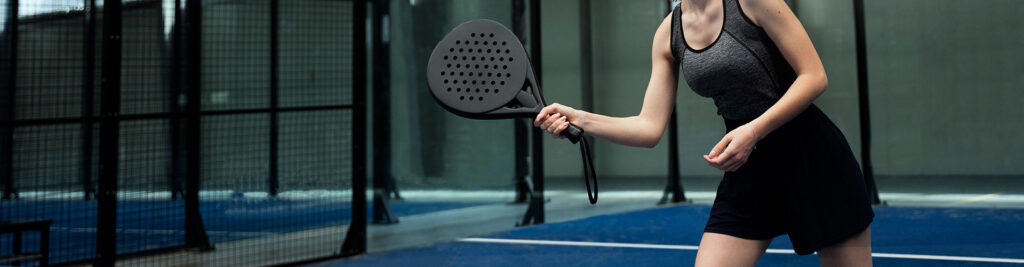
Outdoor padel courts — like any outdoor sports facilities — are subject to weather constraints. Rain, strong wind, excessive heat or cold can force cancellations or discourage players.
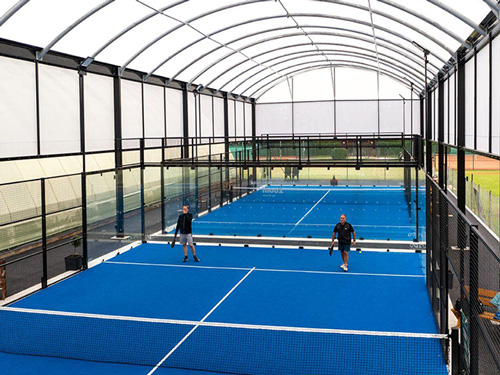
Indoor padel courts, in contrast, operate in a controlled environment — no more cancellations due to weather, no dependence on season or daylight, and players can enjoy stable conditions year-round.
This consistency is a major draw for regular players, casual enthusiasts, and club operators alike. For players, it means reliability and convenience. For clubs, it means higher utilization rates and more predictable revenue.
Consistent Quality and Enhanced Experience
Indoor facilities afford control over many environmental factors: flooring, lighting, temperature, ventilation, and acoustics. This translates to a consistently high-quality experience for players.
- Choosing the right flooring and surface material can manage game pace, ball bounce, and joint impact, catering to both recreational players and competitive matches.
- Proper lighting systems (e.g. LED, glare-free) ensure visibility and safety for day or night play.
- Ventilation and climate control keep air quality and temperature stable — especially important in extreme climates or regions with hot summers / cold winters.
Such features not only improve user satisfaction, but also reduce injuries and extend playable hours — enhancing the facility’s value.
Extended Operating Hours & Diverse Revenue Streams
Indoor padel courts enable clubs to operate beyond daylight hours — evenings, early mornings, weekends, off-season. That flexibility unlocks multiple revenue possibilities:
- Hourly court rentals / pay-per-use for casual players.
- Memberships or subscription-based plans for regular users.
- Coaching sessions, group lessons, youth programs, beginner clinics.
- Hosting tournaments, corporate events, social gatherings, team-building.
- Supplementary services: equipment rental, refreshments / café / lounge, merchandise, social zones.
By leveraging different types of user demand — from casual weekend players to serious competitors — indoor facilities can maximize utilization and diversify income, reducing reliance on any single source.
How Indoor Courts Translate to Club Revenue — Business Models & Economics
Membership & Subscription Models
Membership plans (monthly, quarterly, yearly) remain a cornerstone. For players who want regular access, paying a subscription offers value and convenience.
Clubs can further add tiers — e.g. “premium membership” with guaranteed court availability, discounted lessons, access to social zones or events — creating differentiated pricing structures to cater to various segments (casual players, frequent players, families, corporate groups).
Hourly Rentals, Pay‑Per‑Use & Drop‑In Players
Not everyone wants a long-term commitment. For those who play occasionally — e.g. on weekends or during vacations — hourly rentals offer flexibility.
Indoor courts’ predictable availability and comfort make pay-per-use attractive. Clubs can benefit from spontaneous bookings, possibly during off-peak hours, or from visitors and travelers looking for a quick game.
Coaching, Lessons & Training Programs
Offering private coaching, group lessons, beginner courses, children’s classes — these add educational value, attract new players, and foster community.
For more advanced players, clubs can provide tactical training, league coaching, or high-performance sessions, appealing to competitive or fitness-oriented audiences.
Events, Tournaments & Corporate / Social Activities
Indoor padel courts are ideal venues for tournaments (friendly or competitive), corporate team-building, social gatherings, or special events (e.g. birthday parties, company outings).
These events often generate additional revenue beyond court rentals — e.g. registration fees, coaching fees, catering, equipment rental, merchandise — and help raise club visibility and community engagement.
Long-Term Value & Asset Appreciation
Given the global growth trend, padel infrastructure — especially indoor courts — is increasingly a valuable asset.
As demand continues to rise and supply remains constrained, early‑mover clubs or investors may enjoy asset appreciation, steady cash flow, and competitive positioning. For many, an indoor padel facility represents not just a recreation center, but a long-term investment with growth potential.
Market analysts project that the core padel industry (courts, clubs, services) will evolve into a multi‑billion‑dollar market by 2030, especially if courts continue expanding at the current pace.
Designing a High‑Quality Indoor Padel Court — What Matters
Court Flooring & Surface Choices
Artificial Turf (Synthetic Grass) — Cushion, Comfort, & Accessibility
- Synthetic turf is widely favored for padel because it provides cushioning and reduces joint stress, making it ideal for recreational players, beginners, or long sessions.
- With sand infill (or other infill materials), turf-based courts offer adjustable friction and ball speed — enabling clubs to tailor the playing surface to different player levels (beginners vs. advanced).
- Turf courts tend to be more forgiving on knees and joints, increasing accessibility and broadening the potential user base.
Hard Court / Acrylic Surfaces — Speed and Competitive Feel
- Hard courts or acrylic surfaces offer faster ball bounce and consistent play behavior, appealing to competitive or advanced players.
- The faster pace and consistency of bounce replicate more professional-level play, suitable for leagues, tournaments, or high-level training.
- However, hard surfaces are less forgiving on joints, and may require better shock absorption and maintenance.
Lighting, Ceiling Height & Ventilation Systems
Indoor padel courts demand thoughtful lighting design — uniform, glare-free, and bright enough for fast-paced rallies. LED lighting systems are popular because they are energy-efficient, stable in brightness, and can minimize shadows and glare.
Ceiling height is also critical — ideally, at least 6–7 meters of net clearance to accommodate high lobs and avoid interference.
Ventilation, air circulation, and temperature control (especially in regions with extreme weather) are necessary for comfort and hygiene, but also important for maintaining court materials (e.g. turf, surface coatings) and structural integrity (humidity, mold prevention, air quality).
Layout, Ancillary Facilities & User Experience
Beyond the court itself, modern indoor padel facilities often include:
- Observation / spectator areas (for tournaments or social matches)
- Locker rooms, showers, restrooms
- Lounge / café / social zones — encouraging socializing and longer stays
- Equipment rental / retail zone — rackets, balls, apparel, accessories
- Multi-use space — for fitness, stretching, yoga, events, or other sports
Such extra features significantly improve user experience, encourage repeat visits, and create additional revenue streams beyond just court rentals.
Safety, Accessibility, Multi‑Use Design
Safety is non-negotiable: non-slip floors; impact-absorbing surfaces; glass or mesh walls installed with regulation-compliant safety materials; good lighting; clear lines of sight; proper entry and exit; emergency protocols.
Designing courts for multi-use flexibility (e.g. convertible lines for tennis/badminton, removable nets, convertible configurations) increases utilization — especially valuable in areas where padel demand is still growing or uncertain.
Indoor vs Outdoor Padel Courts: Pros & Cons
| Feature | Indoor Padel Court | Outdoor Padel Court |
|---|---|---|
| Weather dependency | Weather‑proof — all-weather play possible | Weather‑dependent — rain, wind, sun, seasonality affect use |
| Availability / utilization | Year‑round, including nights and off-season | Seasonal, weather‑dependent, limited hours |
| Maintenance & upkeep | Protected from natural elements — easier maintenance | Exposed — needs frequent upkeep (cleaning, weather damage, surface wear) |
| Player comfort & consistency | Stable environment (light, temperature, surface) — better experience | Varies with weather, season, time of day |
| Initial setup cost | Higher — structure, roof, lighting, ventilation, permits | Lower — simpler court build, fencing, minimal infrastructure |
| Revenue potential | Higher — stable, diversified income across memberships, rentals, lessons, events | More variable — weather and seasons impact demand |
| Flexibility & multi-use | Easier to design multi-sport / multi-function facility | Mostly single‑purpose, less adaptable |
Bottom line: For clubs, investors, or entrepreneurs aiming for year‑round stability, high utilization, diversified income, and quality user experience, indoor padel courts offer clear strategic advantages. Outdoor courts may still make sense in regions with mild climates and low construction budgets, but indoor facilities provide more consistent returns and scale potential — especially in growing markets.
Market Data & ROI Projections — What the Numbers Show
Market Size, Growth Projections & Infrastructure Demand
- As mentioned, over 70,000 padel courts now exist globally under roughly 23,000 clubs — with growth accelerating.
- 2024 saw over 7,000 new courts added worldwide and more than 3,000 new clubs launched.
- Analysts forecast over 80,000 courts by 2027, reflecting strong demand for new facilities.
- Given increasing adoption (players, clubs, leagues, coaching demand), the value of the broader padel industry — including facilities, coaching, events, equipment — is estimated to rise into multi‑billion dollar territory in the next few years.
Utilization & Demand Patterns
- Many padel players are returning regularly: in some estimates, a significant share play at least once per week — indicating a sticky user base with recurring demand.
- Peak demand tends to concentrate in evenings, weekends, or after-work hours — ideal for indoor courts that can operate beyond daylight.
- As padel spreads into new markets (North America, Asia, Middle East), initial demand often outpaces supply, offering early investors a chance to capture loyal user bases and establish brand presence.
Sample ROI Scenario — What a New Indoor Padel Facility Could Yield
Consider a hypothetical new indoor padel center with 4–6 courts, designed with good flooring, lighting, ventilation, and amenities, located in a medium-to-large city with moderate demand:
- Revenue sources: membership/subscriptions, hourly rentals, coaching/lessons, events/tournaments, social zone revenue (drinks, snacks, rentals), merchandise.
- Assuming moderate utilization (e.g. 50–60% court occupancy over weeks, higher on weekends), and diversified revenue streams, breakeven may be achievable within 5–7 years — depending on initial investment, operating costs, and local demand.
- With increasing awareness and demand for padel, long-term cash flows can remain stable, and facility value may appreciate, especially if padel continues to expand in the region.
Given the global growth trajectory and medium-term demand forecasts, many analysts view indoor padel facilities as a high-potential investment — especially in regions where padel is still emerging and indoor infrastructure is scarce.
Challenges and Risks — What to Watch Out For
High Initial Investment and Infrastructure Requirements
Building an indoor padel facility is not trivial. Costs typically include:
- Structural construction: roof, walls (often glass or mesh), foundation
- Flooring / surface installation (turf or hard court), with proper underlay and shock absorption
- Lighting system (LED or similar), ventilation / HVAC, climate control, drainage
- Safety installations (glass walls, netting, entry/exit, non-slip surfaces)
- Ancillary facilities: locker rooms, showers, restrooms, lounge / social areas, equipment storage, reception / booking desk — all add to cost
For many operators, securing a suitable indoor space (warehouse, repurposed building, or new construction) can be challenging, especially in urban areas with high real estate prices or restrictive zoning regulations.
Operational and Maintenance Costs
Once built, indoor courts require ongoing maintenance and operating expenses: lighting (electricity), HVAC / ventilation, cleaning, surface maintenance (e.g. turf refresh, re-sanding, hard court recoating), safety inspections.
If utilization is lower than expected, or demand drops (e.g. seasonal swings, economic downturns), these fixed costs can erode profitability.
Market Saturation and Competitive Pressure in Some Regions
In regions where padel has exploded, supply may catch up with — or even outpace — demand. Overbuilding can lead to underused courts, lower occupancy, and aggressive price competition.
As one club builder in Europe shared (on a public forum):
“The number of courts has consistently doubled every year for the last 5 years or so.”
But they also mentioned:
“Finding a site is still the hardest part of the whole process.”
This suggests that while growth is strong, there is increasing competition for good locations — and the quality of design, location, services, and community matters more than ever.
Management and Operational Complexity
Running a successful indoor padel club requires more than just building courts. You need:
- A robust booking system (digital / online) to manage memberships, rentals, lessons, events
- Skilled staff: reception, maintenance, cleaning, coaching / trainers
- Effective scheduling to balance rentals, private lessons, member play, events, tournaments
- Customer service, community-building, marketing, promotions — especially in the early years
- Compliance with safety, insurance, building codes — which may differ across regions
For first-time operators, this can be demanding; underestimating the operational load can lead to poor utilization or unsatisfactory user experience.
Strategic Recommendations for Building & Operating an Indoor Padel Facility
Conduct Thorough Market and Feasibility Research First
- Study local demographics: population density, income levels, interest in racket sports, age distribution, leisure habits
- Evaluate competition: how many padel or racket‑sport facilities already exist; their utilization rates; whether they are indoor or outdoor; pricing; membership models
- Assess property costs: rental or purchase costs for suitable indoor spaces (warehouses, unused large buildings, etc.); zoning regulations; access (parking, public transport), visibility, surrounding neighborhood
- Build a detailed business plan: projected investments (construction, equipment, permits), operating costs (utilities, staffing, maintenance), revenue streams (memberships, rentals, lessons, events), utilization estimates, cash flow projection, ROI timeframe
Design for Flexibility and Multi‑Use
- Consider building courts that can be adapted for multiple sports (padel, tennis, badminton, indoor soccer, fitness classes) — increasing utilization potential and reducing risk in case padel demand slows
- Add social / leisure areas: lounge / café / bar / snack area / benches / observation space — to encourage longer stays and social play (which tends to build community and retention)
- Include amenities: locker rooms, showers, equipment storage, rental — improving comfort and attracting a broader customer base (e.g. working professionals, social players, families)
Implement a Robust Booking & Membership System
- Use an online booking platform or app to manage court reservations, payments, cancellations, member management, availability calendar — making it easy for users to book and pay, and for club to manage capacity and utilization
- Offer a mix of membership plans, hourly rentals, coaching packages, event/tournament bookings — catering to different types of users (frequent, occasional, social, competitive)
- Incorporate dynamic pricing — peak vs off-peak hours, weekend vs weekday, peak season vs off-season — to maximize usage and revenue
Invest in Quality Infrastructure & Maintenance
- Use high‑quality materials for flooring, surfaces, walls, lighting, ventilation — which durable installations reduce long-term maintenance cost and improve user experience
- Schedule regular maintenance: surface maintenance, cleaning, safety inspections, HVAC service — prevent downtimes and prolong facility life
- Ensure safety and compliance — non-slip flooring, proper wall/glass installation, good ventilation, emergency protocols — to build reputation and trust
Build Community & Offer Value-Added Services
- Offer beginner classes, group lessons, youth programs, social events, tournaments, corporate events — to attract a broad user base and foster community
- Host social gatherings, club events, leagues — encourage regular participation and loyalty
- Sell or rent equipment, merchandise, drinks/snacks — add auxiliary revenue streams beyond just court use
Future Outlook & Industry Trends — Why Now Is a Strategic Moment

Continued Expansion and Globalization
The 2025 global data and industry forecasts suggest padel is still in a high-growth phase. Many regions — including North America, Asia, Middle East — are still under‑supplied when it comes to indoor padel infrastructure.
Analysts predict courts could exceed 80,000–100,000 worldwide by 2027–2030 if current growth rates hold.
For early adopters in emerging markets, this represents a strategic window of opportunity — investing now could offer competitive advantage and long-term returns before saturation occurs.
Growing Demand for Indoor, All‑Season & Social Sports
As urbanization increases and lifestyles accelerate, many players — especially working professionals — look for convenient, accessible, and social ways to stay active. Indoor padel courts meet these demands:
- Indoor courts are less affected by weather and seasons, offering consistency.
- Padel’s social, doubles‑based format makes it attractive for friends, families, coworkers, and casual groups.
- With proper amenities (social zones, lounge, events), padel facilities can become community hubs — combining sport, socializing, and recreation.
This lifestyle-driven demand is likely to support padel’s long-term growth, especially in urban and suburban centers.
Maturation of Padel as a Structured, Professional Sport & Market
Padel is gradually shifting from grassroots, informal play to a more structured global sport — with organized clubs, booking platforms, regular leagues, coaching certifications, and international competitions.
With this maturation comes increased investor interest, more professional management, and improved infrastructure — making indoor padel clubs more viable and potentially profitable as long-term businesses.
Conclusion
Indoor padel courts are not simply a fad or short-term trend — they represent a strategic opportunity for sports entrepreneurs, club owners, investors, and facility operators.
With global participation in padel at tens of millions, rapid infrastructure expansion, and rising demand for accessible, social, and indoor sports options — now is a critical moment for those considering building or investing in indoor padel facilities.
Compared to outdoor courts, indoor facilities offer weather‑proof, year‑round accessibility, higher utilization potential, diverse revenue streams, and better player experience. With proper planning, quality construction, smart management, and community-driven services, an indoor padel club can be both a profitable business and a long-term asset.
That said, success depends on thoughtful execution: from site selection and market research, to facility design, operational management, and service offerings. For entrepreneurs and investors ready to commit to quality and community building — indoor padel courts could be among the most promising opportunities in the contemporary sports and recreation market.
FAQ
What makes indoor padel courts a better investment than outdoor ones?
Indoor courts offer year-round access without weather interruption, enable night-time and off-season play, provide a controlled and comfortable environment, and support diversified revenue streams (rentals, memberships, coaching, events). This stability and flexibility make them more attractive for long-term operations.
How large is the global padel market, and is demand still growing?
According to 2025 data, padel has over 30 million players, more than 23,000 clubs, and over 70,000 courts worldwide. Global court and club numbers are rising fast — in 2024 alone, over 7,000 new courts and 3,282 new clubs were added. Projections expect 80,000+ courts by 2027.
What are the main costs involved in building an indoor padel facility?
Significant costs include structural construction (roof, walls), court surfacing (turf or hard court), safety installations (glass or mesh walls), lighting, ventilation / HVAC systems, drainage, and ancillary facilities (locker rooms, restrooms, lounge, equipment storage). Operational costs also include utilities, maintenance, cleaning, staff, and marketing.
How can clubs maximize utilization and revenue from indoor courts?
By offering a mix of services and flexible access: memberships, hourly rentals, coaching/training, social events, corporate rentals, weekend leagues, pay-per-use, and by creating a welcoming facility with amenities (social zone, café, equipment rental). Online booking systems and dynamic pricing (peak vs off-peak) can also optimize scheduling and revenue.
Are there risks of over‑building or market saturation?
Yes — in regions where padel is booming rapidly, supply of courts may outpace demand, leading to underutilization or competition. To mitigate this, clubs should conduct market research before investing, differentiate through quality and services, and design facilities with flexibility for multi-sport or multi-purpose use.
Is padel just a trend, or is it here to stay?
Current global data, infrastructure growth, expanding demographics, and movement toward organized club systems suggest padel is more than a trend. With increasing popularity across different age groups and regions — especially outside traditional strongholds — and with structured growth models, padel appears well-positioned for long-term success and mainstream acceptance.