
مدونة
Best LED Padel Court Lighting Systems
المقالات الأخيرة
مقدمة
Lighting is one of the most critical elements in creating an exceptional padel court experience. The right LED lighting not only enhances visibility and safety but also boosts energy efficiency, reduces long-term costs, and improves player performance. In this guide, we will cover:
- Definition and purpose of padel court lighting
- Benefits of LED over traditional lighting systems
- Detailed comparison of lighting types, lux levels, and coverage
- Installation, positioning, and maintenance guidelines
- Cost, ROI, and energy savings analysis
- Case studies and real-world applications
- Latest trends and technological innovations
- Comprehensive FAQ addressing player and facility questions
This comprehensive guide is designed to help anyone—from facility managers to private court owners—make informed decisions about LED padel court lighting systems. By considering technical specifications, environmental factors, and user needs, you can ensure your courts provide optimal lighting and safety for years to come.
جدول المحتويات
What is Padel Court Lighting?
Definition of Padel Court Lighting
Padel court lighting is a specialized lighting system designed to illuminate a padel court uniformly for day and night use. Proper lighting ensures consistent visibility for players, referees, and spectators, enhancing performance, safety, and overall court aesthetics.
Importance of Proper Lighting
Lighting affects visibility, depth perception, and player reaction times. Without sufficient illumination, players risk eye strain, accidents, and reduced accuracy during fast-paced games. Adequate lighting also improves the spectator experience and is essential for broadcasting matches.
Standards for Padel Court Lighting
According to the International Padel Federation (FIP), recreational padel courts should maintain an average illuminance of 300–500 lux, while professional match courts should achieve 500–750 lux to meet competitive standards. Compliance with these standards ensures fairness, safety, and optimal performance.
Regulatory and Industry Guidelines
Apart from FIP standards, facility owners should refer to national and local electrical safety codes, including proper grounding, wiring, and environmental compliance. These guidelines ensure safety, reduce liability, and improve operational efficiency.
Advantages of LED Padel Court Lighting
Energy Efficiency
LED lights consume 50–70% less electricity than traditional halogen or metal halide lights. Over time, this reduction significantly lowers operational costs and contributes to sustainable energy use.
Longevity and Durability
High-quality LED fixtures can last 50,000–100,000 hours, far exceeding the lifespan of conventional lighting. This longevity reduces maintenance frequency and replacement costs.
Enhanced Light Quality
LEDs provide uniform brightness and consistent color temperature, eliminating shadows and glare. This improved visual clarity reduces player fatigue and enhances accuracy, especially during evening matches.
Weather Resistance and Safety
Outdoor LED systems are typically rated IP65 or higher, protecting them against rain, dust, and extreme temperatures. LEDs emit minimal heat, reducing the risk of burns and making them safer for installation and handling.
Environmental Impact
LED lighting reduces carbon emissions compared to conventional lighting, offering a greener solution for facilities committed to sustainability. Many LED systems are also recyclable, further minimizing environmental impact.
Reduced Heat Output
Traditional lights often increase surrounding temperatures, affecting player comfort and court surface conditions. LED systems maintain low heat output, improving the playing environment.
Key Features to Consider
Brightness (Lux) Levels
Optimal lux levels depend on court use:
- Recreational play: 300–500 lux
- Training sessions: 500–600 lux
- Professional matches: 700–750 lux Adjustable fixtures allow facilities to customize brightness according to events or time of day.
Beam Angle and Coverage
LED fixtures offer a wide range of beam angles (10°–120°). Correct positioning ensures even light distribution, reduces shadows, and prevents glare, allowing players to track fast-moving balls effectively.
Color Temperature
Ideal color temperatures range between 4000–5000K, providing neutral white light that replicates daylight. This enhances visual comfort and reduces eye strain during prolonged play.
Smart Controls and Dimming
Modern LED systems can include programmable controls, allowing scheduling, dimming for practice sessions, and integration with motion sensors. Smart controls optimize energy use and provide flexibility for varying lighting needs.
Fixture Material and Design
Durable materials like aluminum or powder-coated steel ensure long-term performance. Fixtures with anti-glare optics and directional reflectors improve light distribution and player experience.
Environmental and Safety Compliance
High-quality LED systems comply with international safety standards (IEC, CE) and environmental regulations, reducing operational risks and ensuring sustainability.
Comparison: LED vs Traditional Lighting
| ميزة | LED Lighting | Halogen/Metal Halide Lighting |
|---|---|---|
| Energy Consumption | 50–70% less | High energy consumption |
| عمر | 50,000–100,000 hours | 5,000–10,000 hours |
| صيانة | Minimal | Frequent replacement required |
| Light Uniformity | Excellent | Uneven, glare-prone |
| Heat Emission | قليل | عالي |
| Initial Cost | Higher upfront | Lower initial investment |
| Environmental Impact | Low carbon, recyclable | Higher carbon, non-recyclable |
Insight: Though LEDs require a higher initial investment, their efficiency, durability, and long-term cost savings make them the superior choice.
Installation Guidelines

Correct Mounting Height
LED lights should generally be mounted at 6–8 meters for standard padel courts. This height allows optimal coverage and minimizes shadows.
Placement and Positioning
Install lights along sidelines or at court corners. Avoid placing lights directly in players’ line of sight to reduce glare and discomfort.
Wiring and Safety Standards
Installations should follow local electrical codes, with proper grounding, surge protection, and circuit breakers. This prevents accidents and ensures reliable operation.
Professional Installation vs DIY
Professional installation ensures correct alignment, electrical safety, and uniform illumination. DIY installation may save initial costs but increases the risk of uneven lighting, glare, and electrical hazards.
Maintenance Access
Ensure lights are mounted in a manner that allows easy access for maintenance or bulb replacement, reducing downtime.
Maintenance and Upkeep
Cleaning Fixtures
Dust and debris reduce LED efficiency. Clean light covers every 3–6 months with a soft cloth and mild cleaning agent to maintain optimal brightness.
Inspect Electrical Components
Regularly check wiring, connectors, and fixture integrity to prevent electrical failures or reduced performance.
Replace Damaged Units
Even with long lifespan, occasional replacement of broken or malfunctioning fixtures may be necessary to maintain uniform court illumination.
Monitoring Software
Smart LED systems may include apps to monitor energy consumption, detect failures, and provide maintenance alerts.
Preventive Maintenance Schedule
Implement a regular preventive maintenance schedule including inspections, cleaning, and performance checks to extend fixture life and optimize energy use.
Cost and ROI Analysis
Initial Investment
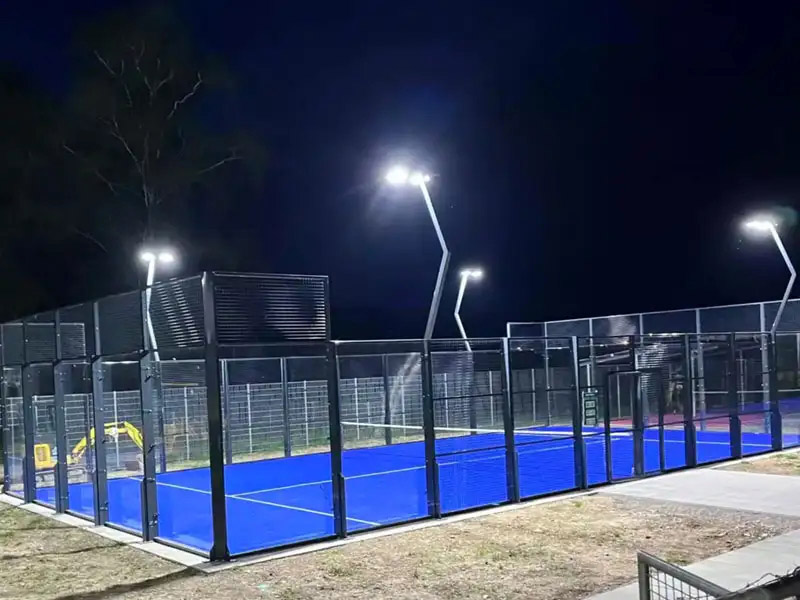
High-quality LED padel court lighting systems range from $3,000–$10,000 per court, depending on fixture quality, coverage, and brand.
Energy and Maintenance Savings
LED systems consume 50–70% less energy than traditional lighting and reduce maintenance frequency, resulting in long-term operational savings.
ROI Timeline
Most padel facilities recover investment in 3–5 years through reduced electricity bills and minimal maintenance requirements.
Case Study: Professional Facility
A Madrid-based padel club replaced metal halide lights with LED systems. Annual energy costs dropped by 65%, and player complaints about glare decreased by 90%.
Cost-Benefit Comparison
When factoring in lifespan, energy savings, and maintenance reduction, LEDs are often 30–40% more cost-effective over a 10-year period compared to traditional lighting.
Real-World Examples and Case Studies
Example 1: Indoor Padel Club
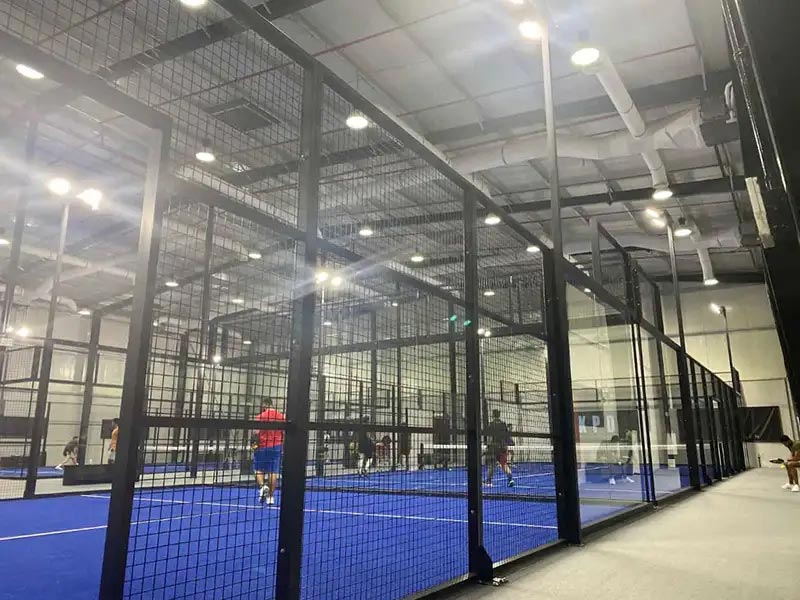
A 4-court indoor facility installed LED panels averaging 500 lux. Players reported improved visibility during evening sessions, and annual electricity bills decreased by $2,500.
Example 2: Outdoor Professional Court
A Spanish professional padel tournament replaced old lighting with IP65-rated LEDs, providing uniform 750 lux for matches. The system improved broadcast quality and reduced maintenance frequency.
Example 3: Multi-Purpose Recreational Court
A community center installed dimmable LEDs, allowing lower lux for casual play and higher lux for tournaments. Energy consumption dropped by 60%, and users praised improved visual comfort.
Example 4: University Padel Facility
LED fixtures installed across 6 university courts allowed scheduling via smart apps. Energy usage decreased by 55%, and students reported enhanced gameplay due to uniform lighting.
Example 5: International Tournament Venue
LED system installed in Portugal provided 800 lux for televised matches. The system complied with FIP guidelines and offered programmable lighting zones for different match scenarios.
Latest Trends in Padel Court Lighting
Smart Lighting Integration
IoT-enabled LEDs allow remote control, scheduling, and real-time monitoring, enhancing operational efficiency and convenience.
Solar-Powered LED Systems
Solar-powered fixtures reduce energy costs, enhance sustainability, and are ideal for outdoor courts in sunny regions.
Dynamic Lighting for Spectators
Advanced systems adjust brightness and color temperature to enhance viewing experiences during tournaments.
Adaptive Lighting for Player Training
Some modern systems include adaptive lighting zones to mimic game situations and improve training performance.
LED Technology Innovation
Ongoing research into high-lumen LED chips, low-glare optics, and modular fixture design is improving energy efficiency and player experience.
خاتمة
Investing in the best LED padel court lighting systems enhances player experience, improves safety, and offers substantial long-term savings. Consider brightness, coverage, weather resistance, smart controls, and compliance with safety standards when choosing your system. Proper installation, regular maintenance, and adoption of the latest technologies ensure your padel courts remain bright, efficient, and future-proof for years to come. By understanding standards, case studies, and emerging trends, facility owners can optimize lighting for both recreational and professional padel environments, creating safer and more enjoyable experiences for all users.
التعليمات
How many lux are recommended for a professional padel court?
Professional matches require 700–750 lux for optimal visibility and broadcast quality.
Can LED lighting handle outdoor rain and dust?
Yes, IP65 or higher-rated fixtures are designed to withstand rain, dust, and other environmental challenges.
Are LED systems expensive compared to halogen lights?
Initial costs are higher, but LEDs save energy and maintenance costs, providing better ROI long-term.
How long do LED padel court lights last?
Most high-quality LEDs last 50,000–100,000 hours, equivalent to over 10 years of regular usage.
Can LEDs be dimmed or remotely controlled?
Yes, smart LED systems allow dimming, scheduling, and remote operation for energy efficiency and flexibility.
What color temperature is best?
Neutral white light (4000–5000K) reduces eye strain and provides natural visibility.
How should lights be positioned to avoid glare?
Install lights along sidelines or court corners, avoiding direct line of sight to players’ eyes, and use anti-glare optics.
How can energy efficiency be maximized?
Use dimming, motion sensors, and scheduling features to reduce power consumption when courts are not in use.
What maintenance is required for LED padel court lights?
Regular cleaning, inspections, and occasional replacement of damaged fixtures are recommended.