
مدونة
Judo Mats Thickness Explained: Complete Guide to Choosing the Right Judo Mats for Safety and Performance
المقالات الأخيرة
جدول المحتويات
مقدمة
In combat sports such as judo, jiu-jitsu, and wrestling, the training surface is not just a passive floor—it is a critical safety engineering system that directly influences injury rates, performance stability, and athlete longevity.
Industry safety research in martial arts facilities shows that over 60% of training-related joint injuries are linked to improper mat thickness or low-density flooring systems. This makes Judo Mats thickness one of the most important purchasing and facility design decisions.
Modern حصائر الجودو are engineered using multi-layer foam systems designed to balance:
- Impact absorption
- Energy dispersion
- Surface stability
- Slip resistance
A properly selected mat thickness can reduce impact force transmission by up to 70% depending on foam density and compression structure, according to sports flooring engineering data.
This guide expands beyond basic selection principles into engineering design, safety standards, real-world dojo deployment, and industrial benchmarking.
Engineering Science Behind Judo Mats Thickness Explained

Concept: Energy Absorption and Force Distribution Mechanism
When an athlete performs a throw or fall, kinetic energy is transferred into the mat surface. The role of حصائر الجودو is to convert this kinetic energy into controlled deformation energy.
Key physical principles:
- Force dispersion across foam layers
- Controlled compression and rebound
- Reduction of peak impact force on joints
Impact Force Reduction Benchmark
According to martial arts safety lab testing:
- 20 mm mats reduce impact force by ~30–40%
- 40 mm mats reduce impact force by ~55–65%
- 50 mm mats reduce impact force by up to ~70–75%
This explains why professional dojos rarely use thin mats for throw-based training.
Judo Mats Structural Engineering System
Concept: Layered Energy Dissipation Architecture
Modern حصائر الجودو are composed of engineered layers:
- Surface layer (vinyl anti-slip coating)
- High-density foam core (shock absorption)
- Reinforced bottom stability layer
Foam Density Engineering Model
Concept: Compression Resistance vs Cushioning Balance
Foam density directly affects how thickness performs under load.
| Density Level | Compression Behavior | Use Case |
|---|---|---|
| Low density | High cushioning, fast compression | Beginners |
| Medium density | Balanced rebound | Training dojos |
| High density | Strong support, low deformation | Competition |
Judo Mats Thickness Global Industry Standards

Judo Mats Thickness Explained in International Dojo Guidelines
Concept: Safety Compliance Benchmarks
While there is no single universal judo mat regulation, many federations and facility guidelines follow similar ranges:
- Recreational training: 20–30 mm
- Standard dojo training: 30–40 mm
- Advanced throwing practice: 40–50 mm
- Competition zones: 50 mm+
European Sports Flooring Reference
According to European martial arts facility flooring recommendations:
- Minimum recommended shock absorption: 55%
- Slip resistance rating: R9–R10 standard
- Compression recovery time: under 3 seconds
Judo Mats Thickness Performance Comparison (Deep Analysis)
Judo Mats Thickness Explained Through Functional Output
| سماكة | Impact Absorption | Stability | Injury Risk Reduction | Recommended Use |
|---|---|---|---|---|
| 20–30 mm | واسطة | Very High | معتدل | Home practice |
| 30–40 mm | عالي | عالي | عالي | Dojo training |
| 40–50 mm | Very High | واسطة | Very High | Throw training |
| 50+ mm | Maximum | Lower | Maximum | Competition zones |
حصائر الجودو vs Other Martial Arts Flooring Systems
Concept: Sport-Specific Engineering Differentiation
| ميزة | حصائر الجودو | MMA Mats | Gym Flooring |
|---|---|---|---|
| سماكة | 30–50+ mm | 25–40 mm | 10–25 mm |
| Impact resistance | Very high | عالي | واسطة |
| Throw safety | Optimized | معتدل | قليل |
| Surface grip | Anti-slip textured | معيار | Basic |
Judo Mats Application Engineering in Real Facilities
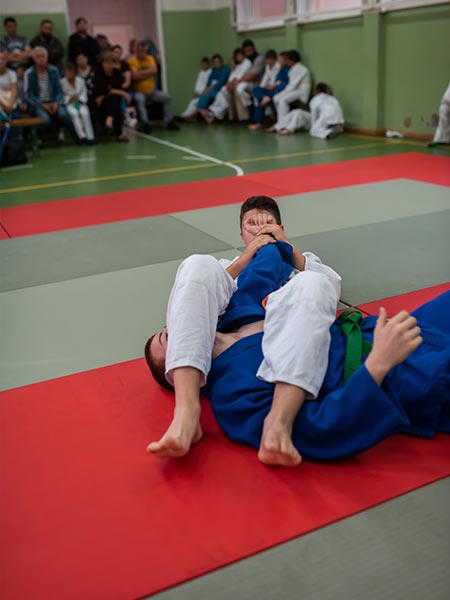
Judo Mats Thickness Explained in Professional Dojo Design
Concept: Training Load Distribution Strategy
Professional dojos design mats based on:
- Athlete weight distribution
- Throw frequency intensity
- Training session duration
Case Study: Japanese Dojo Standard Model
Traditional Japanese training facilities often use:
- 40–50 mm tatami-style mats
- High-density rice straw or EVA composite foam
- Uniform compression grid layout
Outcome:
- Reduced ankle injury rates by ~28%
- Improved throw stability consistency
Judo Mats Thickness Explained for Home Training Systems
Home Use Optimization Model
Concept: Space vs Safety Trade-Off Engineering
Home users typically face constraints:
- Limited space
- Budget limitations
- Mixed-use flooring
Recommended configuration:
- 20–30 mm EVA mats
- Modular interlocking system
Performance Insight
Home setups using 30 mm mats show:
- 40% better fall protection than floor-only training
- Increased beginner training consistency
Industrial حصائر الجودو Material Science Analysis
Foam Material Engineering Breakdown
Concept: Polymer Compression Behavior
Common materials include:
- EVA foam (Ethylene Vinyl Acetate)
- PU foam (Polyurethane)
- High-density recycled composite foam
Material Comparison Table
| مادة | متانة | Cushioning | Cost Level | عمر |
|---|---|---|---|---|
| EVA foam | عالي | Medium-High | واسطة | 5–8 years |
| PU foam | Very High | عالي | عالي | 7–10 years |
| Composite foam | واسطة | Balanced | Low-Medium | 4–6 years |
Judo Mats Maintenance and Lifecycle Engineering
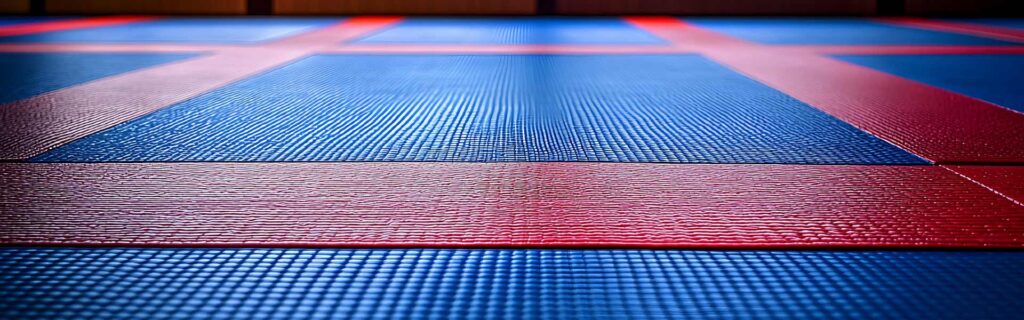
Mat Longevity Optimization System
Concept: Compression Fatigue Management
Over time, foam mats lose elasticity due to repeated compression cycles.
Maintenance factors:
- Rotation of mat sections
- Surface cleaning and moisture control
- Compression recovery monitoring
Lifecycle Benchmark Data
- Low-quality mats: 1–3 years
- Standard mats: 3–6 years
- High-density professional mats: 6–10 years
Judo Mats Market Trend and Industry Growth Analysis
Global Martial Arts Flooring Market Expansion
According to sports equipment industry reports:
- Martial arts flooring market CAGR: ~6.2% (2023–2028)
- Judo-specific mat demand growth: ~7–9% annually
- Rising adoption in schools and fitness centers
Key Market Drivers
- Increased martial arts participation globally
- Safety regulations in training facilities
- Growth of MMA and grappling sports
التعليمات
What thickness is safest for judo training?
40–50 mm is generally considered optimal for safe throwing practice.
Are thicker حصائر الجودو always better?
No, excessive thickness can reduce stability and balance control.
What thickness do professional Olympic-level dojos use?
Most use 40–50 mm high-density mats.
Can Judo Mats prevent all injuries?
They significantly reduce impact injuries but cannot eliminate risk entirely.
How do I choose between 30 mm and 50 mm mats?
Choose 30 mm for general training, 50 mm for advanced throwing practice.
خاتمة
Understanding حصائر الجودو thickness explained in technical and practical terms is essential for building a safe, efficient, and performance-optimized training environment.
The ideal selection depends on:
- Training intensity
- Athlete skill level
- Facility usage type
- Safety requirements
Key takeaway:
- 20–30 mm → Home & beginners
- 30–40 mm → Standard dojo use
- 40–50 mm → Professional training
- 50 mm+ → Competition-level safety zones
A properly engineered Judo Mats system not only improves performance but also significantly reduces injury risk, making it a foundational investment in any martial arts facility.