
مدونة
Padel Club Staff Training Guide for Better Operations
المقالات الأخيرة
جدول المحتويات
Key points covered in this guide:
- How to define staff roles before a padel club opens
- What reception employees should know about bookings and memberships
- How to train staff to complete daily court inspections
- How coaches and operations teams can work together
- What procedures are needed for equipment rental and customer complaints
- How to prepare employees for injuries, evacuations, and severe weather
- Which training records club managers should maintain
- How regular refresher training can improve consistency
محترف Padel Club Staff Training Guide should connect customer service, court safety, booking management, equipment care, maintenance reporting, and emergency preparation.
A modern padel facility may include several courts, a reception desk, coaching programmes, rental equipment, smart access controls, changing rooms, spectator areas, and food or beverage services. Customers expect these different parts of the venue to work together.
Even a well-built court can receive negative reviews when staff cannot explain booking rules, respond to equipment problems, or resolve customer complaints. Clear training helps employees understand their responsibilities and provide a more consistent experience.
Define Padel Club Staff Roles Clearly
Before training begins, managers should decide which tasks belong to each position.
A small club may ask one employee to manage reception, equipment rental, court checks, and customer support. A larger facility may separate these duties between several teams.
Common Padel Club Roles
Typical positions may include:
- Club manager
- Reception employee
- Court operations assistant
- Coach
- Maintenance technician
- Cleaning employee
- Event coordinator
- Membership adviser
- Food and beverage employee
Each employee should receive a written role description explaining normal tasks, decision-making authority, and reporting responsibilities.
Concept: Responsibility Boundary
A responsibility boundary defines where one employee’s role ends and another person’s role begins.
For example, reception staff may identify damaged glass and close the court, but only a qualified technician should inspect or repair the glass system.
Build a Staff Training Matrix
A training matrix helps managers determine which topics apply to each position.
| Training Topic | Reception | Coach | Operations | مدير |
|---|---|---|---|---|
| Booking system | Required | Basic | Basic | Required |
| Membership rules | Required | Basic | Basic | Required |
| Customer service | Required | Required | Required | Required |
| Court inspection | Basic | Required | Required | Required |
| Equipment rental | Required | Required | Required | Basic |
| Incident reporting | Required | Required | Required | Required |
| Emergency procedures | Required | Required | Required | Required |
| Maintenance reporting | Basic | Required | Required | Required |
| Event operations | Basic | Required | Required | Required |
| Refund authorization | محدود | No | No | Required |
Employees should not receive access to functions they are not authorized to use. For example, reception staff may process standard booking credits while larger refunds require manager approval.
Train Reception Staff for the Customer Journey
Reception employees are often the first people customers speak with when they visit the club.
They should understand the complete journey from booking to court entry.
Booking-System Training
Reception staff should be able to:
- Create a reservation
- Modify a booking
- Check payment status
- Apply approved discounts
- Add equipment rental
- Register a guest
- Process permitted cancellations
- Move a booking to another court
- Add a customer to a waiting list
Training should include realistic examples rather than only a software demonstration.
Practice Common Booking Problems
Employees should know how to respond when:
- Two groups claim the same court
- A customer arrives on the wrong date
- A payment has failed
- A membership discount is missing
- A player wants to extend a session
- A booking is interrupted by weather
- A customer cannot access the smart gate
The club should use written policies so different employees do not provide conflicting answers.
Membership Knowledge
Reception staff should be able to explain:
- Membership prices
- Booking windows
- Court credits
- Guest rules
- Peak-hour restrictions
- Renewal dates
- Cancellation terms
- Coaching benefits
Employees should avoid promising benefits that are not included in the official membership agreement.
Create a Daily Padel Court Inspection Routine
Every court should receive a basic visual inspection before the first booking.
Staff should know what normal court components look like and which problems require immediate closure.
Artificial Turf Checks
Inspect the turf for:
- Open seams
- Raised edges
- Uneven sand
- Standing water
- Foreign objects
- Algae
- Surface depressions
- Excessive wear
A problem should be recorded with the court number, date, location, photograph, and action taken.
Glass and Structure Checks
Employees should look for:
- Cracked or chipped glass
- Loose fittings
- Missing gaskets
- Bent mesh
- Sharp edges
- Loose bolts
- Damaged coatings
- Misaligned gates
- Unusual structural movement
Staff should never attempt an improvised structural or glass repair.
SRSC’s Padel Court materials guide explains how turf, steel, glass, lighting, fasteners, and base systems contribute to court performance and maintenance requirements.
Lighting and Electrical Checks
Before evening operation, verify:
- All fixtures turn on
- No fixture flickers
- Control switches work
- Cables remain protected
- Electrical cabinets are closed
- Emergency lighting is operational
- The court has no unusual dark areas
Only qualified personnel should open electrical cabinets or complete repairs.
Train Coaches Beyond Technical Instruction
A coach may spend more time on the court than any other employee. Coaches should therefore understand customer service, safety, equipment care, and incident reporting.
Pre-Session Responsibilities
Before a lesson, the coach should check:
- Court condition
- Net position
- Available equipment
- Group size
- Participant ability
- Relevant access needs
- Weather conditions
- Emergency communication method
Manage Different Ability Levels
Coaches should avoid placing complete beginners into sessions that assume advanced court movement or wall play.
A club may offer:
- First-time introductions
- Beginner courses
- Social coaching
- Intermediate clinics
- Junior programmes
- Competition training
- Private lessons
Report Problems Immediately
Coaches should not assume that another employee has already reported a loose gate, wet surface, broken light, or damaged racket.
A simple digital reporting form can make this process faster.
Standardize Equipment Rental
Rental rackets and balls create a convenient entry point for beginners, tourists, and occasional players.
Poorly managed rental equipment can also lead to customer complaints and unnecessary replacement costs.
Check Equipment Before Issuing It
Inspect rackets for:
- Cracks
- Loose handles
- Damaged wrist straps
- Sharp edges
- Excessive surface damage
- Missing identification labels
Balls should be replaced when their pressure and condition no longer support reasonable play.
Create a Check-Out Process
The system should record:
- Customer name
- Booking number
- Equipment issued
- Time issued
- Condition
- Time returned
- Reported damage
Avoid Immediate Accusations
Normal wear should be distinguished from negligent or deliberate damage.
When a dispute occurs, employees should record the facts and refer the decision to an authorized manager.
Train Staff to Handle Customer Complaints
A complaint may concern court quality, pricing, noise, booking access, another player, coaching, or staff behaviour.
Use a Simple Response Process
Employees can follow four steps:
- Listen without interrupting
- Confirm the main problem
- Explain the available solution
- Record the outcome
Staff should avoid arguing, making personal comments, or blaming another department in front of the customer.
Define Compensation Authority
The club should state which employees can provide:
- Booking credit
- Equipment replacement
- Session extension
- Discount
- Refund
- Manager follow-up
Small service recovery decisions can be handled quickly, while larger financial disputes may require management approval.
Record Repeated Issues
One complaint may be unusual. Several similar complaints may reveal a wider operational problem.
Managers should track complaint categories such as:
- Court condition
- Booking availability
- إضاءة
- Coaching
- Membership rules
- Cleanliness
- Noise
- Staff communication
Prepare Employees for Emergencies
Every club needs written procedures for foreseeable emergencies.
OSHA explains that well-developed emergency plans and properly trained employees can reduce injuries and facility damage by helping workers understand their roles and responsibilities. The exact legal requirements differ by jurisdiction, so clubs should also follow applicable local regulations.
Medical Incident
Staff should know:
- Who contacts emergency services
- Where first-aid supplies are stored
- Who meets emergency responders
- How to provide the exact site location
- How to clear the surrounding area
- Who completes the incident report
Fire and Evacuation
Training should cover:
- Alarm procedure
- Emergency exits
- Assembly point
- Customer evacuation
- Changing-room checks
- Assistance for people with access needs
- Staff accountability
- Emergency-service communication
Emergency routes should never be used for storage.
Severe Weather
Outdoor facilities need procedures for:
- Lightning
- Strong wind
- Heavy rain
- Flooding
- Extreme heat
- Snow and ice
- Poor air quality
The policy should define who can close the court and who can authorize reopening.
Practice Drills
Emergency procedures should be reviewed when the facility layout, staff responsibilities, equipment, or identified hazards change. Practice drills can help employees remember their duties under pressure.
Train Staff for Indoor and Outdoor Courts
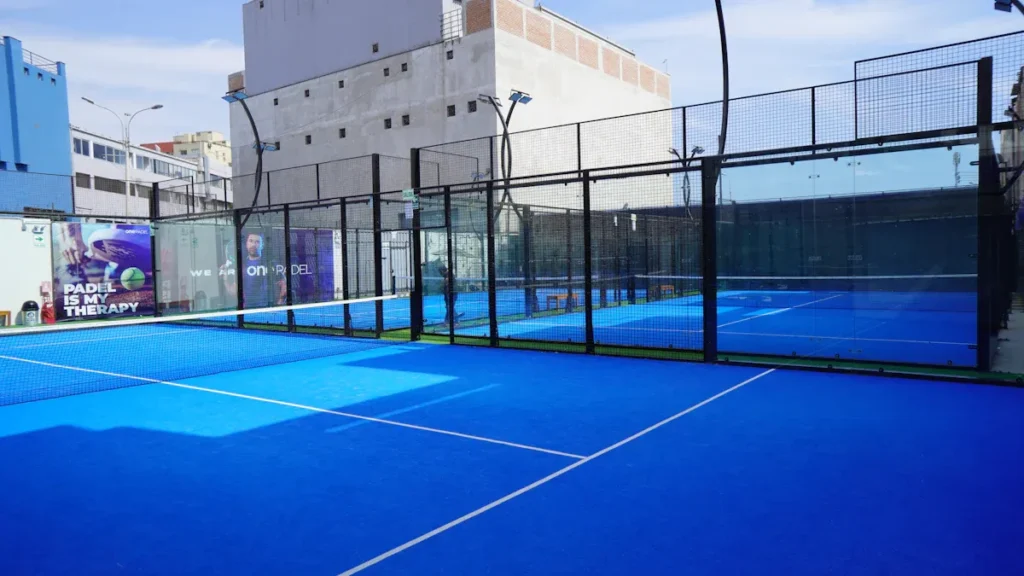
Different facilities require different operating knowledge.
ملعب بادل خارجي
Employees should understand:
- Weather closure procedures
- Drainage inspection
- Wet-surface risks
- Light spill
- Outdoor access control
- Wind-related inspections
- Seasonal maintenance
Buyers can review SRSC’s current Outdoor Padel Court options.
ملعب بادل داخلي
Indoor staff should understand:
- Ventilation
- Internal temperature
- Condensation
- Building evacuation
- Noise and reverberation
- Emergency lighting
- Fire-door operation
SRSC also maintains an Indoor Padel Court product category for projects requiring protected year-round facilities.
Maintain Staff Training Records
Training records help managers understand who is qualified to perform specific duties.
Useful Training Information
Record:
- Employee name
- Training topic
- Training date
- Trainer
- Assessment result
- Renewal date
- Additional support required
Use Practical Assessments
Completing a presentation does not prove that an employee can perform the task.
Practical assessments may include:
- Creating a test booking
- Inspecting a court
- Issuing rental equipment
- Responding to a mock complaint
- Explaining an evacuation route
- Completing an incident report
Concept: Training Competency
Training competency means the employee can demonstrate the required knowledge or task rather than simply attend a session.
Managers should provide additional coaching when an employee cannot complete the assessment correctly.
Schedule Refresher Training
Staff training should continue after the club opens.
Monthly Reviews
Short monthly sessions may cover:
- Recent complaints
- New booking rules
- Common inspection problems
- Equipment damage
- Membership questions
- Upcoming events
Seasonal Training
Outdoor clubs may need specific preparation before:
- Rainy season
- Winter
- Extreme heat
- Tournament periods
- Holiday programmes
Training After Changes
Provide new training when the club introduces:
- Additional courts
- New booking software
- Smart access control
- New membership plans
- Updated emergency routes
- A roofed structure
- Food and beverage service
- New equipment
Measure Staff Training Results
Managers should evaluate whether training improves actual operations.
Useful Performance Indicators
Track:
- Booking errors
- Customer complaints
- Refund requests
- Equipment losses
- Missed inspections
- Maintenance-report response time
- Incident-report accuracy
- Member satisfaction
- Staff turnover
- Emergency-drill performance
A reduction in reported problems does not always mean conditions improved. Employees may simply have stopped recording them.
Managers should encourage accurate reporting rather than rewarding staff only for low incident numbers.
Common Padel Club Staff Training Mistakes
Providing Training Only on Opening Day
Employees need refreshers as policies, equipment, and customer expectations change.
Giving Every Employee the Same Training
Each position requires a different level of access, authority, and technical knowledge.
Relying Only on Verbal Instructions
Written procedures help staff respond consistently across different shifts.
Allowing Unqualified Repairs
Employees should identify and report technical problems, not attempt unsafe structural or electrical work.
Failing to Train Part-Time Staff
Customers expect consistent service regardless of which employee is working.
Ignoring Customer-Service Skills
Technical knowledge alone does not prepare staff to manage complaints, beginners, refunds, or membership questions.
خاتمة
A practical Padel Club Staff Training Guide helps employees connect customer service with safe and efficient court operation.
Reception staff should understand bookings and memberships. Coaches should manage participants and report court defects. Operations teams should complete inspections and coordinate maintenance. Managers should define authority, review records, and prepare employees for emergencies.
Training should continue after opening and evolve as the club adds courts, programmes, technology, and new customer groups.
Operators can explore the complete Padel Court product range, review available project and after-sales services، أو contact SRSC with the planned court quantity, operating model, installation requirements, and staff-support needs. SRSC states that its business covers design, manufacturing, customization, installation, and after-sales support for sports facilities.
التعليمات
What training should reception staff receive?
They should understand bookings, payments, memberships, equipment rental, customer complaints, basic court checks, and emergency procedures.
Should coaches complete court inspections?
Coaches should complete a basic visual check before sessions and report problems. Detailed structural or electrical inspections require qualified personnel.
How often should training be repeated?
Training should be refreshed regularly and whenever procedures, equipment, software, responsibilities, or facility layouts change.
Who should close an unsafe court?
The club should authorize selected staff to stop bookings immediately when a serious hazard is identified.
Do part-time employees need emergency training?
Yes. Every employee working during an emergency should understand their responsibilities and the venue’s procedures.
What should be included in a training record?
Include the employee, topic, date, trainer, assessment result, and renewal requirement.
Can the court supplier provide staff training?
A supplier may provide technical guidance about court components, installation, maintenance, and after-sales support. Customer service and local safety procedures remain the operator’s responsibility.
SRSC describes its services as covering consultation, design, product supply, construction support, maintenance, and after-sales assistance.