
مدونة
Padel Court for Residential Communities: A Developer’s Guide
المقالات الأخيرة
جدول المحتويات
Key points covered in this guide:
- How a Padel Court can support residential amenity planning
- Which housing projects are suitable for a shared court
- How to select a location without disturbing nearby homes
- How classic, panoramic, and roofed courts serve different developments
- How to manage resident bookings, guests, coaching, and operating hours
- Which construction and operating costs should be included in the budget
- How developers can prevent overcrowding and maintenance disputes
- What information buyers should provide when requesting a quotation
A shared ملعب البادل can add an active and social feature to apartment developments, gated communities, villa projects, student housing, retirement communities, and mixed-use residential districts.
Unlike a decorative amenity that residents only view, a court creates opportunities for exercise, social play, beginner lessons, family activities, and community events. The CDC notes that the built environment can influence physical activity and that accessible recreational destinations can make active lifestyles easier for community members.
However, a residential project requires a different planning approach from a commercial sports club. Developers must balance player access with privacy, noise, lighting, maintenance costs, booking fairness, security, and the expectations of residents who may never use the court.
Is a Padel Court Suitable for the Residential Project?
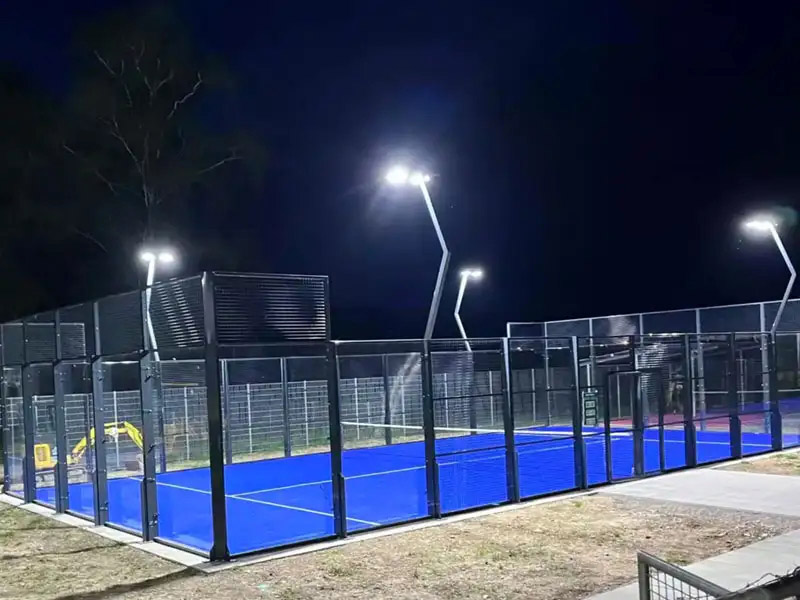
The first question is not which court model to purchase. It is whether the development has enough demand, space, and management capacity to operate a shared sports facility successfully.
Identify the Resident Profile
A court may be particularly relevant for developments serving:
- Young professionals
- Families
- International residents
- University students
- Active adults
- Sports-oriented communities
- Holiday-home owners
- Mixed-age residential districts
Resident surveys, local sports participation, nearby club availability, and expected occupancy can help the developer assess likely demand.
Concept: Amenity Fit
Amenity fit describes how well a facility matches the people, location, operating model, and brand of a development.
A premium facility does not automatically become valuable when residents have little interest in using it or when the management team cannot maintain it.
Consider the Number of Homes
A small development may struggle to justify the full construction and maintenance cost of a standard court. A large community may create the opposite problem: demand may exceed the available booking hours.
The developer should estimate:
- Number of households
- Expected active users
- Peak evening demand
- Weekend demand
- Guest use
- Coaching requirements
- Seasonal occupancy
A single court may be adequate for a smaller community but may require strict booking rules in a high-density development.
Check Padel Court Space Requirements
The official doubles playing enclosure measures 20 metres long by 10 metres wide internally. The complete project requires more space for structural posts, foundations, gates, drainage, circulation, maintenance, seating, and landscaping. The latest technical and playing documents should be checked through the International Padel Federation.
Request the External Footprint
Do not reserve only a 20 × 10 metre area on the master plan.
Ask the supplier for a drawing showing:
- External structural dimensions
- Foundation positions
- Gate locations
- Lighting posts
- Drainage channels
- Maintenance clearance
- Pedestrian routes
- Spectator or waiting areas
- Emergency access
Protect Future Circulation
The court should not block access between apartment buildings, gardens, parking areas, fire routes, waste collection points, or maintenance zones.
A route that appears wide enough on a concept drawing may become congested after benches, landscaping, signs, and sports bags are added.
Choose the Best Residential Location
Location has a direct influence on resident satisfaction.
Keep Distance From Bedrooms
Ball impacts, player voices, gates, and evening activity can be noticeable near apartment balconies and villa bedrooms.
Where possible, position the court away from:
- Bedroom façades
- Private gardens
- Quiet courtyards
- Elderly-care areas
- Study rooms
- Home offices
- Outdoor dining areas
Buildings, parking structures, clubhouses, landscaped mounds, or professionally designed barriers may help separate active and quiet zones.
Maintain Convenient Access
The facility should still be easy to reach from the homes it serves.
Residents should not need to cross vehicle entrances, delivery roads, or unsafe service zones to reach the court.
Balance Convenience and Privacy
The best location is usually visible and accessible enough to support safe use but sufficiently separated from homes requiring quiet and privacy.
Placing the court in the centre of a residential courtyard may improve access while increasing noise and lighting concerns.
Compare Residential Padel Court Types
SRSC currently lists panoramic, super panoramic, classic, single, indoor, outdoor, and roofed court configurations, with several models available in standard or customized colours.
| نوع المحكمة | Residential Advantage | Suitable Project | Main Consideration |
|---|---|---|---|
| Classic court | Practical framed structure | Standard apartment or community project | Visual weight of the frame |
| Panoramic court | Clearer views and modern appearance | Premium villas and branded developments | Higher presentation expectations |
| Super panoramic court | Strong architectural impact | Luxury residential resorts | Engineering and budget |
| Roofed court | Better rain and sun protection | Large all-season communities | Roof loads and drainage |
| Indoor court | Controlled year-round operation | Mixed-use towers and large clubhouses | Building height and acoustics |
| Single court | Reduced width | Selected private or space-limited projects | Different from standard doubles play |
ملعب بادل كلاسيكي
A classic Padel Court can suit developments that prioritize practical community use and controlled capital expenditure.
Its visible framed structure should be coordinated with surrounding architecture, landscape design, and residential sightlines.
ملعب بادل بانورامي
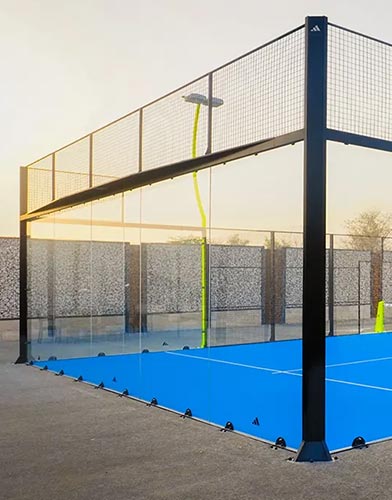
A panoramic Padel Court may be preferred for luxury residences, clubhouse areas, and developments where appearance is an important sales feature.
SRSC lists its panoramic model as a 20 × 10 metre court available in several colours, using steel, glass, and artificial grass.
Roofed Outdoor Court
A roof can increase playable hours during rain or intense sunlight.
However, the roof introduces additional requirements for structural loads, drainage, permits, columns, shade, ventilation, and visual impact. It should be included in the original design rather than added without engineering review.
Plan Resident Booking Rules Before Opening
A shared court can create disputes when the booking policy is unclear.
Set a Fair Booking Window
The management team should define how far in advance residents can reserve the court.
A short booking window may make planning difficult, while a very long window may allow a small number of users to control popular evening periods.
Limit Active Reservations
Consider setting a maximum number of future reservations per household.
Once one booking has been completed, the household can receive another booking allowance.
Define Guest Use
The policy should explain:
- Number of guests allowed
- Whether the resident must be present
- Whether guest fees apply
- Whether coaching is permitted
- Whether commercial lessons are allowed
- Whether outside players can book independently
Avoid Informal Exceptions
Rules should be applied consistently.
Frequent exceptions for selected residents can create complaints and make the booking system difficult to manage.
Create Suitable Operating Hours
Residential operating hours should balance court access with the right of surrounding residents to enjoy quiet periods.
Evening Bookings
Evening use may be popular because residents are available after work or school.
The developer should evaluate lighting spill, noise, security, and staff availability before setting the closing time.
Morning Sessions
Very early sessions may also disturb nearby homes, particularly during weekends.
A clear opening time should apply to players, coaches, maintenance teams, and informal practice.
Weather Closures
Outdoor-court rules should explain when the facility closes because of:
- Standing water
- Lightning
- Strong wind
- Snow or ice
- Extreme heat
- Poor visibility
- Structural inspection
The property-management team should be authorized to close the court when conditions are unsafe.
Plan Lighting for a Residential Environment
Court lighting must support safe play without creating unnecessary glare inside nearby homes.
Request a Lighting Calculation
The proposal should show:
- Fixture positions
- Mounting heights
- Beam angles
- Average illumination
- Uniformity
- Glare control
- Light spill
- Electrical load
- Control method
Use Independent Controls
Lights should operate only when the court is booked or in use.
Booking-based activation, timers, or staff controls can reduce energy consumption and prevent residents from leaving lights on overnight.
Include a Shut-Off Time
Automatic shut-off provides a clear end to evening activity and reduces the need for property staff to monitor every session manually.
Manage Security and Access
The court should remain available to authorized residents without becoming an uncontrolled public facility.
Access Options
Possible systems include:
- Resident access cards
- Mobile credentials
- Temporary booking codes
- Reception keys
- Security-desk control
- Smart gate locks
The access system should include a safe emergency exit and a backup method for power or network failures.
Control Junior Access
The community should establish age and supervision rules for children and teenagers.
These rules may differ for casual use, coaching sessions, organized activities, and evening bookings.
Plan Supporting Residential Amenities
Seating and Waiting Areas
Provide seating for players waiting for the previous booking to finish.
Benches should not block gates, emergency routes, drainage channels, or glass-maintenance access.
Equipment Storage
A secure area may be needed for:
- Shared rackets
- Balls
- Coaching equipment
- Turf brushes
- Cleaning tools
- Spare nets
- Maintenance supplies
Sports equipment should be separated from chemicals and sharp maintenance tools.
Drinking Water and Shade
Outdoor projects may benefit from a water point, shaded seating, and nearby toilets.
These facilities can improve comfort without turning the area into a large public sports club.
Budget for Long-Term Padel Court Management
The initial equipment quotation does not represent the complete residential cost.
Construction Costs
The project budget may include:
- Surveys and design
- Permits
- Excavation
- Foundations
- Drainage
- Steel and glass structure
- العشب الصناعي
- إضاءة
- Electrical connection
- Shipping
- Installation
- Landscaping
- Access control
Operating Costs
The homeowners’ association or property manager may need to budget for:
- Cleaning
- Turf brushing
- Sand redistribution
- Glass washing
- Lighting electricity
- Replacement nets
- Hardware repairs
- Coating repairs
- Booking software
- Insurance
- Periodic inspections
- Turf replacement
Define the Cost-Sharing Model
The project should decide whether costs are covered through:
- General service charges
- Court-booking fees
- Membership fees
- Guest charges
- Developer subsidy
- A combination of methods
The policy should be explained clearly before residents begin using the facility.
Use the Court as a Community Programme
A court can support more than private household bookings.
Beginner Introductions
Scheduled introductory sessions can help residents who are interested but unfamiliar with the game.
Community Leagues
Short internal leagues can create social interaction without requiring a large tournament structure.
Family Sessions
Family booking periods can encourage parents and children to participate together.
Resident Events
The court may support:
- Welcome events
- Holiday activities
- Fitness weeks
- Charity matches
- Youth sessions
- Social mix-ins
These programmes should remain compatible with noise, capacity, insurance, and resident-access rules.
Common Residential Padel Court Mistakes
Promising the Amenity Before Checking the Site
Marketing the facility before confirming permits, dimensions, drainage, access, and neighbour impact can create unrealistic buyer expectations.
Installing It Too Close to Homes
A central location may look attractive in a rendering but create long-term noise and lighting complaints.
Providing No Booking Restrictions
Unrestricted booking may allow a small group of residents to dominate the facility.
Ignoring Non-Players
Residents who never use the court still experience its appearance, noise, lighting, and maintenance costs.
Underestimating Maintenance
Glass, turf, steel, drainage, lighting, and gates all require inspection and care.
Treating It Only as a Sales Feature
A court needs a long-term operating plan after the developer completes and transfers the project.
خاتمة
A Padel Court can become an active and recognizable amenity within a residential development, but successful projects require more than an attractive product.
Developers should coordinate court type, location, access, noise, lighting, booking rules, guest policies, security, maintenance, and long-term cost sharing before construction begins.
The strongest plan considers both the residents who will use the court and those who live nearby but may never play.
SRSC offers classic, panoramic, super panoramic, single, indoor, outdoor, and roofed court configurations. Developers can explore the complete Padel Court range, review project services، أو contact SRSC with the master plan, residential unit count, site location, preferred model, and operating requirements.
التعليمات
Can a Padel Court increase property value?
A well-planned amenity may strengthen the overall residential offering, but value depends on location, market demand, construction quality, maintenance cost, and buyer preferences. No universal increase should be promised.
How many homes can share one court?
There is no fixed number. The decision depends on resident demand, booking duration, operating hours, guest use, coaching, and expected peak-time pressure.
Should residents pay per booking?
Some communities include court use in general service charges, while others use booking or guest fees. The method should reflect maintenance costs and local expectations.
Is a panoramic court better for a residential project?
A panoramic model may offer a more open and modern appearance. A classic model may be suitable when practical use and budget are the main priorities.
Can the court be open to the public?
It can, but public use changes access, parking, security, insurance, staffing, and resident-priority requirements.
How close can the court be to apartments?
The appropriate distance depends on site levels, barriers, façades, operating hours, noise assessment, lighting, and local planning rules.
Who should maintain the court?
The homeowners’ association, property manager, specialist contractor, or facility operator should have clearly assigned responsibilities and a written maintenance schedule.