
مدونة
Padel Court Glass Thickness: 10mm vs 12mm Buyer’s Guide
المقالات الأخيرة
جدول المحتويات
Glass is not simply a transparent barrier around a padel court. It forms part of the playing system, supports predictable ball rebound, provides spectator visibility, and must withstand repeated contact throughout the court’s service life.
When comparing 10mm and 12mm padel court glass, buyers should not select a panel based on thickness alone. Court structure, panel dimensions, support spacing, wind exposure, glass processing, fixing components, installation quality, and applicable standards all affect safety and performance.
Key points covered in this guide:
- Understand how tempered glass functions in a padel court.
- Compare the practical differences between 10mm and 12mm panels.
- Match the glass to classic, panoramic, and outdoor structures.
- Verify edge finishing, drilled holes, flatness, and optical quality.
- Inspect gaskets, fasteners, frame alignment, and foundation accuracy.
- Review packaging and replacement planning before shipment.
- Ask suppliers for measurable specifications and supporting documents.
Why Padel Court Glass Matters
Unlike ordinary sports fencing, padel court walls are involved in active play. The ball must rebound consistently, while the enclosure must provide a smooth and stable surface.
The current International Padel Federation Rules of Padel state that court walls must provide correct consistency and uniform ball rebound. Glass courts must also comply with the applicable requirements for tempered or plate glass.
Player Safety
Players may contact or slide against the glass during a rally. The panels therefore need appropriate strength, smooth surfaces, properly processed edges, and secure fixing systems.
Glass selection should be part of a complete engineered enclosure rather than treated as an independent material purchase.
Ball Rebound
Consistent panel support helps produce predictable rebound behavior. Excessive movement, loose fittings, uneven supports, or incorrect installation may affect how the ball returns from different sections of the wall.
Court Visibility
Clear glass improves sightlines for spectators, coaches, cameras, and club staff. It also gives commercial facilities a more open and professional appearance.
Optical distortion, roller wave, scratches, coating defects, and mismatched panels may reduce the visual quality of the completed court.
What Is Tempered Padel Court Glass?
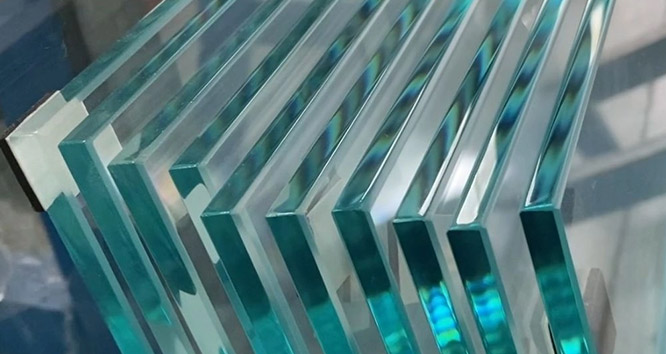
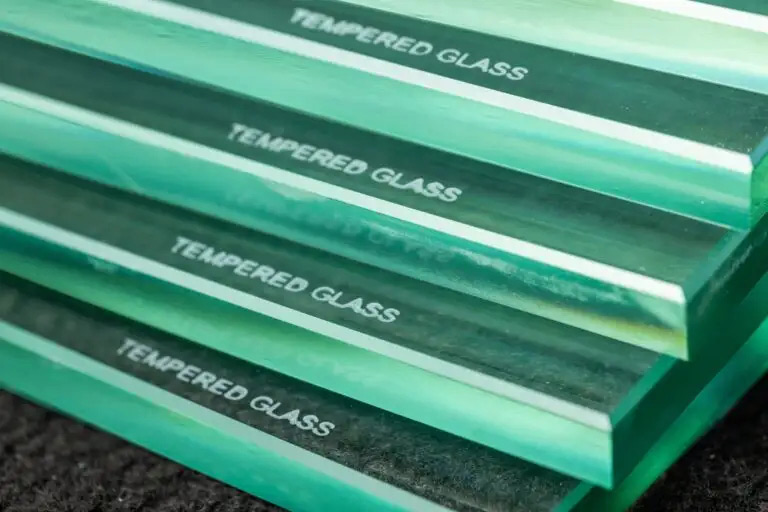
Tempered glass is heat-treated to improve its mechanical and thermal resistance compared with ordinary annealed glass. If it fails, it is designed to break into many relatively small pieces instead of large, sharp shards.
However, the word “tempered” does not automatically confirm that a panel is suitable for a padel court. Buyers still need to check its dimensions, processing quality, applicable standard, installation system, and compatibility with the selected structure.
Heat Treatment
During tempering, the glass is heated and rapidly cooled to create compressive stress at the surface. Cutting, drilling, and edge processing must generally be completed before tempering because later machining can cause the panel to fail.
Panel Identification
Ask whether each panel carries a permanent identification mark showing the manufacturer or applicable standard. Identification can make quality control and future replacement easier.
Tempered vs Laminated Glass
Tempered glass and laminated glass use different safety concepts. Tempered glass breaks into small pieces, while laminated glass uses an interlayer intended to retain fragments after breakage.
The correct option should be determined by the engineered court system and local regulations. Buyers should not substitute one glass type for another without approval from the court designer.
10mm vs 12mm Padel Court Glass
Both thicknesses can appear in padel court projects, but they should not be treated as interchangeable. Increasing thickness changes panel weight, stiffness, handling requirements, hardware loads, and overall system behavior.
| Comparison factor | 10mm tempered glass | 12mm tempered glass |
|---|---|---|
| Panel weight | Lower | Higher |
| Relative stiffness | Lower | Higher |
| Handling | Easier for the installation team | Requires greater lifting control |
| Structural demand | Lower load on supporting components | Higher load on frame, anchors and foundation |
| Typical application | Some framed or engineered court systems | Common in panoramic and premium systems |
| Transportation | Lower panel weight | Heavier crates and handling loads |
| Hardware compatibility | Requires a matching 10mm system | Requires compatible 12mm gaskets and fittings |
| Selection basis | Approved system design | Approved system design |
Weight Difference
Glass weighs approximately 2.5 kilograms per square meter for every millimeter of thickness. Based on this general material value, a 2 × 3-meter panel would weigh approximately 150 kilograms at 10mm and 180 kilograms at 12mm.
Actual shipment and lifting plans should use the glass manufacturer’s confirmed figures. Crates, protective materials, and lifting equipment add further weight.
Stiffness
A thicker panel is generally more resistant to deflection under the same conditions. This can be valuable in structures with reduced framing or larger unsupported areas.
Thickness alone does not establish the capacity of the wall. Panel dimensions, hole locations, support conditions, glass quality, wind pressure, impact loads, and fixing details remain important.
Installation Workload
A 12mm panel is heavier and requires controlled lifting, positioning, and temporary support. The installation team should use suitable glass-handling equipment and follow a documented lifting procedure.
Trying to save time with insufficient labor or unsuitable suction lifters may expose both workers and panels to unnecessary risk.
Is 12mm Glass Always Better?
Not necessarily. The best glass is the panel specified for the tested or engineered court system.
Installing 12mm panels in a structure designed for 10mm glass can create compatibility problems. Existing channels, clamps, bolts, gaskets, supports, and frame clearances may not accept the added thickness and weight.
System Compatibility
A padel court is an assembly of related components. Changing glass thickness may require changes to:
- Gasket dimensions
- Bolt length and grade
- Clamp or bracket size
- Frame clearances
- Hole position or diameter
- Foundation and anchor calculations
- Lifting and installation procedures
Project-Specific Engineering
Indoor and outdoor environments create different structural conditions. Outdoor glass may be exposed to wind pressure, windborne debris, temperature changes, and moisture around its fixings.
A project in a sheltered club cannot automatically use the same assumptions as an exposed coastal or rooftop facility.
Choosing Glass for Different Court Types
Buyers can review SRSC’s available padel court configurations to understand how glass integrates with different structural styles.
ملعب بادل كلاسيكي
A classic court generally has more visible steel framing around the enclosure. The closer structural support can influence the glass specification and load distribution.
This design may suit schools, community facilities, private projects, and clubs seeking a practical balance between cost, durability, and straightforward maintenance.
ملعب بادل بانورامي
A panoramic structure reduces visual obstruction around important glass areas. With less visible framing, the interaction between panel thickness, structural stiffness, brackets, and foundations becomes especially important.
SRSC’s RR01 Panoramic Padel Court uses 12mm tempered glass panels as part of its complete structural system.
Super Panoramic Court
A super panoramic configuration is designed to provide wide, unobstructed views. It is often selected for premium clubs, tournaments, showcase facilities, and venues where spectator experience is a priority.
Reduced framing does not mean reduced engineering. Glass supports, steel beams, anchors, and base construction must work together to control loads and movement.
ملعب بادل خارجي
Outdoor installations require an assessment of wind, corrosion, temperature, drainage, and local structural codes. The glass thickness should be selected alongside the steel structure and anchoring design.
A generic statement such as “suitable for all weather” is not enough. Ask for engineering information relevant to the actual project location.
Glass Manufacturing Quality Checks
Two panels with the same nominal thickness can have different levels of processing quality. Procurement documents should define more than the number of millimeters.
Dimensional Accuracy
Confirm panel length, width, thickness tolerance, squareness, and diagonal measurements. Small inaccuracies can make alignment difficult across a long glass wall.
Panels should match the approved shop drawings rather than only a general product description.
Edge Finishing
Well-processed edges help reduce stress concentration and support safer handling. Ask whether the panels have polished or otherwise specified edge treatment.
Inspect for chips, shells, cracks, and rough areas before installation. Damaged edges should not be hidden inside a frame without technical review.
Hole Processing
Glass holes must be completed before tempering and positioned accurately. Verify hole diameter, distance from the edge, spacing, and alignment with the steel support system.
Countersinking and Special Processing
If the court system requires countersunk or specially processed holes, these details must appear on the manufacturing drawings. The supplier should not leave such decisions to the installation team on-site.
Flatness and Roller Wave
Tempering can create visible distortion or roller wave. Excessive distortion may affect appearance, reflections, and the perceived quality of a panoramic court.
View sample panels from different angles and under natural light when possible.
Surface Quality
Check for scratches, stains, inclusions, edge damage, and marks from storage or transportation. Agree on inspection conditions and acceptance limits before production.
Padel Court Glass Fixing Systems
The way a panel is supported can be as important as the glass itself. Metal-to-glass contact, uneven bolt pressure, or misaligned brackets can introduce localized stress.
Gaskets and Protective Pads
Rubber, neoprene, or other specified cushioning materials separate the glass from hard metal components. They help distribute pressure and accommodate small installation tolerances.
Confirm that the gaskets match the actual glass thickness. A gasket designed for 10mm glass should not be forced around a 12mm panel.
Bolts and Washers
Ask for bolt material, grade, diameter, length, washer type, and tightening instructions. Outdoor and coastal installations may need additional corrosion protection.
Overtightening does not make the glass safer. Fasteners should be installed using the approved sequence and torque guidance provided by the system designer.
Panel Gaps
Designed gaps allow for manufacturing tolerances, installation, and possible thermal movement. Glass panels should not press directly against neighboring panels or structural steel.
Clearances should be checked along the full height of the wall.
Protective Covers
Caps and covers can protect exposed fasteners and improve the finished appearance. They should remain securely attached and should not create projections in player-contact areas.
Foundation and Frame Alignment
Even high-quality glass can be damaged by an inaccurate foundation or misaligned steel frame. Glass should not be forced into a structure that is out of level, out of plumb, or incorrectly spaced.
Concrete Tolerances
Before erecting the frame, inspect the foundation level, anchor locations, concrete strength, and surface condition. Errors should be corrected before the glass reaches the site.
Frame Verticality
Posts and glass supports must be aligned according to the approved drawings. Forcing panels into an irregular opening can create permanent stress.
Structural Movement
Wind and repeated use can produce small movements in the enclosure. The complete frame, anchor, and fixing system should control these movements without transferring inappropriate loads to the panels.
Packaging and International Shipping
Glass damage often occurs during handling rather than normal court operation. Export buyers should examine the packaging plan before approving shipment.
Glass Crates
Panels should be packed in strong, appropriately designed crates with separators and edge protection. The crate should prevent glass-to-glass and glass-to-metal contact.
SRSC states that its tempered panels are packed in plywood crates to reduce transportation damage.
Loading Orientation
The supplier should provide crate weight, dimensions, lifting points, and handling instructions. Shipping teams should keep the package in the required orientation and avoid sudden impact.
Moisture Protection
Crates may encounter rain, condensation, and changing temperatures during transportation. Packaging should protect the panels without trapping damaging moisture against metal fittings or labels.
Delivery Inspection
Inspect the crates before unloading and photograph visible damage. After opening, check panel edges, surfaces, corners, and holes before signing final acceptance documents.
Planning for Replacement Glass
Even a properly designed padel court may eventually need a replacement panel because of accidental impact, extreme weather, vandalism, or installation damage.
Record the Exact Specification
Keep the following information in the facility records:
- Panel position
- Length and width
- Nominal thickness
- Hole diameter and spacing
- Edge treatment
- Tempering specification
- Manufacturer identification
- Drawing and product code
Order a Spare Panel
Commercial clubs may benefit from keeping at least one compatible replacement panel, particularly if the supplier is overseas. The decision should consider storage space, shipping lead time, and downtime cost.
A spare panel must be stored vertically using suitable supports in a dry, protected area.
Do Not Use Approximate Replacements
A panel that looks similar may have different holes, dimensions, edge processing, or tempering quality. Replacement glass should match the approved system specification.
Supplier Documentation Checklist
Ask potential suppliers to provide enough information for a technical comparison.
| Document or detail | Why it matters |
|---|---|
| Glass data sheet | Confirms type, thickness and manufacturing details |
| Panel shop drawings | Shows dimensions, holes and edge requirements |
| Applicable test documents | Supports safety and quality claims |
| Court assembly drawing | Shows how glass connects to the frame |
| Structural information | Links the glass to project loads |
| Packing plan | Reduces handling and delivery risk |
| Installation manual | Defines lifting, alignment and fixing procedures |
| Warranty terms | Explains coverage and exclusions |
| Replacement process | Helps estimate future downtime |
| Maintenance instructions | Supports safe long-term operation |
Questions to Ask a Padel Court Supplier
Use clear, technical questions rather than asking only whether the glass is “strong.”
- Is the proposed glass 10mm or 12mm?
- Why is this thickness suitable for the selected structure?
- Which glass standard applies to the panels?
- Are all cutting, drilling, and edge treatments completed before tempering?
- What dimensional tolerances are used?
- How is optical distortion inspected?
- What gaskets, bolts, and brackets are included?
- Has the structure been evaluated for the project’s wind conditions?
- What lifting equipment is required during installation?
- How are glass panels packed for export?
- What is the procedure for reporting shipping damage?
- How quickly can a replacement panel be produced?
- Are panel drawings supplied with the order?
For project-specific recommendations, buyers can use SRSC’s padel court design and installation services أو contact the project team.
Padel Court Glass Installation Checklist

Glass installation should be performed by trained personnel following the approved method statement.
Before Installation
- Confirm that the concrete has reached the required strength.
- Check anchor positions and frame alignment.
- Inspect panels for damage before lifting.
- Verify that all gaskets and fasteners match the glass thickness.
- Establish an exclusion zone around the work area.
- Confirm that lifting equipment is rated for the panel weight.
During Installation
- Keep glass edges away from concrete and exposed steel.
- Use appropriate suction lifting equipment.
- Install pads and gaskets in their specified positions.
- Maintain the required panel gaps.
- Follow the approved bolt sequence and torque guidance.
- Do not force a panel into a misaligned opening.
After Installation
- Inspect every panel from both sides.
- Check fasteners, covers, gaskets, and clearances.
- Remove labels and temporary materials safely.
- Clean the surface using compatible products.
- Record panel positions and specifications for future replacement.
خاتمة
Choosing between 10mm and 12mm padel court glass is an engineering and system-compatibility decision—not simply a comparison of which panel is thicker. The glass must match the frame, supports, hardware, foundation, environmental loads, and applicable safety requirements.
For buyers, the safest purchasing approach is to request precise specifications, panel drawings, supporting documents, packaging details, and installation instructions before placing an order. Careful verification can reduce breakage risk, installation delays, replacement costs, and long-term maintenance problems.
التعليمات
Is 10mm or 12mm glass better for a padel court?
Neither thickness is automatically better for every project. The correct choice depends on the court structure, panel dimensions, supports, wind exposure, fixing system, and applicable regulations. Use the thickness specified by the court engineer or approved system.
Is 12mm glass safer than 10mm glass?
A thicker panel is generally heavier and stiffer, but safety cannot be judged by thickness alone. Tempering quality, edge processing, holes, supports, installation, structural design, and maintenance also affect performance.
Can I replace 10mm padel glass with 12mm glass?
Not without technical approval. The thicker panel may not fit the existing gaskets, clamps, bolts, brackets, or frame clearances. It also adds weight to the structure and foundation.
Why do panoramic courts often use 12mm glass?
Panoramic courts reduce visual framing around key viewing areas. Many systems therefore use 12mm glass as part of a coordinated design intended to provide suitable stiffness and support. The exact specification remains system-dependent.
How heavy is a padel court glass panel?
A typical 2 × 3-meter panel weighs approximately 150 kilograms at 10mm and 180 kilograms at 12mm, based on a general glass density estimate. Confirm the exact weight with the manufacturer before planning lifting operations.
Can padel court glass break during normal use?
Tempered glass is designed for strength, but no glass is unbreakable. Damage can result from severe impact, defective edges, inclusions, incorrect installation, structural movement, extreme weather, or direct contact with hard materials.
What should I do if a panel has a chipped edge?
Stop installation and ask a qualified person or the glass supplier to evaluate it. Edge damage can weaken a panel, and it should not be concealed inside a bracket without approval.
How should padel glass be cleaned?
Use clean water, soft tools, and a glass-compatible cleaning product. Avoid abrasive materials and inspect the surface, edges, gaskets, and fasteners during cleaning.
Does glass thickness affect ball rebound?
Thickness and stiffness can influence panel movement, but rebound also depends on support conditions, frame alignment, fixings, and installation. A properly engineered system should provide consistent behavior across the wall.
What information is needed to order replacement glass?
Provide the exact panel dimensions, thickness, hole locations, hole diameters, edge treatment, tempering requirements, panel position, and original drawing or product code.