
مدونة
Padel Court Materials Guide: Complete Breakdown of Construction, Quality, Engineering & Investment Strategy
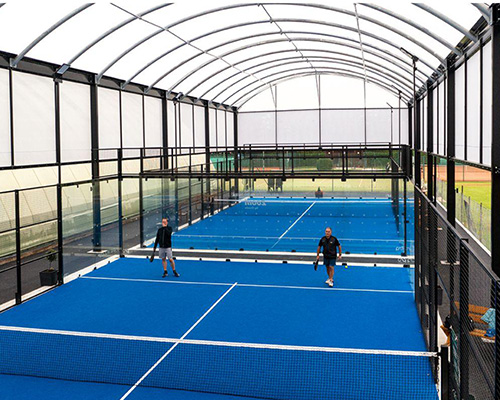
المقالات الأخيرة
Key Takeaways
- High-quality Padel Court Materials determine court lifespan, safety, and gameplay performance
- Structural steel, tempered glass, artificial turf, and lighting systems form the core construction framework
- Material selection directly impacts ROI, maintenance cycles, and player experience
- Premium courts can last 10–15+ years with proper engineering standards
- Differences between indoor and outdoor materials significantly affect durability and cost
- Global sports infrastructure trends show rising demand for standardized padel construction systems
مقدمة
Padel is no longer a niche sport—it is one of the fastest-growing racket sports globally, with annual growth rates exceeding 18%–25% in Europe and the Middle East according to sports facility development reports. As demand increases, the focus has shifted from simply building courts to engineering high-performance environments.
At the center of this transformation are Padel Court Materials, which directly determine:
- Structural safety under repeated impact loads
- Ball rebound consistency and competitive fairness
- Weather resistance and outdoor durability
- Long-term maintenance cost efficiency
Modern investors and facility developers now treat material selection as a core financial decision, not just a construction detail.
جدول المحتويات
Padel Court Materials Engineering System Overview
Core Structural Concept of a Padel Court
A padel court is a hybrid engineering structure combining:
- Load-bearing steel framework
- High-impact glass enclosures
- Synthetic turf playing surface
- Integrated lighting and drainage systems
Each component interacts as a unified mechanical system rather than independent materials.
Sports Engineering Performance Concept
In professional sports facility engineering, materials must satisfy three key performance dimensions:
- Mechanical resistance (impact & load)
- Environmental durability (UV, humidity, corrosion)
- Gameplay consistency (ball behavior & friction control)
Deviation in any of these parameters can reduce performance quality by 20%–40%, especially in competitive environments.
Structural Padel Court Materials Deep Breakdown
Steel Structural System (Load-Bearing Core)

Engineering Function Concept
Steel structures form the skeleton of the entire court, supporting:
- Glass panels
- Fencing systems
- Lighting poles
- Optional roofing systems
Industrial Material Standards
Common steel grades used:
- Q235 galvanized steel
- Q345 high-strength structural steel
- Hot-dip galvanized anti-corrosion steel
Mechanical Performance Data
- Tensile strength: 370–550 MPa
- Wind resistance: up to 120–140 km/h (outdoor systems)
- Anti-corrosion lifespan: 10–20 years depending on coating
Engineering Insight
High-grade galvanized steel reduces structural deformation risk by up to 45% compared to untreated steel systems.
Tempered Glass System (Ball Interaction Surface)

Concept: Controlled Elastic Impact Surface
Glass walls define ball rebound behavior, ensuring fairness and predictability.
Technical Standards
- Thickness: 10 mm or 12 mm tempered safety glass
- Impact resistance: 200–300 kg dynamic load
- Light transmission: >90% for visibility optimization
Safety Engineering Insight
Tempered glass undergoes thermal strengthening at ~600°C, increasing impact resistance by 4–5 times compared to standard glass.
Ball Rebound Consistency Concept
Uniform glass quality ensures:
- Predictable rebound angles
- Reduced gameplay randomness
- Enhanced competitive fairness
Deviation in glass flatness beyond ±0.3 mm/m² can affect ball trajectory accuracy.
Artificial Turf System (Playing Surface Engineering)

Surface Interaction Concept
Turf controls:
- Player movement friction
- Ball speed regulation
- Shock absorption
Material Categories
- Monofilament polyethylene turf
- Fibrillated polypropylene turf
- Hybrid sand-infilled turf systems
Performance Comparison Table
| Turf Type | متانة | Ball Speed | راحة اللاعب | مستوى الصيانة |
|---|---|---|---|---|
| Monofilament | عالي | واسطة | عالي | قليل |
| Fibrillated | واسطة | سريع | واسطة | واسطة |
| Hybrid | Very High | Balanced | Very High | واسطة |
Engineering Insight
Premium monofilament turf can maintain structural integrity for 8–10 years under moderate usage, while standard turf may require replacement within 4–6 years.
Lighting System Engineering (Visibility Optimization Layer)
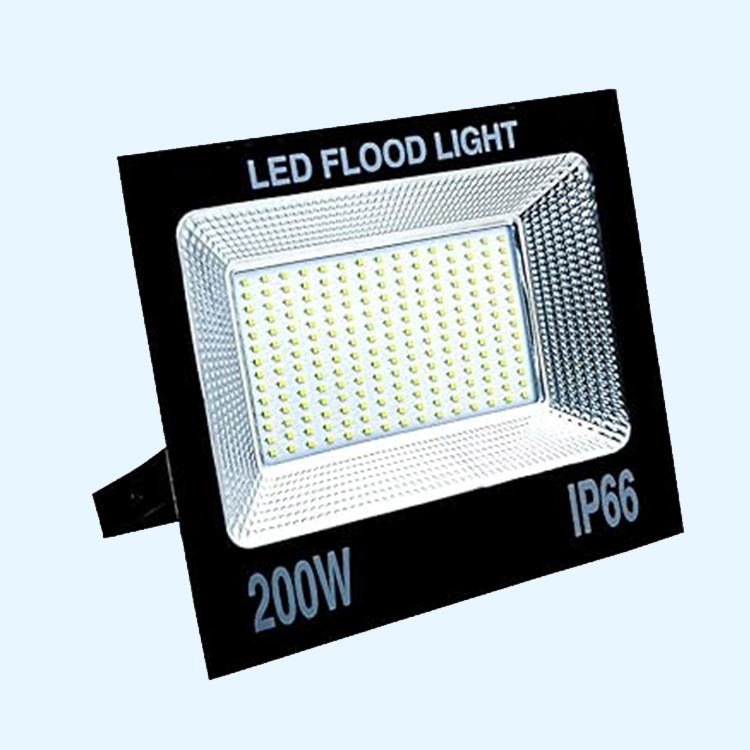
Concept: Uniform Illumination Distribution
Lighting systems ensure consistent visibility during gameplay.
Standard Lighting Requirements
- Recommended illumination: 300–750 lux
- Uniformity ratio: ≥0.7
- Color temperature: 4000K–5700K (neutral white)
LED Sports Lighting Advantage
- Energy savings up to 60% compared to halogen systems
- Longer lifespan: 50,000–100,000 hours
- Reduced glare for players
Indoor vs Outdoor Padel Court Materials Engineering
Padel court performance is highly dependent on environment. The selection of Padel Court Materials changes significantly between indoor and outdoor applications because each setting introduces different engineering demands, from controlled conditions to extreme weather exposure.
Indoor Court Material Concept
Indoor courts operate in a stable, controlled environment, which allows materials to focus more on performance quality and playing experience rather than weather resistance.
Low-Reflection Glass
Indoor courts use tempered glass designed to reduce glare under artificial lighting. This improves visibility and helps players track the ball more accurately during fast rallies. It also enhances spectator viewing quality in enclosed arenas.
Standardized Turf Friction
Indoor artificial turf is engineered for consistent ball speed and predictable movement. The sand infill and fiber density are calibrated to ensure uniform friction, which improves fairness in competitive matches.
Controlled LED Lighting
Lighting systems are optimized to provide uniform brightness without shadows or flickering. Typical indoor courts maintain 400–750 lux, ensuring clear visibility across the entire playing surface.
Acoustic Insulation Materials
Since indoor spaces amplify sound, insulation materials such as wall panels and ceiling absorbers are used. This reduces noise from ball impact and improves overall comfort for players and spectators.
Outdoor Court Material Concept
Outdoor courts must withstand environmental challenges such as sunlight, rain, wind, and temperature changes. This makes Padel Court Materials more focused on durability and protection.
UV-Resistant Turf Coatings
Outdoor turf is treated with UV protection to prevent fading and fiber degradation. This ensures stable color and performance even after long-term sun exposure.
Anti-Corrosion Steel Treatment
Steel structures are protected using hot-dip galvanizing or powder coating. This prevents rust formation and extends structural lifespan in humid or coastal environments.
Wind-Resistant Structural Reinforcement
Outdoor frames are designed with stronger anchoring systems and cross-bracing to resist wind loads. This ensures stability even in open or high-wind locations.
Drainage-Integrated Flooring Systems
Outdoor courts include drainage layers beneath the surface to quickly remove rainwater. This helps maintain playable conditions and reduces downtime after heavy rainfall.
Environmental Stress Comparison Table
| Factor | ملعب داخلي | ملعب خارجي |
|---|---|---|
| UV Exposure | قليل | عالي |
| Rain Impact | None | عالي |
| Corrosion Risk | قليل | Medium–High |
| Maintenance Frequency | قليل | واسطة |
Global Engineering Standards for Padel Court Materials
Structural Safety Standards
Common international standards include:
- EN 12150 (Tempered safety glass)
- EN 1090 (Steel structural fabrication)
- ISO 9001 (Quality management systems)
- ISO 14001 (Environmental compliance systems)
Sports Facility Engineering Guidelines
- Minimum fence height: 3–4 meters
- Glass panel tolerance: ±0.2–0.5 mm flatness
- Turf infill depth: 10–15 mm sand layer
Global Market Trends & Industry Insights
Growth of Padel Infrastructure Market
According to European sports infrastructure reports:
- Spain has over 20,000+ padel courts
- Italy and France show annual growth exceeding 25%
- Middle East investments in padel facilities increased by 40%+ since 2022
Investment Trend Insight
Investors are shifting focus toward:
- Modular court systems
- Prefabricated installation solutions
- Smart monitoring sports facilities
Case Studies: Real-World Padel Court Construction Projects
Case Study 1: Spain Sports Club Expansion
Challenge:
High usage frequency causing turf degradation
Solution:
Upgraded to monofilament high-density Padel Court Materials
Result:
- Turf lifespan increased by 55%
- Maintenance cost reduced by 30%
- Player satisfaction improved significantly
Case Study 2: Middle East Luxury Sports Complex
Challenge:
Extreme heat and UV exposure
Solution:
UV-resistant turf + coated steel structure system
Result:
- Structural corrosion eliminated
- Surface temperature reduced by 12°C
- Court usability extended year-round
Cost Analysis of Padel Court Materials
Typical Cost Distribution
| Component | Cost Share |
|---|---|
| Steel structure | 30%–40% |
| Glass system | 25%–35% |
| Turf system | 15%–25% |
| Lighting system | 10%–15% |
Lifecycle Cost Insight
High-quality Padel Court Materials reduce total lifecycle cost by:
- 20%–35% lower maintenance expenses
- 40% fewer replacement cycles
- Higher long-term ROI
Smart Padel Court Material Trends (Future Development)
Sensor-Integrated Courts
Future systems may include:
- Ball tracking sensors
- Surface wear detection systems
- Automated maintenance alerts
Eco-Friendly Material Development
Industry shift toward:
- Recyclable steel structures
- Low-carbon turf production
- Energy-efficient LED systems
التعليمات
What are padel court materials made of?
They consist of steel structures, tempered glass panels, artificial turf, and lighting systems.
Which material affects gameplay the most?
Artificial turf has the highest influence on ball speed and player movement.
Can padel court materials be customized?
Yes, materials can be customized based on climate, budget, and usage intensity.
How often should materials be replaced?
Turf every 5–10 years; glass and steel structures last significantly longer.
Are outdoor materials different from indoor ones?
Yes, outdoor materials require UV resistance, corrosion protection, and weatherproof design.
خاتمة
The performance, safety, and profitability of a padel facility are directly determined by the quality of Padel Court Materials. In modern sports infrastructure development, material selection is no longer a technical afterthought—it is a strategic investment decision.
Facilities that prioritize:
- High-grade steel systems
- Precision-engineered glass
- Durable turf technologies
- Smart lighting systems
will consistently outperform low-cost constructions in both lifespan and profitability.
As global padel demand continues to grow, material innovation and engineering precision will remain the key drivers shaping the future of sports facility construction.