
مدونة
Padel Court Utilization Strategy: Fill More Hours Without Overcrowding
المقالات الأخيرة
جدول المحتويات
Key points covered in this guide:
- How to calculate real court utilization
- Why peak-hour demand can hide weak overall performance
- How to increase weekday and daytime bookings
- How to balance public play, memberships, coaching, and events
- Which programmes can fill underused court hours
- How indoor and roofed courts affect usable capacity
- Which operating data should guide expansion decisions
- How to improve revenue without reducing player experience
A strong Padel Court Utilization Strategy helps a club generate more value from the courts it already owns.
Many venues appear busy during weekday evenings and weekends but remain underused during mornings, afternoons, school hours, or poor weather. Looking only at peak periods can create the false impression that the facility needs immediate expansion.
Before adding another court, club operators should understand when courts are used, who books them, which programmes generate repeat demand, and where unused capacity remains.
Effective utilization is not achieved by filling every available minute. The goal is to create a balanced schedule that supports revenue, coaching, maintenance, social activities, and a reliable customer experience.
What Is Padel Court Utilization?
Padel Court utilization measures how much of the available court time is booked or used during a defined period.
A club with four courts open for 14 hours each day has 56 available court hours. When players use 28 of those hours, the daily utilization rate is 50%.
Booked Time vs Played Time
A reservation does not always mean the court was actually used.
Operators should distinguish between:
- Paid and completed bookings
- Complimentary sessions
- Coaching blocks
- Cancelled bookings
- No-shows
- Maintenance closures
- Tournament preparation
- Weather closures
Concept: Effective Utilization
Effective utilization measures court time that creates genuine operational value.
A fully booked hour may generate court revenue, coaching income, membership value, customer acquisition, or event exposure. The club should understand which type of value each scheduled activity creates.
Do Not Judge Performance by Peak Hours Alone
A club may be fully booked from 6:00 p.m. to 10:00 p.m. but operate below capacity during the rest of the day.
Peak-Hour Utilization
Peak periods usually include:
- Weekday evenings
- Weekend mornings
- Weekend afternoons
- Public holidays
- League nights
These periods should be protected because they normally have the highest demand and revenue potential.
Off-Peak Utilization
Off-peak periods may include:
- Weekday mornings
- Early afternoons
- Late evenings
- School hours
- Seasonal low-demand periods
These hours require different pricing, programming, and customer groups.
Sport England notes that actual sports-facility usage is influenced by management, promotional policies, programming, and the attractiveness and quality of the venue—not simply by the existence of the facility.
Calculate Padel Court Utilization Correctly
Use consistent time periods so that performance can be compared.
| Utilization Metric | What It Shows | Why It Matters |
|---|---|---|
| Total utilization | Percentage of all available hours used | Measures overall facility performance |
| Peak utilization | Demand during high-value periods | Supports pricing and membership limits |
| Off-peak utilization | Use during quieter periods | Identifies growth opportunities |
| Paid utilization | Hours producing direct booking revenue | Measures commercial productivity |
| Programme utilization | Coaching, leagues, and events | Shows value of organized activities |
| Weather-adjusted utilization | Performance after weather closures | Improves outdoor-court comparisons |
| Revenue per court hour | Income generated by available capacity | Connects usage with financial results |
| Repeat-booking rate | Customers returning after initial play | Measures customer retention |
Exclude Genuine Closures
A court undergoing necessary maintenance should not always be treated as available inventory.
However, repeated closures caused by poor drainage, lighting failures, or delayed repairs should be recorded separately because they represent avoidable lost capacity.
Compare Similar Periods
Do not compare a winter month directly with a holiday-season month without considering weather, school schedules, tourism, and local events.
Monthly, quarterly, and year-over-year comparisons usually provide more useful insight.
Segment Customers by Available Time
Different customer groups can fill different parts of the schedule.
Office Workers
Office workers usually prefer evenings and weekends. They are valuable customers but cannot solve weekday daytime underutilization.
Flexible Workers
Remote workers, freelancers, business owners, and shift workers may be available during mornings or afternoons.
Offer short sessions, off-peak memberships, and organized games during these periods.
Retired and Older Players
Daytime social sessions can attract customers who prefer quieter courts, smaller groups, and earlier operating hours.
Programmes should be based on local demand rather than assumptions about ability or age.
Students
Universities and colleges may provide demand during weekday afternoons.
Student pricing can help fill available time without discounting high-demand evening periods.
Schools and Junior Players
Junior coaching can use after-school periods before adult evening demand reaches its peak.
Holiday camps may also improve daytime use during school breaks.
Corporate Groups
Companies may book courts during weekday afternoons for team activities, customer events, and wellness programmes.
Corporate packages can combine court use, coaching, equipment, food, and meeting space.
Use Off-Peak Pricing Carefully
Lower prices can stimulate demand, but discounts should have a clear purpose.
Create Simple Time Bands
A practical structure may include:
- Peak rate
- Standard rate
- Off-peak rate
Customers should be able to understand the schedule without checking a complicated pricing table for every hour.
Avoid Discounting Busy Periods
When evening courts are already full, further discounts reduce revenue without increasing utilization.
Instead, improve access through waiting lists, cancellation controls, and suitable booking limits.
Offer Off-Peak Credits
Membership credits can be valid mainly during quiet periods.
This gives members additional value while moving some demand away from crowded evening hours.
Concept: Demand Shifting
Demand shifting encourages customers to choose a different time rather than simply paying less for the same peak booking.
The strongest offer gives flexible customers a clear reason to change their playing schedule.
Build Programmes Around Quiet Hours
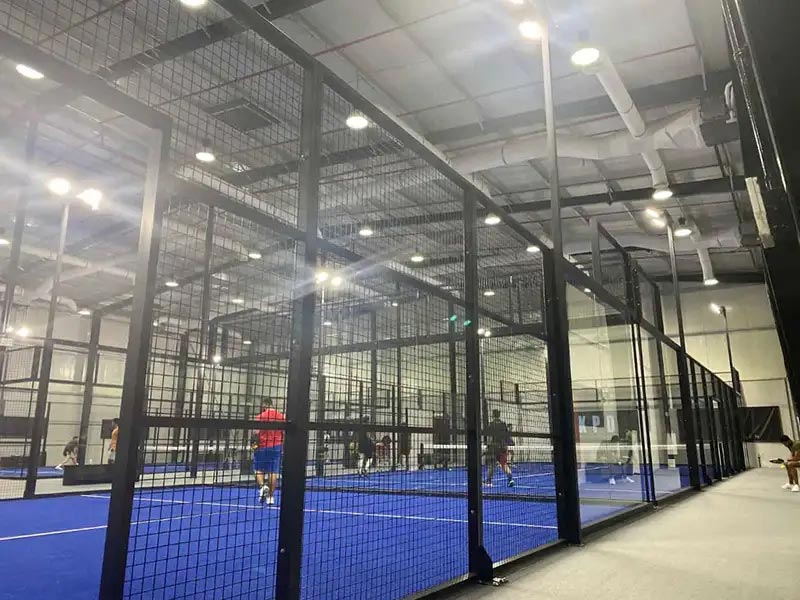
Open court availability does not always create demand by itself. Many players need partners, coaching, or an organized reason to attend.
Social Mix-In Sessions
Mix-in sessions allow individual players to join games without arranging four participants independently.
Group players by approximate ability and use a host or coach to manage rotations.
Beginner Courses
A structured beginner pathway can include:
- Trial session
- Introductory course
- Supervised social play
- Beginner league
- Regular membership or booking
These programmes can turn low-demand hours into customer-acquisition periods.
Junior Academies
Junior programmes may use weekday afternoons, weekends, and school holidays.
The timetable should avoid occupying too much adult peak capacity unless coaching revenue justifies it.
Women’s and Community Sessions
Targeted sessions can help groups that may feel less comfortable joining unstructured open play.
The objective should be genuine access and community building rather than creating unnecessary customer divisions.
Corporate Programmes
Offer companies fixed packages instead of asking organizers to assemble every activity separately.
A package may include:
- Court reservation
- Coach or event host
- Equipment rental
- Round-robin format
- Refreshments
- Awards
- Meeting area
Balance Coaching and Public Bookings
Coaching can generate strong revenue and build future players, but excessive court blocking may frustrate regular customers.
Reserve Coaching Windows
Place group coaching and junior programmes in quieter periods where possible.
Keep enough evening and weekend capacity for public and member bookings.
Compare Revenue per Court Hour
A group class may generate more total income than one standard court rental. A private lesson may also support customer retention and future bookings.
Evaluate:
- Court revenue
- Coaching fees
- Number of participants
- Staff cost
- Equipment cost
- Customer conversion
- Future booking behaviour
Avoid Permanent Blocks Without Review
Recurring coaching reservations should have a review date.
A programme that began with strong attendance may later occupy valuable time with too few participants.
Use Memberships to Improve Utilization
Membership design should guide demand rather than simply reduce prices.
Off-Peak Membership
An off-peak plan can provide:
- Lower daytime prices
- Priority access during quiet hours
- Social-session entry
- Coaching discounts
- Limited monthly credits
Full Membership
Full members may receive broader booking access, but active-reservation limits should protect court capacity.
Corporate Membership
A company can purchase booking credits for employees.
The club may restrict these credits to weekdays or selected periods, helping fill otherwise unused hours.
Reduce Cancellations and No-Shows
A booked court that remains empty produces no playing value and may prevent another customer from using it.
Use Automatic Reminders
Send reminders before the cancellation deadline.
Include the date, time, court number, player details, and cancellation link.
Create a Waiting List
When a booking is cancelled, the system can notify customers who requested the same time.
Give the customer a short response period before offering the slot to the next person.
Apply Clear Cancellation Rules
Possible rules include:
- Full credit for early cancellation
- Partial credit for late cancellation
- No credit for a no-show
- Temporary booking limits for repeated no-shows
Rules should be visible before payment and applied consistently.
Use Court Design to Support Higher Utilization
Physical court selection can influence playable hours and customer demand.
Classic Courts for Daily Operations
A classic Padel Court can support standard bookings, coaching, and community play.
It may be suitable for operators prioritizing practical use and controlled investment.
Panoramic Feature Court
A panoramic design can support premium bookings, events, sponsors, livestreaming, and tournament finals.
SRSC’s comparison of panoramic and standard court designs explains how structural design can influence visibility, installation cost, maintenance, spectator experience, and commercial use.
Roofed Outdoor Court
Rain and excessive sunlight can reduce available playing hours.
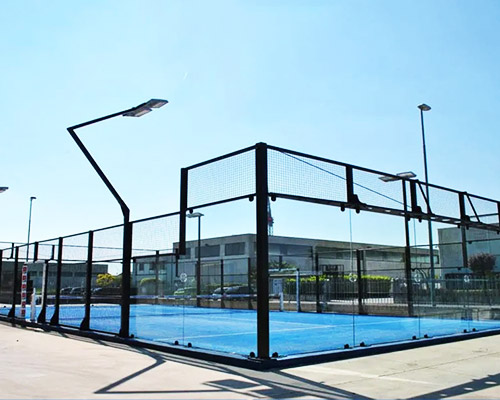
A roofed Outdoor Padel Court may improve schedule reliability in suitable climates, although roof structures introduce additional engineering, drainage, foundation, and permit requirements.
ملعب داخلي
Indoor facilities provide more predictable operation but may require higher building, rent, ventilation, lighting, and energy costs.
The business decision should compare additional usable hours with the complete cost of indoor operation.
Schedule Maintenance Without Losing Peak Revenue
Maintenance should protect long-term utilization rather than repeatedly interrupt bookings.
Use Planned Maintenance Windows
Schedule routine work during historically quiet periods.
Tasks may include:
- Turf brushing
- Infill redistribution
- Glass cleaning
- Drain inspection
- Bolt checks
- Gate adjustment
- Lighting maintenance
- Coating repair
Keep Spare Parts Available
A missing net, LED driver, gate fitting, or glass accessory can close a court longer than necessary.
Request a recommended spare-parts list when purchasing the court.
Record Downtime Causes
Track whether closures result from:
- Planned maintenance
- Accidental damage
- Weather
- Drainage failure
- Electrical problems
- Delayed replacement parts
- Staffing
- Events
This information helps operators decide which improvements will recover the most playable hours.
Know When to Add Another Padel Court
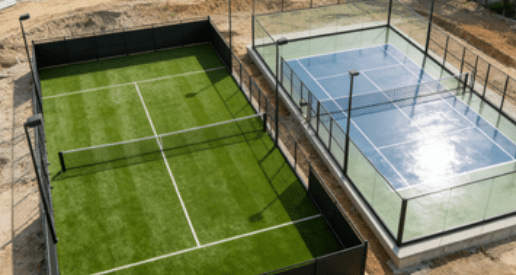
High peak demand does not automatically justify expansion.
Signs Expansion May Be Needed
Consider adding capacity when:
- Peak waiting lists remain consistently long
- Customers leave because they cannot book
- Coaching cannot grow without displacing public play
- Events require repeated full-club closures
- Off-peak utilization is also improving
- Financial projections support the additional cost
Signs Programming Should Improve First
Delay expansion when:
- Only a few evening hours are full
- Weekday courts remain mostly empty
- Customer retention is weak
- No-show rates are high
- Marketing reaches only one customer group
- Existing courts experience frequent avoidable downtime
Market research should examine demand, market size, customer location, competition, and the prices customers pay for alternatives before a club commits to additional investment.
Common Padel Court Utilization Mistakes
Measuring Only Total Bookings
Total booking count does not show duration, revenue, no-shows, or time-of-day demand.
Discounting Every Quiet Hour
Price is only one reason customers do not book. They may lack partners, confidence, coaching, transport, or suitable programmes.
Overselling Memberships
Membership sales can increase cash flow while making peak access worse.
Blocking Courts Permanently
Recurring bookings should be reviewed according to attendance and commercial value.
Expanding Before Fixing Operations
New courts will not solve poor scheduling, weak retention, or repeated maintenance closures.
خاتمة
A successful Padel Court Utilization Strategy combines pricing, customer segmentation, organized programmes, memberships, coaching, maintenance, and reliable booking data.
Clubs should protect high-value peak periods while developing specific products for quieter hours. Beginner courses, social sessions, junior programmes, corporate events, and off-peak memberships can create demand that ordinary open booking does not generate.
Expansion should come after the operator understands the performance of the existing facility. When waiting lists, customer retention, revenue, and off-peak use all support growth, adding classic, panoramic, indoor, or roofed courts may become a stronger investment.
Operators can explore SRSC’s complete Padel Court range, review the Padel Court cost guide, learn about project services، أو contact SRSC with the current court quantity, booking data, expansion goals, and site requirements.
التعليمات
What is a good Padel Court utilization rate?
There is no universal target. A sustainable rate depends on rent, pricing, staffing, court quantity, operating hours, weather, and secondary revenue.
How can a club fill weekday mornings?
Consider social sessions, retired-player groups, coaching, corporate wellness, flexible-worker offers, and off-peak memberships.
Should off-peak court prices be lower?
They can be lower when the discount creates additional demand. Avoid reducing prices without measuring whether bookings actually increase.
How can a club reduce no-shows?
Use prepayment, reminders, clear cancellation rules, booking limits, and automatic waiting lists.
Is coaching better than standard court rental?
It may generate more revenue and develop future players, but the club should compare coaching income, staff cost, participation, and customer conversion.
When should a club build another court?
Expansion is more reasonable when demand remains strong across several periods and the existing schedule has already been optimized.
Can a roof improve court utilization?
A suitable roof can reduce some weather-related closures, but the benefit depends on climate, structural cost, drainage, and local permits.