
Ratgeber
Padel Court Orientation Guide: Sun, Wind, and Site Layout
Aktuelle Artikel
Inhaltsverzeichnis
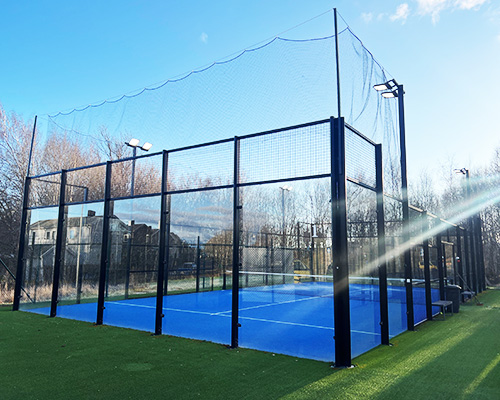
The orientation of a Padelplatz can directly affect player comfort, sunlight, wind exposure, lighting design, and the overall layout of a commercial sports facility.
For outdoor projects, court direction should be considered before foundations, drainage, pathways, and lighting are finalized.
This guide covers:
- Recommended Padel Court orientation
- Why north-south orientation is common
- How sunlight affects players
- How wind should influence the layout
- Multi-court planning
- Common orientation mistakes
What Is the Best Padelplatz Orientation?
For outdoor facilities, a north-south longitudinal orientation is generally preferred.
The main reason is sunlight.
When the long axis of the court runs east-west, players may spend part of the morning or afternoon facing directly toward a low sun.
This can affect:
- Serves
- Smashes
- High balls
- Visibility through glass
For tournament projects, FIP guidance recommends a north-south longitudinal layout while allowing adjustments according to local geographic conditions.
Why Sun Position Matters
Padel includes many overhead shots.
Players frequently look upward when preparing:
- Smashes
- Lobs
- Bandejas
- Viboras
Low-angle sunlight can therefore be particularly distracting.
Morning Sun
An east-west court may create stronger glare toward one end during early operating hours.
Afternoon Sun
The opposite end can experience similar problems later in the day.
A north-south orientation usually reduces prolonged direct low-angle sunlight along the primary playing direction.
Can the Court Be Rotated Away From True North?
Yes.
Site conditions may justify adjustments.
Factors include:
- Latitude
- Nearby buildings
- Mountains
- Trees
- Available land
- Prevailing winds
The objective is not to follow compass direction blindly.
The goal is to reduce environmental problems while maintaining an efficient site layout.
Consider Surrounding Buildings
Buildings can significantly change the sun and wind conditions around a Padel Court.
A tall structure may provide useful afternoon shade.
However, buildings can also create:
- Wind tunnels
- Turbulence
- Uneven shade
- Rainwater runoff
Survey the Site at Different Times
Where possible, inspect the site:
- Morning
- Midday
- Late afternoon
This helps identify conditions that may not be obvious from architectural drawings alone.
Padel Court Orientation and Wind
Wind is another important factor for outdoor Padel Courts.
Strong crosswinds can affect:
- Ball trajectory
- Player comfort
- Court usability
But orientation should not be changed only for playing comfort without considering structural engineering.
Prevailing Wind
Review local wind information before construction.
Consider whether the site is:
- Open countryside
- Coastal
- Rooftop
- Protected by buildings
- Surrounded by trees
More exposed locations may require stronger structural consideration.
Do Not Use Windscreens Without Review
Some clubs install banners or windscreens to reduce wind.
These additions can increase the amount of wind force transferred to:
- Mesh panels
- Steel posts
- Anchors
- Foundations
A structure originally designed with open mesh should not automatically be covered with large solid panels.
Orientation and Padel Court Lighting
Court orientation should also be coordinated with lighting.
LED fixtures should provide balanced illumination without creating uncomfortable glare.
When planning the site, consider:
- Light pole positions
- Adjacent courts
- Glass reflections
- Nearby properties
Avoid Light Conflicts Between Courts
In multi-court clubs, poorly arranged lights can create glare for players on neighbouring courts.
The entire facility should therefore be designed as one lighting system rather than treating each court independently.
Multi-Court Padel Court Orientation
For a commercial club with several courts, consistent orientation usually creates a cleaner and more practical layout.
Benefits can include:
- Easier drainage planning
- Simpler electrical routes
- Better circulation
- Consistent lighting
- More organized appearance
Example Layout
| Layout | Main Advantage | Main Consideration |
|---|---|---|
| Courts side by side | Efficient land use | Player circulation |
| Two rows of courts | Suitable for larger clubs | Central walkway needed |
| Show court + standard courts | Strong event presentation | More space required |
| Mixed orientation | Fits irregular land | Sun and circulation may vary |
Leave Space Between Courts
Do not position courts only according to their 20 × 10 m internal dimensions.
Additional space may be needed for:
- Gates
- Walkways
- Wartung
- Spectators
- Beleuchtung
- Emergency access
For tournament facilities, outside-play areas may require additional unobstructed space depending on the competition format.
Orientation for Indoor Padel Courts
Sunlight is less important for fully enclosed indoor courts, but orientation still affects the building layout.
Consider:
- Roof beams
- Columns
- HVAC ducts
- Beleuchtung
- Fire systems
- Entrances
- Spectator seating
Building Efficiency
Aligning several courts in the same direction can make better use of:
- Structural spans
- Lighting rows
- Ventilation
- Walkways
The building should be designed around the final court layout whenever possible.
Orientation for Hotels and Resorts
Hotel projects often balance sports performance with landscape design.
A Padel Court may need to coordinate with:
- Swimming pools
- Gardens
- Guest rooms
- Restaurants
- Sea views
Consider Guest Comfort
Avoid positioning the court so that:
- Lights shine toward rooms
- Player noise is directed toward quiet areas
- Major pathways cross the playing zone
The best orientation should support both the players and the surrounding property.
Orientation for Coastal Padel Courts
Coastal sites require special attention.
Besides sunlight, consider:
- Strong prevailing winds
- Salt exposure
- Open terrain
A court near the sea may need stronger corrosion protection and a site-specific structural review.
The location of buildings and landscaping can sometimes provide useful wind protection without attaching additional solid surfaces to the court structure.
Common Padel Court Orientation Mistakes
Choosing Direction Only to Fit More Courts
Maximizing court count may create poor sunlight conditions.
Ignoring Afternoon Sun
A site may look suitable during a morning survey but become uncomfortable later.
Ignoring Future Expansion
The first two courts may prevent another row from using a suitable orientation.
Positioning Lights Without Considering Glass
Poor fixture angles can create distracting reflections.
Ignoring Prevailing Wind
An exposed court may become uncomfortable during certain seasons.
Padel Court Orientation Checklist
Before approving the site layout, confirm:
- North direction
- Sunrise and sunset
- Prevailing wind
- Nearby buildings
- Trees and landscaping
- Court quantity
- Future expansion
- Gate locations
- Walkways
- Lighting positions
- Drainage
- Spectator areas
Abschluss
Padel Court orientation should be decided during the earliest stage of site planning.
For outdoor projects, a north-south longitudinal layout is generally preferred because it reduces the impact of low morning and afternoon sunlight.
However, the final direction should also consider wind, surrounding buildings, available land, lighting, drainage, circulation, and future expansion.
A well-oriented Padelplatz can improve playing comfort while also making the complete facility easier to operate and expand.
Häufig gestellte Fragen
Which direction should a Padel Court face?
For outdoor courts, a north-south longitudinal orientation is generally preferred to reduce problems caused by low-angle sunlight.
Can a Padel Court face east-west?
It can, particularly when the site geometry requires it, but morning and afternoon glare should be evaluated carefully.
Does Padel Court orientation affect wind?
Yes. The direction and surrounding buildings can influence how wind moves through the playing area.
Does orientation matter for indoor courts?
Yes, although sunlight is less important. Indoor orientation affects building columns, lighting, ventilation, access, and spectator circulation.
Should every court in a club face the same direction?
Usually this creates a more efficient layout, although irregular sites may require different solutions.
When should Padel Court orientation be decided?
Before foundation, drainage, electrical, and lighting work begins.