
BLOG
Padel Rules: Beginner’s Quick Guide
Recent Articles
Introduction
Padel is rapidly becoming one of the most popular racket sports worldwide, especially among beginners and casual players. Unlike tennis or squash, padel combines fast-paced rallies with unique court dynamics that rely on walls and teamwork. Understanding Padel Rules is essential for anyone wanting to enjoy the game safely, improve quickly, and compete fairly. This guide covers everything a beginner needs to know—from court setup to scoring, serving, and strategies—while providing practical tips and real-world examples.
Key Takeaways of This Guide
- Basic Padel Rules every beginner must know
- Court dimensions and layout explained
- Equipment and doubles player positions
- Scoring system and match structure
- Serving rules, faults, and tips
- Common beginner mistakes and how to avoid them
- Comparison: Padel vs Tennis
- Practical strategies for wall usage and positioning
- Safety, etiquette, and court behavior
- FAQs to clarify typical beginner questions
Table of Contents
Understanding Padel Rules
Concept of Padel Rules
Padel Rules are designed to ensure fair, safe, and enjoyable gameplay. Unlike traditional tennis, padel allows walls and fence rebounds, making tactical positioning and teamwork crucial. Beginners should start with the fundamentals: serve, scoring, and court awareness.
Importance of Learning Rules Early
Knowing the rules prevents disputes during games, reduces unnecessary mistakes, and helps players focus on technique rather than worrying about scoring or faults.
Padel Court Dimensions
Standard Court Size
- Length: 20 meters
- Width: 10 meters
- Wall height: 3 meters for back walls, 2 meters for side walls
Court Layout Basics
The court includes service boxes, a central net, and side walls. Proper positioning within these zones is critical for legal shots and effective gameplay.
Comparison Table: Padel vs Tennis Court
| Feature | Padel Court | Tennis Court |
|---|---|---|
| Length | 20 m | 23.77 m |
| Width | 10 m | 10.97 m |
| Wall Use | Allowed | Not allowed |
| Net Height | 88–92 cm | 91–107 cm |
| Doubles Only | Standard | Optional |
Equipment Essentials
Padel Racket
Padel rackets are solid, perforated, and shorter than tennis rackets. They offer better control for wall rebounds and fast volleys.
Padel Ball
Similar to a tennis ball but slightly less pressurized, the padel ball travels slower, making it easier for beginners to control and return shots.
Shoes and Safety Gear
Proper padel shoes with lateral support prevent ankle injuries. Beginners should also consider wristbands and comfortable grips for longer practice sessions.
Player Positions and Doubles Play
Standard Doubles Play
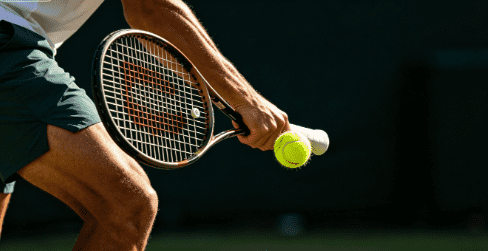
Padel is predominantly played in a doubles format, with two players on each side of the court. Unlike singles, doubles play emphasizes teamwork, communication, and strategic court positioning. Successful doubles teams coordinate movements to cover the court efficiently, minimize gaps, and anticipate opponents’ shots.
Key Principles for Doubles Play
- Communication: Constantly signal to your partner about intended shots, potential lobs, and switching positions.
- Court Awareness: Players should be aware of both their position and their partner’s location to avoid overcrowding or leaving empty spaces.
- Rotation: Rotating positions after each point or rally ensures balanced coverage and prevents one player from overexertion.
A study from the International Journal of Sports Science & Coaching (2022) indicates that doubles pairs using structured rotation strategies win approximately 20% more points than pairs who remain static. This highlights the importance of position management in competitive play.
Beginner Positioning Tips
For beginners, understanding how to cover the court effectively is essential for staying competitive. Proper positioning reduces the chance of leaving open angles for opponents and improves defensive and offensive opportunities.
Tips for New Players:
- Divide the Court: Each player should take responsibility for roughly half of the court, with one focusing on baseline defense and the other covering the net area.
- Avoid Crowding: Especially near the net, overcrowding limits reaction time and can create confusion during fast rallies.
- Rotation After Points: After each point, swap positions when appropriate. This ensures both players develop balanced skills for net play and baseline defense.
In beginner tournaments, coaches often encourage players to adopt a “baseline-net rotation” approach, where the player at the net occasionally drops back to handle lobs, while the baseline player moves forward to intercept quick volleys. This approach not only improves individual skills but fosters teamwork understanding early on.
Scoring System and Match Structure
Basic Scoring
Padel scoring is closely related to tennis but includes nuances that beginners must learn to avoid confusion.
- Points: Progress as 15 → 30 → 40 → Game.
- Game: A standard game is won by the first team to reach four points with at least a two-point margin.
- Set: Typically played as the best of three sets. Each set is won by reaching six games with a minimum two-game lead.
New players often misunderstand the importance of holding serve and maintaining point momentum. Effective use of serve and placement can shift pressure onto opponents, particularly in tight games where one or two points determine the outcome.
Tie-Break Rules
When a set reaches a 6-6 game score, a tie-break is used to determine the set winner.
- 7-Point Tie-Break: The first team to reach seven points, with a margin of two points, wins the set.
- Serve Alternation: The serve rotates every two points after the initial serve, requiring players to be mentally prepared for sudden role switches.
According to Padel Europe Federation Guidelines (2023), tie-breaks often test beginners’ mental focus more than technical skill, as pressure situations increase the likelihood of unforced errors. Practicing tie-break scenarios is therefore recommended in training sessions.
Serving Rules
Proper Serve Execution
Serving in padel is unlike tennis and must be executed under specific regulations:
- Underhand Serve: The ball must be struck underhand rather than overhead, emphasizing control over power.
- Diagonal Bounce: The ball must bounce once in the diagonally opposite service box before being played by the opponent.
- Two Attempts: Each player has two attempts per point, similar to tennis, to deliver a valid serve.
Common Serving Faults
Many beginners struggle with serving because of improper technique or positioning. Common faults include:
- Net Faults: The ball hits the net and fails to reach the correct service box.
- Foot Faults: The server steps over the baseline before striking the ball.
- Incorrect Service Box: Serving into the wrong diagonal box leads to point loss.
Coaches often recommend repetitive underhand serve drills to develop muscle memory and consistency. Even short daily practices can reduce faults by up to 50% within a month.
Common Beginner Mistakes
Ignoring Wall Strategy
Beginners often overlook the unique wall rules in padel, missing opportunities to rebound shots off side or back walls. Proper use of walls can:
- Extend rallies, allowing more strategic placement of returns.
- Enable defensive recovery when out of position.
- Create offensive angles to surprise opponents.
Ignoring wall strategy often leads to rushed shots, early errors, and inefficient court coverage.
Incorrect Serve Technique
New players frequently attempt to mimic tennis serves, resulting in underhand errors or illegal placements. Focusing on proper underhand motion and controlled power ensures a higher first-serve success rate and reduces opponent scoring opportunities.
Poor Court Coverage
Lack of rotation and communication leaves large gaps open for opponents. Beginner teams should practice coordinated movement drills to understand spatial dynamics and avoid leaving empty zones, particularly near corners and the net.
Using Walls Effectively
Defensive Wall Play
Utilizing the back wall effectively allows players to:
- Delay opponent attacks
- Regain position for offensive shots
- Execute controlled lobs that push opponents back
Training tip: New players should start with low-power returns and gradually incorporate angled rebounds to improve accuracy and depth.
Offensive Wall Shots
Side wall angles create surprise shots that are difficult for opponents to predict. Key benefits include:
- Minimal effort for maximum point potential
- Opportunities to place the ball in open spaces
- Quick transition from defensive to offensive play
A practical approach for beginners is to practice side-wall angles during warm-up drills, gradually increasing shot speed and precision.
Padel vs Tennis
| Feature | Padel | Tennis |
|---|---|---|
| Court Size | 20×10 m | 23.77×10.97 m |
| Wall Rebounds | Allowed | Not allowed |
| Serve Type | Underhand | Overhand |
| Scoring | Tennis-like | Standard tennis |
| Doubles Preference | Standard | Optional |
Practical Tips for Beginners
- Always communicate with your partner
- Focus on underhand serve technique first
- Use walls strategically for both defense and attack
- Track score and faults during practice matches
- Warm-up and stretch to prevent injuries
Safety and Etiquette
Court Safety
- Avoid swinging rackets near others
- Clear the area before chasing balls
Player Etiquette
- Respect opponents’ serves and turns
- Keep noise and distractions to a minimum
Conclusion
Understanding Padel Rules is crucial for beginners to enjoy the game, improve skills, and compete effectively. With knowledge of court dimensions, scoring, serving, doubles positioning, wall strategies, and safety, new players can confidently start playing while minimizing mistakes. By practicing these basics, beginners not only follow the rules but also gain a solid foundation for advanced padel techniques.
FAQ
1. Can I play padel solo?
Singles is possible but doubles is standard for beginner-friendly games.
2. What are legal wall rebounds?
Ball may hit side or back walls after bouncing once on your side before opponent returns.
3. How many sets per match?
Most beginner matches are best of 3 sets with tie-breaks at 6-6.
4. What is the proper serve technique?
Serve underhand from behind baseline, aiming diagonally across.
5. Are specialized shoes necessary?
Yes, lateral support and grip reduce ankle injuries and improve stability.