
BLOG
Safe and Effective Strength Training Equipment for Seniors
Recent Articles
Maintaining strength, mobility, and joint health is essential for seniors to live independently and safely. As people age, muscle mass decreases, flexibility diminishes, and joint health can decline, increasing the risk of falls and injuries. Choosing the right strength training equipment for seniors ensures safer workouts, improved physical performance, and better overall quality of life. Modern innovations, particularly non-electric machines made in China, offer effective, practical, and safe solutions tailored to the needs of older adults.
Whether you want to strengthen your core, improve leg stability, or enhance upper body strength, the right equipment provides a controlled, progressive approach to senior fitness. This article covers essential machines, expert insights, detailed exercise methods, and tips for creating a safe, effective senior workout routine.
Table of Contents
Key Takeaways from This Article
- Features of safe, senior-friendly strength training equipment
- Non-electric, innovative solutions from China for seniors
- Exercises targeting core, lower body, and upper body muscles
- Detailed comparisons of popular machines
- Practical tips for safe and effective workouts
- Expert opinions and research-based insights
- Frequently asked questions reflecting common user concerns
Understanding Senior Strength Training Needs
Why Strength Training is Critical for Seniors
Sarcopenia, the age-related decline in muscle mass and strength, affects nearly 50% of adults over 80, according to the National Institute on Aging. Muscle loss can lead to poor balance, slower mobility, increased risk of falls, and reduced independence. Engaging in regular strength training helps seniors preserve muscle mass, maintain joint stability, and improve overall physical function.
Benefits Beyond Muscle
Strength training offers a variety of health benefits for seniors:
- Bone Health: Resistance training increases bone density, helping to reduce osteoporosis risk.
- Joint Mobility: Targeted exercises improve flexibility in the knees, hips, shoulders, and elbows.
- Metabolic Health: Regular strength exercises help maintain healthy blood sugar levels, support cardiovascular health, and improve overall metabolic function.
- Mental Health: Exercise stimulates the release of endorphins and supports cognitive function, reducing the risk of age-related decline.
Dr. Emily Zhang, a geriatric physiotherapist at Beijing Rehabilitation Center, emphasizes:
“Strength training is essential for seniors. It’s not just about building muscle—it’s about preserving independence, mobility, and quality of life.”
Why Non-Electric Equipment is Ideal
Non-electric machines allow seniors to control resistance manually, eliminating the risk associated with electrical malfunctions. Manual resistance ensures gradual, safe progression, which is critical for preserving joint health. Non-electric machines are also easier to maintain and can be used anywhere without the need for power sources, making them ideal for home gyms or senior activity centers.
Innovations in Chinese-Made Equipment
China has become a leader in producing innovative strength training equipment tailored for seniors. Many machines are designed with adjustable resistance, compact dimensions, ergonomic seating, and clear instructions to facilitate safe and effective workouts. These features make Chinese-made machines a cost-effective yet highly functional choice for senior fitness programs.
Core Types of Strength Training Equipment for Seniors
Backpull Trainer: Strengthen Waist and Abdominal Muscles

Overview
The Backpull Trainer targets the waist and abdominal muscles while improving hip and waist flexibility. This makes it an essential tool for core strengthening and posture correction.
Exercise Protocol
- Sit on the seat and grip the armrests firmly.
- Use the strength of your waist and abdominal muscles to pull the equipment downward.
- Gradually increase counterweights according to your fitness level.
- Perform five repetitions per set, resting at least three minutes between sets. Up to five consecutive sets can be completed.
Benefits
Improves posture, enhances core stability, supports safer daily movements, and reduces lower back pain. Seniors with a history of back discomfort find this machine particularly effective.
Squat Up Trainer: Enhance Leg Strength

Overview
The Squat Up Trainer focuses on quadriceps, brachialis major, and hip/knee joint flexibility. It strengthens the lower body and enhances functional mobility.
Exercise Protocol
- Stand in front of the equipment and hold the handrails.
- Use your leg strength to perform a controlled squat-up motion.
- Adjust counterweights gradually for progressive resistance.
- Perform five repetitions per set, with a minimum of three minutes rest between sets, and up to five sets.
Benefits
Boosts leg strength, improves knee and hip mobility, reduces fall risk, and supports walking endurance. It is especially beneficial for seniors recovering from mild joint injuries or surgery.
Dual Arm Trainer: Upper Body Strength and Balance
Overview
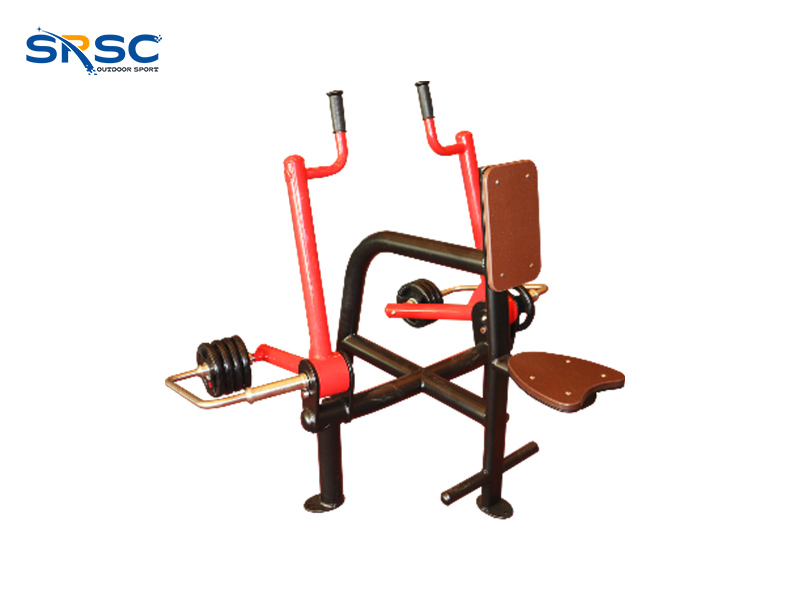
The Dual Arm Trainer strengthens the latissimus dorsi and biceps while enhancing elbow and shoulder joint flexibility.
Exercise Protocol
- Sit and grip the armrests.
- Pull using the strength of your back and arms.
- Gradually increase counterweights according to your fitness level.
- Perform five repetitions per set, resting three minutes between sets.
Benefits
Supports arm mobility, improves upper body strength for daily activities such as lifting and carrying, and promotes muscle balance between the left and right sides of the body.
Push Trainer: Deltoids and Biceps for Joint Health

Overview
The Push Trainer targets deltoids and biceps, improving elbow and shoulder joint function.
Exercise Protocol
- Sit and hold the armrests firmly.
- Push the equipment forward using arm strength.
- Gradually increase resistance according to ability.
- Perform five repetitions per set, with up to five sets allowed per session.
Benefits
Enhances arm mobility, reduces stiffness, and supports functional independence for tasks such as reaching, lifting, or pushing objects.
Sitting Hook Leg Trainer: Knee Joint Function

Overview
Targets hamstrings and calves to strengthen knee and lower leg function, improving stability and mobility.
Exercise Protocol
- Sit, grip handles, and perform the leg hook motion.
- Move back and forth using leg strength, gradually increasing counterweights.
- Perform five repetitions per set, resting three minutes between sets, up to five sets.
Benefits
Improves knee stability, enhances flexibility, and supports safe walking and climbing activities. Ideal for seniors seeking better lower body functionality and injury prevention.
Equipment Comparison Table
| Equipment | Target Muscles | Joint Focus | Dimensions (mm) | Resistance Type | Ideal For |
|---|---|---|---|---|---|
| Backpull Trainer | Waist, Abs | Waist/Hip | 1424 x 1196 x 1355 | Adjustable Counterweights | Core Stability |
| Squat Up Trainer | Quads, Brachi. | Hip/Knee | 1672 x 1610 x 1453 | Adjustable Counterweights | Lower Body Strength |
| Dual Arm Trainer | Latissimus, Biceps | Elbow/Shoulder | 1308 x 1515 x 1297 | Adjustable Counterweights | Upper Body Balance |
| Push Trainer | Deltoids, Biceps | Shoulder/Elbow | 1421 x 1528 x 1234 | Adjustable Counterweights | Arm Strength |
| Sitting Hook Leg Trainer | Hamstrings, Calves | Knee | 1755 x 1240 x 1159 | Adjustable Counterweights | Knee Mobility |
How to Choose the Right Equipment
Safety Considerations
Select machines with stable frames, ergonomic seating, and clear instructions. Non-electric machines simplify operation and reduce hazards.
Target Muscle Groups
Identify your personal goals: core stability, leg strength, or upper body mobility. Each machine serves a specific purpose.
Space and Layout
Ensure sufficient room to move safely around equipment. Compact designs are particularly advantageous for home gyms or senior activity centers.
Progressive Resistance
Gradual resistance prevents overexertion and supports safe strength gains, making it ideal for seniors with varying fitness levels.
Budget and Quality
While price is important, prioritize durability, ergonomic design, and ease of maintenance. Innovative Chinese designs often provide excellent value.
Expert Opinions and Data Insights
- Dr. Emily Zhang, Geriatric Physiotherapist: “Controlled resistance is crucial for seniors. Machines like Backpull and Squat Up Trainers allow safe progression while improving strength and mobility.”
- Harvard Health Publishing (2023): Seniors performing resistance training twice per week showed 15–20% increases in lower body strength within 12 weeks.
- National Institute on Aging: Non-electric machines are recommended for home use due to safety, simplicity, and ease of maintenance.
- Professor Li Wei, Exercise Science Expert at Shanghai University: “Seniors benefit most from equipment that targets multiple joints, promotes balance, and allows adjustable resistance to match individual capacity.”
Advanced Concepts in Senior Fitness
Multi-Joint vs Single-Joint Machines
- Multi-joint machines like Squat Up Trainer engage several muscles simultaneously, improving coordination.
- Single-joint machines like Push Trainer focus on specific muscles, ideal for targeted rehabilitation.
Core vs Peripheral Focus
- Core-focused equipment improves balance and stability.
- Peripheral-focused machines enhance limb strength and functional independence.
Customizing Frequency and Volume
- Beginners: 2 sessions/week, 1–2 sets per muscle group
- Intermediate: 3 sessions/week, 2–3 sets
- Advanced: 3–4 sessions/week, up to 5 sets
Progressive Resistance Guidelines
- Increase counterweights gradually by 5–10% every 2–3 weeks.
- Monitor form and fatigue levels to prevent overuse injuries.
- Use rest intervals of at least 3 minutes between sets to allow recovery.
Sample Senior Workout Routine
| Day | Equipment | Sets x Reps | Focus |
|---|---|---|---|
| Mon | Backpull Trainer | 3 x 5 | Core & Waist |
| Tue | Squat Up Trainer | 3 x 5 | Legs & Hip/Knee |
| Thu | Dual Arm Trainer | 3 x 5 | Upper Body Strength |
| Fri | Push Trainer | 3 x 5 | Deltoids & Biceps |
| Sat | Sitting Hook Leg Trainer | 3 x 5 | Knee & Calf Mobility |
Rest 3 minutes between sets. Maximum 5 consecutive sets per exercise are recommended.
Additional Tips for Safe Senior Workouts
- Always warm up with light stretches or walking before using equipment.
- Maintain proper posture and controlled movements during each exercise.
- Start with minimal resistance and gradually increase to avoid injury.
- Hydrate adequately and listen to your body’s signals for fatigue or discomfort.
- Consider professional guidance for the first few sessions to ensure correct form.
Final Thoughts
Selecting the right strength training equipment for seniors is essential for safety, effectiveness, and long-term health. Non-electric, innovative machines from China such as the Backpull Trainer, Squat Up Trainer, Dual Arm Trainer, Push Trainer, and Sitting Hook Leg Trainer offer a safe, progressive, and practical approach to senior fitness.
When integrated into a structured routine with proper guidance, these machines help seniors maintain independence, improve mobility, enhance strength, and enjoy a higher quality of life. Consistency, safety, and proper technique remain the cornerstones of effective strength training for seniors.
FAQ
Is strength training safe for seniors with joint problems?
Yes. Non-electric, adjustable machines reduce joint stress and allow controlled movements, making them safe for arthritis or post-surgery recovery.
How quickly can seniors expect results?
Most notice improvements in strength, balance, and flexibility within 6–8 weeks of consistent training.
Can multiple machines be used in one session?
Yes. Combining machines for a full-body routine ensures comprehensive fitness improvements.
How should progress be tracked safely?
Monitor repetitions, resistance levels, and functional improvements (e.g., walking speed, chair rise test) instead of focusing solely on weight lifted.
Are Chinese-made machines reliable and effective?
Yes. Many Chinese manufacturers produce innovative, durable, and ergonomically designed machines tailored for seniors.
How often should seniors train per week?
Typically 2–3 strength training sessions per week, allowing at least 48 hours of rest between workouts targeting the same muscle groups.