
مدونة
Judo Mats Buying Guide: Thickness, Density, and Safety
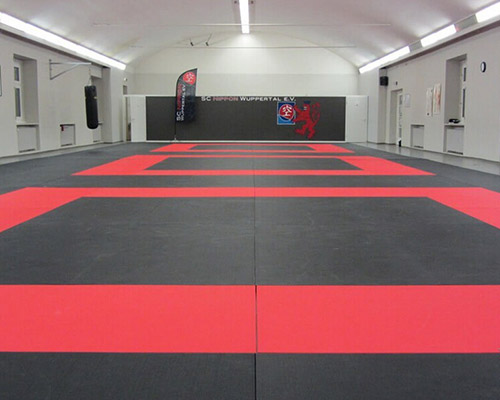
المقالات الأخيرة
جدول المحتويات
Key points covered in this guide:
- How Judo Mats differ from general-purpose gym mats
- Why thickness and foam density must be evaluated together
- How competition mats compare with training and school mats
- Which surface texture provides controlled grip
- Why anti-slip backing and perimeter restraint matter
- How to calculate mat quantity for a dojo or competition area
- What buyers should verify about standards and product approval
- How to inspect, install, clean, store, and replace martial arts mats
Professional حصائر الجودو must provide a stable standing surface while absorbing energy during repeated throws, falls, groundwork, and movement.
A mat that is too soft may feel unstable underfoot. A mat that is too hard may provide insufficient cushioning during high-impact falls. The correct product must balance firmness, impact absorption, surface friction, dimensional stability, hygiene, and durability.
The International Judo Federation maintains current sport and organisation regulations, official supplier information, and other technical documents through its website. Buyers preparing sanctioned competitions should verify the latest requirements and exact product approval status before placing an order.
This guide explains how schools, dojos, martial arts clubs, sports centres, event organisers, and international distributors can compare Judo Mats for different applications.
What Are Judo Mats?

Judo Mats, also called tatami, are specialised sports mats designed for throwing, falling, standing movement, and groundwork.
A typical mat includes:
- A shock-absorbing foam core
- A durable outer surface
- Textured player contact area
- Anti-slip underside
- Reinforced edges or corners
- Defined dimensions and thickness
- Colour options for activity and safety zones
ال SRSC Judo Mats use high-density foam with a durable vinyl surface and are offered as modular panels or larger prepared mat systems for training and competition applications.
Judo Mat vs Ordinary Exercise Mat
A yoga or general exercise mat is mainly intended for floor exercises, stretching, and low-impact activity.
Judo includes frequent throws and controlled falling techniques. Its surface therefore needs different performance characteristics.
| Comparison Area | حصائر الجودو | General Exercise Mats |
|---|---|---|
| Main activity | Throws, falls, gripping, groundwork | Stretching and floor exercise |
| Impact requirement | عالي | Low to moderate |
| Surface stability | Must support standing movement | Often softer or more flexible |
| Installation | Complete connected area | Individual personal mat |
| Edge movement | Must be controlled | Less critical |
| Cleaning | Designed for shared intensive use | Usually individual use |
| Competition suitability | Product-specific verification required | Normally unsuitable |
Concept: Tatami System
A tatami system is the complete installed surface rather than one individual panel.
Its performance depends on the mats, subfloor, joints, perimeter restraint, colour layout, cleaning programme, and condition of every module.
Training vs Competition Judo Mats
The intended use should be defined before the buyer selects material, thickness, dimensions, or certification.
Training Mats
Training products may be used for:
- Daily club practice
- Beginner instruction
- Technical drills
- School physical education
- Recreational martial arts
- General groundwork
A training mat still needs suitable shock absorption and stability, but the purchasing specification may provide more flexibility in dimensions, colours, and approval requirements.
Competition Mats
Competition products may need to meet:
- Federation rules
- Event dimensions
- Colour-zone requirements
- Product approval rules
- Defined safety performance
- Broadcast appearance requirements
- Repeated installation and removal
The IJF currently publishes an official supplier list that separately identifies approved tatami suppliers and approved testing laboratories. Buyers should check the exact product and supplier status instead of accepting a general claim that a mat is “competition grade.”
School Mats
Schools may prioritise:
- Durable construction
- Simple cleaning
- Stable installation
- Moderate cost
- Multi-age use
- Easy replacement
- Clear safety-zone colours
The selected product must still be appropriate for the planned throws and age groups.
Understand Judo Mat Thickness
Thickness is one of the first specifications buyers compare, but it should not be considered alone.
Common Purchasing Ranges
Depending on the material and intended activity, sports-mat products may be offered in thicknesses such as:
- 30 mm
- 40 mm
- 50 mm
- Project-specific configurations
For example, SRSC’s XPE roll-mat range is offered in 3 cm, 4 cm, and 5 cm options for martial arts and other impact-related activities. These roll mats are a separate product type from modular competition Judo Mats, so their specifications should not be applied automatically to a tatami project.
Thinner Mats
A thinner product may provide:
- Lower overall floor height
- Easier transport
- Reduced storage volume
- Lower product weight
- Potentially lower cost
However, it must still demonstrate suitable performance for the intended training activity.
Thicker Mats
A thicker product can create more space for impact absorption, but thickness alone does not guarantee safety.
A thick mat made from unsuitable foam may feel unstable, compress excessively, or fail to recover evenly.
Concept: Effective Cushioning
Effective cushioning is the mat’s ability to manage impact while remaining stable enough for standing movement.
It depends on thickness, foam construction, density, compression, recovery, cover design, and the floor beneath the mat.
Density vs Hardness: What Is the Difference?
Buyers often use the words density and hardness as though they mean the same thing.
They describe different characteristics.
Foam Density
Density represents the amount of material contained within a defined volume.
It can influence:
- Mat weight
- Structural consistency
- Compression resistance
- متانة
- Recovery
- Transport cost
A higher-density value does not automatically mean the mat is safer or better for every user.
Surface Hardness or Firmness
Firmness describes how resistant the mat feels under load.
A mat can use a relatively dense foam but still be engineered to provide controlled cushioning through its internal structure.
Compression Recovery
After repeated impact, the mat should recover rather than remain permanently compressed.
Poor recovery can create:
- Low areas
- Uneven joints
- Different standing conditions
- Reduced cushioning
- Visible surface waves
Why Buyers Need Test Data
Judo mat selection should be based on measured performance rather than density alone.
EN 12503-3 specifies performance and safety requirements for Judo Mats used in schools, training, and competition. Buyers serving European markets can request current product test documentation showing the exact mat model and test scope.
Compare Common Foam Materials
Different foam systems can provide different combinations of cushioning, stability, weight, and cost.
| Foam Type | General Characteristic | Buyer Consideration |
| Rebonded PU foam | Compressed foam particles with firm support | Density consistency and recovery |
| EVA foam | Closed-cell structure with low water absorption | Firmness and long-term compression |
| رغوة XPE | Cross-linked polyethylene structure | Weight, resilience, and connection method |
| Layered foam | Combines materials or firmness levels | Bonding quality and performance balance |
| Moulded foam | Formed as a complete core | Consistency and replacement compatibility |
Rebonded Polyurethane Foam
Rebonded PU foam is often used when the manufacturer wants a firm and dense internal structure.
Buyers should inspect:
- Density consistency
- Odour
- Particle bonding
- Edge integrity
- Compression recovery
- Product weight
EVA Foam
EVA products are widely used in martial arts flooring because they can provide a closed-cell structure and straightforward modular production.
Not every EVA puzzle mat is suitable for repeated Judo throws. Product thickness, hardness, interlock strength, subfloor, and testing remain important.
XPE Foam
XPE is a cross-linked polyethylene foam that can provide resilience, moisture resistance, and relatively low weight.
SRSC’s XPE roll mats use densities of 33 kg/m³ or 40 kg/m³ and can be supplied with PVC or carpet surfaces using tape or hook-and-loop connections. These values apply to the listed roll-mat product and should not be confused with the specifications of dense modular tatami.
Do Not Compare Different Materials by Density Alone
A density figure from one foam family cannot always be compared directly with the same number from another material.
The buyer should compare the finished mat’s tested performance and intended application.
Choose the Right Mat Surface
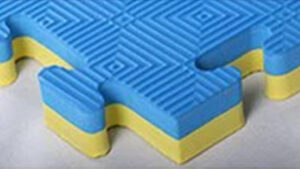
The top surface affects footwork, groundwork, cleaning, skin contact, and appearance.
Tatami Texture
A traditional tatami-style texture creates a visible grain across the surface.
It should provide controlled grip without becoming excessively abrasive.
Smooth Vinyl Surface
A smoother vinyl surface may be easier to wipe but can become slippery when:
- Dust accumulates
- Sweat remains
- Incorrect cleaning products are used
- The surface coating wears
Controlled Friction
The mat should allow athletes to:
- Step and turn confidently
- Perform gripping movements
- Complete throws
- Move during groundwork
- Avoid uncontrolled sliding
Too much friction can also be undesirable because feet or skin may stop suddenly during movement.
Surface Durability
Inspect for resistance to:
- Repeated footwear contact
- Fingernails
- Cleaning
- Sweat
- Disinfectants
- Dragging
- Edge wear
- Colour transfer
The SRSC competition Judo Mat page describes a durable vinyl cover over a high-density foam core for repeated training and impact use.
Check the Anti-Slip Bottom
Even a high-quality top surface can become unsafe when the entire mat moves on the floor.
Common Bottom Designs
A mat underside may use:
- Textured rubber
- Anti-slip latex
- Waffle pattern
- High-friction coating
- Hook-and-loop connection
- Dedicated subframe or retaining border
Subfloor Compatibility
Anti-slip performance can change depending on whether the mat is installed over:
- Hardwood flooring
- أسمنت
- Vinyl
- Ceramic tile
- Raised platform
- Carpet
- Rubber underlay
The supplier should know the actual installation surface before recommending the underside.
Perimeter Restraint
A complete area may use:
- Fixed timber borders
- Wall-to-wall installation
- Retaining frames
- Edge ramps
- Tensioned covering systems
- Mat carts or temporary event frames
Concept: Mat Migration
Mat migration is the gradual movement of individual panels during use.
It can create open joints, raised edges, uneven colour zones, and an unstable playing area.
Modular Tatami vs Roll Mats
Modular Judo Mats
Individual rectangular panels can be arranged into a larger surface.
Possible advantages include:
- Easy replacement of damaged sections
- Clear competition colour layouts
- Flexible area sizes
- Convenient panel identification
- Reusable event installation
Possible limitations include:
- More joints
- Heavy manual handling
- Storage requirements
- Need for perimeter restraint
Roll Mats
Roll systems cover larger areas with fewer visible joints.
Possible advantages include:
- Faster installation
- Reduced panel sorting
- Easier storage for selected facilities
- Convenient multi-purpose room conversion
Possible limitations include:
- Hook-and-loop or tape maintenance
- Curling at roll ends
- More difficult local replacement
- Different standing and impact characteristics
Which Type Is Better?
| Decision Factor | Modular Tatami | Roll Mat |
| Competition layout | Strong option when approved | Product-specific |
| Daily permanent dojo | Highly suitable | Suitable for selected systems |
| Temporary setup | Labour intensive | Faster |
| Local replacement | Easy | More complex |
| Storage shape | Flat panels | Rolled sections |
| Joint quantity | Higher | Lower |
| Colour zoning | Easy to configure | Requires prepared roll colours |
| Transport weight | Distributed across panels | Concentrated in large rolls |
The project should select the mat type according to the sport, approval requirements, room usage, storage, staff capacity, and installation frequency.
Calculate the Required Mat Area
Buyers should calculate the complete activity and safety area rather than only the central contest zone.
Information Needed
Before requesting a quotation, provide:
- Room length and width
- Column positions
- Doors
- Walls
- Radiators
- Storage
- Spectator areas
- Competition or training use
- Number of simultaneous areas
- Required safety zones
Basic Quantity Formula
For modular mats:
Required surface area ÷ area of one mat = preliminary mat quantity
The final order may also include:
- Perimeter cuts
- Spare mats
- Different zone colours
- Replacement stock
- Event-specific layouts
Check Current Competition Requirements
The IJF’s current Sport and Organisation Rules, dated January 21, 2026, are available through its official document library. Competition organisers should use the current rules and event instructions when confirming the contest area, safety zone, colours, and mat approval.
Avoid Leaving Hard Gaps
The final design should not leave exposed hard flooring between:
- Contest area
- Safety area
- Walls
- Platforms
- Equipment
- Adjacent mats
Where hard objects remain nearby, the venue may require additional clearance or padding.
Plan the Dojo Layout
Keep Walls and Columns Clear
Athletes may move beyond the centre of the activity area during throws and groundwork.
Avoid placing the mat surface immediately beside:
- Concrete columns
- Glass walls
- Radiators
- Storage cabinets
- Benches
- Doors
- Unprotected equipment
Create Safe Entry Points
Entrances should not introduce:
- Loose shoes
- Bags
- Cleaning equipment
- Raised thresholds
- Folded mat corners
- Cables
Separate Shoes and Barefoot Areas
A dojo can use a defined transition zone between outdoor footwear and the mat surface.
This can reduce dirt, grit, and moisture entering the training area.
Provide Storage
Storage should accommodate:
- Spare mats
- Cleaning tools
- Crash mats
- Training equipment
- Event borders
- Transport carts
Choose Suitable Colours
Common Judo Mat colours include:
- أحمر
- أزرق
- Yellow
- أخضر
- Grey
- أسود
- Custom combinations
Competition Colour Zones
Different colours can identify:
- Contest area
- Safety perimeter
- Adjacent competition area
- Walking routes
The layout should follow the rules applying to the planned event.
Training Colour Layout
A club may use colour to:
- Divide class groups
- Mark technical zones
- Support beginner instruction
- Separate warm-up areas
- Match the club identity
Confirm Colour Consistency
Request:
- Colour code
- Production sample
- Batch control
- UV and cleaning information
- Replacement matching policy
A replacement panel may appear noticeably different when it comes from another production batch.
Request Complete Product Documentation
A professional Judo Mat quotation should identify the exact product rather than describe it only as “high density.”
Material Information
Request:
- Foam type
- كثافة
- Hardness or firmness
- سماكة
- Cover material
- Surface texture
- Bottom material
- Edge construction
- Product weight
Performance Information
Depending on the market, request:
- Shock-absorption results
- Impact test
- Friction or slip performance
- Compression recovery
- Dimensional tolerance
- Fire performance
- Chemical testing
- Applicable standards
Approval Information
For IJF-sanctioned use, confirm:
- Exact supplier
- Exact product model
- Approval status
- Approval period
- Supporting certificate
- Approved laboratory
The IJF official supplier list currently identifies approved tatami suppliers and testing laboratories. A manufacturer’s general marketing statement should not replace verification in the official directory.
Order a Sample Before Bulk Procurement
A physical sample can help the buyer review:
- Surface grip
- Foam firmness
- Edge quality
- Colour
- Odour
- Bottom friction
- Surface cleaning
- Product weight
Test the Sample on the Real Floor
The same underside may behave differently on concrete, hardwood, vinyl, or tile.
Compare Several Samples Together
A small sample may feel acceptable when pressed by hand but perform differently as part of a complete installed area.
Where possible, request enough material to compare standing movement, connection stability, and surface feel.
Keep the Approved Sample
Label it with:
- Product model
- سماكة
- كثافة
- Colour
- Approval date
- Supplier signature
The approved sample can support factory inspection and delivery acceptance.
Packaging and International Shipping
Judo Mats occupy substantial container volume even when their individual shape is simple.
Packaging Priorities
Packaging should protect against:
- Moisture
- Crushing
- Surface abrasion
- Dirt
- Colour transfer
- Edge deformation
- Mixed batches
Confirm Packaging Units
Ask the supplier to state:
- Mats per package
- Package dimensions
- Package weight
- Total volume
- Pallet or loose loading
- Container quantity
- Unloading method
Avoid Long-Term Compression
Mats should not remain under uncontrolled heavy loads during storage.
Excessive compression can create temporary or permanent deformation.
Inspect the Container
At delivery, document:
- Container condition
- Seal
- Water entry
- Package movement
- Torn wrapping
- Crushed corners
- Package count
- Product labels
Install Modular Judo Mats Correctly
Step 1: Inspect the Subfloor
The floor should be:
- Clean
- Dry
- Stable
- Reasonably flat
- Free from sharp objects
- Free from oil and dust
Step 2: Confirm the Layout
Mark the:
- Activity area
- Safety area
- Colour zones
- Starting corner
- Perimeter restraint
- Door transitions
Step 3: Place the First Row
Use a straight wall or approved reference line.
Do not follow an uneven wall without checking the completed surface geometry.
Step 4: Keep Joints Tight
Panels should remain closely fitted without being forced into excessive compression.
Step 5: Install the Perimeter
Complete the retaining frame, wall connection, edge ramps, or other approved restraint.
Step 6: Inspect the Surface
Check for:
- Open joints
- Raised corners
- Mixed orientation
- Colour errors
- Unstable panels
- Contamination
- Hard objects below the mats
Cleaning and Hygiene
Judo Mats are shared surfaces that come into contact with hands, feet, clothing, and skin.
Daily Cleaning
A basic routine may include:
- Remove loose dirt
- Vacuum or dry-clean the surface
- Apply a compatible cleaning solution
- Use controlled moisture
- Remove remaining liquid
- Allow the surface to dry
Avoid Excessive Water
Water entering between or below the mats can create:
- Odour
- Mould
- Subfloor damage
- Discolouration
- Reduced anti-slip performance
Use Compatible Products
Strong solvents, abrasive brushes, oils, and unsuitable disinfectants may damage the vinyl texture or colour.
Request a written cleaning guide from the supplier.
Clean Under the Mats Periodically
Permanent installations should still be lifted according to an appropriate inspection schedule.
Check for:
- Moisture
- Dust
- Insects
- Subfloor damage
- Odour
- Mat-bottom wear
Inspect Judo Mats Regularly

Frequent Visual Checks
Look for:
- Open joints
- Torn surfaces
- Raised edges
- Permanent compression
- Loose vinyl
- Slippery areas
- Stains
- Mat movement
Check High-Use Areas
Wear may be greater near:
- Dojo entrances
- Central throwing zones
- Instructor positions
- Equipment storage
- Repeated drill areas
Rotate Panels Where Appropriate
For a training facility, planned panel rotation may help distribute wear.
Competition colour zones should remain consistent with the approved layout.
Replace Damaged Mats
A mat may need replacement when it has:
- Torn surface material
- Exposed foam
- Permanent low areas
- Uncontrolled movement
- Damaged edges
- Significant loss of cushioning
- Unremovable contamination
Judo Mat Procurement Checklist
| Specification Area | Buyer Check |
| Intended use | School, training, club, or competition |
| Product type | Modular tatami or roll system |
| Foam material | PU, EVA, XPE, or layered system |
| سماكة | Confirmed for the exact application |
| كثافة | Stated with test method where relevant |
| Firmness | Balanced for standing and impact |
| سطح | Textured, durable, and cleanable |
| Bottom | Compatible with the actual subfloor |
| أبعاد | Product and installed-area dimensions |
| Colour | Contest, safety, and custom options |
| Testing | Exact product reports |
| Approval | Verified for the intended event |
| Packaging | Moisture and deformation protection |
| Spare stock | Matching replacement panels |
| Warranty | Compression, cover, and manufacturing terms |
| صيانة | Cleaning and inspection instructions |
Common Judo Mat Buying Mistakes
Choosing Only by Thickness
Foam type, firmness, recovery, and tested performance are equally important.
Buying Cheap Puzzle Mats for Throwing Practice
A product designed for children’s play or light exercise may not be suitable for repeated Judo falls.
Assuming “IJF Standard” Means IJF Approved
Check the exact product and supplier in current official information.
Ignoring the Subfloor
A slippery, uneven, or damp base can affect the complete mat system.
Ordering Only the Contest Area
The safety area and surrounding clearance must also be planned.
Mixing Different Foam Systems
Mats with different thicknesses or firmness levels can create an uneven surface.
Using Too Much Water During Cleaning
Moisture trapped below the mats can create hygiene and subfloor problems.
Failing to Order Spare Mats
Future replacement can be difficult when the original colour or product is discontinued.
خاتمة
Judo Mats should be selected as a complete safety and performance surface rather than a simple foam product.
Buyers need to compare the intended use, foam material, thickness, density, firmness, compression recovery, top texture, anti-slip bottom, dimensions, colour layout, subfloor, testing, approval status, packaging, installation, cleaning, and replacement plan.
Training centres and schools may have different purchasing priorities from sanctioned competition organisers. The strongest specification is therefore one that matches the exact users, throwing intensity, facility layout, destination-market requirements, and maintenance capacity.
SRSC supplies Judo Mats, Wrestling Mats, Taekwondo Mats, and XPE roll systems for schools, dojos, gyms, martial arts centres, and event projects. Buyers can explore the complete Sports Mats range, review the SRSC Judo Mats, compare حصائر المصارعة و حصائر لفافة مصنوعة من مادة XPE، أو contact SRSC with the room dimensions, martial arts disciplines, user level, preferred thickness, colour layout, and delivery destination.
التعليمات
How thick should Judo Mats be?
The correct thickness depends on the foam structure, tested performance, user group, training type, and competition requirements. Buyers should not select thickness without reviewing the complete mat specification.
Are thicker حصائر الجودو always safer?
No. An excessively soft mat can reduce standing stability. Thickness, firmness, impact absorption, and recovery must be balanced.
What material is used inside Judo Mats?
Common systems may use rebonded polyurethane, EVA, XPE, moulded foam, or layered materials.
What surface is best for Judo?
A durable textured surface should provide controlled grip, support movement, resist wear, and remain easy to clean.
Do Judo Mats need an anti-slip bottom?
Yes, the installed surface should remain stable. The correct underside and perimeter restraint depend on the subfloor and room layout.
Can Judo Mats be used for BJJ?
Selected mats may support both sports, but Judo involves repeated throws and may require different impact and firmness performance. Confirm the intended disciplines with the supplier.
How can I verify IJF approval?
Check the current IJF official supplier list and confirm the exact supplier, product, certificate, and event requirements.
Which standard covers Judo Mats in Europe?
EN 12503-3 specifies safety and performance requirements for Judo Mats used in school, training, and competition settings.
Can damaged Judo Mats be repaired?
Minor surface issues may have approved repair options, but mats with exposed foam, serious tears, permanent compression, or unstable edges usually require replacement.
Does SRSC supply Judo Mats?
SRSC lists high-density foam Judo Mats with durable vinyl covers for martial arts training and competition projects, together with wrestling, Taekwondo, and XPE roll-mat products.