
مدونة
Outdoor Arm Trainer Guide: Hand-Crank vs Rotation vs Pull-Down Equipment
المقالات الأخيرة
جدول المحتويات
أن Outdoor Arm Trainer provides structured upper-body exercise for parks, residential communities, schools, senior-friendly areas, corporate campuses, and public fitness projects.
However, hand-crank trainers, seated arm trainers, rotation trainers, and pull-down machines do not provide the same movement. Some focus on continuous arm rotation, while others use adjustable resistance or pulling movements.
Understanding these differences helps B2B buyers build a balanced fitness area without installing several machines that perform nearly identical functions.
Key Takeaways
- Hand-crank trainers use continuous circular arm movement.
- Seated arm trainers can provide adjustable resistance and supported exercise.
- Rotation trainers focus on simple shoulder and upper-limb movement.
- Pull-down trainers provide a more strength-focused pulling action.
- Seated machines may be easier for some users to access and understand.
- Dual-position machines improve user capacity.
- Buyers should compare resistance, dimensions, movement zones and maintenance.
- Outdoor equipment should support general fitness rather than medical treatment.
What Is an Outdoor Arm Trainer?
أن Outdoor Arm Trainer is a weather-resistant exercise machine designed around controlled upper-body movement.
Depending on the model, it may use:
- Circular hand cranks
- Rotating wheels
- Hydraulic resistance
- Electromagnetic resistance
- Counterweights
- Pull-down arms
- Digital exercise displays
These machines can support general strength training, mobility and coordinated physical activity.
Why Install Arm-Training Equipment?
Many outdoor gyms contain several leg-focused products, such as air walkers, pedals and elliptical machines.
Adding arm-training stations creates a more balanced equipment mix and gives users more exercise options.
What Is a Hand-Crank Trainer?
ال جهاز تدريب يدوي uses a seated position and circular hand movement.
The user holds the handles and rotates the cranks continuously.
Adjustable Resistance
The SRSC model uses electromagnetic resistance with three adjustable levels.
Users can change the resistance using “+” and “−” controls.
Digital Feedback
Its display can show:
- مدة التمرين
- عدد التكرارات
- Estimated calories
The equipment can also connect with a smart platform for exercise records and guidance.
Best Applications
A hand-crank trainer can suit:
- Smart outdoor gyms
- Community fitness zones
- Senior-friendly parks
- Schools
- Corporate wellness areas
- Accessible exercise projects
What Is a Seated Arm Trainer?
ال جهاز تدريب الذراعين الجالس uses a supported seated position with rotating handles.
Compared with a basic hand-crank machine, it offers a wider resistance range.
نظام المقاومة
The SRSC Seated Arm Trainer combines hydraulic and electromagnetic resistance and provides seven resistance levels.
This allows one machine to serve users with different exercise abilities.
Supported Position
The PU seat gives users a defined starting position.
This can be useful in public facilities where equipment must remain easy to understand.
Hand-Crank Trainer vs Seated Arm Trainer
| Factor | جهاز تدريب يدوي | جهاز تدريب الذراعين الجالس |
|---|---|---|
| Main movement | Circular arm cranking | Controlled arm rotation |
| User position | Seated | Seated |
| Resistance | 3 electromagnetic levels | 7 hydraulic and electromagnetic levels |
| Digital display | Available | Available |
| Exercise tracking | Time, repetitions and calories | Time, repetitions and calories |
| Main advantage | Simple operation | Wider resistance selection |
| Best project | General community fitness | Advanced smart fitness area |
Which One Is Better?
Choose the Hand-Crank Trainer when simple operation and moderate resistance options are the priority.
Choose the Seated Arm Trainer when the project requires a wider resistance range and a more advanced smart-equipment configuration.
What Is a Rotation Trainer?
ال مدرب الدوران الذكي ثنائي الوضع uses two rotating hand wheels.
Users stand in front of the equipment, hold the handles and turn the wheels clockwise or counterclockwise.
Main Differences
Unlike the seated trainers, the Rotation Trainer:
- Uses a standing position
- Does not require continuous seated support
- Focuses on simple circular upper-limb movement
- Allows two users to exercise simultaneously
Suitable Projects
It is a practical option for:
- Public parks
- Community mobility zones
- Walking-trail fitness stations
- Residential developments
- Mixed-age outdoor gyms
Rotation Trainer vs Hand-Crank Trainer
| Factor | Rotation Trainer | جهاز تدريب يدوي |
| User position | Standing | Seated |
| Main movement | Rotating hand wheels | Continuous crank movement |
| Resistance adjustment | Product-dependent | Three levels |
| Digital functions | Smart configuration | Display and smart platform |
| User capacity | Two | One station |
| Best use | Mobility and warm-up | Structured arm exercise |
Which Is Easier to Use?
The Rotation Trainer provides a very simple movement and may be appropriate for general public fitness areas.
The Hand-Crank Trainer provides more measurable and resistance-based exercise.
What Is a Pull-Down Trainer?
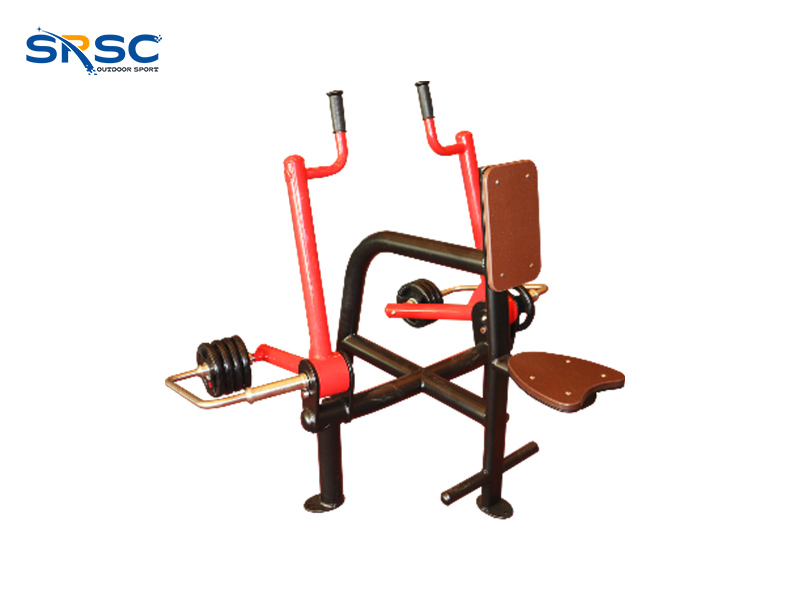
ال جهاز تدريب ذكي مزدوج الوضع للأسفل uses a seated downward-pulling movement.
Users hold the handles and pull them toward a lower position.
Strength-Focused Movement
The Pull-Down Trainer provides a different movement from rotating equipment.
It can add upper-body pulling exercise to a facility that already contains arm cranks and rotation wheels.
Dual-User Capacity
Two users can exercise at the same time, with one person at each station.
This can improve space efficiency in busy parks and community gyms.
Hand-Crank vs Pull-Down Equipment
| Factor | جهاز تدريب يدوي | Pull-Down Trainer |
| Movement | Continuous circular motion | Downward pull |
| Exercise style | Repetitive aerobic movement | Resistance-focused pulling |
| User position | Seated | Seated |
| Main equipment role | Arm endurance and coordination | Upper-body strength |
| User capacity | Model-dependent | Two |
| Best layout use | Smart cardio zone | Strength zone |
Should a Project Install Both?
Yes, when space and budget allow.
The two products provide different movement patterns and can complement each other within a larger fitness circuit.
How to Build a Balanced Upper-Body Fitness Zone
A compact upper-body area could include:
- جهاز تدريب يدوي
- جهاز تدريب الذراعين الجالس
- Double-Position Rotation Trainer
- Double Position Pull Down Trainer
- تمرين الضغط على الصدر ثنائي الوضع الذكي
This layout provides:
- Circular arm movement
- Adjustable resistance
- Shoulder rotation
- Pulling exercise
- Pushing exercise
Avoid Repetitive Selection
A small site may not need both a Hand-Crank Trainer and Seated Arm Trainer if their purchasing objectives are too similar.
In that case, choose one rotating machine and combine it with a pull-down and chest-press station.
Site Planning Requirements
The steel frame dimensions are not the complete space requirement.
Buyers should also consider:
- Handle movement
- User entry and exit
- Wheel rotation
- Seat access
- Waiting users
- Maintenance space
- Distance from nearby machines
Seated Equipment Access
Allow sufficient space beside and in front of the seat.
Users should not need to cross another machine’s movement zone to reach the equipment.
Standing Equipment Clearance
Rotation trainers need clear space around both user positions.
Foundations and Ground Surfaces
Outdoor arm-training equipment requires a stable foundation.
Foundation Drawing
Use the installation drawing supplied for the exact product.
A large dual-position machine may require different foundations from a compact single-station trainer.
Surface Options
Possible surrounding surfaces include:
- Rubber surfacing
- العشب الصناعي
- أسمنت
- Paving
- Engineered safety surfaces
The final system should follow local safety, accessibility and drainage requirements.
Maintenance Checks
Outdoor arm equipment contains several moving and electronic components.
| Component | Inspection Focus |
| Handles | Looseness and surface wear |
| Bearings | Noise and smooth movement |
| Resistance system | Correct adjustment |
| مقعد | Damage and secure fixing |
| Display | Screen and button operation |
| Fasteners | Tightness and corrosion |
| Coating | Scratches and peeling |
| Foundation | Cracks or movement |
| Drainage | Standing water |
Smart Equipment Maintenance
Digital displays, resistance controls and data platforms may require additional technical support.
Buyers should confirm the availability of replacement screens, control boards, sensors and resistance components before ordering.
Common Buying Mistakes
Choosing Only by Appearance
Similar-looking machines can have different movements and resistance systems.
Installing Too Many Rotation Machines
A balanced facility should also include pulling, pushing and lower-body equipment.
Ignoring Resistance Range
The selected settings should match the intended users.
Forgetting Seat Access
A seated product still requires sufficient circulation and entry space.
Making Medical Claims
Outdoor arm trainers support general physical activity but should not be described as treating shoulder, arm or joint conditions.
Ignoring Spare Parts
Displays, buttons, bearings, handles and resistance components may eventually need replacement.
Outdoor Arm Trainer Buyer Checklist
Before ordering, confirm:
- Target users
- Seated or standing design
- Main movement
- Resistance type
- Resistance levels
- Number of users
- Product dimensions
- Movement zone
- Seat and handle design
- Digital display
- Data functions
- Power requirements
- Foundation drawing
- Surface treatment
- Spare parts
- Maintenance support
- Warranty
FAQ About Outdoor Arm Trainers
What is an Outdoor Arm Trainer used for?
It provides controlled upper-body movement for general fitness, strength, coordination or mobility exercise.
Is a Hand-Crank Trainer suitable for public parks?
Yes. Its seated position and simple circular movement can make it suitable for parks, communities and smart outdoor gyms.
What is the difference between a Hand-Crank Trainer and Rotation Trainer?
The Hand-Crank Trainer uses seated continuous arm cranking with adjustable resistance.
The Rotation Trainer uses standing hand-wheel movement and normally serves two users.
Is a Pull-Down Trainer better for strength exercise?
A pull-down machine provides a more strength-focused pulling movement than a simple rotation wheel.
The appropriate resistance should match the target users.
Does smart arm-training equipment require electricity?
Electromagnetic resistance, displays, sensors and data functions may require electrical power.
Confirm the exact voltage and power configuration before installation.
Can these machines be installed together?
Yes. Cranking, rotating, pulling and pushing machines provide different movements and can form a balanced upper-body circuit.
What documents should buyers request?
Request product specifications, movement-zone drawings, foundation plans, electrical requirements, resistance information, installation instructions, spare-parts lists, maintenance guidance and warranty terms.
خاتمة
أن Outdoor Arm Trainer should be selected according to movement type rather than appearance alone.
A Hand-Crank Trainer provides continuous circular exercise. A Seated Arm Trainer adds a wider adjustable-resistance range. A Rotation Trainer offers simple standing upper-limb movement, while a Pull-Down Trainer provides more strength-focused exercise.
For a balanced public fitness project, combine complementary equipment instead of installing several products with nearly identical motions.
The most practical purchasing process is:
define the users → choose the movement types → compare resistance → plan the site → confirm foundations and power → organize maintenance
This approach helps parks, communities, schools and smart fitness projects create a more varied and practical upper-body exercise area.