
مدونة
Padel Court Gate Design: Size, Safety, and Installation Tips
المقالات الأخيرة
جدول المحتويات
A ملعب البادل gate is used constantly throughout the day, yet it is often overlooked during purchasing and installation.
For commercial clubs, schools, hotels, resorts, and sports facilities, the gate should provide easy player access while remaining stable, smooth, safe, and properly aligned with the surrounding steel and glass structure.
This guide covers:
- What to check when choosing a Padel Court gate
- Gate frame and hinge requirements
- Why alignment matters
- Common gate safety issues
- Maintenance and replacement tips
- What buyers should inspect before opening the court
Why Padel Court Gate Design Matters
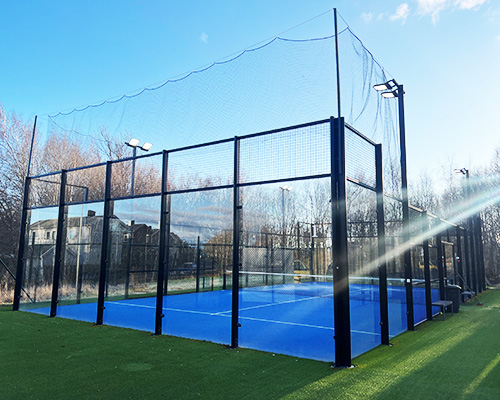
A gate is a moving part inside an otherwise mostly fixed court structure.
Repeated opening and closing can gradually affect:
- Hinges
- Bolts
- Latches
- Steel frames
- Nearby posts
A poorly installed gate may begin to:
- Sag
- Rub against the frame
- Become difficult to close
- Produce noise
- Transfer movement into nearby structures
For a busy commercial Padel Court, these problems can appear much faster than on a lightly used private court.
Main Padel Court Gate Components
A typical gate system includes:
| Component | الوظيفة الرئيسية |
|---|---|
| Steel gate frame | Provides structural support |
| Mesh panel | Completes the enclosure |
| Hinges | Allow smooth opening |
| Handle | Provides player access |
| Latch | Keeps the gate controlled |
| Bolts | Secure hardware |
| Protective caps | Cover exposed hardware |
The exact design varies according to the court model.
Check the Gate Frame
The gate frame should remain:
- Straight
- Square
- Properly welded
- Properly coated
- Compatible with the surrounding structure
Look for Distortion
A twisted frame can create:
- Uneven gaps
- Difficult closing
- Extra hinge stress
Before installation, place the gate in its intended position and verify that it aligns naturally.
Hinge Quality Is Important
Hinges experience repeated mechanical movement.
For a commercial Padel Court, buyers should check:
- Hinge material
- Corrosion protection
- Bolt size
- Welding quality
- Replacement availability
Common Hinge Problems
Look for:
- Excessive movement
- Noise
- corrosion
- loose bolts
- worn pins
A small hinge problem can eventually cause the entire gate to sag.
Gate Alignment
Proper alignment helps the gate open and close smoothly.
Check:
- Top gap
- bottom gap
- side clearance
- handle position
The gate should not need excessive force to close.
Do Not Correct Misalignment by Forcing the Gate
If the gate does not fit properly, inspect:
- Post verticality
- hinge position
- foundation level
- frame dimensions
The real cause should be corrected rather than bending or forcing the gate.
Consider Player Safety
All player-facing surfaces should remain smooth.
Inspect for:
- Sharp bolt ends
- exposed threads
- rough welds
- damaged mesh
- broken caps
Handle Design
The handle should be easy to use without creating a dangerous projection into the playing area.
For commercial projects, simple and durable hardware is often preferable to complicated mechanisms that require frequent adjustment.
Single vs Double Access
Different court designs may use different access arrangements.
Single Gate
Advantages:
- Simple construction
- fewer moving components
- easier maintenance
Multiple Access Points
Additional access may improve:
- Player flow
- tournament operation
- maintenance access
However, every additional gate introduces more:
- Hinges
- latches
- hardware
- maintenance points
The final layout should match the intended use of the facility.
Gate Design for Commercial Clubs
A high-traffic club should prioritize durability.
Useful specifications include:
- Strong steel frame
- corrosion-resistant hinges
- replaceable hardware
- simple adjustment
- smooth opening
Tournament Facilities
Tournament courts may also need to consider player entry and exit flow around surrounding spectator areas.
The gate should not interfere with:
- Officials
- cameras
- pathways
- adjacent courts
Outdoor Padel Court Gates
Outdoor gates face additional environmental exposure.
These include:
- Rain
- UV
- dust
- humidity
- salt in coastal areas
Check Corrosion Protection
Pay particular attention to:
- Hinges
- bolt heads
- welds
- bottom of the gate frame
These areas can be more vulnerable because of repeated movement and coating wear.
Gate Installation Checklist
During installation, check:
- Supporting post is vertical
- Gate frame is square
- Hinges are correctly positioned
- Bolts are secure
- Gate opens freely
- Latch operates correctly
- No sharp hardware is exposed
- Nearby glass remains unaffected
The gate should be tested several times before final acceptance.
Common Padel Court Gate Problems
Gate Sagging
Possible causes include:
- Loose hinges
- weak frame
- misaligned post
- repeated heavy use
Gate Will Not Close Properly
Check:
- Frame alignment
- latch position
- hinge wear
- foundation movement
Corroded Hinges
This is more common on outdoor and coastal courts.
Regular inspection and appropriate maintenance can reduce premature failure.
Loose Handle
A loose handle should be repaired immediately because it can become both inconvenient and unsafe.
When Should Gate Hardware Be Replaced?
Replacement should be considered when:
- Hinges have excessive play
- bolts are corroded
- latch no longer works reliably
- handle is damaged
- frame has visible deformation
Small hardware replacement is usually easier than allowing the problem to damage the complete gate assembly.
Padel Court Gate Maintenance
Weekly
Check:
- Opening
- closing
- latch
- مقبض
Monthly
Inspect:
- Hinges
- bolts
- corrosion
- frame alignment
Periodically
Clean moving parts and follow the supplier’s maintenance recommendations.
For commercial facilities, keeping spare hinges and handles can reduce downtime.
Padel Court Gate Buying Checklist
| غرض | What to Confirm |
| Frame | Size and steel specification |
| Coating | Suitable for indoor or outdoor use |
| Hinges | Durable and replaceable |
| Handle | Smooth and safe |
| Latch | Reliable operation |
| Bolts | Correct material and size |
| Mesh | No sharp edges |
| Alignment | Compatible with court posts |
| Spare parts | Available |
| Installation | Clear instructions provided |
خاتمة
A Padel Court gate should be treated as an important moving component rather than a minor accessory.
Correct frame alignment, durable hinges, safe handles, secure latches, corrosion protection, and regular inspection all contribute to reliable long-term operation.
Commercial buyers should test every gate before final acceptance and keep commonly used replacement hardware available.
SRSC supplies complete Padel Court systems including steel structures, mesh, gates, tempered glass, turf, lighting, and installation accessories. Buyers can also contact SRSC for project-specific court configurations.
التعليمات
Why does a Padel Court gate start sagging?
Common causes include hinge wear, loose fasteners, frame deformation, or movement in the supporting post.
Should Padel Court gates open smoothly?
Yes. A properly installed gate should open and close without excessive force or contact with surrounding structures.
Can gate hinges be replaced?
In most modular court systems, worn hardware can be replaced when compatible spare parts are available.
Are outdoor Padel Court gates different?
Outdoor gates require greater attention to corrosion protection because hinges, bolts, and frames are exposed to weather.
How often should gate hardware be inspected?
Busy commercial facilities should conduct frequent visual checks and more detailed periodic inspections.
What spare gate parts should a club keep?
Useful spare parts include hinges, handles, latches, bolts, washers, and protective caps.