
مدونة
Padel Court Lifespan: How Long Does Each Component Last?
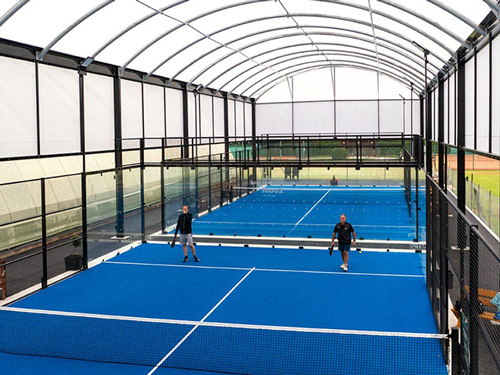
المقالات الأخيرة
جدول المحتويات
Key points covered in this guide:
- What actually determines the lifespan of a Padel Court
- Which components normally wear faster than the main structure
- How steel, glass, turf, lighting, mesh, gates, and hardware age differently
- Why coastal and high-humidity locations require more maintenance
- How playing hours affect artificial turf replacement
- Which early warning signs indicate repair or replacement
- How preventive maintenance can reduce long-term ownership costs
- What commercial buyers should ask suppliers about warranties and spare parts
- How to create a lifecycle budget before purchasing a court
A ملعب البادل should be viewed as a long-term sports facility rather than a single product with one fixed service life.
The steel structure may remain usable for many years, while artificial turf, LED drivers, nets, gate hardware, coatings, and other wear components may require maintenance or replacement much earlier.
This means asking, “How long does a Padel Court last?” does not have one universal answer.
A better approach is to evaluate the expected life of each major component and build a maintenance and replacement plan around the complete court.
For commercial clubs, hotels, schools, residential developments, sports centres, and investors, this lifecycle approach provides a much more realistic picture of the total cost of ownership.
What Determines Padel Court Lifespan?
Several courts manufactured from similar materials can age very differently.
The main factors include:
- Indoor or outdoor installation
- Coastal or inland environment
- Daily playing hours
- Steel coating system
- Drainage quality
- Artificial turf quality
- Cleaning frequency
- Silica-sand maintenance
- Installation accuracy
- Wind exposure
- Temperature changes
- Humidity
- Player traffic
- Maintenance response
Usage Intensity
A private court used several hours per week experiences very different wear from a commercial club operating from early morning until late evening.
High booking rates increase wear on:
- Turf
- Net
- Gates
- hinges
- handles
- glass fittings
- أنظمة الإضاءة
Environmental Exposure
Outdoor courts may face:
- Rain
- UV radiation
- humidity
- salt
- wind
- dust
- temperature cycles
Indoor courts avoid some weather exposure but can still experience condensation, humidity, cleaning chemicals, and high player traffic.
Concept: Component Lifespan
Component lifespan is the period during which one part of the court continues to perform its intended function at an acceptable level.
It is different from the lifespan of the entire Padel Court because individual components can be replaced without rebuilding the whole structure.
Typical Padel Court Component Lifecycle
Actual service life varies by product and environment, so buyers should use manufacturer-specific warranties and inspection results rather than treating a generic number as guaranteed.
A useful lifecycle plan may look like this:
| Component | Relative Lifespan | Typical Maintenance Priority |
|---|---|---|
| Main galvanized steel structure | Long | Corrosion and connection inspection |
| Tempered glass | Long when undamaged | Edge, fitting, and impact inspection |
| Steel mesh | Long to medium | Coating and weld inspection |
| العشب الصناعي | واسطة | Brushing, cleaning, sand redistribution |
| LED fixtures | Medium to long | Cleaning, driver and connection checks |
| LED drivers | واسطة | Electrical inspection and replacement |
| Net | Short to medium | Tension and wear inspection |
| Gates and hinges | واسطة | Adjustment and lubrication |
| Bolts and fittings | Medium to long | Tightness and corrosion |
| Powder coating | Environment-dependent | Touch-up and corrosion monitoring |
| Silica sand | Ongoing consumable | Redistribution and replenishment |
A professional maintenance budget should therefore separate structural components from wear components.
How Long Can a Padel Court Steel Structure Last?
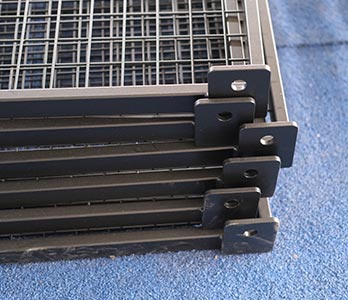
The steel enclosure forms the main structural framework of the court.
Its service life depends heavily on corrosion protection and site conditions.
Hot-Dip Galvanized Steel
Hot-dip galvanizing provides a zinc layer that helps protect carbon steel from corrosion.
A quality outdoor court may combine:
- Galvanized steel
- Additional zinc treatment
- Powder coating
- Corrosion-resistant fasteners
SRSC’s RR01 Panoramic Padel Court currently uses hot-dip galvanized steel together with zinc and powder-coating protection.
طلاء المسحوق
Powder coating provides:
- Colour
- Surface protection
- Improved appearance
- Additional weather resistance
However, coating damage should be repaired promptly.
Small scratches around:
- Bolts
- welds
- base plates
- gate frames
- transport contact points
can become starting points for corrosion.
Structural Steel Warning Signs
Inspect for:
- Rust around welds
- Coating bubbles
- Cracks
- Bent members
- Loose base plates
- Movement at anchors
- Persistent water around the steel base
- Corroded fasteners
Coastal Locations
Coastal Padel Court projects require more attention because airborne salt can accelerate corrosion.
Maintenance should include:
- More frequent freshwater cleaning
- Bolt inspection
- coating repair
- drainage inspection
- base-plate cleaning
- salt removal
A court located beside the sea may require a stronger corrosion-protection specification than an identical court installed inland.
How Long Does Tempered Glass Last?
Tempered glass does not normally wear in the same way as turf.
When properly manufactured, installed, and maintained, it can remain functional for a long period.
Its service life is more likely to be shortened by:
- Hard impact
- Edge damage
- Installation stress
- incorrect fittings
- structural movement
- damaged holes
- transport damage
Glass Does Not Need Routine Replacement by Age Alone
A glass panel should not automatically be replaced simply because the court is several years old.
Instead, inspect:
- Edges
- corners
- drilled holes
- surface scratches
- fittings
- panel alignment
Edge Damage Is Important
Tempered glass edges are more vulnerable than the central surface.
Damage can occur during:
- Installation
- maintenance
- glass cleaning
- equipment movement
- replacement work
Fitting Condition Affects Glass Life
Rubber gaskets, sleeves, bolts, washers, and support blocks should remain in good condition.
Glass should not develop uncontrolled direct contact with steel.
SRSC’s current panoramic court specification uses 12 mm tempered glass panels measuring 2 × 3 metres, with eighteen panels in the standard court configuration.
Keep Replacement Drawings
Store records showing:
- Glass size
- thickness
- hole dimensions
- hole locations
- edge finish
- orientation
This allows a damaged panel to be reproduced without remeasuring the entire court.
Artificial Turf Is Usually a Major Wear Component
Artificial grass experiences continuous contact with players, shoes, balls, sand, brushes, UV light, and weather.
It is therefore one of the components most likely to require planned replacement during the life of a commercial Padel Court.
SRSC currently describes its textured PE turf as a 12 mm system with UV protection and a multi-layer backing and states a potential lifespan of up to eight years under suitable conditions. Actual replacement timing will depend heavily on usage and maintenance.
High-Traffic Areas Wear First
Pay particular attention to:
- Service positions
- Baselines
- Net approaches
- entrances
- central movement zones
Early Turf Warning Signs
Look for:
- Flattened fibres
- Exposed backing
- Loose seams
- colour fading
- inconsistent traction
- poor sand distribution
- abnormal ball bounce
Maintenance Extends Useful Life
Regular maintenance may include:
- Brushing
- silica-sand redistribution
- debris removal
- deep cleaning
- seam repair
- local fibre inspection
A neglected court may require resurfacing significantly earlier than a properly maintained one.
Silica Sand Requires Continuous Management
Silica sand should be treated as a maintained infill material rather than a one-time installation item.
It can move because of:
- Player movement
- brushing
- wind
- rain
- cleaning
Too Little Sand
Insufficient infill may contribute to:
- Fibre instability
- faster turf wear
- different ball response
- increased movement of the surface
Uneven Sand
A court may develop:
- Fast zones
- slow zones
- slippery areas
- exposed fibres
Contaminated Sand
Over time, sand may mix with:
- Dust
- organic material
- broken turf fibres
- leaves
- mud
Severely contaminated infill may require more substantial cleaning or replacement.
How Long Do Padel Court LED Lights Last?
LED fixtures can provide long operating life, but fixture life is different from LED driver life.
A complete lighting system includes:
- LED chips
- driver
- housing
- lens
- seals
- wiring
- connectors
- mounting bracket
LED Fixture Life Depends on Heat
Excessive temperature can shorten electronic life.
Good fixtures should provide suitable heat dissipation.
Outdoor Lighting Faces Additional Exposure
Inspect for:
- Water ingress
- condensation
- corrosion
- damaged seals
- loose brackets
- cable damage
Driver Replacement
A failed LED driver does not always require replacing the entire fixture.
Before purchasing a Padel Court, ask whether:
- Drivers are replaceable
- replacement drivers are available
- model numbers are documented
- access is straightforward
Keep Spare Drivers
For commercial clubs, storing a small number of compatible replacement drivers can reduce downtime.
Mesh Fence Lifespan
The steel mesh receives repeated ball impacts but usually wears slowly when its coating remains intact.
Common problems include:
- Rust
- broken welds
- bent wire
- loose frames
- sharp projections
- coating damage
Inspect Player Contact Areas
Pay particular attention near:
- Gates
- corners
- lower mesh sections
- high-traffic entrances
Do Not Ignore Small Weld Failures
A single broken weld can gradually develop into:
- Larger movement
- sharp wire
- rattling
- coating damage
Early repair is normally easier than replacing an entire mesh panel.
Net Lifespan Is Shorter Than Structural Components
The net is an inexpensive component compared with the glass or steel.
It is also exposed to:
- Ball contact
- tension
- UV
- weather
- adjustment
- player contact
Net Warning Signs
Replace or repair the net when you see:
- Torn mesh
- damaged top tape
- broken tension cable
- permanent sagging
- damaged centre strap
- frayed attachment points
Keep Spare Nets
For commercial facilities, spare nets are relatively inexpensive insurance against court downtime.
Gate Hardware Requires Regular Attention
Players and staff use the gate every day.
That repeated movement affects:
- Hinges
- handles
- latches
- bolts
- frames
Common Gate Problems
- Sagging
- hinge noise
- loose fasteners
- misalignment
- damaged latch
- coating wear
Adjust Problems Early
A slightly misaligned gate can place additional stress on:
- Frame
- hinges
- زجاج
- nearby mesh
Routine adjustment helps prevent more expensive repairs.
Anchor Bolts and Base Plates
Anchor connections transfer structural loads from the court into the concrete foundation.
They should remain:
- Tight
- corrosion-free
- properly supported
- free from standing water
Warning Signs
Look for:
- Rust
- loose nuts
- cracked grout
- concrete cracking
- base-plate movement
- leaning posts
Drainage Matters
Water should not remain permanently around steel base plates.
Poor drainage can shorten the life of:
- coatings
- anchors
- أسمنت
- electrical connections
How Indoor and Outdoor Courts Age Differently
ملعب بادل داخلي
Indoor facilities normally experience less:
- Rain
- UV
- salt exposure
- wind
However, they may experience:
- Heavy booking volume
- dust
- humidity
- HVAC condensation
- indoor cleaning chemicals
The turf may wear quickly even when the steel remains visually almost new.
ملعب بادل خارجي
Outdoor installations face:
- UV
- rain
- temperature cycles
- wind
- dust
- vegetation
- salt in coastal locations
Preventive inspection is particularly important.
Roofed Padel Court
A roof can reduce direct rain and solar exposure but does not eliminate:
- Wind-driven rain
- condensation
- humidity
- dust
- corrosion
The roof structure itself also adds:
- Gutters
- fasteners
- panels
- downpipes
- additional steel
These components need their own maintenance programme.
How Climate Affects Padel Court Lifespan
| Environment | Main Risk | Maintenance Priority |
| Coastal | Salt corrosion | Wash steel and inspect fittings |
| Hot sunny climate | UV and heat | Turf, coating, seals |
| Heavy rainfall | Water and drainage | Drains, base plates, turf |
| Cold climate | Freeze-thaw and snow | Foundations, drainage, roof |
| Desert environment | Sand and dust | Turf cleaning and electrical sealing |
| Humid indoor venue | Condensation | Steel, electrical equipment, HVAC |
| High-use commercial club | Mechanical wear | Turf, gates, nets, fittings |
The same court specification may therefore require different maintenance schedules in different countries.
Daily Padel Court Maintenance
Daily checks can prevent small problems from developing into larger failures.
Before Opening
Inspect:
- Glass
- gates
- net
- turf
- loose debris
- إضاءة
- standing water
Remove Debris
Remove:
- Leaves
- stones
- broken glass
- litter
- loose hardware
Check the Playing Surface
Look for:
- Open turf seams
- slippery spots
- sand piles
- wrinkles
Monthly Padel Court Maintenance
A more detailed monthly inspection can include:
- Turf brushing
- Sand redistribution
- Gate adjustment
- Net tension
- Glass-fitting inspection
- Steel coating checks
- Drainage cleaning
- Lighting operation
- Anchor inspection
Photograph Problem Areas
Taking photos at regular intervals makes gradual deterioration easier to identify.
Annual Padel Court Inspection
A commercial court should receive a more thorough periodic review.
Inspect:
- Structural alignment
- post verticality
- base plates
- anchors
- glass edges
- fittings
- mesh welds
- coating
- turf wear
- drainage
- electrical system
- lighting poles
- gates
- net equipment
Compare With the Previous Inspection
Record whether deterioration is:
- Stable
- progressing
- urgent
This supports better maintenance budgeting.
Build a Padel Court Replacement Schedule
A club should not wait for components to fail unexpectedly.
Create a replacement plan covering:
Short-Term Consumables
- Nets
- small fittings
- touch-up coating
- lamps or drivers
- turf repair material
Medium-Term Items
- العشب الصناعي
- selected gate hardware
- electrical components
- heavily exposed fittings
Long-Term Components
- Steel structure
- زجاج
- mesh
- foundations
The actual timing should be based on inspection rather than calendar age alone.
Padel Court Lifecycle Cost
The purchase price is only the first part of court ownership.
Initial Cost
Includes:
- Court structure
- زجاج
- turf
- إضاءة
- shipping
- foundation
- drainage
- installation
Operating Cost
Includes:
- Electricity
- cleaning
- labour
- brushing
- inspections
Maintenance Cost
Includes:
- Turf repair
- coating repair
- replacement hardware
- net replacement
- lighting repair
Major Replacement Cost
May include:
- Complete turf resurfacing
- LED upgrade
- glass replacement
- structural repair
- roof maintenance
Downtime Cost
Commercial clubs should also consider lost bookings when a court is unavailable.
A more durable component may justify a higher purchase price when it reduces long-term downtime.
When Is Repair Better Than Replacement?
Repair is appropriate when damage is:
- Localized
- understood
- structurally limited
- economically reasonable
Repair Examples
- One damaged turf seam
- one failed LED driver
- loose gate hinge
- local coating scratch
- worn net
Replacement Becomes More Practical When
- Repairs are frequent
- damage is widespread
- replacement parts are unavailable
- performance remains inconsistent
- maintenance cost is increasing quickly
When Should the Entire Padel Court Be Replaced?
Complete replacement is less common than replacing individual components.
It may be considered when:
- Structural corrosion is severe
- Foundation movement is extensive
- Court geometry can no longer be corrected economically
- Multiple structural components are damaged
- The facility requires a completely different court model
In many cases, an older Padel Court can instead be modernized through:
- New turf
- new lighting
- coating refurbishment
- gate repair
- replacement fittings
- new net
- selected glass replacement
Padel Court Lifespan Inspection Checklist
| Component | Check | Possible Action |
| Steel posts | Corrosion and movement | Repair coating or structural review |
| Glass | Edges, holes, cracks | Replace damaged panel |
| Glass fittings | Gaskets, bolts, sleeves | Tighten or replace |
| Mesh | Welds and coating | Repair or replace panel |
| Turf | Fibres, seams, backing | Maintain or resurface |
| Silica sand | Distribution and contamination | Redistribute or replace |
| مصابيح LED | Output and water ingress | Repair fixture or driver |
| Gates | Alignment and hinges | Adjust or replace hardware |
| Net | Tension and wear | Repair or replace |
| Anchors | Corrosion and tightness | Engineering inspection |
| Drainage | Blockage and standing water | Clean or repair |
| Coating | Scratches and rust | Touch up or refurbish |
Questions to Ask a Padel Court Supplier
Before ordering, ask:
What Is the Steel Protection System?
Confirm:
- Galvanizing
- coating
- surface preparation
- repair procedure
Which Components Have Separate Warranties?
The warranty may differ for:
- Structure
- turf
- زجاج
- إضاءة
- coating
- electrical equipment
What Spare Parts Are Available?
Ask about:
- Nets
- glass hardware
- gate parts
- LED drivers
- fixtures
- turf
- coating material
How Long Are Replacement Parts Supported?
A court may remain operational for many years.
Parts availability is therefore an important purchasing consideration.
Can Replacement Components Be Shipped Individually?
Confirm packaging and shipping options for:
- Glass panels
- mesh panels
- turf rolls
- إضاءة
- gates
Common Padel Court Lifespan Mistakes
Assuming the Whole Court Has One Lifespan
Different components age at different rates.
Waiting for Turf to Become Completely Worn
Poor playing performance may appear before the backing is fully exposed.
Ignoring Small Coating Damage
Local corrosion can spread below surrounding paint.
Using High-Pressure Cleaning Everywhere
Aggressive cleaning can damage coatings, seals, electrical equipment, and turf.
Never Redistributing Silica Sand
Uneven infill accelerates surface wear.
Ignoring Drainage
Standing water can affect several court components at once.
Keeping No Spare Parts
Small component failures can cause unnecessary downtime.
Recording No Maintenance History
Without records, it becomes difficult to understand why the same failure keeps returning.
خاتمة
The lifespan of a Padel Court depends less on one headline number and more on how each individual component is designed, installed, operated, and maintained.
The steel structure and tempered glass can remain serviceable for a long time when correctly engineered and protected. Artificial turf, silica sand, nets, gates, lighting drivers, coatings, and smaller hardware normally require more regular attention.
For commercial buyers, the best purchasing strategy is therefore to evaluate lifecycle cost rather than only the initial court price.
Before placing an order, request detailed specifications for the steel, corrosion protection, glass, turf, lighting, gates, fittings, spare parts, warranties, and maintenance requirements.
SRSC’s Padel Court range includes panoramic, super-panoramic, classic, indoor, outdoor, single, and roofed configurations. Buyers can review the RR01 Panoramic Padel Court, read the Padel Court Corrosion Protection Guide, explore the Artificial Turf Padel Court Guide، أو contact SRSC with the project location, expected daily usage, court quantity, climate, and maintenance requirements.
التعليمات
How long does a Padel Court last?
There is no single lifespan for the complete court. Steel, glass, artificial turf, lighting, nets, gates, and fittings age at different rates. Environment, usage, material quality, installation, and maintenance all affect service life.
Which Padel Court component usually needs replacement first?
Wear components such as nets, selected hardware, LED drivers, and artificial turf generally require attention earlier than the primary steel and glass structure.
How long does Padel Court turf last?
It varies greatly by playing hours, climate, turf construction, UV exposure, brushing, and sand maintenance. SRSC currently states that its selected textured turf can provide a lifespan of up to eight years under suitable conditions.
Does Padel Court glass need to be replaced after a certain number of years?
Not simply because of age. Glass condition, edge damage, fittings, alignment, and impact history are more important.
How can I extend Padel Court turf life?
Regularly remove debris, brush the fibres, redistribute silica sand, repair seams early, maintain drainage, and follow the turf supplier’s cleaning instructions.
Does galvanizing make a Padel Court maintenance-free?
No. Galvanized steel still needs inspection, particularly around scratches, welds, fasteners, base plates, and coastal exposure.
Do coastal Padel Courts wear faster?
Coastal salt can accelerate corrosion, making material selection, cleaning, coating maintenance, and fastener inspection more important.
Can an old Padel Court be renovated instead of replaced?
Yes. Many courts can be upgraded with new turf, lighting, coatings, fittings, gates, nets, and selected glass panels while retaining the main structure.
How often should a commercial Padel Court be inspected?
Operators should combine frequent visual checks with scheduled detailed inspections. The frequency should reflect playing hours, environment, manufacturer guidance, and local requirements.
What spare parts should a Padel Club keep?
Useful stock may include nets, gate hardware, glass gaskets and sleeves, bolts, LED drivers, connectors, coating touch-up material, and turf repair materials.