
مدونة
Padel Court Supplier Checklist for International Buyers
المقالات الأخيرة
جدول المحتويات
Key points covered in this guide:
- How to verify whether a Padel Court supplier has relevant manufacturing experience
- Which technical specifications buyers should confirm before requesting a quotation
- What drawings, material documents, and inspection records should be provided
- How to compare classic, panoramic, indoor, outdoor, and roofed court options
- Which questions to ask about customization, packaging, shipping, and installation
- How to identify incomplete or misleading quotations
- What warranty and spare-parts terms should be agreed upon
- How to compare suppliers beyond the initial purchase price
Selecting a reliable supplier involves more than comparing the price of steel, glass, artificial turf, and lighting.
A complete court is a connected system. Structural frames, fencing, gates, tempered glass, turf, lighting, fasteners, foundations, drainage, packaging, and installation must work together. A weakness in one area can delay installation, increase maintenance costs, or prevent the facility from opening on schedule.
هذا Padel Court Supplier Checklist explains how international buyers can evaluate manufacturers, quotations, technical documents, project support, and after-sales service before placing an order.
Define the Project Before Contacting Suppliers

Suppliers cannot prepare an accurate proposal without understanding the project.
Before requesting prices, collect the basic project information.
Project Location
Provide the country, city, and site environment.
The supplier may need to consider:
- Coastal exposure
- High humidity
- Heavy rain
- Snow
- Strong sunlight
- Temperature changes
- Wind conditions
- Indoor or outdoor installation
- Local electrical supply
The same court specification may not be suitable for every location.
Planned Court Quantity
State whether the project includes:
- One private court
- Several commercial courts
- A padel club
- A hotel or resort facility
- A school project
- A residential development
- A multi-location rollout
Court quantity affects packaging, freight, spare parts, installation planning, and project pricing.
Intended Use
Explain whether the courts will be used for:
- Recreational bookings
- Professional coaching
- Tournaments
- Corporate events
- School programmes
- Private residential play
- Hotel guest activities
Projects intended for official competition should be checked against the latest applicable rules and regulations. The International Padel Federation maintains current rules and competition documents through its official documentation section. Review the FIP documents.
Verify the Padel Court Supplier’s Business Scope
A company that sells sports products is not automatically an experienced court manufacturer.
Buyers should understand which parts of the project the supplier controls directly.
Ask About Manufacturing Responsibility
Request clear answers to the following questions:
- Does the supplier manufacture the steel structure?
- Is welding completed in its own facility?
- Who produces the tempered glass?
- Who supplies the artificial turf?
- Are lighting systems assembled internally or purchased?
- Who completes quality inspection?
- Who prepares the technical drawings?
- Who provides installation guidance?
A supplier may use specialist partners for selected components. This is not necessarily a problem, provided responsibilities and quality-control procedures are clear.
Manufacturer vs Trading Company
| Supplier Type | Possible Advantage | Main Question to Ask |
|---|---|---|
| Direct manufacturer | More control over design and production | Which components are made internally? |
| Trading company | Access to several product sources | Who is responsible for technical issues? |
| Project contractor | Can coordinate complete construction | Which products are subcontracted? |
| Local distributor | Faster communication and local support | Is factory technical support included? |
| Franchise supplier | Standardized brand specification | Can materials and suppliers be changed? |
Concept: Supply-Chain Visibility
Supply-chain visibility means the buyer understands where the main components come from and who is responsible for their quality.
It becomes especially important when replacement parts, warranty claims, or technical modifications are required.
Review Relevant Project Experience
General sports-equipment experience does not always demonstrate Padel Court capability.
Request Comparable Projects
Ask for examples that match the proposed project in:
- Court type
- Quantity
- Climate
- Country or region
- Indoor or outdoor setting
- Commercial usage
- Installation method
A supplier that has completed one private court may not have experience coordinating a 12-court commercial club.
Verify Project Information
Where appropriate, request:
- Project photographs
- Installation dates
- Court configurations
- Customer references
- Shipment records
- Installation videos
- Handover information
Photographs alone do not prove that the supplier manufactured or delivered the project. Ask for supporting context.
Look for Long-Term Performance
A newly installed court may look attractive before it experiences heavy use and weather exposure.
Older project references can provide more useful information about:
- Coating condition
- Gate alignment
- Turf wear
- Lighting reliability
- Glass fittings
- Maintenance requirements
- Spare-parts availability
Compare the Available Court Types
The supplier should explain the practical differences between court configurations instead of recommending the most expensive model automatically.
ملعب بادل كلاسيكي
A classic Padel Court can be suitable for clubs, schools, community facilities, and projects prioritizing practical operation.
Its structural posts may create a more traditional appearance while supporting routine bookings and coaching.
ملعب بادل بانورامي

A panoramic Padel Court offers clearer spectator views around key areas of the enclosure.
It may be selected for premium clubs, tournament feature courts, hotels, branded venues, and customer-facing developments.
Roofed Outdoor Court

A roofed Outdoor Padel Court may reduce disruption from rain and direct sunlight in suitable environments.
The roof should be coordinated with structural design, foundations, drainage, wind assessment, permits, and installation planning.
ملعب بادل داخلي
Indoor projects require more than placing an outdoor court inside a building.
The buyer should verify:
- Clear internal height
- Column positions
- Ventilation
- إضاءة
- Fire routes
- Building access
- Acoustic conditions
- Condensation risk
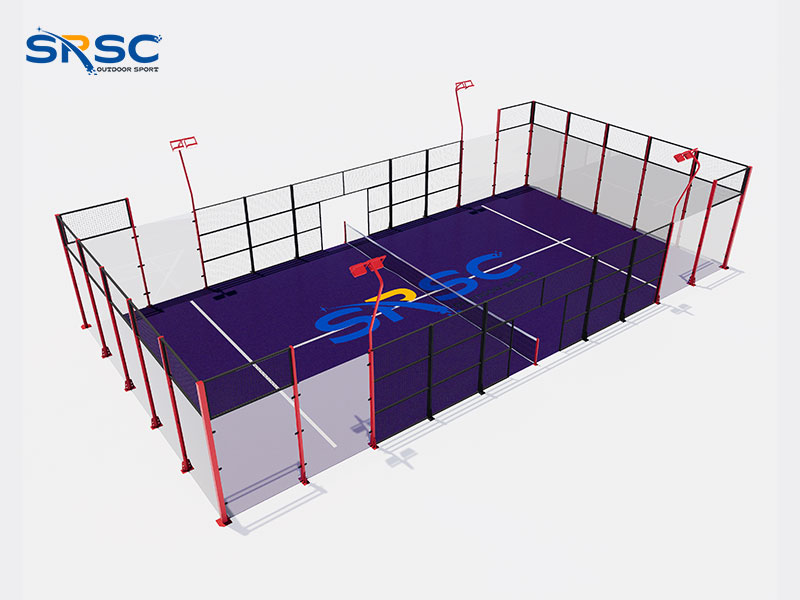
Buyers can compare available configurations through the SRSC Padel Court category. SRSC presents several court formats and describes its services as covering design, production, installation, customization, and after-sales support.
Request a Complete Technical Specification
A quotation that lists only the court size and total price is not sufficient for a serious comparison.
Steel Structure
Ask the supplier to state:
- Profile dimensions
- Wall thickness
- Steel grade
- Structural arrangement
- Welding method
- Surface preparation
- Coating system
- Coating colour
- Fastener specification
- Environmental assumptions
Avoid Comparing Steel Weight Alone
A heavier structure is not automatically better.
Structural performance depends on material grade, profile geometry, connection design, load assumptions, fabrication quality, and foundation interface.
الزجاج المقسّى
Confirm:
- Panel dimensions
- Glass thickness
- Tempering process
- Hole patterns
- Edge finishing
- Fittings
- Protective packaging
- Identification markings
- Replacement procedure
Glass drawings should show exact dimensions and hole positions.
Metal Mesh
Review:
- Wire diameter
- Opening size
- Panel dimensions
- Welding method
- Frame design
- Coating
- Connection points
- Gate integration
The supplier should explain whether the mesh is welded directly to a frame or assembled through another connection system.
عشب صناعي
Request details for:
- Fibre type
- Pile height
- كثافة
- Backing
- Colour
- Line integration
- Roll dimensions
- Infill recommendation
- Installation method
- Maintenance instructions
The cheapest turf may create higher long-term costs if it requires early repair or replacement.
Lighting System
Confirm:
- Fixture quantity
- Power rating
- Mounting position
- Pole design
- Input voltage
- Driver details
- Control method
- Ingress protection
- Installation responsibility
- Lighting-layout documentation
Lighting specifications should match the intended operating level rather than using one standard package for every project.
Ask for Technical Drawings
Drawings help buyers coordinate the court with architects, engineers, civil contractors, electricians, and installers.
Essential Drawing Package
A useful package may include:
- General arrangement drawing
- Court dimensions
- Structural layout
- Foundation or anchor layout
- Glass-panel schedule
- Gate details
- Lighting positions
- Turf layout
- Component identification
- Drainage interface
- Installation sequence
Confirm Drawing Status
Drawings may be issued as:
- Preliminary
- For quotation
- For approval
- For construction
- As built
Do not allow local contractors to begin foundation work using an unapproved preliminary drawing.
Concept: Drawing Revision Control
Drawing revision control identifies which document is currently approved.
Every updated drawing should include a revision number or date so the factory, buyer, contractor, and installer use the same information.
Check Customization Capability
Many projects require more than changing the steel colour.
Possible Customization Areas
A supplier may offer:
- Structural colours
- Turf colours
- Logos
- Printed glass
- Branding panels
- Entrance signs
- Lighting configurations
- Gate positions
- Roof systems
- Spectator features
- Court numbering
Request Engineering Review
Branding and accessories should not be attached without checking their effect on:
- Wind exposure
- Structural loads
- Glass visibility
- Emergency access
- إضاءة
- Player safety
- صيانة
A supplier should distinguish between cosmetic customization and structural modification.
Approve Samples
Before production, request approval materials where practical:
- Colour samples
- Coating references
- Turf samples
- Logo artwork
- Glass-printing proofs
- Signage drawings
Written approval reduces disputes about colour and appearance.
Evaluate Quality-Control Procedures
Quality control should occur during production rather than only before shipping.
Ask for an Inspection Plan
The inspection plan may cover:
- Incoming material verification
- Profile dimensions
- Welding
- Hole positions
- Surface preparation
- Coating
- Glass dimensions
- Component quantities
- Trial assembly
- Lighting tests
- Packaging
Request Production Records
Depending on the contract, buyers may request:
- Material certificates
- Dimensional inspection reports
- Welding records
- Coating records
- Glass documentation
- Lighting test reports
- Packing photographs
- Final inspection checklist
The documents required should be agreed upon before production starts.
Use Third-Party Inspection When Necessary
A buyer may appoint an independent inspector for large orders or high-risk projects.
The inspection scope should specify:
- Inspection stage
- Sampling method
- Acceptance criteria
- Documentation
- Corrective-action process
- Release authorization
Compare Quotations Line by Line
A low total price may exclude important components or services.
| Quotation Item | Supplier A | Supplier B | Supplier C |
| Steel structure | Included | Included | Included |
| Tempered glass | Included | Included | Included |
| العشب الصناعي | Included | خياري | Included |
| إضاءة | Included | خياري | Included |
| Net system | Included | Included | Excluded |
| Packaging | Included | Unclear | Included |
| Technical drawings | Included | Included | Extra fee |
| Installation support | Remote | On-site | Excluded |
| Spare parts | Included | خياري | Unclear |
| Warranty | Component schedule | General statement | Component schedule |
| Freight | Included | Excluded | Excluded |
Confirm Every Exclusion
Ask whether the price excludes:
- Foundations
- Drainage
- Electrical cables
- Distribution cabinets
- Cranes
- Unloading
- Local labour
- Travel
- Accommodation
- Customs duties
- Taxes
- Permits
- Site security
- Waste disposal
Confirm the Trade Term
The quotation should state the agreed Incoterm or delivery basis, named location, currency, payment schedule, and quotation-validity period.
Do not assume a shipping price includes customs clearance or delivery to the construction site.
Review Packaging and Container Planning
Poor packaging can damage components before installation begins.
Steel Packaging
Steel sections should be protected from:
- Scratching
- Movement
- Water
- Forklift impact
- Lost small components
- Mixed court sets
Glass Packaging
Glass should use appropriate frames or crates with:
- Separation materials
- Edge protection
- Clear labels
- Handling instructions
- Stable securing
- Panel identification
Component Labelling
Packages should show:
- Project name
- Court number
- Package number
- Component type
- Quantity
- وزن
- Lifting points
- Installation sequence where useful
Ask for a Container Loading Plan
A loading plan helps the buyer prepare unloading equipment and identify which packages must be removed first.
It can also reduce repeated handling at the destination.
Confirm Production and Delivery Time
The supplier should separate manufacturing time from total project delivery time.
Timeline Stages
A complete schedule may include:
- Technical confirmation
- Drawing approval
- Deposit payment
- Material preparation
- Manufacturing
- Quality inspection
- Packaging
- Export booking
- International transport
- Customs clearance
- Site delivery
- Installation
Identify Buyer-Dependent Activities
The delivery date may be affected by delayed:
- Drawing approval
- Colour confirmation
- Logo artwork
- Payment
- Foundation completion
- Import documents
- Shipping instructions
Both parties should understand which milestones control the schedule.
Evaluate Installation Support
Even correctly manufactured components can be damaged or misaligned during installation.
Possible Installation Models
| Installation Model | Main Advantage | Main Risk |
| Supplier team | Direct product knowledge | Higher travel cost |
| Local contractor | Lower travel and faster availability | Limited product familiarity |
| Supplier supervisor with local labour | Combines technical guidance and local resources | Requires clear coordination |
| Remote guidance | Lower support cost | Depends heavily on installer experience |
Request Installation Documents
The supplier should provide relevant information for:
- Site readiness
- Tools
- Lifting equipment
- Assembly sequence
- Bolt installation
- Glass handling
- Turf installation
- Lighting connections
- Final inspection
Define the Completion Standard
Handover should verify:
- Court alignment
- Gate operation
- Glass installation
- Net height and tension
- Turf condition
- Lighting operation
- Drainage
- Surface cleaning
- Remaining defects
Check the Warranty in Detail
Do not compare suppliers only by the number of warranty years.
Request Component-Level Coverage
The warranty schedule should explain coverage for:
- Steel
- Coating
- Mesh
- Glass
- Turf
- إضاءة
- Gates
- Nets
- Fasteners
- Installation
Clarify Related Costs
Ask who pays for:
- Replacement production
- Export packaging
- Freight
- Customs
- Local delivery
- Labour
- Lifting equipment
- Travel
- Reinstallation
A replacement component may be free while the related logistics and installation remain the buyer’s responsibility.
Review Warranty Exclusions
Common exclusions may involve:
- Normal wear
- Incorrect installation
- Poor maintenance
- Unauthorized modifications
- Accidental impact
- Ground movement
- Severe weather
- Incorrect storage
- Electrical problems outside the supplied system
The written contract should determine the actual coverage.
Confirm Spare-Parts Availability
Spare parts affect how quickly the court can return to service after a component problem.
Request an Initial Spare-Parts List
Useful items may include:
- Net components
- Gate hardware
- Selected fasteners
- Protective caps
- Glass fittings
- Lighting drivers
- Electrical connectors
- Turf repair materials
- Coating repair materials
Ask About Future Compatibility
Confirm whether the supplier maintains:
- Part numbers
- Production drawings
- Glass-panel schedules
- Colour references
- Lighting specifications
- Court-model records
These records can simplify replacement orders several years after installation.
SRSC’s product information states that technical support and troubleshooting can be provided to international customers through phone, email, or video communication. Buyers should confirm response times, spare-parts costs, and warranty responsibilities in their individual contract.
Evaluate Communication Quality
Communication before the sale can indicate how the supplier may respond during production and after delivery.
Look for Specific Answers
A reliable technical response should explain:
- What is included
- Which specification applies
- What information is missing
- What risks need review
- Which party is responsible
Repeated vague answers may create larger problems after payment.
Identify the Project Contact
Ask whether the project will have:
- Sales contact
- Technical engineer
- Production coordinator
- Logistics contact
- Installation contact
- After-sales contact
The buyer should know who handles each issue.
Confirm Response Records
Important approvals should be recorded through email, signed drawings, or agreed project documents.
Messaging applications are useful for daily communication, but major technical changes should be confirmed formally.
Watch for Padel Court Supplier Red Flags
Quotation Without Specifications
A total price without material and service details cannot be compared reliably.
Identical Solution for Every Climate
Outdoor structures, coatings, foundations, drainage, and roofs may need project-specific review.
Unwillingness to Provide Drawings
Basic technical documentation should be available before civil construction begins.
No Clear Warranty Process
A long warranty statement is weak when exclusions, freight, labour, and claim procedures are undefined.
Unrealistic Delivery Promises
Very short production periods may ignore drawing approval, material procurement, inspection, and shipping.
Pressure to Pay Before Technical Confirmation
Major specifications should be agreed upon before the production deposit becomes non-refundable.
No Part Identification
Courts without part numbers, drawings, or panel schedules can be difficult to maintain later.
Padel Court Supplier Scorecard
Use a weighted scorecard to compare shortlisted companies.
| Evaluation Area | Suggested Weight |
| Technical specification | 20% |
| Relevant project experience | 15% |
| Manufacturing and quality control | 15% |
| Drawing and engineering support | 10% |
| Price completeness | 10% |
| Packaging and logistics | 10% |
| Installation support | 8% |
| Warranty | 7% |
| Spare parts and after-sales | 5% |
The weighting can be adjusted according to the project.
A private residential court may place more emphasis on appearance and simple installation. A commercial club may prioritize durability, replacement parts, delivery coordination, and technical support.
خاتمة
A reliable supplier should provide more than a competitive equipment price.
The strongest proposal combines a suitable court design, clear material specifications, approved drawings, documented quality control, safe packaging, realistic delivery planning, installation guidance, warranty coverage, and long-term spare-parts support.
International buyers should use a structured Padel Court Supplier Checklist to compare companies on the same basis. Technical details and responsibility boundaries should be confirmed before production begins, while drawings, approvals, inspection records, and handover documents should be retained throughout the project.
SRSC describes itself as a sports-facility provider integrating design, manufacturing, customization, installation, and after-sales services. Buyers can explore the complete Padel Court range, review its project services, learn more about the company، أو contact SRSC with the project location, court quantity, intended use, preferred design, and delivery requirements.
التعليمات
How do I know whether a Padel Court supplier is reliable?
Review comparable projects, technical documents, manufacturing responsibility, inspection procedures, customer references, warranty terms, and after-sales support.
What should be included in a Padel Court quotation?
It should identify the court model, materials, dimensions, turf, glass, lighting, packaging, drawings, installation support, warranty, delivery terms, price, and exclusions.
Should I choose the cheapest supplier?
Not automatically. Compare the complete project cost, documentation, component quality, installation support, warranty, freight, and spare-parts availability.
What technical drawings should the supplier provide?
Request a general layout, foundation or anchor plan, structural arrangement, glass schedule, gate details, lighting positions, turf layout, and installation information.
Can one supplier specification be used in every country?
No. Climate, wind, snow, corrosion exposure, electrical requirements, building regulations, and site conditions may differ.
Should I visit the factory?
A factory visit can be useful for large orders. Buyers may also use live video inspections or independent third-party inspection when travel is impractical.
How should I compare supplier warranties?
Compare component coverage, start date, exclusions, labour, freight, claim procedures, replacement lead times, and after-sales support—not only the headline duration.
When should the supplier be selected?
Shortlist suppliers during site planning so that court dimensions, foundations, logistics, access, electrical work, and installation can be included in the project design.