
BLOG
Cost of Building a Padel Court: Complete 2026 Investment Guide
Recent Articles
Table of Contents
Introduction
Padel is no longer a niche sport—it has evolved into a global investment category driven by rapid club expansion, hospitality integration, and private sports infrastructure development. Across multiple regions, demand for padel facilities continues to accelerate, supported by rising participation rates, social sports trends, and low-barrier entry compared to traditional racket sports.
For investors, operators, and facility planners, understanding the cost of building a padel court is no longer optional—it is a core requirement for strategic decision-making. A well-planned court project can become a long-term revenue asset, while poor planning may lead to inflated operational costs and underutilized space.
This guide expands into a full professional breakdown, covering construction components, engineering considerations, financial models, global standards, and real-world investment logic.
Key Insights of This Guide
- Breakdown of full padel court investment structure
- Engineering and material selection impact analysis
- Indoor vs outdoor cost logic comparison
- Standard vs premium court classification system
- Operational cost and lifecycle analysis
- Global market adoption trends and investment signals
- Risk factors and compliance requirements
- Revenue models for padel facility operators
- Real project-style investment frameworks
- FAQ covering real buyer search intent queries
Global Padel Market Expansion and Investment Context
Rapid Growth of Facility Demand
The global padel industry has experienced sustained expansion, with increasing adoption in Europe, the Middle East, and emerging markets in Asia and the Americas. Sports facility developers are increasingly integrating padel courts into mixed-use recreational environments.
Key drivers include:
- Rising popularity of social sports
- Lower learning curve compared to tennis
- High court utilization efficiency
- Strong community and club culture development
Investment Relevance for 2026
Industry forecasts suggest continued expansion of padel infrastructure projects in hospitality, urban sports centers, and private developments. This makes the cost of building a padel court a critical planning metric for developers evaluating ROI potential.
Core Structure of a Padel Court Investment System
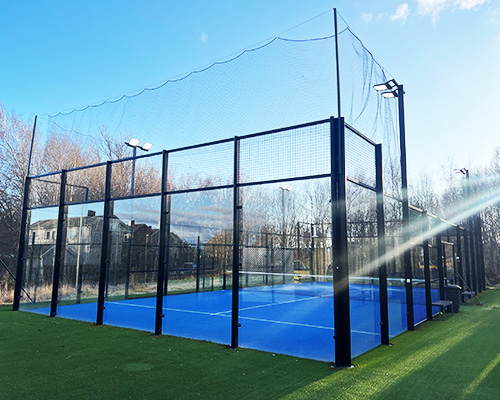
A padel court is a modular engineering system composed of multiple integrated components.
Structural Steel Framework System
The steel structure forms the backbone of the court.
Engineering Concept: Load Distribution System
The frame is designed to distribute dynamic loads generated during gameplay and environmental exposure.
It typically includes:
- Reinforced steel profiles
- Anti-corrosion coating systems
- Modular connection joints
Long-term durability is highly dependent on surface treatment quality and environmental resistance standards.
Tempered Glass Wall System
Performance Function
Glass panels define gameplay behavior, ball rebound characteristics, and spectator visibility.
Industry Standard Considerations
Professional courts typically use tempered safety glass engineered for:
- Impact resistance
- Optical clarity
- Structural stability under tension loads
Glass quality directly affects both user experience and maintenance cycle frequency.
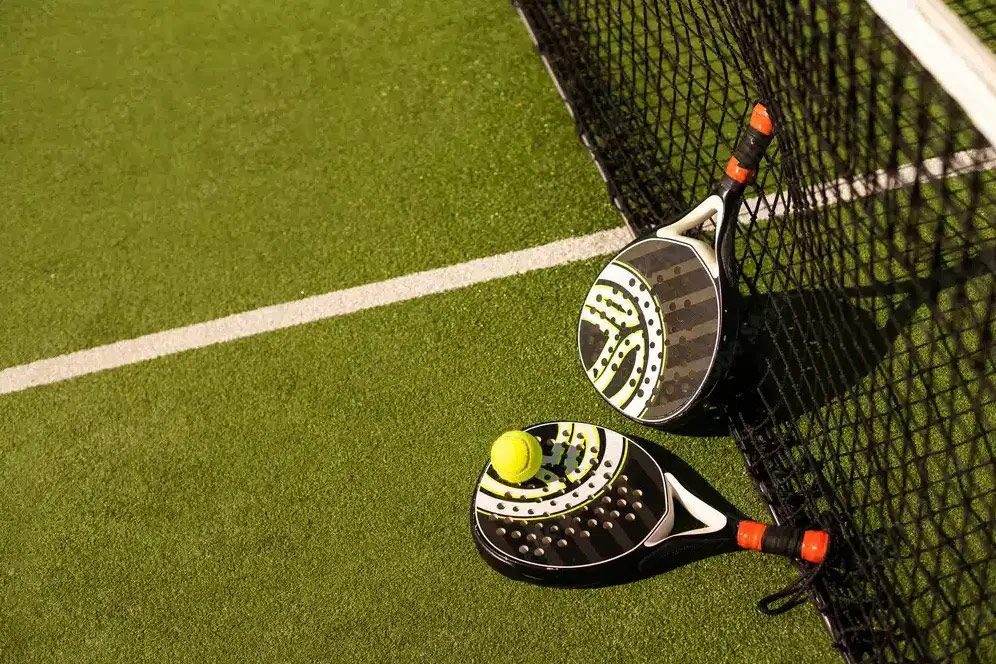
Artificial Turf System
Functional Role
The turf layer determines ball speed, traction, and athlete comfort.
Material Composition Concept
Modern systems often include:
- Polyethylene fiber structures
- Sand infill stabilization layers
- UV-resistant surface coating
The surface system is one of the most influential variables in long-term operational cost control.
Lighting System Engineering
Concept: Visibility Optimization Layer
Lighting systems extend operational hours and enhance night-time usability.
Key design considerations:
- Uniform light distribution
- Anti-glare positioning
- Energy consumption efficiency
- Weather resistance rating
LED-based systems are increasingly preferred due to operational stability and maintenance efficiency.
Comprehensive Cost Structure Breakdown (Conceptual Model)
The cost of building a padel court can be understood as a multi-layer investment model rather than a single-price component.
Major Cost Layers
| Cost Layer | Description | Impact Level |
|---|---|---|
| Structural System | Steel + frame + foundation | High |
| Playing Surface | Turf + infill system | High |
| Glass System | Safety tempered panels | High |
| Lighting System | LED or floodlighting | Medium |
| Site Preparation | Ground leveling + drainage | High |
| Installation Labor | Assembly and engineering | Medium |
| Permits & Compliance | Legal approvals | Medium |
| Logistics | Transportation and handling | Medium |
| Maintenance Setup | Initial operational setup | Low–Medium |
Indoor vs Outdoor Investment Engineering Logic

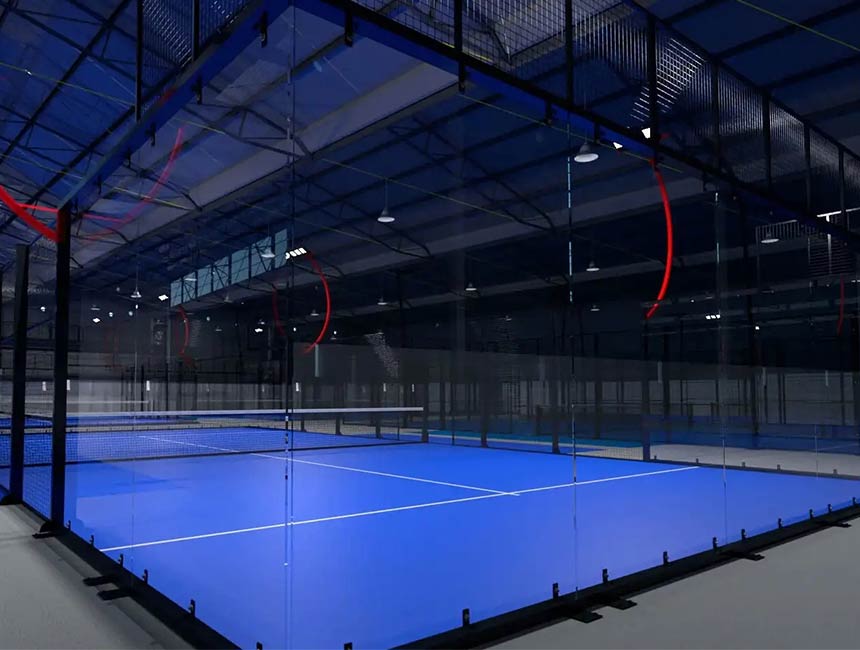
Indoor Padel Court System
Engineering Characteristics
Indoor courts require integration with building infrastructure systems.
Key considerations include:
- Ceiling height clearance
- Ventilation control systems
- Structural load compatibility
- Acoustic management
Indoor systems provide stable operating conditions but require higher architectural coordination.
Outdoor Padel Court System
Environmental Engineering Concept
Outdoor courts rely on climate-resistant structural design.
Important elements:
- Drainage system integration
- Wind load resistance
- UV protection materials
- Weatherproof coatings
Outdoor systems are more exposed but often simpler in construction logic.
Standard vs Premium Court Architecture Model
Standard Court System
Designed for functional sports usage with balanced investment efficiency.
Key Characteristics:
- Standardized frame design
- Basic LED lighting systems
- Functional turf specification
- Modular installation approach
Premium Court System
Designed for high-end clubs, resorts, and professional venues.
Key Characteristics:
- Reinforced structural engineering
- Enhanced visual glass systems
- High-performance turf systems
- Custom branding integration
- Tournament-grade lighting design
Premium systems typically aim to maximize user experience and brand positioning.
Real-World Investment Scenarios
Scenario 1: Community Sports Club Model
A mid-scale sports club integrates multiple courts to serve local demand.
Key focus:
- High utilization rate
- Cost-efficient construction
- Membership-based revenue
Scenario 2: Resort Integration Model
Hotels and resorts install courts to enhance guest experience.
Key focus:
- Aesthetic integration
- Premium visual design
- Leisure-oriented usage
Scenario 3: Commercial Padel Center Model
Dedicated padel centers operate as independent sports businesses.
Key focus:
- Multi-court optimization
- Event hosting capability
- Coaching program revenue
Engineering Standards and Industry References
European Facility Benchmark Logic
Many padel court systems align with widely adopted European construction benchmarks used in club-level installations.
These benchmarks typically emphasize:
- Safety glass compliance
- Structural load resistance
- Consistent playing surface behavior
Safety and Material Performance Standards
Common engineering expectations include:
- Impact resistance certification for glass systems
- Anti-corrosion treatment for steel structures
- UV resistance for outdoor turf systems
These standards ensure long-term operational stability.
Maintenance Lifecycle Cost Concept
Maintenance Structure Overview
The long-term cost of building a padel court includes ongoing lifecycle considerations.
Surface Maintenance Cycle
Routine cleaning and sand redistribution help maintain performance consistency.
Structural Inspection Cycle
Periodic inspections ensure stability and early detection of wear.
Lighting Maintenance Cycle
LED systems typically require minimal intervention but periodic checks are recommended.
Revenue Generation Models for Padel Courts
Core Revenue Streams
- Court rental bookings
- Membership programs
- Coaching sessions
- Tournament hosting
- Brand sponsorship integration
Utilization Rate Concept
Higher utilization directly improves ROI efficiency.
Operators often focus on:
- Peak-hour optimization
- Off-peak promotions
- Event scheduling strategies
ROI-Oriented Investment Framework
Key ROI Drivers
- Location demand intensity
- Number of courts per site
- Pricing strategy structure
- Operational efficiency
- Marketing and branding strength
Risk Management Factors
- Seasonal demand variation
- Local competition density
- Maintenance cost fluctuations
- Regulatory compliance changes
Cost Optimization Strategies
Modular Construction Strategy
Using standardized modular systems reduces installation complexity and improves scalability.
Supplier Consolidation Strategy
Working with integrated suppliers reduces logistics fragmentation and coordination overhead.
Lifecycle Cost Planning Strategy
Instead of focusing only on initial investment, planners evaluate:
- Maintenance cycles
- Replacement intervals
- Operational efficiency
Comparative Investment Table
| Investment Approach | Cost Focus | Risk Level | Scalability |
| Single Court Entry | Low initial entry | Medium | Low |
| Multi-Court Club | Balanced ROI | Medium | High |
| Resort Integration | Experience-driven | Low | Medium |
| Commercial Center | Revenue maximization | Medium | Very High |
Conclusion
Understanding the cost of building a padel court requires a full-system perspective that includes engineering design, material selection, operational planning, and long-term business strategy. It is not simply a construction expense but a structured investment model tied to usage efficiency and market demand.
For investors entering the padel industry, success depends on aligning technical specifications with commercial goals, selecting the right construction approach, and building scalable operational systems capable of supporting long-term growth.
A well-designed padel facility is not just a sports venue—it is a high-utilization asset with strong commercial potential in the evolving global sports economy.
FAQ
What is the main factor affecting the cost of building a padel court?
The main factors include structural materials, site preparation, court type, and installation complexity. Each element contributes differently to total investment requirements.
Why do padel court prices vary between suppliers?
Variations come from material quality differences, engineering standards, production processes, and installation service levels.
Is it better to build indoor or outdoor padel courts?
Indoor courts offer stable year-round usage, while outdoor courts are generally simpler in construction. The choice depends on business model and climate conditions.
How long does a padel court typically last?
With proper maintenance, a well-constructed court system can remain operational for many years, depending on material quality and usage intensity.
What is the most expensive part of a padel court?
Typically, structural systems, glass panels, and foundation preparation represent the highest cost components.
Can padel courts generate stable income?
Yes. Revenue can be generated through rentals, memberships, coaching, and events, especially in high-demand urban or resort areas.