
BLOG
Cost to Build a Padel Court: 2026 Guide
Recent Articles
Key Points Covered in This Guide
- Average cost ranges for padel court construction in 2026
- Materials and surface options affecting the cost to build a padel court
- Indoor vs outdoor padel court construction costs
- Labor, permits, and additional infrastructure considerations
- Comparing professional installation vs DIY approach
- Maintenance and long-term cost planning
- ROI and revenue potential for commercial padel courts
- Industry case studies and global cost benchmarks
- Step-by-step guide to estimating your court costs
Introduction
Padel has become one of the fastest-growing racquet sports worldwide, with professional tournaments, club memberships, and recreational players driving demand. Whether you are a club owner, a residential property investor, or a sports facility manager, understanding the cost to build a padel court is essential to avoid overspending while ensuring a high-quality court.
Investing in a padel court is not just about laying turf; it involves a careful analysis of materials, labor, infrastructure, and long-term maintenance. In 2026, with advancements in construction technology and materials, building a court has become more flexible and efficient, but price variations are significant depending on choices and location.
This guide will walk you through every aspect of padel court construction costs, offering practical insights, comparisons, real-world examples, and professional recommendations.
Table of Contents
Average Cost Ranges for 2026
Outdoor Padel Court Cost
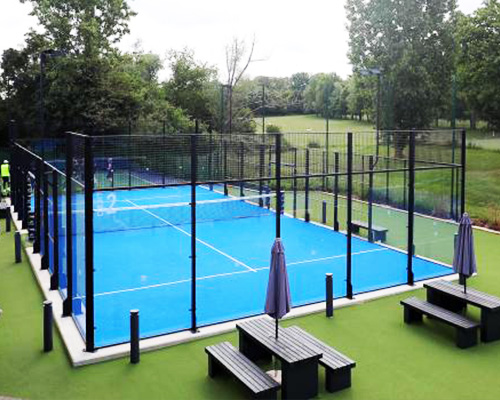
Outdoor courts are generally more economical due to the absence of an enclosure, yet they require proper drainage, surface leveling, and UV-resistant materials.
- Standard synthetic turf outdoor court: $15,000 – $25,000
- Premium outdoor court with sand infill and reinforced fencing: $30,000 – $45,000
Indoor Padel Court Cost
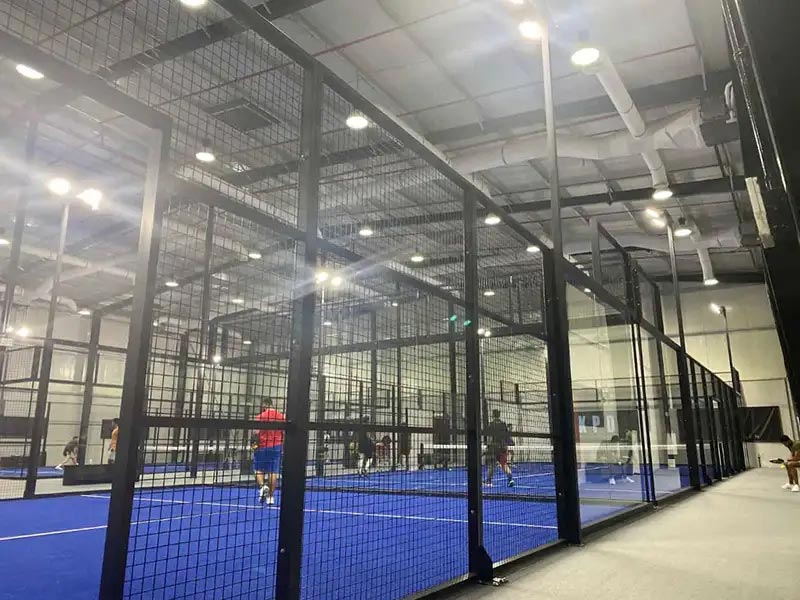
Indoor courts are more expensive, requiring structural support, ventilation, and artificial lighting:
- Professional indoor court with acrylic surface: $50,000 – $70,000
- Luxury indoor court with LED lighting and climate control: $80,000 – $120,000
These estimates include materials, labor, basic accessories, and fencing. Optional amenities such as seating, scoreboards, or automated lighting will increase costs further.
Key Factors Affecting the Cost to Build a Padel Court
Surface Material Options
The choice of surface material significantly influences both upfront and long-term costs:
- Synthetic Turf: Affordable, low maintenance, ideal for residential use.
- Concrete with Acrylic Coating: High durability, moderate cost, suitable for clubs.
- Premium Sand-Infilled Turf: Higher upfront cost but professional-grade experience and lower long-term wear.
Court Size and Standardization
A standard padel court measures 20m x 10m, including fencing. Additional space for walkways, seating, or spectator areas can increase overall construction costs.
Indoor vs Outdoor Construction
Indoor courts require additional structural considerations, such as steel or aluminum frames, insulated roofing, humidity control, and LED lighting. These features can add 30%–60% to the total cost compared to a similar outdoor court.
Location and Terrain
Groundwork and soil quality significantly affect costs. Sloped or uneven terrain may require excavation, retaining walls, or reinforced foundations. Urban areas often have higher labor and permitting fees.
Labor and Professional Installation
Professional Installation
Hiring experienced contractors ensures compliance with local regulations and delivers consistent quality. Installation typically accounts for 25%–40% of total project costs.
DIY Installation
For residential projects, some owners may attempt partial DIY installation. While cost-saving, this approach risks uneven surfaces, improper drainage, and potential safety hazards. Professional oversight is recommended for warranty and long-term durability.
Detailed Cost Comparison Table
| Court Type | Surface Material | Indoor/Outdoor | Approx. Cost (USD) | Durability | Maintenance Level |
|---|---|---|---|---|---|
| Standard | Synthetic Turf | Outdoor | 15,000 – 25,000 | Medium | Low |
| Premium | Sand-Infilled Turf | Outdoor | 30,000 – 45,000 | High | Medium |
| Professional | Concrete + Acrylic | Indoor | 50,000 – 70,000 | Very High | Medium-High |
| Luxury | Custom Turf + LED Lighting | Indoor/Outdoor | 80,000 – 120,000 | Very High | High |
Additional Cost Considerations
Permits and Regulations
Permits are often required, especially for commercial courts or indoor structures. Typical permit costs range from $500 to $2,000, depending on local laws.
Lighting and Accessories
Floodlights, nets, seating, and fencing improve usability but add costs. A professional LED lighting setup alone can cost between $2,500 and $8,000.
Site Preparation
Site preparation is crucial for leveling, drainage, and foundation integrity. Costs for this stage often account for 10–15% of the total project budget, particularly for uneven or sloped terrain.
ROI Considerations for Commercial Padel Courts
Professional padel courts can generate substantial revenue:
- Average hourly rental fee: $20 – $50
- Membership packages and leagues can increase utilization
- ROI period: 3–5 years for premium courts in urban locations
A case study by FIP (International Padel Federation, 2024) shows that investment in professional-grade padel courts increased club membership by 25–35% and generated additional revenue through coaching and events.
Comparing Indoor and Outdoor Courts
Indoor Courts
- Advantages: All-weather play, professional-quality surface, extended operating hours
- Disadvantages: High initial cost, ongoing energy costs for lighting and ventilation
Outdoor Courts
- Advantages: Lower construction cost, natural lighting, easier expansion
- Disadvantages: Vulnerable to weather, UV degradation, higher surface maintenance
Materials and Construction Standards
- Synthetic Turf: ISO 9001 certified, UV-resistant fibers, drainage compatibility
- Concrete Acrylic: ASTM C39 standard for compressive strength, thickness 15–20 cm
- Fencing: Minimum 4m height, galvanized steel or powder-coated for corrosion resistance
- Lighting: Energy-efficient LED, compliant with IEC 60598 safety standards
Maintenance Costs and Longevity
- Annual maintenance: $500–$2,500 depending on court type and surface
- Turf resurfacing every 5–7 years for synthetic surfaces
- Acrylic concrete coating may require recoating every 7–10 years
- Regular net replacement and fence inspections
Case Study: Residential vs Club Court Costs
Residential Backyard Court
- Synthetic turf, standard fencing, outdoor installation
- Total cost: $22,000
- Time to completion: 3 weeks
Club-Level Indoor Court
- Concrete acrylic, LED lighting, climate control, seating
- Total cost: $95,000
- Time to completion: 6–8 weeks
Key takeaway: Residential courts focus on cost-efficiency, while club courts prioritize professional standards and revenue potential.
Expert Tips to Reduce Costs Without Sacrificing Quality
- Choose modular or prefabricated turf solutions to reduce labor costs
- Use durable, low-maintenance surfaces to minimize long-term expenses
- Compare multiple contractors to ensure competitive pricing
- Plan for future expansion to avoid costly retrofits
Conclusion
Building a padel court is a significant investment, whether for personal enjoyment or commercial purposes. By understanding the cost to build a padel court, including materials, labor, permits, and long-term maintenance, you can make informed decisions that maximize both quality and ROI.
A well-planned court not only provides years of recreational enjoyment but also enhances property value or club revenue. Careful consideration of indoor vs outdoor options, material choices, and professional installation will ensure a safe, durable, and enjoyable playing experience.
FAQ
Q: How long does construction take?
A: 2–8 weeks depending on indoor or outdoor installation and site preparation.
Q: Can I save by doing some work myself?
A: Minor DIY tasks like surface cleaning can save costs, but structural and surfacing work should be professional.
Q: What is the typical lifespan of a padel court?
A: 10–15 years with proper maintenance. High-quality materials can last longer.
Q: Are there any international standards for padel courts?
A: Yes, the International Padel Federation (FIP) defines dimensions, surface types, fencing, and lighting standards.
Q: Is insurance necessary?
A: Yes, liability insurance for clubs and property insurance for residential courts is recommended.