
BLOG
LED Lighting for Outdoor Tennis Courts: Pro Solutions Guide
Recent Articles
Table of Contents
Key Takeaways
- LED lighting for outdoor tennis courts improves visibility, energy efficiency, and player performance
- Proper lux levels, uniformity, and glare control are critical for professional courts
- LED systems reduce maintenance costs compared to traditional lighting
- Smart controls and modular fixtures enable flexible operation and long-term ROI
- Choosing the right beam angle and pole layout directly impacts lighting quality
Introduction
As tennis continues to expand globally—from recreational community courts to professional tournament venues—the demand for high-performance lighting has never been higher. Traditional lighting systems are increasingly unable to meet modern expectations for energy efficiency, visual clarity, and sustainability.
LED lighting for outdoor tennis courts has emerged as the industry benchmark, offering measurable improvements in illumination quality, operational efficiency, and environmental impact. With advancements in optical engineering, smart control systems, and international lighting standards, LED solutions are redefining how tennis courts are designed and operated.
This guide provides a comprehensive, data-driven overview of professional LED lighting systems, helping facility owners, contractors, and buyers make informed decisions.
What Is LED Lighting for Outdoor Tennis Courts?
LED lighting for outdoor tennis courts refers to specialized lighting systems designed to deliver uniform brightness, reduced glare, and optimal visibility for tennis gameplay. These systems utilize light-emitting diode technology to produce high-intensity illumination with minimal energy consumption.
Unlike legacy systems such as metal halide lamps, LED lighting provides instant-on performance, consistent color rendering, and precise light distribution. This ensures players can track fast-moving balls accurately while maintaining visual comfort.
Key Components of Professional LED Tennis Court Lighting
LED Luminaires
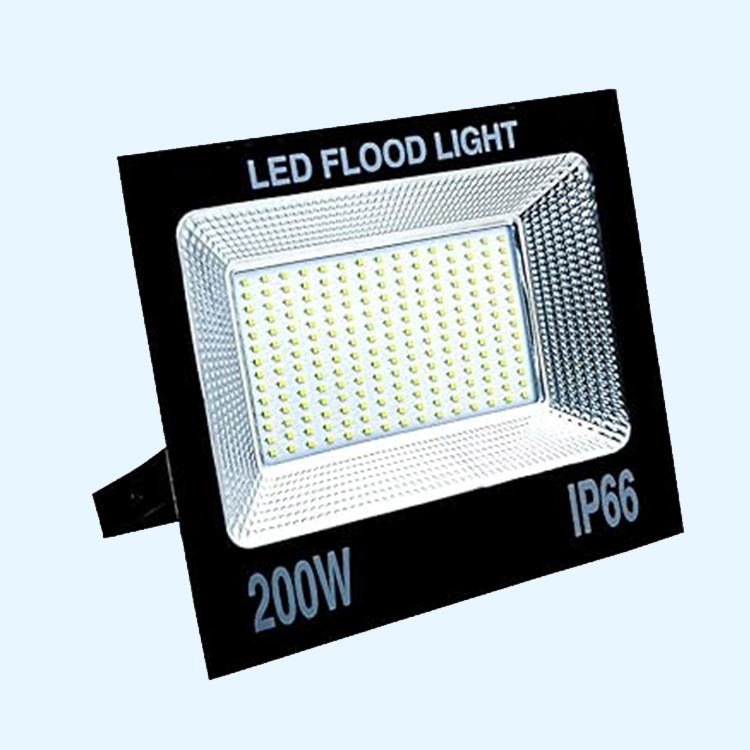
LED luminaires are the core of the lighting system. They incorporate advanced optical lenses that control light distribution and minimize spill light beyond the court area. High-quality luminaires also feature thermal management systems to maintain performance over time.
Lighting Poles
Lighting poles determine fixture height and positioning. Standard installations typically use poles between 6m and 12m, depending on court classification. Proper pole alignment ensures balanced illumination across all playing zones.
Control Systems
Modern LED lighting systems integrate intelligent controls, allowing users to adjust brightness levels, schedule operations, and monitor performance remotely. This enhances energy efficiency and operational flexibility.
Core Lighting Standards for Outdoor Tennis Courts
Illuminance (Lux Levels)
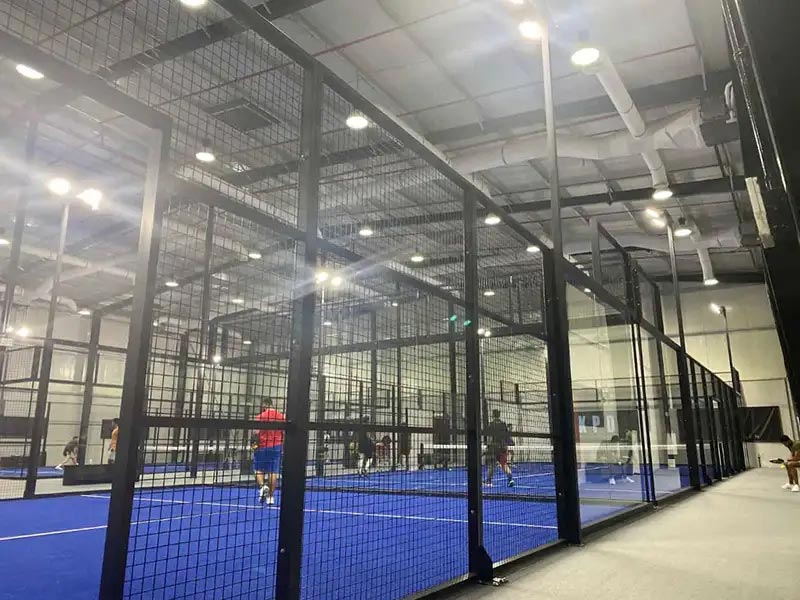
Illuminance defines the amount of light on the playing surface. According to international standards:
- Recreational courts: 200–300 lux
- Club-level courts: 300–500 lux
- Professional courts: 500–1000+ lux
Higher lux levels are required for televised matches to ensure broadcast-quality visuals.
Uniformity Ratio
Uniformity ratio measures how evenly light is distributed. Professional standards typically require a uniformity ratio of 0.7 or higher, ensuring no significant brightness variations across the court.
Glare Control
Glare can negatively impact player performance. Advanced LED systems use shielding and precise beam control to reduce glare, improving visibility and comfort.
International Standards and Compliance
ITF Lighting Guidelines
The International Tennis Federation (ITF) specifies lighting requirements for different competition levels, including minimum lux levels and uniformity ratios.
EN 12193 Standard
This European standard outlines lighting requirements for sports facilities, including tennis courts, focusing on safety, performance, and energy efficiency.
IESNA Recommendations
The Illuminating Engineering Society of North America (IESNA) provides detailed guidelines for sports lighting design, emphasizing glare control and uniformity.
LED vs Traditional Tennis Court Lighting
| Feature | LED Lighting | Metal Halide Lighting |
|---|---|---|
| Energy Efficiency | 50–70% savings | High energy consumption |
| Lifespan | 50,000–100,000 hours | 10,000–15,000 hours |
| Warm-up Time | Instant | 5–15 minutes |
| Maintenance Cost | Low | High |
| Light Quality | Uniform, flicker-free | Uneven, flickering |
| Environmental Impact | Low carbon footprint | Higher emissions |
Design Considerations for LED Lighting for Outdoor Tennis Courts
Beam Angle Selection
Beam angles typically range from 15° to 120°. Narrow beams are used for targeted illumination, while wider beams provide general coverage.
Pole Height and Layout
A standard tennis court often uses a 4-pole or 6-pole configuration. Proper spacing ensures optimal light overlap and uniformity.
Environmental Durability
Outdoor lighting systems must withstand harsh conditions, including rain, wind, and temperature fluctuations. IP65 or higher ratings are recommended.
Advanced Optical Design in LED Systems

Asymmetric Light Distribution
Asymmetric optics direct light precisely onto the court, minimizing spill light and improving efficiency.
Anti-Glare Shields
Specialized shields reduce direct light exposure to players, enhancing visual comfort.
Color Rendering Index (CRI)
High CRI (≥80) ensures accurate color perception, which is critical for tracking the tennis ball during play.
Smart LED Lighting Technologies
Adaptive Lighting Controls
Adaptive systems adjust brightness based on usage, reducing energy waste during low-activity periods.
IoT Integration
Internet of Things (IoT) technology enables remote monitoring, predictive maintenance, and real-time performance tracking.
Dimming Capabilities
LED systems support dimming from 0% to 100%, allowing flexible lighting levels for different scenarios.
Cost Analysis and ROI
Initial Investment
LED lighting systems typically cost 20–40% more upfront than traditional systems.
Energy Savings
Facilities can achieve up to 70% energy savings, significantly reducing operational expenses.
Maintenance Reduction
LED systems require minimal maintenance, lowering long-term costs.
ROI Timeline
Most installations achieve return on investment within 2–4 years.
Real-World Case Studies
Community Tennis Club Upgrade
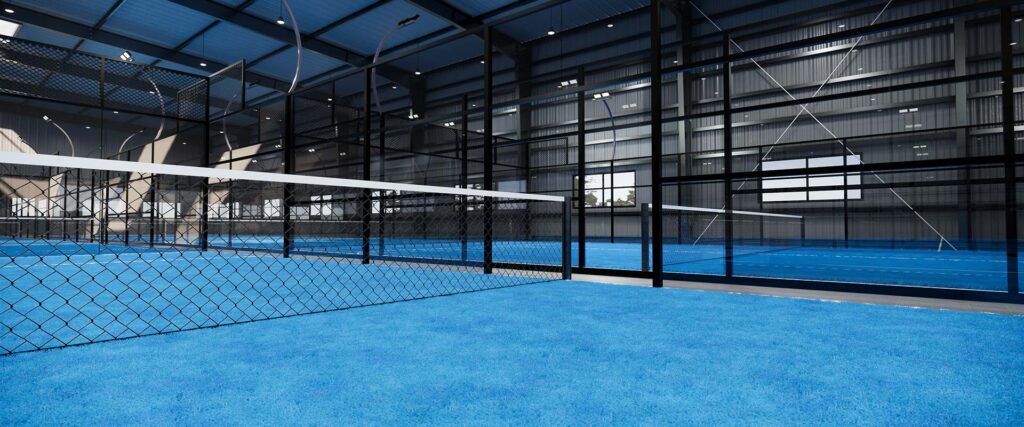
A mid-sized tennis club replaced metal halide lights with LED systems, reducing energy consumption by 60% and improving player satisfaction.
Professional Tournament Venue
A tournament facility implemented high-lux LED lighting, meeting broadcast standards and enhancing viewer experience.
Comparison of Lighting Configurations
| Configuration Type | Number of Poles | Typical Lux Level | Application Level |
|---|---|---|---|
| Basic Setup | 4 | 200–300 | Recreational |
| Standard Setup | 6 | 300–500 | Club Level |
| Advanced Setup | 8 | 500–1000 | Professional |
Sustainability and Environmental Impact
Energy Efficiency
LED lighting reduces electricity consumption, contributing to lower carbon emissions.
Reduced Light Pollution
Directional lighting minimizes light spill, protecting surrounding environments.
Long Lifespan
Extended lifespan reduces waste and resource consumption.
Common Mistakes in Tennis Court Lighting Design
Incorrect Pole Placement
Improper positioning can lead to uneven lighting and shadows.
Overlooking Glare Control
Ignoring glare can negatively affect player performance.
Using Low-Quality Fixtures
Inferior products may result in poor durability and inconsistent lighting.
Future Trends in LED Tennis Court Lighting

AI-Based Lighting Optimization
Artificial intelligence is being integrated to optimize lighting performance automatically.
Solar-Powered Systems
Renewable energy solutions are becoming more popular in outdoor sports facilities.
Modular Lighting Systems
Modular designs allow easy upgrades and scalability.
Conclusion
LED lighting for outdoor tennis courts represents a significant advancement in sports infrastructure. By combining energy efficiency, superior lighting quality, and smart technology integration, LED systems provide long-term value for facility owners and operators.
As industry standards continue to evolve, adopting professional LED lighting solutions ensures compliance, enhances player experience, and delivers measurable economic benefits.
FAQ
What is the ideal lux level for professional tennis courts?
Professional courts typically require 500–1000 lux, depending on competition and broadcasting needs.
How much energy can LED lighting save?
LED systems can reduce energy consumption by up to 70% compared to traditional lighting.
Are LED lights suitable for all weather conditions?
Yes, high-quality LED fixtures are designed to operate in extreme weather conditions.
How long does installation take?
Installation typically takes 1–3 days, depending on project complexity.
Can LED lighting be customized?
Yes, LED systems can be tailored to specific court dimensions and usage requirements.