
BLOG
Outdoor Smart Gym vs Traditional Outdoor Fitness Equipment
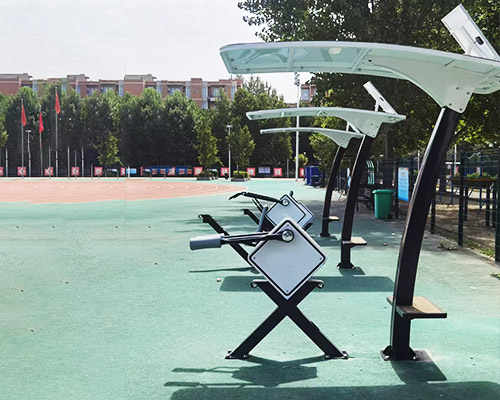
Recent Articles
Table of Contents
An Outdoor Smart Gym combines public fitness equipment with digital displays, exercise tracking, adjustable resistance, data transmission, interactive guidance, and other intelligent functions. Compared with traditional outdoor fitness equipment, it can provide users and facility operators with a more measurable and engaging exercise experience.
However, smart equipment is not automatically the right solution for every park, school, community, or municipal project. Traditional equipment remains attractive because of its simple structure, low operating requirements, and familiar user experience.
For B2B buyers, the correct decision depends on the project budget, target users, available power, maintenance capacity, site conditions, data requirements, and long-term operating objectives.
Key Takeaways
- An Outdoor Smart Gym can collect and display exercise data.
- Traditional outdoor fitness equipment usually has fewer electrical and digital components.
- Smart systems are suitable for projects emphasizing user engagement and measurable activity.
- Conventional equipment can be practical for low-maintenance public fitness areas.
- Adjustable resistance helps one machine serve users with different fitness levels.
- Dual-user stations can improve space efficiency and encourage social exercise.
- Power, drainage, foundations, connectivity, and after-sales support should be planned early.
- Outdoor durability depends on steel construction, surface treatment, enclosures, fasteners, and installation quality.
- Buyers should compare lifecycle cost rather than only the equipment price.
- A mixed smart and traditional layout may provide the best solution for some facilities.
What Is an Outdoor Smart Gym?
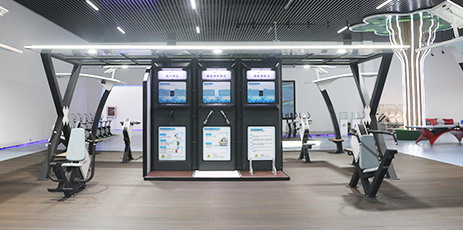
An Outdoor Smart Gym is a public or commercial outdoor fitness area that integrates physical exercise equipment with digital technology.
Depending on the system, smart functions may include:
- Exercise-duration tracking
- Repetition counting
- Calorie estimates
- Resistance adjustment
- Heart-rate testing
- Fitness assessments
- Digital displays
- Voice guidance
- Wireless data transmission
- Mobile-terminal access
- Equipment-use statistics
Smart Fitness Equipment
Smart fitness equipment uses sensors, processors, displays, or communication systems to collect and present exercise information.
This concept is related to the broader Internet of Things, in which physical devices collect, exchange, or present data through connected technologies.
Outdoor Fitness Environment
Unlike an indoor gym, outdoor equipment must operate under changing weather conditions.
The structure and electronic components may be exposed to:
- Rain
- Humidity
- Dust
- Sunlight
- Temperature changes
- Public use
- Vandalism risks
- Limited staff supervision
A Complete System
An Outdoor Smart Gym should therefore be evaluated as more than exercise equipment.
It is a complete system combining:
fitness functions + outdoor structure + electrical components + software + foundation + maintenance
What Is Traditional Outdoor Fitness Equipment?
Traditional outdoor fitness equipment normally uses mechanical movement without integrated digital displays or data collection.
Common examples include:
- Air walkers
- Waist twisters
- Pull-down trainers
- Shoulder wheels
- Leg presses
- Rowing trainers
- Stretching stations
- Balance equipment
Mechanical Operation
The equipment is powered directly by user movement.
It may use body weight, fixed mechanical resistance, counterweights, hydraulic resistance, or a defined movement path.
Simple User Experience
Users can normally begin exercising without creating an account, scanning a code, selecting a program, or operating a screen.
Why Traditional Equipment Remains Popular
Traditional equipment can provide:
- Lower technical complexity
- Familiar operation
- Minimal electronic maintenance
- Easy public access
- Controlled initial cost
- Suitability for unsupervised parks
It remains a practical choice for many community and municipal projects.
Outdoor Smart Gym vs Traditional Fitness Equipment
The two systems serve different project objectives.
| Factor | Outdoor Smart Gym | Traditional Equipment |
|---|---|---|
| Exercise data | Available by configuration | Usually unavailable |
| Digital display | Common | Rare |
| Resistance adjustment | Often available | Fixed or mechanical |
| User guidance | Screen, voice or app | Signage |
| Power requirement | Usually required | Usually not required |
| Connectivity | Possible | Not needed |
| Maintenance complexity | Higher | Lower |
| User engagement | Interactive | Simple |
| Project cost | Generally higher | Generally lower |
| Management data | Possible | Limited |
| Best application | Smart parks and flagship projects | General public fitness areas |
Which Is Better?
Neither is universally better.
A smart gym can provide greater interaction and data visibility, while traditional equipment can deliver dependable exercise functions with fewer technical requirements.
Project Objective First
The most useful purchasing question is:
“What should this fitness area achieve for its users and operator?”
The answer may be increased public participation, senior-friendly exercise, community branding, physical testing, rehabilitation support, or simple low-cost recreation.
What Data Can an Outdoor Smart Gym Collect?
Data capabilities vary by product.
A smart system may record information such as:
- Exercise time
- Number of repetitions
- Resistance level
- Estimated calories
- Equipment usage
- Heart rate
- Grip strength
- Height or body measurements
SRSC’s Outdoor Intelligent Gym combines fitness testing and exercise stations with wireless data transmission, voice broadcasting, fixed displays, and smart-terminal access.
User-Level Data
Exercise information can help users understand how long or how frequently they train.
Facility-Level Data
Depending on the software configuration, operators may be able to evaluate which stations are used most frequently.
Data Should Support a Decision
Collecting information has limited value unless the project has a clear reason to use it.
Before purchasing, buyers should define whether they need data for:
- User motivation
- Community fitness programs
- Equipment planning
- Maintenance scheduling
- Public health campaigns
- Facility reports
Outdoor Intelligent Gym vs Individual Smart Stations
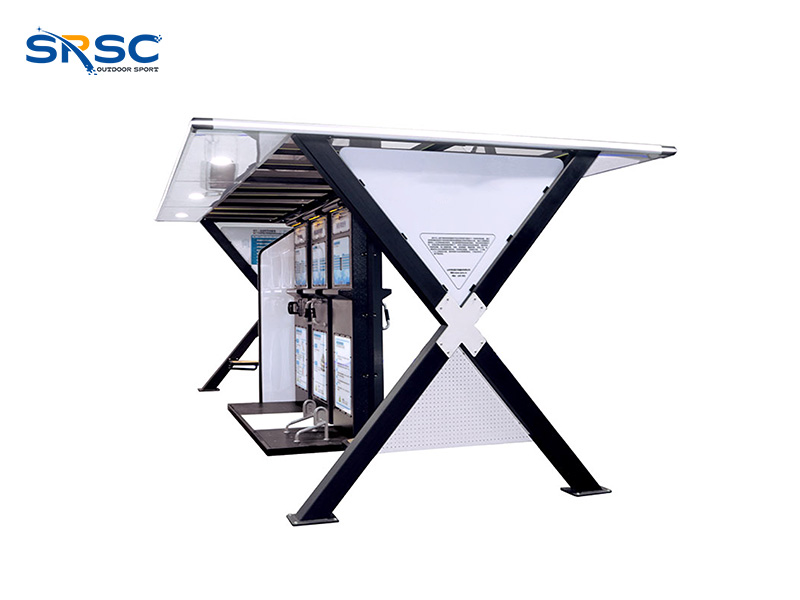
Smart outdoor equipment can be arranged as one integrated facility or as individual exercise stations.
Integrated Outdoor Intelligent Gym
An all-in-one gym can combine several exercise and testing functions beneath one coordinated structure.
The Outdoor Fitness Equipment system uses a modular design with fitness testing, exercise stations, data display, wireless transmission, voice functions, and optional smart-terminal access.
Individual Smart Stations
Separate machines can be distributed throughout a park or community fitness area.
Examples include:
- Smart rowers
- Chest presses
- Air walkers
- Pull-down trainers
- Rotation trainers
- Pedal trainers
Which Layout Is Better?
An integrated system can create a recognizable flagship fitness zone.
Individual stations provide greater layout flexibility and allow buyers to select equipment according to specific muscle groups or user needs.
How Adjustable Resistance Improves Outdoor Training
Traditional public fitness equipment often uses the user’s body weight or a fixed movement structure.
Smart or advanced outdoor machines may provide multiple resistance settings.
Different Fitness Levels
A single resistance level may be too light for one user and too demanding for another.
Adjustable resistance allows the equipment to serve a wider range of people.
Progressive Training
Users can gradually increase resistance as strength improves.
This follows the general principle of progressive overload, in which training demands are increased over time to support continued development.
Seated Leg Training
SRSC’s Outdoor Intelligent Gym Seated Leg Curl Trainer uses hydraulic and electromagnetic resistance adjustment with multiple resistance levels and a display for workout information.
Buyer Check
Ask the supplier:
- How many resistance levels are available?
- How is resistance changed?
- Does adjustment require power?
- What happens if the display stops working?
- Can the machine still operate mechanically?
- Which parts require periodic replacement?
Digital Display vs Traditional Instruction Sign
Traditional outdoor equipment commonly uses printed or engraved instructions.
Smart equipment can provide more interactive guidance.
Traditional Signage
A fixed instruction panel can show:
- Exercise method
- Target muscles
- Safety warnings
- User limitations
- Recommended repetitions
Digital Display
A screen can show changing information such as:
- Exercise duration
- Repetition count
- Resistance level
- Estimated calories
- Training prompts
- Equipment status
Digital Does Not Replace Clear Design
A smart machine should still be understandable when the screen is difficult to read or temporarily unavailable.
Basic movement instructions and safety information should remain visible.
Dual-User Outdoor Smart Equipment
Many public fitness areas need to serve multiple users within limited space.
Dual-position equipment allows two people to exercise at the same time.
Space Efficiency
One supporting structure can serve two training positions.
This can reduce the amount of land required per active user.
Social Exercise
Two-person equipment can encourage friends, couples, family members, or community users to exercise together.
Independent Stations
Each user should be able to complete the movement without interfering with the other station.
Examples of Dual-User Equipment
The Intelligent Double-Position Rower provides two rowing positions for thigh, waist, and coordinated pulling exercise.
The Intelligent Dual Position Chest Press provides two stations for shoulder and chest training.
The Intelligent Two-Position Air Walker allows two users to perform walking-style aerobic movements.
Smart Rower vs Traditional Outdoor Rower
Outdoor rowing trainers use a pulling motion to exercise several muscle groups.
Traditional Rower
A conventional model normally provides a fixed mechanical movement without a display.
Intelligent Rower
A smart rower may add digital tracking, usage records, voice guidance, or other interactive features.
| Factor | Smart Rower | Traditional Rower |
| Repetition tracking | Possible | No |
| Exercise-time display | Possible | No |
| User feedback | Digital | Physical movement only |
| Power | Usually required | Not required |
| Maintenance | Electronic and mechanical | Mainly mechanical |
| Purchase cost | Higher | Lower |
| User motivation | Interactive | Simple |
Which Project Needs a Smart Rower?
Smart rowing equipment may be appropriate for:
- Technology-focused parks
- Urban fitness demonstration projects
- Schools
- Corporate campuses
- Residential developments
- Community health programs
Traditional equipment can remain sufficient where the main priority is simple public access.
Smart Chest Press vs Fixed-Resistance Chest Press
A chest press develops upper-body pushing strength.
Fixed Mechanical System
The movement range and resistance are generally determined by the equipment geometry and user body weight.
Adjustable Smart System
An intelligent system can provide selected resistance levels and display exercise information.
SRSC’s Intelligent Double Position Chest Press is designed for dual-user chest and shoulder exercise.
User Suitability
Resistance should be appropriate for the intended population.
Public Equipment Is Not a Commercial Gym Machine
Outdoor equipment is used by people with different ages, body sizes, and experience levels.
The movement path, handles, seats, resistance, and warning labels should therefore be evaluated for public use rather than copied directly from indoor bodybuilding equipment.
Smart Air Walker for Outdoor Cardio Areas
An air walker uses a swinging leg movement that resembles walking with an extended stride.
It is commonly used for low-impact aerobic activity and coordination training.
Cardiovascular Exercise
Regular movement can support aerobic activity.
General background on this training category is available in Wikipedia’s overview of aerobic exercise.
Balance and Coordination
Users hold the handrails while moving the foot platforms forward and backward.
The Intelligent Two-Position Air Walker is designed for two users and targets aerobic capacity, balance, and physical coordination.
Site Planning
Air walkers require a clear movement zone around the swinging platforms.
Do not position benches, bins, signs, planting, or other equipment inside the operating area.
Smart Pull-Down Trainer for Upper-Body Exercise
A pull-down trainer uses a controlled downward movement to engage the upper body and back.
The Intelligent Double Position Pull Down Trainer provides two training positions within one structure.
Main Project Benefits
- Dual-user capacity
- Upper-body exercise
- Shared supporting frame
- Suitable for public fitness zones
- Clear guided movement
Equipment Mix
A complete fitness area should not contain only upper-body machines.
Balanced Outdoor Gym Layout
Consider including:
- Upper-body pushing
- Upper-body pulling
- Lower-body exercise
- Aerobic movement
- Flexibility
- Balance
- Core training
- Accessible stations
A balanced equipment mix can serve more users than several machines targeting the same movement.
Rotation Trainers and Shoulder Mobility
Rotation equipment is often included in community fitness areas because it provides a relatively simple movement pattern.
The Intelligent Double-Position Rotation Trainer uses rotating hand wheels for upper-limb and shoulder movement.
Suitable User Groups
This type of station may be attractive for:
- General adult exercise
- Senior-friendly fitness areas
- Warm-up zones
- Community wellness programs
- Low-intensity mobility work
Controlled Movement
Users should complete movements gradually rather than forcing the joint through an uncomfortable range.
Equipment Is Not Medical Treatment
Outdoor fitness equipment can support general exercise but should not be marketed as diagnosing, treating, or curing medical conditions without appropriate evidence and regulatory support.
Smart Gym vs Traditional Gym Maintenance
Maintenance is one of the biggest differences between smart and conventional outdoor equipment.
Traditional Equipment Maintenance
Common tasks include:
- Tightening bolts
- Lubricating moving parts
- Checking welds
- Inspecting seats and handles
- Repairing coatings
- Checking foundations
- Replacing worn bearings
Smart Equipment Maintenance
Smart equipment requires the same mechanical inspections plus checks of:
- Displays
- Sensors
- Wiring
- Batteries
- Control boards
- Data modules
- Resistance controls
- Speakers
- Software or terminals
| Maintenance Area | Smart Equipment | Traditional Equipment |
| Bolts and welds | Required | Required |
| Bearings and pivots | Required | Required |
| Coating inspection | Required | Required |
| Electrical inspection | Required | Usually not |
| Software support | Possible | No |
| Display replacement | Possible | No |
| Sensor calibration | Possible | No |
| Data connectivity | Possible | No |
Maintenance Capacity Matters
A municipality with a trained technical team may be comfortable operating connected equipment.
A remote park with limited maintenance access may benefit from simpler equipment.
Outdoor Weather Protection for Smart Fitness Equipment

Electronic functions add more components that need protection from the outdoor environment.
Steel Structure
The main frame should use an appropriate outdoor surface-treatment system.
The Outdoor Fitness Equipment specification includes steel and aluminum components with degreasing, shot blasting, and electrostatic powder coating.
Electronic Enclosures
Displays, sensors, wiring, switches, and connectors should be protected from rain and dust.
Drainage
Water should not accumulate around foundations, electrical cabinets, seats, or moving components.
Ask for Environmental Specifications
Useful questions include:
- What enclosure protection is used?
- What temperature range is supported?
- How is rainwater prevented from reaching the electronics?
- Are cables concealed?
- Can damaged modules be replaced independently?
- Is remote technical support available?
Smart Gym Power Options
Traditional equipment normally does not require electricity.
Smart equipment may use mains power, batteries, low-voltage systems, or solar-assisted configurations.
Low-Voltage Operation
Low-voltage power can support displays, sensors, lighting, data transmission, and resistance controls.
Solar-Assisted Power
Solar power may be considered where suitable sunlight and project conditions are available.
General information about generating electricity from sunlight is available through Wikipedia’s overview of solar power.
Mains Connection
A fixed electrical connection may provide more reliable power for equipment with higher energy requirements.
Power Planning Checklist
Confirm:
- Operating voltage
- Maximum power demand
- Battery configuration
- Solar-panel requirements
- Underground conduits
- Isolation switches
- Earthing
- Local electrical approval
- Emergency shutdown
- Maintenance access
Does an Outdoor Smart Gym Need Internet Access?
Not every smart function requires continuous internet access.
Offline Functions
Equipment may be able to display:
- Time
- Repetitions
- Resistance
- Calories
- Basic guidance
without sending information to a remote server.
Connected Functions
Internet or wireless connectivity may be required for:
- Centralized data
- User accounts
- Remote monitoring
- Software updates
- Facility dashboards
- Usage analytics
Avoid Paying for Unused Connectivity
A project should not include complex networking simply because it sounds advanced.
Define which connected features the facility will actually operate and maintain.
Data Privacy for Smart Public Fitness Equipment
Connected public equipment may process usage or account information.
If the system identifies individual users, buyers should consider applicable privacy requirements.
Anonymous Equipment Data
Counting total machine use without identifying individuals creates different privacy considerations from storing personal profiles.
User Accounts
Apps or membership systems may collect additional information.
Buyer Questions
Ask:
- What data is collected?
- Is the information anonymous?
- Where is it stored?
- Who can access it?
- How long is it retained?
- Can users exercise without registering?
- Which privacy rules apply locally?
The equipment supplier and facility operator should clearly define their respective responsibilities.
Outdoor Smart Gym for Public Parks
Public parks need equipment that is inclusive, durable, understandable, and practical to maintain.
User Variety
Park users may include:
- Teenagers
- Adults
- Seniors
- Beginners
- Experienced exercisers
- Families
- Tourists
Easy Access
The equipment should not require a paid membership or complex registration unless the project specifically operates that way.
Visible Guidance
Clear instructions help reduce incorrect use.
Smart Park Value
A smart gym can become a recognizable public amenity that supports:
- Community activity
- Municipal branding
- Public health campaigns
- Exercise education
- Usage measurement
Outdoor Smart Gym for Residential Communities
Residential developers may use intelligent fitness equipment to differentiate a housing project.
Amenity Value
A well-designed gym can strengthen the recreation offering of the development.
Shared Use
Dual-user machines help serve multiple residents without requiring a large indoor gym building.
Appearance
Modern structural design can become part of the landscape architecture.
Long-Term Management
The property-management team should understand the power, maintenance, warranty, and replacement requirements before the equipment is handed over.
Outdoor Smart Gym for Schools
Schools can use smart equipment to combine exercise with basic performance feedback.
Physical Education
Students can learn how exercise time, repetitions, and resistance affect training.
Supervision
Teachers can explain correct equipment use and manage training groups.
Equipment Selection
School projects should consider:
- Student age
- Height range
- Supervision
- Safety
- Maximum user capacity
- Resistance levels
- Equipment spacing
Adult Equipment May Not Suit Children
Equipment dimensions and resistance intended for adults may be inappropriate for younger users.
Confirm the intended age group with the manufacturer.
Outdoor Smart Gym for Senior-Friendly Parks
Older users often value clear movements, supportive handles, moderate resistance, and comfortable access.
Suitable Functions
Potential options include:
- Air walkers
- Shoulder rotation
- Gentle pulling
- Pedal trainers
- Balance equipment
- Seated leg exercise
Seating and Access
Seats, handles, steps, and surrounding paths should be evaluated together.
Accessibility Is a Site Issue
Accessible equipment alone does not create an accessible facility.
The project also needs suitable:
- Pathways
- Ground surfaces
- Entrance widths
- Rest areas
- Signage
- Lighting
- Drainage
Foundation Requirements for Outdoor Smart Equipment
Outdoor machines depend on stable foundations.
The exact foundation method varies according to product size, loading, soil, and local requirements.
Embedded Foundations
Some larger SRSC smart equipment uses embedded foundations.
The final foundation should follow the drawing supplied for the exact model.
Anchor Bolts
Other systems may use base plates and anchors.
Underground Services
Power and communication conduits should be coordinated before concrete is poured.
Do Not Copy a Generic Foundation
Equipment with a large canopy or tall digital structure may create different wind loads from a compact traditional trainer.
A local engineer should verify site-specific requirements where necessary.
Outdoor Smart Gym Layout Planning
A successful outdoor gym needs more than a collection of machines.
Exercise Zones
Equipment can be grouped into:
- Cardio
- Upper-body strength
- Lower-body strength
- Core
- Flexibility
- Balance
- Fitness testing
Circulation
Users need clear paths between stations.
Movement Areas
Moving arms, pedals, platforms, and handles need sufficient clearance.
Rest Areas
Benches, shade, and drinking water can improve the overall experience.
Logical Exercise Sequence
A simple layout might follow:
warm-up → mobility → cardio → strength → balance → recovery
This can make the facility easier to understand.
Smart Gym Equipment Selection Table
| Project Objective | Recommended Equipment Type |
| Fitness assessment | Outdoor Intelligent Gym |
| Aerobic exercise | Intelligent Air Walker |
| Pulling strength | Intelligent Rower or Pull-Down Trainer |
| Pushing strength | Intelligent Chest Press |
| Lower-body exercise | Intelligent Pedal or Leg Trainer |
| Shoulder mobility | Rotation Trainer |
| Balance and coordination | Pendulum or Seesaw |
| Multi-user capacity | Dual-position equipment |
| Flagship park feature | Integrated Outdoor Smart Gym |
| Low-maintenance zone | Traditional mechanical equipment |
Lifecycle Cost of an Outdoor Smart Gym
Smart equipment often has a higher initial price than traditional equipment.
However, B2B buyers should compare total ownership cost.
Initial Costs
These may include:
- Equipment
- Freight
- Foundations
- Electrical work
- Networking
- Installation
- Software setup
- Commissioning
Operating Costs
These may include:
- Electricity
- Connectivity
- Inspections
- Replacement displays
- Sensors
- Batteries
- Software support
- Mechanical repairs
Potential Project Value
Benefits may include:
- Increased user engagement
- Modern facility branding
- Public-use statistics
- Training guidance
- Measurable community participation
Cheapest Is Not Always Lowest Cost
Traditional equipment may produce lower ownership costs where no one will use the digital data.
A smart system may justify its additional cost where interaction and management information support the project objectives.
Smart, Traditional or Mixed Outdoor Gym?
Some projects do not need to choose only one category.
All-Smart Layout
Suitable for flagship parks, technology demonstration zones, and high-profile urban projects.
All-Traditional Layout
Suitable for projects emphasizing simplicity, low technical maintenance, and unrestricted use.
Mixed Layout
Combines smart flagship stations with simpler supporting equipment.
| Layout | Main Advantage | Main Limitation |
| All smart | Strong interaction and branding | Higher cost and maintenance |
| All traditional | Simple and economical | Limited data |
| Mixed | Balanced investment | Requires coordinated design |
Why a Mixed Layout Works
A project could install:
- One intelligent fitness-testing station
- One smart air walker
- One smart chest press
- Several traditional stretching and mobility stations
This creates digital engagement without making every station dependent on electronic systems.
How to Compare Outdoor Smart Gym Suppliers
Use a detailed specification sheet.
| Buyer Check | Information to Request |
| Main materials | Steel, aluminum, plastics, panels |
| Steel dimensions | Posts, beams and wall thickness |
| Surface treatment | Preparation and coating process |
| Exercise functions | Target movements and users |
| Resistance | Type and adjustment levels |
| Display | Data shown and screen type |
| Sensors | Measurements collected |
| Power | Voltage and consumption |
| Connectivity | Wireless, app or terminal |
| Data | Storage and access |
| Weather protection | Enclosures and operating range |
| Foundation | Drawing and installation method |
| Maximum users | Per machine and total area |
| Spare parts | Displays, sensors and controls |
| Software support | Updates and troubleshooting |
| Warranty | Mechanical and electronic coverage |
Common Outdoor Smart Gym Buying Mistakes
Buying Technology Without a Use Case
Data collection should support a defined facility objective.
Comparing Only the Screen
The mechanical structure remains the most important part of exercise equipment.
Ignoring Power Infrastructure
Electrical conduits are difficult to add after foundations and paving are completed.
Forgetting Software Support
Digital features may become unusable without long-term technical assistance.
Using Adult Equipment for Every Age Group
Dimensions and resistance must match the intended users.
Ignoring Drainage
Standing water can affect foundations, coatings, electronics, and access.
Installing Too Many Similar Machines
A complete fitness zone needs balanced exercise functions.
Failing to Budget for Replacement Parts
Screens, sensors, cables, and buttons may eventually need replacement.
Outdoor Smart Gym Buyer Checklist
Before ordering, confirm:
- Project type
- Target users
- Expected daily users
- Available site area
- Smart or traditional strategy
- Required exercise functions
- Fitness-testing requirements
- Resistance levels
- Data to be collected
- Display functions
- Connectivity requirements
- User registration requirements
- Privacy responsibilities
- Power source
- Electrical conduits
- Foundation method
- Soil conditions
- Drainage
- Shade
- Lighting
- Accessibility
- Weather protection
- Maximum users
- Spare parts
- Software support
- Installation supervision
- Maintenance plan
- Warranty
FAQ About Outdoor Smart Gyms
What is an Outdoor Smart Gym?
It is an outdoor fitness system that combines exercise equipment with digital functions such as displays, repetition counting, workout timing, adjustable resistance, fitness assessment, voice guidance, or data transmission.
Is smart outdoor fitness equipment better than traditional equipment?
Not always.
Smart equipment provides more interaction and measurable information, while traditional equipment is simpler and generally requires less technical maintenance.
Does an Outdoor Smart Gym need electricity?
Most smart functions require a power source.
The system may use low-voltage mains power, batteries, solar-assisted power, or a combination depending on the product.
Can an Outdoor Smart Gym work without internet access?
Some functions can operate offline, while centralized data, user accounts, remote monitoring, or software updates may require connectivity.
Confirm the exact system requirements.
Is outdoor smart equipment waterproof?
Outdoor equipment should use appropriate weather-resistant structures and protected electrical components.
However, buyers should ask for the exact enclosure, drainage, temperature, and maintenance specifications rather than relying only on the word “waterproof.”
Which smart equipment is best for a public park?
A balanced public park may include an intelligent fitness-testing station, air walker, rower, chest press, leg trainer, mobility station, and balance equipment.
The final selection should reflect local users.
Can senior citizens use Outdoor Smart Gym equipment?
Some machines can be suitable for older users when they provide controlled movement, supportive handles, comfortable access, and appropriate resistance.
Equipment selection should follow the intended age and ability range.
What information can smart fitness equipment display?
Depending on the model, it may display exercise time, repetitions, resistance, calories, heart rate, or other fitness information.
How many users can use one machine?
Capacity depends on the product.
Many SRSC smart stations use a dual-position design for two users, while larger integrated systems can support multiple exercise stations.
Does smart equipment require more maintenance?
Generally, yes.
It includes the normal mechanical maintenance of outdoor equipment plus inspection of displays, wiring, sensors, controls, batteries, and communication modules.
How should smart gym equipment be installed?
Installation should follow the exact foundation, electrical, spacing, and assembly drawings supplied for the selected equipment.
Local engineering or electrical review may also be required.
What should I ask a supplier before buying?
Ask for:
product dimensions, user capacity, exercise functions, resistance system, steel specification, surface treatment, display functions, power requirements, connectivity, foundation drawings, weather protection, spare parts, warranty, and technical support.
Conclusion
Choosing between an Outdoor Smart Gym and traditional outdoor fitness equipment depends on the purpose of the project.
Smart equipment is suitable for buyers who value digital guidance, adjustable resistance, exercise data, public engagement, modern design, and measurable facility use.
Traditional equipment remains attractive for parks and communities that prioritize simple operation, low technical maintenance, unrestricted access, and controlled investment.
For many projects, the strongest solution is a carefully planned combination of both.
A successful outdoor fitness area should balance:
user needs + exercise variety + site conditions + technology + maintenance + lifecycle cost
SRSC provides integrated and individual outdoor smart fitness products for parks, schools, communities, residential developments, public-health projects, and commercial recreation spaces, including:
- Outdoor Intelligent Gym
- Outdoor Fitness Equipment
- Outdoor Intelligent Gym Seated Leg Curl Trainer
- Intelligent Double-Position Rower
- Intelligent Dual Position Chest Press
- Intelligent Two-Position Air Walker
- Intelligent Double Position Pull Down Trainer
- Intelligent Double-Position Rotation Trainer
By defining the target users and operating requirements before comparing products, buyers can create an outdoor gym that is easier to manage, more attractive to users, and better suited to long-term public use.