
BLOG
Padel Court Insurance and Risk Management Guide

Recent Articles
Table of Contents
Key points covered in this guide:
- Identify risks before the Padel Court begins commercial operation
- Separate court-equipment risks from wider venue responsibilities
- Use daily, weekly, and annual inspection records
- Prepare emergency procedures for injuries, fires, storms, and power failures
- Review insurance coverage for property, liability, staff, and business interruption
- Keep maintenance, training, and incident documentation
- Clarify responsibility between owners, suppliers, installers, and contractors
- Review risks whenever the facility, equipment, or operating model changes
A commercial Padel Court brings together players, coaches, spectators, employees, glass walls, steel structures, artificial turf, lighting, electrical systems, gates, and digital access controls.
Each part of the facility introduces potential risks. A player may slip on wet turf, a loose gate may cause an injury, extreme weather may damage an outdoor structure, or a lighting failure may force the club to cancel bookings.
Insurance can reduce the financial impact of certain events, but it cannot replace inspection, maintenance, staff training, and clear operating procedures. Club owners should combine suitable insurance with an active risk-management programme.
What Is Padel Court Risk Management?
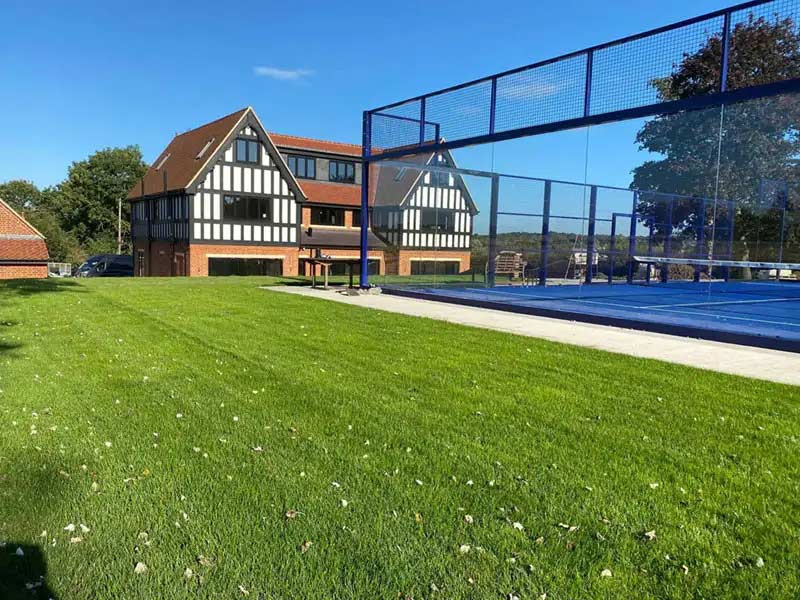
Risk management is the process of identifying hazards, assessing their possible consequences, applying suitable controls, and reviewing whether those controls remain effective.
The ISO 4980:2023 standard provides a benefit-risk assessment method for sports and recreational facilities, activities, and equipment. It recognises that sports offer important benefits while still requiring structured assessment of foreseeable risks.
Hazard Versus Risk
A hazard is something that may cause harm. Risk describes the likelihood and possible severity of that harm.
Example
A loose glass fitting is a hazard. The risk depends on how loose it is, where it is located, how frequently the court is used, and what may happen if the fitting fails.
The purpose of risk management is not to eliminate every normal part of sport. It is to prevent avoidable danger and keep remaining risks within an acceptable and properly managed level.
Identify the Main Padel Court Risks
A risk assessment should cover the playing enclosure and the complete customer journey.
Playing-Surface Risks
Possible turf-related hazards include:
- Open seams
- Uneven sand infill
- Standing water
- Algae or contamination
- Raised edges
- Surface depressions
- Foreign objects
- Excessive wear
The court should be closed when the surface cannot provide safe and predictable movement.
Glass and Structure Risks
Inspect:
- Glass edges
- Cracks or chips
- Loose clamps
- Missing gaskets
- Metal-to-glass contact
- Damaged mesh
- Loose bolts
- Corrosion
- Misaligned gates
- Unstable lighting posts
Players and staff should never attempt temporary glass repairs using unsuitable clamps, tapes, or improvised supports.
Customer-Area Risks
Risks may also exist in:
- Parking areas
- Reception
- Changing rooms
- Toilets
- Cafés
- Stairs
- Walkways
- Spectator seating
- Equipment-rental areas
- Emergency exits
A technically sound court does not remove the operator’s responsibility to manage the wider venue.
Padel Court Risk Assessment Table
| Risk Area | Possible Hazard | Basic Control |
|---|---|---|
| Artificial turf | Open seam or uneven infill | Routine inspection and prompt repair |
| Tempered glass | Edge damage or loose fitting | Close affected court and request professional inspection |
| Metal fencing | Sharp edge or loose panel | Isolate area and repair securely |
| Court gate | Damaged hinge or difficult latch | Inspect hardware and maintain clear operation |
| Lighting | Fixture failure or exposed cable | Electrical isolation and qualified repair |
| Drainage | Standing water or blocked channel | Cleaning, testing, and temporary closure |
| Spectator zone | Blocked walkway | Marked circulation and staff checks |
| Rental equipment | Damaged racket | Check equipment before reissuing |
| Extreme weather | Wind, lightning, snow, or heat | Weather policy and closure procedure |
| Medical incident | Injury or sudden illness | Emergency action plan and trained staff |
| Digital access | Player locked inside or outside | Manual override and support procedure |
| Fire or evacuation | Unclear exit route | Signs, drills, alarms, and written procedures |
Create a Padel Court Inspection Schedule
Inspections should be frequent enough to identify problems before they cause an accident or interrupt operations.
Daily Opening Check
Before the first booking, staff should inspect:
- Turf surface
- Glass panels
- Gates
- Nets
- Lighting
- Visible bolts
- Drainage
- Walkways
- Emergency exits
- Rental equipment
A simple checklist can be completed on a phone, tablet, or printed form.
Check Between Bookings
Staff do not need to complete a full structural inspection after every session. However, they should respond when players report broken glass, unusual movement, standing water, lighting failure, or damaged equipment.
Encourage Player Reporting
Display a simple method for reporting problems through reception, a QR code, telephone, or booking application.
Customers should know that reporting a defect will not automatically make them responsible for it.
Weekly and Monthly Checks
More detailed inspections may cover:
- Bolt tightness
- Door alignment
- Turf seams
- Infill distribution
- Coating damage
- Mesh-panel movement
- Drain blockage
- Electrical cabinets
- First-aid supplies
- Emergency lighting
The Padel Court maintenance guide can support a wider preventive-maintenance schedule.
Professional Inspections
Structural, electrical, glass, fire-safety, or roof inspections should be completed by qualified professionals when required.
Additional inspections may be necessary after:
- Severe wind
- Flooding
- Earthquake
- Impact damage
- Electrical failure
- Structural modification
- Court relocation
- Major tournament
- Serious incident
Prepare an Emergency Action Plan
A written emergency action plan explains what staff should do during foreseeable emergencies.
OSHA guidance states that well-developed emergency plans and properly trained employees can reduce injuries and facility damage by ensuring that people understand their responsibilities.
Medical Emergencies
The plan should identify:
- Who calls emergency services
- Who provides first aid
- Where first-aid equipment is stored
- How emergency responders enter the site
- Which court or location information must be provided
- Who controls spectators
- Who records the incident
Staff should know the facility’s full address and the fastest route for emergency vehicles.
Fire and Evacuation
Emergency exits must remain visible and unobstructed.
The plan should explain how to:
- Raise the alarm
- Stop play
- Guide customers outside
- Assist people requiring support
- Check changing rooms and toilets
- Reach the assembly point
- Communicate with emergency responders
Severe Weather
Outdoor and roofed facilities should establish procedures for:
- Lightning
- Strong wind
- Heavy rain
- Flooding
- Snow and ice
- Extreme heat
- Poor air quality
The policy should define who can close the courts and when reopening is permitted.
Avoid Informal Decisions
Staff should not rely only on personal judgement during severe weather.
Use recognized weather information, written thresholds where appropriate, local authority warnings, and project-specific structural guidance.
Review Important Padel Court Insurance Types

Insurance requirements vary by country, business model, lease, financing agreement, staff structure, and local law. A qualified insurance adviser should review the actual facility.
Public or General Liability Insurance
This coverage may respond when a player, spectator, visitor, or other third party alleges injury or property damage connected with the venue.
The operator should confirm whether the policy covers:
- Recreational play
- Coaching
- Tournaments
- Junior programmes
- Equipment rental
- Food and beverage
- Corporate events
- Spectators
- Contractors
Property Insurance
Property coverage may protect court structures, glass, lighting, turf, buildings, furniture, equipment, and stock against specified events.
Ask whether the policy includes:
- Storm damage
- Flood
- Fire
- Theft
- Vandalism
- Glass breakage
- Electrical damage
- Accidental damage
Do not assume that glass, outdoor structures, roofs, or flood damage are automatically covered.
Business Interruption Insurance
A damaged court may remain closed while replacement glass, turf, lighting, or structural components are ordered.
Business interruption insurance may help cover certain lost income and continuing expenses following an insured event.
Confirm:
- Waiting period
- Maximum coverage period
- Covered causes
- Revenue-calculation method
- Required financial records
- Treatment of seasonal revenue
Employer and Worker Coverage
Clubs with employees may require employer liability, workers’ compensation, or similar statutory coverage.
Staff activities may include cleaning, lifting equipment, handling glass areas, operating electrical controls, coaching, food service, and responding to emergencies.
Cyber and Payment Risk
A modern club may store customer details and use online payments, smart locks, cameras, Wi-Fi, and booking software.
Cyber coverage may be relevant for data breaches, system interruption, payment fraud, or recovery costs. The policy should be reviewed together with privacy, payment-security, and software-provider responsibilities.
Provide Accurate Information to the Insurer
Insurance quotations depend on the information supplied by the operator.
Prepare details about:
- Court quantity
- Indoor or outdoor installation
- Roof structure
- Building construction
- Replacement value
- Annual revenue
- Operating hours
- Coaching activities
- Events
- Customer numbers
- Security
- Fire protection
- Maintenance programme
- Claims history
Declare Changes
Notify the insurance adviser before making material changes such as:
- Adding courts
- Installing a roof
- Extending opening hours
- Hosting tournaments
- Adding alcohol service
- Introducing unattended access
- Installing temporary seating
- Beginning junior programmes
- Adding a gym or café
An insurance policy prepared for a two-court daytime venue may not reflect the risks of an eight-court event facility operating late at night.
Clarify Responsibilities Between Project Parties
A Padel Court project may involve the owner, manufacturer, civil contractor, installer, electrician, engineer, landlord, and facility operator.
Supplier Responsibility
The supplier’s scope may include:
- Steel structure
- Glass
- Mesh
- Turf
- Lighting
- Hardware
- Technical drawings
- Installation guidance
- Product warranty
Local Contractor Responsibility
The local contractor may control:
- Excavation
- Foundations
- Drainage
- Electrical connection
- Building work
- Access paths
- Landscaping
- Local permits
Operator Responsibility
After handover, the operator normally manages inspections, cleaning, customer behaviour, staff training, maintenance reporting, and emergency procedures.
Use Written Scope Documents
Verbal assumptions create disputes when an accident or defect occurs.
Contracts should state who designs, supplies, installs, inspects, approves, maintains, and repairs each part of the facility.
The SRSC project services page can help buyers understand the technical support available during court planning and delivery.
Keep Reliable Risk-Management Records
Documentation can show that the club identified problems and responded appropriately.
Useful Records
Maintain:
- Daily inspection forms
- Maintenance reports
- Professional inspection certificates
- Staff-training records
- Incident reports
- Customer complaints
- Repair invoices
- Supplier communications
- Weather-closure records
- Emergency drills
- Equipment replacement history
Incident Reports
An incident report should record facts rather than guesses.
Include:
- Date and time
- Exact location
- People involved
- Witnesses
- Conditions
- Equipment involved
- Immediate response
- Photographs where appropriate
- Follow-up action
Do not alter records after the event without clearly documenting the correction.
Use Waivers and Rules Carefully
Customer waivers, terms of use, and safety rules may help explain normal sporting risks and customer responsibilities.
However, a waiver should not be treated as permission to ignore defective equipment, poor maintenance, or unsafe operating conditions.
Display Clear Court Rules
Rules may cover:
- Suitable footwear
- No unauthorized equipment
- Gate operation
- Food and drinks
- Junior supervision
- Weather closures
- Reporting damage
- Booking times
- Spectator access
Local legal advice should be obtained when preparing waivers, membership agreements, and customer terms.
Common Padel Court Risk-Management Mistakes
Buying Insurance Without Reading Exclusions
A low premium may reflect limited coverage, high deductibles, or exclusions for important risks.
Inspecting Only After Complaints
Routine checks should identify hazards before customers report them.
Keeping No Written Records
Maintenance may have been completed, but without records it can be difficult to show when and how the work occurred.
Allowing Untrained Repairs
Incorrect repairs to glass, structures, electrical systems, and anchors can create additional danger.
Failing to Update the Risk Assessment
The HSE advises that risk management should identify hazards, control risks, record findings when required, and review controls as work changes.
A club should therefore review its assessment after changes, incidents, new equipment, or operating expansion.
Conclusion
Padel Court risk management combines suitable insurance with prevention, inspection, maintenance, training, emergency preparation, and accurate documentation.
The strongest programme covers the complete facility rather than focusing only on the playing enclosure. Turf, glass, steel, gates, lighting, drainage, customer areas, employees, digital systems, and weather procedures should all be reviewed.
Insurance terms must match the real operating model, including coaching, events, junior activities, equipment rental, and unattended access. Operators should also update their risk assessment whenever the venue changes.
Buyers can explore the complete Padel Court range, review the maintenance guidance, or contact SRSC with the project location, court quantity, operating model, and technical requirements.
FAQ
Does every Padel Court club need liability insurance?
Requirements vary, but commercial venues generally need to consider protection against third-party injury and property-damage claims. A qualified adviser should confirm local requirements.
Does property insurance cover broken court glass?
Not always. Glass breakage, accidental damage, vandalism, storms, and installation defects may be treated differently. Check the policy wording.
How often should a Padel Court be inspected?
Basic checks should occur before operation, while more detailed inspections can be weekly, monthly, annually, and after severe weather or damage.
Should customers sign a waiver?
Waivers may help explain normal sporting risks, but their legal effect varies. They do not replace safe facilities, maintenance, or suitable insurance.
Who is responsible when a contractor installs the court incorrectly?
Responsibility depends on the contract, cause of the defect, local law, insurance, approvals, and each party’s scope. Written documentation is essential.
Should a club close a court with damaged glass?
Yes. Isolate the affected court and request professional assessment when glass is cracked, chipped, loose, or improperly supported.
What should staff do after an injury?
Provide appropriate emergency assistance, protect the area, record factual information, preserve relevant evidence, and follow the club’s reporting and insurance procedures.
Can security cameras help with incidents?
Cameras may help establish facts, but their use must comply with privacy, signage, retention, and access requirements.