
BLOG
Padel Court Launch Checklist: 30 Days to Opening
Recent Articles
Table of Contents
Key points covered in this guide:
- Complete technical inspection before accepting customer bookings
- Test lighting, gates, drainage, turf, glass, and booking systems
- Train staff to manage check-in, equipment rental, and emergencies
- Use trial sessions to identify operating problems
- Start membership presales before the official opening
- Plan beginner events, coaching demonstrations, and local partnerships
- Collect customer feedback during the soft-opening period
- Measure bookings, repeat visits, and revenue after launch
Opening a new Padel Court facility is an important commercial milestone, but the first day should not be the first time the complete venue is tested.
A court may look ready while still containing loose hardware, uneven turf infill, incorrect booking settings, unclear signs, or untrained staff. These small problems can create negative reviews during the period when the club is trying to build its reputation.
A structured 30-day launch plan allows owners to test the physical facility, train employees, promote memberships, invite trial users, and correct operational weaknesses before the official opening.
30 Days Before Opening: Complete the Technical Review

The first stage should focus on construction, installation, safety, and documentation.
Do not begin selling non-refundable bookings until the court and surrounding facility have passed the required inspections.
Inspect the Padel Court Structure
Review all visible and accessible structural components, including:
- Steel posts and beams
- Base plates and anchors
- Bolted connections
- Welded mesh panels
- Glass supports
- Gate frames
- Lighting columns
- Roof components, when applicable
Loose connections, misaligned posts, damaged coatings, or unstable gates should be corrected before players enter the court.
The SRSC installation guide describes the main installation stages, including foundation preparation, steel assembly, glass fitting, turf installation, lighting, and final inspection.
Check Tempered Glass
Inspect every panel for:
- Edge damage
- Surface scratches
- Incorrect holes
- Metal-to-glass contact
- Loose fasteners
- Missing gaskets
- Uneven gaps
- Installation marks
Glass should be clean enough for players, staff, and inspectors to identify damage clearly.
Test the Gates
Open and close each gate repeatedly.
The gate should move smoothly without dragging across the turf or creating a dangerous projection into the playing area. Check handles, hinges, latches, door stops, and any access-control equipment.
Review the Playing Surface
The artificial turf should provide consistent traction, drainage, and ball response across the complete playing area.
Inspect Turf Seams
Look for open joints, lifted edges, visible adhesive, loose seam tape, and surface distortion.
Turf problems should be corrected before the sand infill is fully distributed because later repairs may require removing and reinstalling part of the surface.
Check Sand Distribution
Uneven infill can change traction and ball speed.
Brush the complete surface and inspect:
- Corners
- Gate areas
- Service lines
- Glass edges
- High-traffic zones
- Turf seams
Conduct a Play Test
Invite experienced players or coaches to test ball bounce, movement, net position, glass rebound, and surface grip.
Their feedback can reveal playing issues that may not be obvious during a visual inspection.
Confirm Court Dimensions and Equipment
The latest official rules and competition documents should be checked through the International Padel Federation documentation centre. FIP publishes the official Rules of Padel and related competition documents through this resource.
Verify:
- Court dimensions
- Playing lines
- Net position
- Net height and tension
- Gate arrangement
- Clear height
- Lighting position
- Surface condition
A commercial recreational facility may not be preparing for an international tournament, but using recognized technical references supports a consistent playing experience.
Test Lighting and Electrical Systems
Lighting should be tested under realistic evening conditions rather than only during daylight.
Review Court Illumination
Check for:
- Dark areas
- Uneven illumination
- Glare
- Reflections on glass
- Shadows from steel posts
- Light spill outside the site
- Flickering fixtures
- Delayed activation
Ask several players to test the court from different positions.
Test Individual Court Controls
Each court should ideally be controlled independently.
This allows the club to illuminate only the courts in use instead of running the complete facility during low-demand periods.
Confirm Emergency Procedures
Staff should know how to switch off power, isolate damaged equipment, and respond to an electrical fault.
Outdoor controls, cables, and cabinets should remain protected from rain, dust, and unauthorized access.
Padel Court Pre-Opening Inspection Table
| Inspection Area | What to Test | Required Result |
|---|---|---|
| Steel structure | Alignment, bolts, coating | Stable and undamaged |
| Tempered glass | Edges, fittings, gaps | Secure and free from damage |
| Turf | Seams, infill, level | Even and playable |
| Net | Position, height, tension | Correctly installed |
| Gates | Opening, handles, locks | Smooth and safe |
| Lighting | Lux, glare, controls | Even and reliable |
| Drainage | Water flow and outlets | No standing water |
| Booking system | Availability and payment | Accurate reservations |
| Access control | Codes, cards, overrides | Reliable entry |
| Signage | Court numbers and directions | Clear and visible |
| Emergency routes | Exits and pathways | Unobstructed |
| Customer facilities | Toilets, seating, lockers | Clean and operational |
Test Drainage Before the Launch
Outdoor projects should be inspected during or after rainfall where possible.
If natural rainfall is unavailable, the contractor may conduct an agreed controlled test.
Look for Standing Water
Pay attention to:
- Turf corners
- Doorways
- Glass-wall edges
- Steel base plates
- Drainage channels
- Surrounding walkways
- Parking and entrance areas
Water should not repeatedly collect around anchors, electrical components, or player access points.
Clean All Drainage Channels
Construction debris, packaging, turf fibres, dust, and sand may enter channels during installation.
Remove these materials before the club opens.
21 Days Before Opening: Test the Operating Systems
Once the physical courts are ready, the club should test how customers will book, pay, enter, and use the facility.
Configure the Booking Calendar
Set up:
- Opening hours
- Court names
- Booking durations
- Peak prices
- Off-peak prices
- Membership discounts
- Coaching sessions
- Cancellation rules
- Equipment rental
- Temporary closures
Court names and numbers must match the physical signs inside the venue.
Make Test Reservations
Staff should test the complete process using different customer situations:
- New customer
- Existing member
- Guest player
- Coaching customer
- Discount-code user
- Cancelled booking
- Refund request
- Failed payment
Test on Mobile Devices
Many customers will make reservations from a phone.
Check whether the calendar, payment screen, confirmation message, and cancellation process remain easy to use on smaller screens.
Test Access Control
When the club uses smart gates or temporary codes, confirm:
- Activation time
- Expiration time
- Correct access area
- Backup access
- Staff override
- Customer instructions
Technology should not leave paid customers locked outside when the internet or one device fails.
Train the Padel Court Staff
Employees should understand both customer service and the basic operation of the facility.
Reception Training
Reception staff should be able to:
- Create and modify bookings
- Check payment status
- Explain membership options
- Rent equipment
- Process cancellations
- Direct customers to courts
- Record maintenance problems
- Respond to basic emergencies
Court Operations Training
Staff should know how to inspect:
- Turf condition
- Glass damage
- Loose mesh
- Gates
- Nets
- Lighting
- Drainage
- Access controls
Employees do not need to perform structural repairs, but they must recognize when a court should be closed.
Customer-Service Scenarios
Practice realistic situations, including:
- Customer arrives late
- Court remains occupied
- Rental racket is damaged
- Player requests a refund
- Lighting fails
- Child becomes separated from a parent
- Customer reports an injury
- Rain interrupts an outdoor booking
Written procedures can help staff respond consistently.
14 Days Before Opening: Begin the Soft Launch
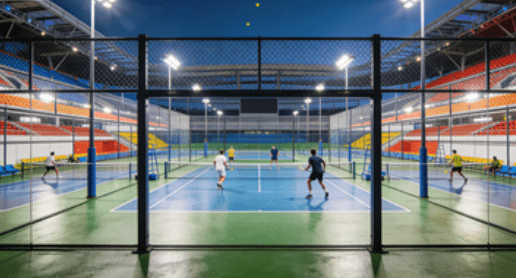
A soft launch allows invited players to use the venue before the full public opening.
Invite Different User Groups
Include:
- Experienced players
- Complete beginners
- Coaches
- Families
- Older players
- Local club members
- Corporate groups
- Community partners
Different users may identify different problems.
Experienced players may focus on the surface and lighting, while beginners may notice unclear instructions, difficult booking steps, or missing signs.
Limit Booking Volume
Do not fill every available time slot immediately.
Leave space between sessions so staff can inspect courts, gather feedback, and correct issues.
Collect Structured Feedback
Ask trial users about:
- Booking experience
- Parking
- Entrance
- Reception
- Changing facilities
- Court quality
- Lighting
- Seating
- Equipment rental
- Overall satisfaction
Avoid asking only whether they “liked the club.” Specific questions produce more useful information.
Start Membership Presales
Opening with an existing group of committed players can create early activity and social proof.
Create a Founding Membership
A limited founding offer may include:
- Reduced joining fee
- Advance-booking rights
- Introductory court credits
- Free trial session
- League registration
- Guest passes
- Club merchandise
Avoid offering permanent discounts that may become difficult to sustain.
Explain the Value Clearly
Membership marketing should state:
- Price
- Duration
- Included credits
- Booking rights
- Guest rules
- Cancellation terms
- Renewal conditions
Unclear membership terms can create disputes during the club’s busiest opening period.
Build a Local Launch Campaign
A strong launch campaign should target the people most likely to visit the facility rather than trying to reach everyone.
The U.S. Small Business Administration recommends building marketing around the target customer, positioning, branding, objectives, budget, and timeline.
Create a Local Customer List
Potential launch audiences may include:
- Tennis players
- Fitness-club members
- Schools
- Universities
- Hotels
- Residential communities
- Local businesses
- Sports coaches
- Tourism operators
- Corporate event planners
Publish Useful Opening Content
Prepare content such as:
- How to play padel
- Beginner rules
- Court tour
- Coach introductions
- Membership options
- Opening schedule
- Equipment guide
- Frequently asked questions
Creating social-media accounts and building awareness before opening can help generate interest in the first sessions.
Plan the Opening Event
The official event should allow visitors to experience the facility rather than only watch speeches.
Opening-Day Activities
Consider:
- Beginner demonstrations
- Free short coaching sessions
- Exhibition match
- Equipment testing
- Junior activities
- Membership consultations
- Sponsor introductions
- Club tours
- Prize draws
Protect Normal Operations
Keep emergency routes, court entrances, reception, toilets, and parking areas clear.
Temporary banners, catering tables, cameras, and spectator seating should not interfere with player movement or safety.
Prepare for Beginners
Many opening visitors may have never played padel.
Provide Simple Instructions
Display clear information about:
- Basic rules
- Safety
- Court entry
- Racket rental
- Ball use
- Session timing
- Equipment return
- Booking extensions
Offer Beginner Sessions
Dedicated introductory sessions can prevent inexperienced players from feeling uncomfortable beside advanced groups.
Beginner programmes may also create a more reliable path from first visit to membership.
Seven Days Before Opening: Complete the Final Review
Confirm Staff Schedule
Opening week normally requires more staff than a standard operating week.
Assign responsibility for:
- Reception
- Court supervision
- Equipment rental
- Coaching
- Cleaning
- Technical support
- Event management
- Customer feedback
Check Inventory
Confirm sufficient quantities of:
- Rental rackets
- Balls
- Grips
- Nets
- First-aid supplies
- Cleaning products
- Towels
- Retail products
- Spare hardware
Inspect Every Customer Area
Walk through the facility as a first-time visitor.
Check parking, entrance, reception, court numbering, toilets, changing areas, seating, café, emergency signs, and exits.
Sport England’s facility guidance emphasizes using customer insight and appropriate management models when planning sports provision and service delivery.
What to Measure After Opening
The launch is not complete when the event ends.
Track performance during the first 30 to 90 days.
Booking Metrics
Measure:
- Available court hours
- Booked court hours
- Peak-time utilization
- Off-peak utilization
- Cancellation rate
- No-show rate
Customer Metrics
Track:
- New registrations
- Trial-session attendance
- Membership sales
- Repeat bookings
- Coaching enquiries
- Customer complaints
- Review scores
Revenue Metrics
Separate income from:
- Court rental
- Memberships
- Coaching
- Equipment rental
- Retail
- Events
- Food and beverage
This helps the club understand which services deserve additional investment.
Common Padel Court Launch Mistakes
Opening Before Testing Everything
The first public customers should not become unpaid facility inspectors.
Selling Too Many Memberships
Large presales can create frustration when members cannot find suitable booking times.
Focusing Only on Social Media
Online promotion cannot replace local partnerships, coaching programmes, community relationships, and direct customer service.
Ignoring Beginners
A club built only for experienced players may limit the size of its future customer base.
Collecting Feedback Without Acting
Customers are less likely to provide future feedback when visible problems remain unresolved.
Conclusion
A successful Padel Court opening is the result of technical preparation, operational testing, staff training, controlled trial sessions, and focused local marketing.
The facility should be inspected as both a sports structure and a complete customer experience. Courts, lighting, drainage, booking systems, reception, equipment, signs, and emergency procedures must work together before large numbers of customers arrive.
SRSC supplies classic, panoramic, super panoramic, indoor, outdoor, single, and roofed court systems and provides support from design through installation and maintenance. Buyers can explore the complete Padel Court range, review project services, or contact SRSC with the site plan, court quantity, opening schedule, and operating requirements.
FAQ
How early should a Padel Court club begin marketing?
Basic awareness and membership presales can begin before the opening, but the venue should avoid promising a date until construction, inspection, and operational testing are sufficiently advanced.
What is a soft opening?
A soft opening is a controlled trial period in which selected customers use the venue before the full public launch.
How many people should attend the opening event?
Attendance should match parking, court access, staff capacity, toilets, seating, and emergency requirements. A smaller well-managed event can create a better experience than an overcrowded launch.
Should opening-day court use be free?
Free demonstrations or short trial sessions can attract beginners. Full court reservations may still require payment or advance registration to control demand.
What should be inspected every day during opening week?
Inspect turf, glass, mesh, gates, nets, lighting, drainage, customer routes, changing rooms, and equipment.
How can a new club attract its first members?
Combine local partnerships, beginner sessions, founding offers, coaching introductions, social content, and trial events.
When should the court supplier be contacted after installation?
Contact the supplier immediately when structural, glass, turf, lighting, or installation problems are identified. Keep photographs and inspection records.