
BLOG
Padel Court Materials Guide for Commercial Buyers: Turf, Glass, Steel, Lighting, and Base Systems
Recent Articles
Introduction
For sports clubs, schools, hotels, real estate developers, and facility contractors, choosing padel court materials is a long-term investment decision. The right materials can improve player safety, extend service life, reduce maintenance pressure, and make the court easier to operate every day.
A padel court is not only a playing surface. It is a connected system made of artificial turf, tempered glass, steel structure, wire mesh, lighting, drainage, fasteners, and foundation details. When these parts are selected as a system, the court performs better and creates fewer problems after installation.
What Are Padel Court Materials?
Padel Court Materials Basic Concept
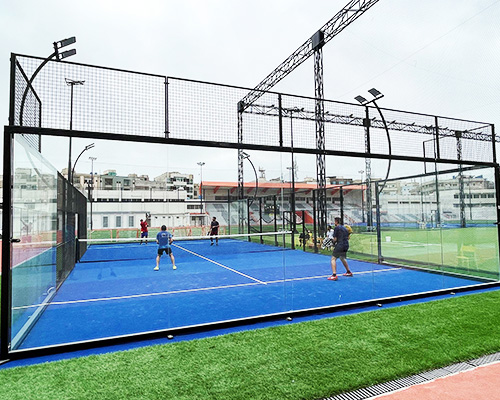
Padel court materials are the main components used to build a complete court system. They include the surface, rebound wall, frame, fencing, lighting, base, drainage, and installation accessories. Each part has a different job, but the final court quality depends on how well they work together.
Commercial Court System Concept
A commercial court system is designed for frequent play, outdoor exposure, and predictable maintenance. It usually requires stronger steel, safer glass, stable turf, and better lighting than a low-use private court. Buyers should compare the complete specification, not only the lowest total price.
Artificial Turf Surface
Artificial turf affects ball bounce, grip, sliding comfort, and player experience. For busy venues, turf density, backing quality, UV resistance, and sand infill all matter. A poor surface can wear quickly and make the court feel inconsistent.
Tempered Glass Wall
Tempered glass creates the rebound wall and gives the court a professional look. Buyers should check glass thickness, edge quality, hole accuracy, and safety processing. These details affect both installation and long-term safety.
Simple Buyer Note
If the court will be installed outdoors, ask whether the glass, steel, fasteners, coating, and lighting are suitable for local wind, humidity, heat, and corrosion conditions.
Padel Court Materials Selection for Commercial Projects
Steel Structure and Frame Strength
The steel frame supports the glass, mesh, lighting, and general court stability. Galvanized steel and powder coating are commonly used to improve corrosion resistance. For coastal or humid areas, buyers should ask about coating thickness, welding quality, anchor design, and structural support.
Wire Mesh and Fence Panels
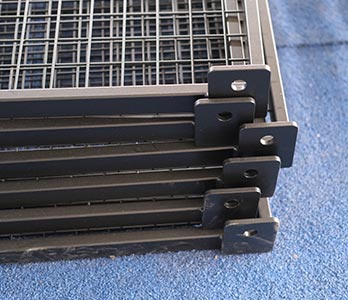
Wire mesh handles repeated ball impact and protects the open sections of the court. Strong mesh panels should resist deformation and keep a clean appearance after long use. For commercial courts, mesh quality is important because repairs can interrupt bookings and daily operation.
LED Lighting for Padel Courts
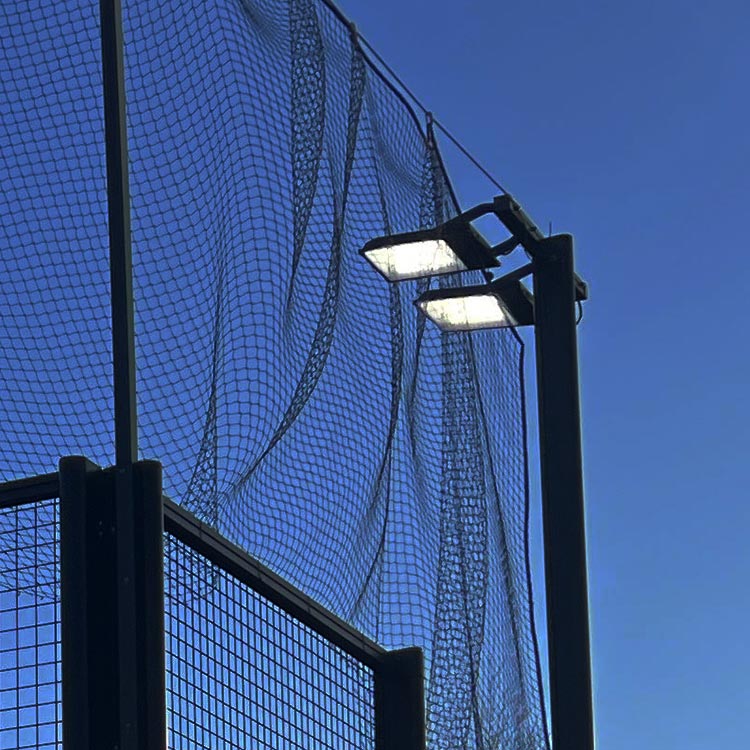
Lighting affects evening revenue, visibility, player comfort, and event use. Buyers should compare brightness, glare control, waterproof rating, pole design, and layout. A cheaper light may reduce purchase cost but create uneven visibility or uncomfortable glare.
Outdoor Lighting Concept
Outdoor lighting must handle weather, wind, and long operating hours. It should provide stable illumination across the court without strong glare. Facilities near residential areas may also need to consider local lighting rules.
Indoor Lighting Concept
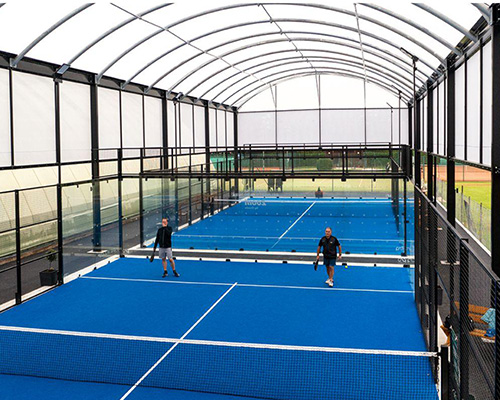
Indoor lighting depends on ceiling height, reflection, and court layout. The goal is clear visibility without shadow zones. Buyers should confirm the lighting layout before finalizing the court package.
Padel Court Materials Comparison Table
| Material Area | Main Function | What Buyers Should Check | Common Risk If Ignored |
|---|---|---|---|
| Artificial turf | Playing surface and ball response | Fiber type, density, backing, infill, UV resistance | Fast wear, poor bounce, slippery play |
| Tempered glass | Rebound wall and safety barrier | Thickness, edge quality, hole accuracy, safety standard | Breakage risk or unsafe installation |
| Steel frame | Main support structure | Galvanizing, coating, welding, wind load design | Rust, vibration, weak stability |
| Wire mesh | Fence and impact zone | Wire diameter, mesh opening, coating, panel stiffness | Deformation and frequent repair |
| LED lighting | Night play and visibility | Lumen output, glare control, waterproof rating, layout | Uneven light and poor user experience |
| Base and drainage | Foundation and water control | Slope, drainage path, concrete quality, tolerance | Standing water and unstable surface |
Concept Comparison: Budget Court vs Commercial Court
Budget Court Concept
A budget court focuses on reducing initial cost. It may be suitable for light use, private spaces, or temporary projects. However, buyers should be careful when the court will face heavy play, outdoor weather, or high customer expectations.
Commercial Court Concept
A commercial court is built for repeated use, safer operation, better appearance, and easier maintenance. It usually uses more reliable padel court materials and stronger installation planning. For clubs and public facilities, this option often creates better long-term value.
Which Option Should Buyers Choose?
If the court will generate revenue, host training, support memberships, or serve many players, commercial-grade materials are usually the safer choice. If the project is experimental or low-use, a simpler specification may be acceptable. The key is to match the material level with the business goal.
Supplier Checklist for Padel Court Materials
Ask About Material Specifications
A professional supplier should explain turf type, glass thickness, steel treatment, lighting configuration, and mesh details clearly. Written specifications make quotations easier to compare. Vague answers can hide differences in quality and service life.
Ask About Custom Court Requirements
Many projects need custom colors, branding, packing, foundation drawings, or container loading plans. A supplier with project experience can adjust the court system for different climates and installation conditions. This is useful for contractors managing several sites.
Ask About Installation Support
Installation quality can affect even the best padel court materials. Buyers should ask whether the supplier provides drawings, manuals, video support, or technical guidance. Clear installation support can reduce delays and avoid unnecessary rework.
Helpful Internal and External Resources
For complete project planning, review the SRSC outdoor sports facility website. Buyers comparing surfaces can also read the guide on artificial turf for padel courts and the article about galvanized steel wire mesh for padel court fencing. For general sport background, the Padel overview on Wikipedia explains the game format and court context.
FAQ: Padel Court Materials Questions Buyers Ask
What are the most important padel court materials to compare before buying?
The most important areas are turf, tempered glass, steel structure, wire mesh, lighting, and base preparation. These parts affect safety, play quality, durability, and maintenance. Buyers should compare full specifications instead of only asking for one total price.
How long do commercial padel court materials usually last?
Service life depends on climate, usage frequency, installation quality, and maintenance. Steel and glass can last many years when properly specified and maintained. Turf and lighting may need replacement or upgrades sooner depending on play volume and environment.
Is artificial turf better than other court surfaces for padel?
Artificial turf is widely used because it supports controlled ball bounce, grip, and player comfort. It is also practical for commercial maintenance. The best choice depends on fiber quality, infill, drainage, and the level of play expected at the facility.
What should I ask a supplier before ordering a padel court?
Ask for material specifications, court drawings, installation guidance, packing details, production lead time, warranty terms, and project references. If the court is outdoors, also ask about wind load, corrosion resistance, drainage, and local climate suitability.
Can padel court materials be customized for a club or resort?
Yes. Many suppliers can customize frame color, turf color, logo areas, lighting layout, entrance style, and packaging. Buyers should confirm customization details early because they can affect production time and cost.
Conclusion
Choosing padel court materials is not only about building a court; it is about creating a safe, durable, and profitable sports facility. Turf, glass, steel, mesh, lighting, and base systems all influence the final result. For commercial buyers, the strongest decision comes from comparing specifications, supplier support, installation needs, and long-term maintenance.
Before placing an order, define the project goal, climate, expected play volume, budget level, and installation schedule. Then compare suppliers based on complete material value rather than the lowest headline price. This approach helps protect both the player experience and the buyer’s investment.