
BLOG
Padel Court Relocation Guide: Can You Move and Reinstall a Court?
Recent Articles
Table of Contents
Key points covered in this guide:
- When relocating a Padel Court makes financial sense
- Which court components can potentially be reused
- What should be inspected before dismantling
- Why tempered glass needs a separate relocation plan
- How steel structures should be labelled during disassembly
- Whether old artificial turf should be reused
- What happens to anchors and foundations
- How to prepare the new site before transportation
- What buyers should budget beyond dismantling and shipping
- How to inspect a relocated court before reopening
- When replacing the court may be more practical than moving it
A Padel Court represents a significant investment in steel, tempered glass, artificial turf, lighting, hardware, installation, and site infrastructure.
When a club changes location, a lease ends, a hotel renovates its sports area, or an investor purchases an existing facility, an important question often appears:
Can the existing Padel Court be dismantled, transported, and installed somewhere else?
In many cases, selected court components can potentially be reused. However, relocating a Padel Court is not the same as moving ordinary sports equipment.
The steel structure, glass, mesh, gates, lighting, turf, anchor system, drainage, electrical supply, and concrete foundation all have different reuse possibilities.
A successful relocation therefore starts with a technical assessment rather than a dismantling crew.
Can a Padel Court Be Relocated?
Potentially, yes.
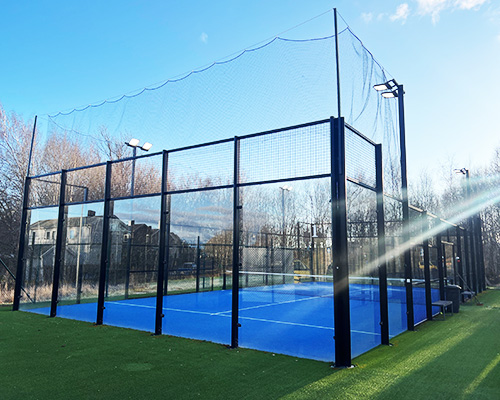
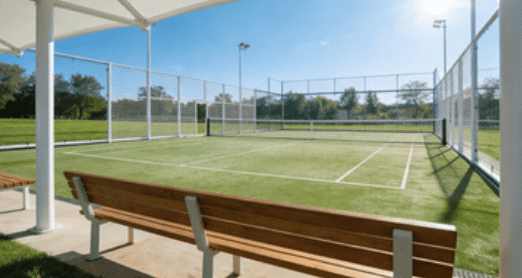
A court assembled from individual steel sections, mesh panels, tempered-glass panels, lighting posts, and bolted fittings may allow many above-ground components to be dismantled and transported.
For example, SRSC’s current RR01 Panoramic Padel Court is supplied as a system containing galvanized steel posts, galvanized mesh, eighteen 12 mm tempered-glass panels, artificial turf, and LED lights. Its RR03 Classic model uses a similarly component-based construction.
However, relocation suitability depends on:
- Original court design
- Age
- Structural condition
- Corrosion
- Glass condition
- Connection method
- Foundation design
- Turf condition
- New site requirements
- Local engineering requirements
The Foundation Usually Does Not Move
The concrete base, reinforcement, underground drainage, and many anchor systems generally form part of the original site.
A relocated court therefore usually requires a new foundation at the destination.
This is one of the most important cost items to include when evaluating relocation.
Why Would a Business Relocate a Padel Court?
Club Relocation
A sports club may move because:
- The lease expires
- A larger property becomes available
- Current rent increases
- Customer demand shifts to another area
- The operator wants additional courts
If the existing court structure remains in good condition, relocation may preserve part of the original investment.
Temporary or Leased Sites
An investor using leased land may prefer an asset that can potentially be dismantled rather than permanently abandoning all court equipment when the lease ends.
Hotel or Resort Renovation
A resort may redesign:
- Gardens
- Pools
- Parking
- Entertainment zones
The existing court may need to move elsewhere on the property.
Acquisition of an Existing Facility
A buyer may purchase:
- Used Padel Court equipment
- A closing club
- Surplus courts
- A sports facility being redeveloped
The buyer then needs to determine whether relocation is economically preferable to purchasing a new court.
Relocation vs Buying a New Padel Court
The decision should be based on total project cost, not simply the price of the existing court.
| Cost Area | Relocate Existing Court | Purchase New Court |
|---|---|---|
| Existing steel | Potentially reusable | New |
| Tempered glass | Potentially reusable | New |
| Mesh | Potentially reusable | New |
| Lighting | Potentially reusable | New |
| Artificial turf | Condition-dependent | New |
| Dismantling | Required | Not required |
| Specialized packing | Required | Factory packing included |
| Transport | Required | Required |
| New foundation | Required | Required |
| New anchors | Usually required | Required |
| Reinstallation | Required | Required |
| Missing hardware | Possible | New package |
| Repairs | Frequently possible | Limited |
| Appearance | Existing condition | New |
| Warranty | May be reduced or unavailable | Supplier-specific new warranty |
A low purchase price for a used court can become expensive after dismantling, glass packing, replacement turf, missing parts, coating repairs, new foundations, transportation, and reinstallation are added.
Start With a Padel Court Condition Survey
Before dismantling anything, inspect the complete court.
The purpose is to divide components into three categories:
Reusable
Repairable
Replace
Record the Existing Court
Document:
- Court model
- Overall dimensions
- Post positions
- Glass panel numbers
- Gate positions
- Lighting locations
- Turf layout
- Hardware
- Foundation
- Electrical routes
Take photographs before dismantling.
These records become extremely valuable during reassembly.
Verify the Court Dimensions
For a standard doubles Padel Court, the FIP rules specify an internal playing area of 20 metres by 10 metres.
The new site must provide sufficient space not only for this playing area but also for:
- Structural members
- Installation access
- Drainage
- Maintenance
- Circulation
- Lighting
- Optional spectator zones
Do Not Assume the New Foundation Can Copy the Old One
Foundation requirements may change because the new site has different:
- Soil
- Concrete
- Wind exposure
- drainage
- structural requirements
- local codes
The destination foundation should be reviewed independently.
Inspect the Steel Structure Before Relocation
Steel is often one of the most reusable parts of a Padel Court when it remains structurally sound.
SRSC’s current RR01 and RR03 specifications use hot-dip galvanized steel structures with additional coating protection and 100 × 100 × 3 mm main posts.
Inspect for Corrosion
Pay close attention to:
- Base plates
- Bottom of posts
- Welds
- Bolt holes
- Corners
- Gate frames
- Areas where coating has been scratched
Inspect for Structural Damage
Look for:
- Bent posts
- Twisted beams
- Cracked welds
- Deformed brackets
- Enlarged holes
- Loose connections
Check Previous Modifications
Older courts may have been modified on site.
Examples include:
- New holes drilled
- Brackets welded
- sections shortened
- additional advertising supports added
These changes should be documented before relocation.
Base Plates Require Special Attention
The bottom of the steel structure is frequently exposed to:
- Water
- dirt
- turf infill
- cleaning chemicals
- corrosion around anchors
Inspect After Removing the Nuts
Once the structure is dismantled, examine the underside of base plates.
Look for:
- Hidden corrosion
- distorted steel
- elongated anchor holes
- failed coating
This area may look acceptable while the court is assembled but reveal deterioration after removal.
Should Old Padel Court Anchors Be Reused?
Usually, the new site should be treated as a new anchoring project.
Post-installed anchors and cast-in systems are designed for specific:
- Concrete
- embedment
- edge distances
- loads
- foundation geometry
Removing a structural anchor from the original foundation does not automatically make it suitable for the new site.
Plan New Anchors
Before relocation, obtain:
- Base-plate dimensions
- Bolt-hole pattern
- Structural reactions where available
- New foundation details
Then specify suitable anchors for the destination.
Do not make anchor selection based only on matching the old bolt diameter.
Inspect the Tempered Glass Carefully
Glass is one of the most valuable but also one of the most sensitive components to relocate.
SRSC’s current standard RR01 panoramic system uses eighteen 2 × 3 m panels of 12 mm tempered glass.
Inspect Every Panel Before Dismantling
Look for:
- Edge chips
- Corner damage
- deep scratches
- damage around fixing holes
- unusual contact with steel
Number Every Panel
Do not remove eighteen visually similar pieces of glass and expect the installation team to identify their original positions later.
Create a numbering system such as:
- G01
- G02
- G03
- G04
Mark the drawing with the matching positions.
Photograph the Fixings
Take detailed photos showing:
- Bolts
- gaskets
- nylon sleeves
- washers
- setting blocks
This helps the new installation team reproduce the intended assembly.
Remove Glass Before Major Steel Dismantling
The court should not be partially collapsed or allowed to become unstable while heavy glass panels remain installed.
A controlled dismantling plan should generally maintain structural stability while the glass is removed.
Use Suitable Glass Equipment
Depending on panel size and site conditions, this may involve:
- Rated suction lifters
- glass trolleys
- lifting frames
- trained handlers
Never Lay Large Glass Panels Directly on Concrete
Use suitable racks and edge protection.
The edges and corners deserve particular protection during relocation.
Can Padel Court Glass Be Reused?
Potentially, when the panels remain:
- Undamaged
- Correctly sized
- Compatible with the new structure
- Properly handled
However, replacing a damaged panel may be safer and more practical than transporting one with questionable edge condition.
Keep the Original Glass Drawings
Record:
- Width
- height
- thickness
- hole diameter
- hole positions
- orientation
If one panel breaks during transportation, these details simplify replacement production.
Glass Packing Is Critical
The original factory packing may no longer exist when the court is relocated.
New transport packaging therefore needs to be created.
SRSC currently uses protective packaging including polyethylene foam and plywood packing for its court systems, while its product information specifically describes secure plywood packaging for tempered glass.
Relocation Glass Crates Should Consider
- Panel dimensions
- panel quantity
- separators
- edge support
- movement restraint
- forklift handling
- loading direction
Do Not Mix Loose Hardware With Glass
Bolts and steel pieces should be packaged separately.
A small steel component moving inside a glass crate can create serious damage.
Inspect the Steel Mesh
Mesh panels may often be reusable when they remain:
- Flat
- securely welded
- properly coated
- free from dangerous wire damage
Check for Deformation
Repeated impact or previous handling can create:
- Bowed frames
- bent wire
- broken welds
Repair Before Reinstallation
Relocation is an ideal time to:
- Repair broken welds
- remove rust
- restore coating
- replace badly damaged panels
It is easier to complete this work while the components are already dismantled.
Label Every Steel Component
One of the most common relocation mistakes is dismantling everything into an unidentified pile.
Create a Component Code
For example:
P = Main post
M = Mesh panel
B = Beam
G = Gate
L = Lighting post
Then create IDs such as:
- P01
- P02
- M01
- M02
- B01
Mark the Assembly Drawing
Each code should appear on the drawing.
Protect the Labels
Labels need to survive:
- Handling
- transport
- rain
- storage
Permanent tags or durable markings are generally more reliable than loose paper labels.
Keep Hardware Organized
A court can contain hundreds of small components.
These may include:
- Structural bolts
- Glass bolts
- Nuts
- Washers
- Gaskets
- Sleeves
- Caps
- Gate hardware
Separate by Function
Use boxes such as:
Box A – Structural Hardware
Box B – Glass Fittings
Box C – Gate Hardware
Box D – Lighting Hardware
Replace Worn Hardware
Relocation is a good opportunity to replace:
- Corroded bolts
- damaged threads
- flattened gaskets
- cracked sleeves
- worn hinges
Small components are relatively inexpensive compared with the labour required to dismantle the court again.
Should Artificial Turf Be Reused?
This is one of the most important relocation decisions.
Unlike steel and glass, turf is a wear surface.
Reuse May Be Possible When Turf Is:
- Relatively new
- evenly worn
- free from major seam damage
- carefully removed
- correctly stored
Replacement May Be Better When Turf Has:
- Flattened fibres
- multiple seam repairs
- exposed backing
- heavy contamination
- inconsistent grip
- significant UV aging
Compare Removal Cost With Replacement Value
Old turf must be:
- Cleared of loose infill
- Released from seams or adhesive
- Rolled carefully
- Labelled
- Transported
- Reinstalled
The labour cost may reduce the financial benefit of reuse.
Remove Silica Sand Before Rolling Turf
Artificial turf containing large quantities of infill becomes:
- Heavy
- difficult to roll
- difficult to transport
- prone to uneven deformation
Remove as much loose silica sand as practical according to the turf system and installation method.
Should the Old Sand Be Reused?
Evaluate whether it remains:
- Clean
- dry
- correctly graded
- free from organic contamination
In some projects, purchasing fresh infill at the destination may be simpler than transporting old sand.
Mark Turf Rolls Before Removal
Record:
- Court number
- roll number
- orientation
- seam position
Keep Fibre Direction
When the turf is reinstalled, maintaining the original orientation can help preserve visual consistency.
Avoid Tight or Irregular Folding
Large artificial turf surfaces should generally be rolled or handled according to the turf supplier’s instructions rather than folded randomly.
Creases may be difficult to remove later.
Inspect the Lighting System
Lighting may also be reusable.
Check:
- Fixture operation
- LED output
- drivers
- brackets
- cables
- glands
- corrosion
- water ingress
Decide Whether an Upgrade Makes More Sense
If the court is already several years old, relocation creates an opportunity to install:
- New LED fixtures
- improved optics
- new drivers
- smart controls
The labour required to reinstall old lighting may not be worthwhile if replacement is already expected soon.
Dismantle the Court in a Controlled Sequence
The exact sequence depends on the court design, but a typical relocation project may follow:
- Disconnect electrical supply
- Remove loose accessories
- Remove net
- Remove lighting fixtures
- Remove tempered glass
- Remove turf and infill as required
- Remove mesh panels
- Remove gates
- Label structural members
- Remove beams and posts
- Inspect base plates
- Package all components
Do Not Simply Reverse the Installation Process Without Planning
The original installation may have relied on temporary supports that are no longer available.
A competent dismantling team should maintain structural stability throughout the process.
Inspect Components Immediately After Dismantling
Some defects only become visible after parts are separated.
Steel
Check hidden contact areas for:
- Rust
- damaged coatings
- cracks
Glass Fittings
Inspect:
- Gaskets
- sleeves
- washers
- bolts
Mesh Connections
Look for:
- Enlarged holes
- cracked welds
- damaged frames
Gate Hinges
Relocation provides an ideal opportunity to replace worn moving components.
Repair Steel Before Transport or Reinstallation
Depending on the condition, refurbishment may include:
- Cleaning
- corrosion removal
- weld repair
- coating repair
- component replacement
Avoid Painting Over Active Rust
Prepare the substrate according to the selected repair system.
The objective is not simply to make the relocated court look new for handover photos.
The repair should restore suitable corrosion protection.
Prepare the New Site Before Shipping the Court
One of the best ways to control relocation downtime is to finish the new foundation while the old court is still operating.
Complete Before Dismantling Where Possible
- Site survey
- engineering
- foundation design
- drainage
- underground electrical work
- concrete construction
This allows the relocation team to move directly from dismantling to transport and reinstallation.
Avoid Long Storage Periods
Long storage increases exposure to:
- Moisture
- accidental damage
- lost hardware
- dirt
- uncontrolled movement
The New Foundation Must Be Checked Independently
Do not assume that because the old court worked for years, the new foundation only needs to copy its dimensions.
The new project should consider:
- Soil
- concrete
- wind
- court model
- local requirements
- drainage
- new roof or accessories
Check the Finished Surface
Before reinstallation, inspect:
- Levels
- flatness
- dimensions
- drainage
- anchor zones
A relocated court still needs the same installation accuracy as a new one.
New Site Wind Conditions May Be Different
Relocating an outdoor Padel Court even within the same city can change exposure.
The new location may be:
- More open
- closer to the coast
- on higher ground
- surrounded by fewer buildings
Structural Review May Be Necessary
Particularly when:
- The previous court was indoor
- The new court is outdoor
- Windscreens are added
- A roof is added
- Advertising panels are added
A court suitable for the old environment should not automatically be assumed suitable for the new one.
Indoor-to-Outdoor Relocation Needs Extra Review
Moving an indoor court outdoors changes several conditions.
Corrosion
The structure now faces:
- Rain
- UV
- temperature changes
- humidity
Lighting
Existing fixtures or electrical components may not have suitable environmental protection.
Drainage
The old indoor facility may not have required outdoor drainage.
Wind
The steel structure now experiences external wind loading.
Indoor-to-outdoor relocation should therefore be treated as more than simply changing the address.
Outdoor-to-Indoor Relocation
Moving an outdoor court indoors may reduce some weather exposure, but the new building must provide suitable:
- Floor area
- free height
- access
- lighting
- ventilation
The FIP documents continue to specify the fundamental dimensions and playing requirements that the finished court must meet.
Check overhead obstacles such as:
- Beams
- HVAC ducts
- lights
- fire-protection systems
before installation begins.
Reinstall the Steel Structure First
At the new site, begin with the new anchoring and structural layout.
Check Court Geometry
Verify:
- Length
- width
- diagonals
- post positions
Check Verticality
Older steel members may contain small deformation from:
- Previous use
- dismantling
- transport
Inspect alignment before glass installation.
Replace Damaged Structural Components
Do not force badly bent or corroded components back into the structure simply because they belonged to the original court.
Trial-Fit Connections Before Installing Glass
After steel and mesh alignment:
- Check brackets
- verify glass-hole positions
- inspect base stability
Never Use Glass to Correct the Frame
The tempered glass should fit the prepared structure naturally.
If it does not, stop and identify the cause.
Install Glass With New Protective Hardware Where Needed
Relocation often justifies replacing low-cost protective parts.
Consider new:
- Rubber gaskets
- polymer sleeves
- selected washers
- damaged bolts
These components influence how clamping pressure reaches the glass.
Reinspect Every Glass Edge
Transport can create new damage.
A panel that passed the pre-dismantling inspection should be checked again before installation.
Decide Whether to Install New Turf
For older commercial courts, relocation may be the ideal time to upgrade the playing surface.
Advantages include:
- Fresh appearance
- predictable seams
- new fibre performance
- easier installation
- less contamination
SRSC currently offers straight and textured turf options across its Padel Court range, allowing a relocated facility to change playing characteristics during the move.
Relocation Can Become a Refurbishment Project
Instead of reproducing the old court exactly, owners can upgrade:
- Turf
- lighting
- nets
- gates
- coatings
- branding
This can make the relocated facility feel substantially newer without replacing the complete steel and glass system.
Padel Court Relocation Cost Breakdown
A proper relocation budget may include:
| Cost Area | Typical Requirement |
| Initial inspection | Required |
| Engineering review | Project-dependent |
| Dismantling labour | Required |
| Glass handling | Required |
| Glass crates | Often required |
| Steel packaging | Required |
| Hardware replacement | Likely |
| Turf removal | If reused |
| Transport | Required |
| Storage | Project-dependent |
| New foundation | Required |
| New anchors | Usually required |
| Electrical work | Required |
| Drainage | New site-dependent |
| Steel repairs | Condition-dependent |
| New turf | Condition-dependent |
| New lighting | Optional |
| Reinstallation | Required |
| Final inspection | Required |
Compare the Full Number With a New Court
The correct comparison is:
Relocation + repairs + new foundation + transport + reinstallation
versus
New court + new foundation + transport + installation
This prevents a misleading decision based only on the apparent value of the old equipment.
When Padel Court Relocation Makes Sense
Relocation may be attractive when:
- Court is relatively new
- Steel remains in excellent condition
- Glass is undamaged
- Court design remains suitable
- New site is compatible
- Transport distance is manageable
- Replacement cost is high
Commercial Example
A club leaving a rented property may preserve a valuable steel-and-glass system rather than abandoning it.
The project can then combine reused structural components with:
- New turf
- new anchors
- refreshed coating
- upgraded lighting
When Buying a New Court May Be Better
Replacement may be more practical when:
- Steel corrosion is widespread
- Many glass panels are damaged
- Court dimensions or design are outdated
- Turf already needs replacement
- Lighting needs complete replacement
- Hardware is incomplete
- Previous modifications make reassembly difficult
- Dismantling and shipping costs are high
Consider Downtime
A complicated relocation may keep the court unavailable for longer than installing a new premanufactured system.
Commercial clubs should include lost booking revenue when comparing options.
Buying a Used Padel Court for Relocation
Used-court buyers should be especially careful.
Do not purchase based only on photographs.
Request
- Court model
- manufacturer
- installation year
- specifications
- drawings
- maintenance history
- glass condition
- steel condition
- turf age
- reason for sale
Inspect Before Payment
Preferably inspect the court while it is still assembled.
This makes it easier to identify:
- Alignment
- gate problems
- loose glass
- structural movement
- turf performance
Once dismantled, some problems are harder to recognize.
Used Padel Court Inspection Checklist
| Component | Inspect Before Purchase |
| Main posts | Corrosion, bending, dimensions |
| Base plates | Rust, distortion, holes |
| Beams | Straightness, welds |
| Mesh | Broken welds, coating |
| Glass | Edges, holes, scratches |
| Glass fittings | Completeness and condition |
| Gates | Alignment and hinges |
| Turf | Wear, seams, backing |
| Lights | Operation and corrosion |
| Hardware | Quantity and condition |
| Drawings | Availability |
| Packaging | Relocation method |
Recommission the Court Before Opening
A relocated court should receive a new acceptance inspection.
Do not assume that because it operated safely at the previous location, it is automatically ready for players.
Structural Inspection
Check:
- Anchors
- base plates
- post alignment
- connections
- mesh
- gates
Glass Inspection
Verify:
- Panel condition
- fittings
- gaps
- alignment
Turf Inspection
Check:
- Seams
- infill
- surface condition
- lines
Lighting
Test:
- Fixtures
- controls
- aiming
- electrical protection
Playing Test
Evaluate:
- Ball bounce
- glass rebound
- mesh response
- traction
- net setup
Padel Court Relocation Checklist
Before dismantling
- Inspect complete court
- Photograph structure
- Review drawings
- Number glass
- Number steel
- Assess turf
- Test lighting
During dismantling
- Disconnect electricity
- Remove glass safely
- Protect edges
- Separate hardware
- Label components
- Inspect hidden corrosion
Before transportation
- Build glass crates
- Protect steel coatings
- Roll turf correctly
- Prepare packing list
At the new site
- Complete foundation
- Complete drainage
- Install electrical conduits
- Approve anchors
During reinstallation
- Check geometry
- Check verticality
- Replace damaged hardware
- Reinspect glass
- Install turf
- Install lighting
Before opening
- Complete structural inspection
- Test gates
- Test lighting
- Check turf and sand
- Conduct playing test
- Record final condition
FAQ About Padel Court Relocation
Can a Padel Court be moved to another location?
Potentially. Many above-ground components such as steel, glass, mesh, lighting, and selected accessories may be reusable when the original system allows dismantling and the components remain in suitable condition.
Can the old concrete foundation be moved?
No practical relocation normally includes the original concrete foundation. A suitable new base is generally required at the destination.
Can Padel Court glass be reused after relocation?
It may be reusable when it remains undamaged, correctly handled, compatible with the new structure, and accepted during inspection.
Can artificial turf be reused?
Possibly, but age, fibre wear, seams, backing, contamination, removal method, and transport cost should be evaluated first.
Should old anchor bolts be reused?
The new foundation should have an anchor design appropriate to its own concrete, geometry, structural loads, and local requirements. Do not assume the original anchors are automatically suitable.
How should Padel Court glass be transported?
Large tempered-glass panels should be handled with appropriate equipment and secured in purpose-designed protective transport packaging with suitable edge support and restraint.
Is it cheaper to relocate a Padel Court than buy a new one?
Sometimes, but not always. Compare dismantling, packaging, transport, repairs, replacement turf, new foundations, anchors, electrical work, and reinstallation against the total cost of a new court.
Can an indoor Padel Court be moved outdoors?
It may be possible, but the structure, corrosion protection, lighting, drainage, wind loads, anchors, and foundation should be reviewed for outdoor conditions.
Should I replace turf during relocation?
For an older commercial surface, relocation can be a practical time to install new turf because the existing surface must already be removed and handled.
What information is most important before buying a used Padel Court?
Request the manufacturer, model, drawings, age, materials, glass specification, steel condition, turf age, maintenance history, and detailed photos before deciding.
Conclusion
A Padel Court can represent a relocatable asset, but successful relocation depends on the condition and design of each individual component.
Steel structures, mesh panels, tempered glass, gates, and lighting may often retain significant value. Artificial turf, protective fittings, anchors, coatings, and electrical components require a more detailed condition-based decision.
The biggest mistake is treating relocation as simple dismantling and reassembly.
A professional project should include:
Inspection → documentation → component numbering → controlled dismantling → protective packing → new foundation → new anchors → structural alignment → glass reinstallation → turf and lighting → final commissioning.
For club operators and investors, relocation can also become an opportunity to refurbish the court with new turf, lighting, coatings, hardware, or branding.
SRSC’s current Padel Court range includes panoramic, super-panoramic, classic, single, indoor, outdoor, and roofed systems. Buyers can review the RR01 Panoramic Padel Court, RR03 Classic Padel Court, or contact SRSC with photos, drawings, court age, current location, destination, and component condition when evaluating a relocation or replacement project.