
BLOG
Pickleball vs. Padel: Key Differences Explained
Recent Articles
Introduction

In the realm of racket sports, two games have captured global attention in recent years: Pickleball and Padel. Both are fast‑growing, fun‑focused, and community‑driven sports—but beneath the surface, they deliver very different experiences. Whether you’re a seasoned athlete, a weekend warrior, a coach, or someone simply curious about which sport to try next, understanding the Pickleball vs. Padel comparison is essential. This is more than a “which is better” debate—it’s about sport culture, participation trends, physical intensity, court design, community impact, and where the future of racket sports is heading.
In 2026, both games are reshaping sports landscapes: Pickleball continues to dominate participation numbers in the United States, while Padel is rapidly rising as one of the fastest‑growing sports in the world—even attracting significant investments from major figures in the sports and business world.
Table of Contents
What Are Pickleball and Padel?
Pickleball: A Beginner‑Friendly Paddle Sport

Overview
Pickleball is a hybrid sport that combines tennis, table tennis, and badminton, designed to be accessible for all ages.
Court and Equipment
- Court size: 13.41m × 6.10m (44’ × 20’)
- Net height: 91.4 cm at sidelines, 86.4 cm at center
- Paddle: Lightweight composite or wood
- Ball: Hard plastic with holes to reduce wind resistance
Why Players Love It
- Low-impact: gentle on joints, ideal for seniors and beginners
- Strategic depth: placement, spin, and teamwork in doubles
- Versatile formats: singles, doubles, recreational, and competitive
Social & Cultural Impact
- Rapid growth in the U.S.: participation +20% year-over-year
- Community-driven: played in schools, parks, and recreation centers
- Emerging professional scene: tournaments and leagues worldwide
Key Features of Pickleball
- Accessible for beginners: Small court and moderate ball speed
- Social gameplay: Encourages community and friendly competition
- Strategic opportunities: Advanced players can use placement and spin to win points
- Low-cost equipment: Paddle and ball are affordable, easy to maintain
Padel: A Fast‑Paced, Wall‑Enabled Racket Game
Overview
Padel is a dynamic sport blending tennis and squash, designed for doubles play and rapid rallies.
Court and Equipment
- Court size: 20m × 10m (66’ × 33’), enclosed by glass and metal walls
- Ball: Slightly smaller and less pressurized than tennis balls
- Racket: Solid, perforated, heavier than Pickleball paddles
Gameplay Characteristics
- Uses walls: rebounds extend rallies and create tactical options
- Fast-paced: emphasizes reflexes, anticipation, and positioning
- Doubles format: requires teamwork and communication
Global Popularity & Growth
- Over 30 million players worldwide (2025)
- Rapid expansion in Europe, Latin America, and Middle East
- Professional leagues, celebrity endorsements, and corporate sponsorships
Key Features of Padel
- High energy and competitive: Longer rallies, faster pace
- Strategic use of walls: Allows creative shots and defensive strategies
- Team-focused: Doubles required; communication is critical
- Growing infrastructure: New courts and clubs expanding globally
Quick Comparison: Pickleball vs Padel
- Ease of Learning: Pickleball is simpler; Padel requires more skill
- Physical Demand: Padel is higher intensity; Pickleball is moderate
- Court Requirement: Pickleball smaller and easier to set up; Padel needs enclosed court
- Social & Competitive Mix: Both offer social benefits, but Padel leans more competitive
Global Popularity and Growth Trends
Pickleball’s Explosion in Participation
Pickleball has become a sports phenomenon in the United States and beyond. According to recent industry reports, it has established itself as America’s fastest‑growing sport, with participation increasing dramatically year after year.
Key growth indicators include:
- Widespread conversion of tennis courts into Pickleball courts across U.S. cities.
- A multi‑million player base in the U.S., fueled by its ease of learning and community appeal.
- Strong growth internationally, including Australia’s membership jump of 45% in 2025.
Padel’s Rising Global Footprint
Padel has experienced astonishing growth, particularly in Europe, Latin America, and increasingly in the U.S. The sport has seen international stars invest in leagues and clubs, indicating strong commercial confidence.
Recent news highlights include:
- Padel nearing one million participants in the UK alone, with rapid court expansion.
- Major investors valuing competitive Padel leagues at high multiples in early funding rounds.
- Reports suggesting over 30 million players across more than 130 countries.
Court Dimensions, Design, and Playing Area
Pickleball Court Basics
Pickleball courts measure approximately 44 feet long by 20 feet wide (about 13.41m × 6.10m). The hallmark feature is the non‑volley zone (commonly called the “kitchen”) just in front of the net, where players are not allowed to volley the ball in air.
Pickleball’s court design emphasizes:
- Quick reflex exchanges near the net.
- Strategic placements over power.
- A size that’s easy to fit into community spaces, gyms, and converted tennis courts.
Padel Court Structure
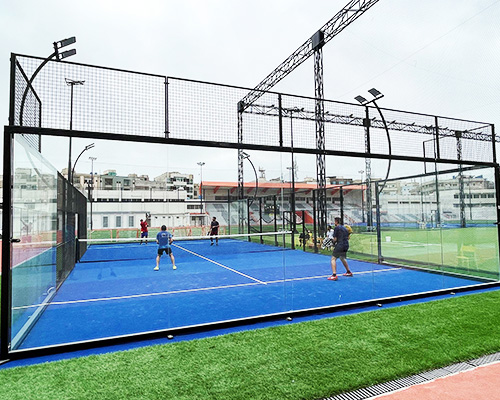
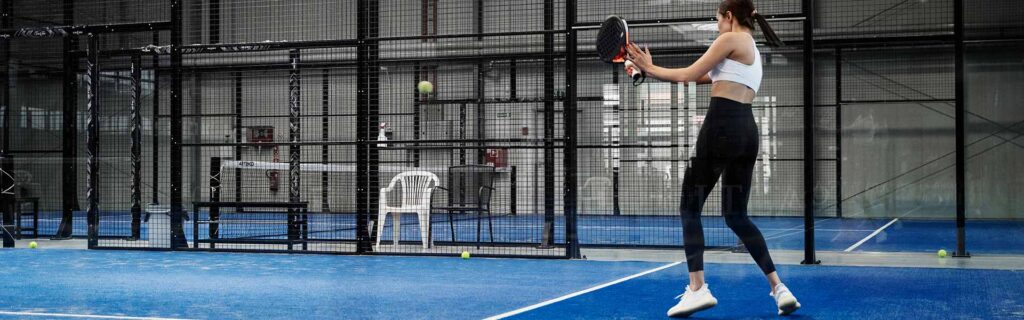
In contrast, Padel is played on a 20m × 10m enclosed court (about 66’ × 33’), where the walls are active elements of the game. Glass and metal fences surround the court, enabling players to play balls off the walls much like in squash.
Padel courts influence play by:
- Producing extended rallies due to wall utilization.
- Requiring strong court awareness and positioning.
- Making doubles play the standard format.
Key Rules and Scoring Systems
Pickleball Rules at a Glance
- Serve: Underhand, contact below the waist, must land past the non‑volley zone.
- Scoring: Points scored only by the serving team, typically to 11 points.
- Format: Both singles and doubles are popular.
Padel Rules and Scoring
- Serve: Underhand serve after a bounce, diagonally to opponent’s service box.
- Scoring: Uses traditional tennis scoring—15, 30, 40, game—with sets and possible tiebreaks.
- Format: Typically played in doubles, promoting teamwork.
Equipment Differences and Their Effect on Play
| Aspect | Pickleball | Padel |
|---|---|---|
| Ball Type | Hard plastic with holes | Depressurized, tennis‑like |
| Paddle/Racket | Solid, lightweight paddle | Perforated, composite racket |
| Bounce Height | Lower, slower, predictable | Higher, more varied rebound off walls |
| Physical Demand | Moderate, reflex‑heavy | Higher due to larger court, movement + walls |
| Cost of Equipment | Lower overall | Higher due to specialized rackets and balls |
| Typical Match Duration | Short, quick exchanges | Longer, tactical rallies |
(Padel vs. Pickleball gear comparison based on consolidated research.)
Physical, Cognitive & Community Benefits
Fitness and Health Impact
Participation in both sports contributes to improved physical fitness, cardiovascular health, and cognitive engagement. Studies show that these sports appeal to a wide age range, offering social interaction and general wellbeing benefits.
Padel’s larger court and longer rallies can increase stamina and agility more than Pickleball, which emphasizes precision and quick bursts.
Social and Community Aspects
Both sports are praised for their social, inclusive nature. Pickleball often draws retirees and recreational players due to lower physical barriers, while Padel attracts players seeking a mix of athletic challenge and social doubles strategy.
Cost and Facility Considerations
Court Build and Maintenance
- Pickleball: Easier and cheaper to install due to small size and simpler court requirements.
- Padel: Requires specialized enclosed structures with walls, leading to higher construction and maintenance costs.
Club Membership and Accessibility
Padel courts are often found in private clubs or mixed sports complexes, while Pickleball can be installed in parks, recreation centers, driveways, or adapted from existing tennis courts, increasing accessibility.
Case Studies & Real‑World Trends
Padel League Investments
Recently, NBA owner Rick Schnall invested $15 million in the Pro Padel League, highlighting commercial growth potential and investor confidence in Padel’s expansion.
Padel Growth in the UK
In the UK, Padel nearly reached one million players in 2025, driven by celebrity endorsements and rapidly increasing court installations.
Pickleball’s Enduring American Presence
Despite questions about trends, Pickleball maintains a strong presence in cities like Houston, with hundreds of dedicated courts and major national events drawing tens of thousands of spectators.
FAQ
What is easier to learn: Pickleball or Padel?
Pickleball is generally easier for beginners due to slower ball speed, smaller court, and simpler rules. Padel’s use of walls and larger court adds complexity.
Can I play these sports at any age?
Yes, both sports are suitable for all ages, but Pickleball’s lower physical intensity often makes it more accessible for older players.
How many players are there globally?
Padel boasts millions of players worldwide and is growing rapidly; Pickleball has tens of millions of participants, particularly in the U.S.
Do both sports offer competitive leagues?
Yes. Pickleball has national circuits and major tournaments, while Padel now has professional leagues and expanding international competition.
Which sport burns more calories?
Padel generally burns more calories per hour due to larger court movement, while Pickleball offers moderate cardio activity.
Conclusion
While Pickleball vs. Padel might look like a simple paddle sport comparison, it’s really a study in how two games evolve differently based on culture, rules, equipment, community dynamics, and physical demands. Pickleball’s nimble pace and accessibility have made it a social staple across communities, while Padel’s strategic, wall‑enabled gameplay has ignited global interest and investment.
Your choice between these two will depend largely on your goals, physical preferences, local availability of courts, and the kind of social or competitive environment you enjoy. The future of both sports looks bright, with each carving out a unique niche in the worldwide sports ecosystem.