
BLOG
Single Padel Court: Complete Guide for Design, Cost, Installation & Buying
Recent Articles
Introduction
Padel has rapidly become one of the fastest-growing racket sports worldwide, with increasing demand from sports clubs, hotels, schools, residential communities, and commercial recreation facilities. As more investors look for flexible and space-efficient sports solutions, the Single Padel Court has gained significant attention as an alternative to traditional full-size padel courts.
Unlike standard double padel courts designed for four players, a single padel court provides a more compact playing environment while maintaining the essential features of professional padel design, including glass walls, steel structures, artificial turf, and high-quality lighting systems.
For businesses and facility owners, choosing the right padel court solution requires careful consideration of several factors, including available space, installation requirements, investment budget, maintenance costs, and expected usage scenarios.
This complete guide explains everything you need to know about Single Padel Court, including:
- What a Single Padel Court is and how it works
- Standard dimensions and design requirements
- Construction materials and structural components
- Cost factors and investment considerations
- Installation process and preparation requirements
- Benefits for different commercial applications
- How to select a reliable manufacturer
Whether you are planning to build a new sports facility or expand an existing recreational project, understanding these key factors can help you make a more informed purchasing decision.
Table of Contents
What Is a Single Padel Court?
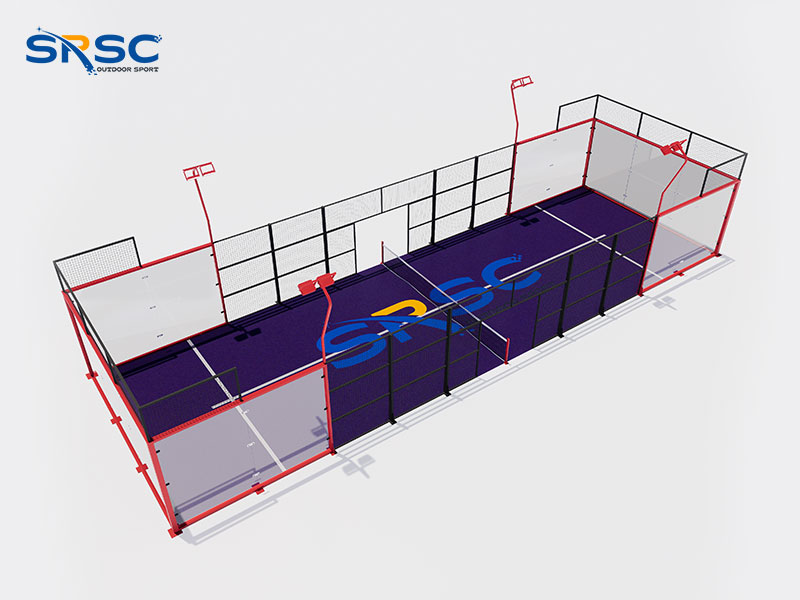
A Single Padel Court is a compact version of a traditional padel court designed for individual training, recreational games, and space-limited applications. It keeps the main characteristics of a professional padel court, such as enclosed glass walls, metal framework, artificial turf surface, and net systems, but is optimized for smaller areas.
Traditional padel courts are mainly designed for doubles matches, where four players participate at the same time. A single padel court, however, focuses on one-on-one gameplay, practice sessions, skill development, and locations where space availability is limited.
Key Features of a Single Padel Court
A professionally designed single padel court typically includes:
Compact Court Structure
The smaller footprint allows installation in locations where a standard padel court may not be suitable. This makes it ideal for:
- Urban sports centers
- Rooftop facilities
- Private clubs
- Hotels and resorts
- Schools and training centers
Professional Playing Experience
Although smaller in size, a high-quality single court maintains important padel features:
- Tempered glass walls
- Powder-coated steel frame
- Professional artificial turf
- Durable net system
- LED lighting options
Flexible Installation Options
Single padel courts can be installed in various environments, including:
- Indoor sports halls
- Outdoor recreational areas
- Commercial fitness facilities
- Private residential spaces
This flexibility makes them an attractive choice for investors looking to maximize available space.
Single Padel Court Dimensions and Space Requirements
Understanding dimensions is one of the most important steps before purchasing a padel court. The required space affects construction planning, installation costs, and overall user experience.
Standard Size of a Single Padel Court
The exact dimensions of a single padel court may vary depending on manufacturer design and project requirements. However, most single courts are designed with a reduced playing area compared with traditional padel courts while following the basic principles of padel gameplay.
A standard double padel court usually measures approximately:
| Court Type | Typical Dimensions |
|---|---|
| Standard Double Padel Court | 20m × 10m |
| Single Padel Court | Customized compact design |
Because single courts are often customized, buyers should confirm:
- Playing area dimensions
- Total installation footprint
- Safety clearance space
- Ceiling height requirements
with their selected manufacturer.
How Much Space Is Needed for a Single Padel Court?
The required installation area depends on several factors:
- Court size
- Surrounding safety zone
- Player movement requirements
- Indoor or outdoor conditions
- Local building regulations
A professional installation should consider additional space around the court to ensure safe movement and comfortable gameplay.
Recommended Planning Considerations
Before installation, buyers should evaluate:
Available Land Area
Measure the total available space, including:
- Court footprint
- Player access areas
- Spectator zones
- Equipment storage areas
Surface Conditions
The installation foundation should provide:
- Flat and stable ground
- Proper drainage
- Strong load-bearing capacity
Environmental Factors
Outdoor projects should consider:
- Weather resistance
- Wind conditions
- Rainwater drainage
- Sun exposure
A professional manufacturer can provide technical drawings and layout recommendations based on the specific project location.
Single Padel Court Design Options
Modern padel facilities are increasingly focused on both performance and visual appeal. A well-designed court can improve user experience while helping businesses create attractive sports destinations.
Indoor Single Padel Court Design
Indoor installations are popular for:
- Fitness centers
- Sports complexes
- Training academies
Advantages include:
- Weather protection
- Year-round operation
- Better lighting control
- Longer equipment lifespan
Indoor projects usually require attention to:
- Ceiling height
- Ventilation
- Lighting arrangement
- Noise control
Outdoor Single Padel Court Design
Outdoor single courts are commonly installed in:
- Hotels
- Resorts
- Residential communities
- Public recreation areas
Important design factors include:
Weather-Resistant Materials
Outdoor courts should use:
- Anti-corrosion steel structures
- High-quality protective coatings
- UV-resistant artificial turf
- Durable glass panels
Lighting System Integration
LED lighting allows extended operation hours and improves commercial value, especially for facilities offering evening bookings.
Main Components of a Single Padel Court
A complete padel court system consists of multiple components that work together to provide safety, durability, and professional performance.
Steel Structure Frame
The steel framework provides the main support for:
- Glass panels
- Fencing systems
- Lighting equipment
High-quality steel structures should have:
- Strong corrosion resistance
- Stable construction
- Long service life
For outdoor projects, protective treatments such as galvanization or powder coating are commonly used.
Tempered Glass Panels
Glass walls are one of the most recognizable features of padel courts.
Quality glass panels provide:
- Player safety
- Clear visibility
- Professional appearance
- Impact resistance
Common specifications include:
- Safety tempered glass
- Professional thickness standards
- Strong fixing systems
Proper installation is essential because glass panels directly affect both safety and playing performance.
Artificial Turf Surface
The playing surface plays an important role in ball speed, player movement, and comfort.
A quality artificial turf system should provide:
- Good shock absorption
- Weather resistance
- Anti-slip performance
- Consistent ball bounce
Common turf options include:
- Monofilament turf
- Textured artificial grass
- Professional padel-specific turf
Padel Net System
The net divides the playing area and must meet professional requirements for:
- Height accuracy
- Durability
- Stability
A reliable net system ensures consistent gameplay and reduces maintenance needs.
LED Lighting System
For commercial facilities, lighting is an important investment factor.
Professional lighting systems help:
- Extend operating hours
- Improve player experience
- Increase booking opportunities
Energy-efficient LED lights are commonly selected because they provide:
- Low energy consumption
- Long service life
- Stable brightness
Single Padel Court Cost Analysis: What Affects the Investment?
One of the most important considerations before purchasing a Single Padel Court is understanding the total investment required. The final cost is not determined only by the court structure itself but also depends on multiple factors, including materials, customization options, transportation, installation conditions, and additional equipment.
Compared with building a full-size padel facility, a single padel court generally requires less space and may offer a more flexible investment option for businesses that want to enter the growing padel market with a lower initial budget.
How Much Does a Single Padel Court Cost?
The price of a single padel court varies depending on specifications, materials, manufacturer capabilities, and project requirements.
Generally, the total investment can include:
| Cost Factor | Description |
|---|---|
| Court Structure | Steel frame, glass panels, fencing system |
| Playing Surface | Artificial turf and installation materials |
| Lighting System | LED lights and electrical components |
| Foundation Work | Ground preparation and construction |
| Transportation | Shipping distance and logistics requirements |
| Installation | Professional assembly and labor costs |
| Customization | Branding, colors, design modifications |
Buyers should evaluate the complete project cost rather than only comparing the initial product quotation.
Main Factors Affecting Single Padel Court Price
Court Material Quality
Materials directly influence durability, maintenance requirements, and long-term operating costs.
A premium single padel court usually uses:
- High-strength steel structures
- Corrosion-resistant coatings
- Safety tempered glass
- Professional artificial turf
- Weather-resistant components
Although higher-quality materials may increase the initial investment, they can reduce replacement and maintenance costs over the lifetime of the court.
Custom Design Requirements
Many commercial buyers require customized solutions to match their brand identity or site conditions.
Customization options may include:
- Customized court colors
- Logo printing
- Special lighting systems
- Different glass designs
- Modified structural layouts
Hotels, sports clubs, and premium recreational facilities often choose customized designs to create a unique customer experience.
Installation Location
The installation environment has a significant impact on the final project budget.
For example:
Outdoor Installation
May require:
- Concrete foundation
- Drainage systems
- Weather protection considerations
- Additional structural reinforcement
Indoor Installation
May require:
- Building modifications
- Lighting adjustments
- Ventilation improvements
- Space optimization
A professional manufacturer can provide installation recommendations based on the specific project location.
Single Padel Court vs Traditional Padel Court Investment
For investors, choosing between a single padel court and a standard padel court depends on business goals, available space, and expected customer demand.
| Comparison Factor | Single Padel Court | Standard Padel Court |
|---|---|---|
| Space Requirement | Smaller footprint | Larger area required |
| Initial Investment | Lower | Higher |
| Installation Flexibility | Easier | More demanding |
| Player Capacity | Suitable for training and small groups | Suitable for competitive matches |
| Suitable Locations | Hotels, schools, private clubs | Large sports facilities |
A single padel court can be an effective solution for businesses that want to maximize limited space while still offering a professional padel experience.
Single Padel Court Installation Process
Installing a Single Padel Court requires careful planning and professional execution. A proper installation process ensures structural stability, player safety, and long-term performance.
The installation timeline depends on project complexity, site preparation, and customization requirements.
Step 1: Site Inspection and Planning
Before construction begins, the installation area should be carefully evaluated.
Important considerations include:
- Available space
- Ground conditions
- Drainage requirements
- Access for transportation
- Power supply availability
Manufacturers usually provide technical drawings to help customers prepare the installation site.
Step 2: Foundation Preparation
The foundation is one of the most critical parts of a padel court installation.
A stable foundation helps ensure:
- Structural safety
- Flat playing surface
- Proper drainage
- Long-term durability
Common preparation steps include:
- Ground leveling
- Concrete base construction
- Surface checking
- Drainage preparation
Poor foundation quality may lead to problems such as uneven surfaces or structural instability.
Step 3: Steel Frame Assembly
After foundation preparation, the steel structure is installed.
This stage includes:
- Positioning steel columns
- Installing supporting frames
- Fixing structural components
- Checking alignment
The frame must be accurately assembled because it supports the glass panels and fencing system.
Step 4: Glass Panel Installation
Tempered glass panels are installed around the court structure.
Professional installation requires:
- Accurate positioning
- Secure fixing systems
- Safety inspections
The glass installation process affects:
- Court appearance
- Player safety
- Ball rebound performance
Step 5: Artificial Turf Installation
The artificial turf surface is installed after the main structure is completed.
The process usually includes:
- Surface cleaning
- Turf positioning
- Cutting and adjustment
- Joint connection
- Sand filling if required
A professional turf installation helps maintain consistent ball movement and player comfort.
Step 6: Lighting and Equipment Installation
For commercial projects, lighting systems are usually installed during the final stage.
Additional equipment may include:
- LED lighting poles
- Scoreboards
- Access gates
- Player benches
- Protective accessories
After installation, the entire court should undergo final testing before being opened for use.
How Long Does It Take to Install a Single Padel Court?
The installation time depends on several factors:
- Site preparation condition
- Court customization level
- Weather conditions
- Installation team experience
A standard installation process may include:
| Stage | Main Work |
|---|---|
| Planning | Site measurement and design |
| Preparation | Foundation and ground work |
| Assembly | Steel structure and glass installation |
| Finishing | Turf, lighting, and accessories |
| Testing | Safety inspection and approval |
Working with an experienced manufacturer can significantly improve installation efficiency and reduce potential delays.
Benefits of Installing a Single Padel Court
A Single Padel Court provides several advantages for businesses and organizations looking for flexible sports solutions.
1. Requires Less Space
One of the biggest advantages is its compact design.
Compared with traditional padel facilities, single courts can fit into smaller locations, making them suitable for:
- Urban areas
- Rooftop spaces
- Small sports centers
- Private properties
This allows investors to use previously unavailable spaces for recreational development.
2. Lower Initial Investment
Because of its smaller size and reduced construction requirements, a single padel court may require a lower initial investment compared with larger facilities.
This makes it attractive for:
- New sports businesses
- Small clubs
- Hotels expanding entertainment options
- Community recreation projects
3. Easy Maintenance
A smaller playing area generally means:
- Less turf maintenance
- Lower cleaning requirements
- Reduced replacement costs
- Easier daily management
For operators, this can improve operational efficiency.
4. Suitable for Training and Practice
Single courts are especially useful for:
- Beginner training
- Individual practice
- Coaching sessions
- Skill improvement programs
Sports academies can use them as additional training areas without requiring large-scale facilities.
Applications of Single Padel Court
The flexible design allows single padel courts to be used across different industries.
Single Padel Court for Sports Clubs
Sports clubs can install single courts to:
- Increase available playing areas
- Offer private training sessions
- Attract new members
- Improve facility utilization
For smaller clubs, a single court provides an affordable way to enter the padel market.
Single Padel Court for Hotels and Resorts
Hotels increasingly use sports facilities as premium guest experiences.
A single padel court can help hotels:
- Enhance recreational services
- Increase guest engagement
- Create additional revenue opportunities
It is especially suitable for:
- Luxury resorts
- Holiday destinations
- Private accommodation facilities
Single Padel Court for Schools and Universities
Educational institutions can use single courts for:
- Physical education programs
- Student activities
- Sports training
The compact design allows schools with limited outdoor space to introduce padel programs.
Single Padel Court for Residential Communities
Residential developers can add padel facilities as premium community amenities.
Benefits include:
- Improving property value
- Creating social interaction spaces
- Providing healthy recreational options
How to Choose the Right Single Padel Court
Choosing the right Single Padel Court supplier is an important decision that directly affects product quality, installation efficiency, operating costs, and customer experience.
With the rapid growth of the global padel market, more manufacturers and suppliers have entered the industry. However, not every supplier can provide professional design, reliable materials, technical support, and long-term service.
Before making a purchase decision, buyers should evaluate several key factors, including manufacturing experience, product quality, customization capabilities, certifications, and after-sales support.
Evaluate the Manufacturer’s Experience
A reliable manufacturer should have professional experience in designing and producing padel court systems.
Experienced suppliers usually have better knowledge of:
- International court standards
- Different installation environments
- Material selection
- Project requirements
- Export procedures
When evaluating a manufacturer, consider:
- Years of industry experience
- Previous installation projects
- Global customer cases
- Production capability
- Technical team expertise
A manufacturer with successful international projects can usually provide more reliable solutions for overseas buyers.
Check Product Quality and Materials
The quality of a Single Padel Court depends heavily on the materials used during manufacturing.
Steel Structure Quality
The supporting structure should provide:
- High strength
- Long-term stability
- Corrosion resistance
- Weather durability
For outdoor applications, protective treatments such as:
- Galvanization
- Powder coating
- Anti-rust coating
can help extend service life.
Glass Panel Quality
The glass system is one of the most important safety components.
High-quality padel courts typically use:
- Tempered safety glass
- Strong fixing systems
- Professional installation methods
Poor-quality glass or incorrect installation may create safety risks and affect the overall playing experience.
Artificial Turf Performance
The playing surface should provide:
- Comfortable player movement
- Consistent ball bounce
- Good durability
- Weather resistance
Buyers should ask manufacturers about:
- Turf specifications
- Fiber quality
- Drainage performance
- Maintenance requirements
Customization Options for Single Padel Court Projects
Different customers have different installation environments and business goals. Therefore, customization capability is an important factor when selecting a supplier.
Custom Court Design
Professional manufacturers can provide customized solutions based on:
- Available space
- Indoor or outdoor conditions
- Brand requirements
- Customer budget
Customization may include:
- Court dimensions
- Frame colors
- Glass designs
- Lighting configurations
- Additional accessories
Branding and Commercial Design
For commercial projects, visual design plays an important role in attracting users.
Businesses can customize:
- Company logos
- Brand colors
- Entrance designs
- Advertising spaces
This is especially valuable for:
- Sports clubs
- Hotels
- Resorts
- Commercial recreation centers
Single Padel Court Maintenance Guide
Proper maintenance helps extend the lifespan of a padel court and ensures a safe playing experience.
Although a high-quality court requires relatively low maintenance, regular inspections and cleaning are still necessary.
Artificial Turf Maintenance
The artificial turf should be maintained regularly to preserve performance.
Recommended maintenance includes:
- Removing debris
- Cleaning dust and dirt
- Checking turf flatness
- Maintaining sand distribution when required
Regular maintenance helps prevent:
- Uneven surfaces
- Reduced ball bounce
- Excessive turf wear
Glass Wall Maintenance
Glass panels should be inspected periodically.
Maintenance tasks include:
- Cleaning glass surfaces
- Checking fixing points
- Inspecting cracks or damage
- Tightening connection components
Clean glass walls also improve visibility and create a more professional appearance.
Steel Structure Inspection
The metal structure should be checked regularly, especially for outdoor courts.
Inspection should focus on:
- Rust prevention
- Connection points
- Structural stability
- Coating condition
Early detection of problems can reduce repair costs.
Lighting System Maintenance
For courts with LED lighting systems, regular checks should include:
- Light brightness
- Electrical connections
- Pole stability
- Energy efficiency
A reliable lighting system improves evening operation and increases facility availability.
Future Trends of Single Padel Court Development
The global popularity of padel continues to grow, creating new opportunities for compact court solutions.
Several trends are expected to influence the future development of Single Padel Court systems.
Increasing Demand for Space-Efficient Sports Facilities
As urban areas become more crowded, available land for sports facilities becomes increasingly limited.
Compact padel solutions are becoming attractive because they allow:
- More efficient land use
- Lower construction requirements
- Flexible installation options
This trend is expected to increase demand among:
- Urban sports centers
- Hotels
- Residential developments
- Private investors
Smart Technology Integration
Future padel courts may include more digital technologies, such as:
- Smart booking systems
- Digital scoreboards
- Player tracking systems
- Video recording solutions
These technologies can improve user experience and create additional business value.
More Sustainable Court Materials
Environmental considerations are becoming increasingly important in sports construction.
Future court designs may focus on:
- Recyclable materials
- Energy-efficient lighting
- Longer-lasting components
- Reduced maintenance requirements
Sustainable solutions can help operators reduce long-term operating costs.
Is a Single Padel Court a Good Investment?
For many businesses, investing in a Single Padel Court can provide attractive commercial opportunities.
The investment potential depends on:
- Location
- Target customers
- Operating model
- Pricing strategy
- Facility utilization rate
Revenue Opportunities
Businesses can generate income through:
- Hourly court rentals
- Membership programs
- Training courses
- Tournaments
- Brand partnerships
A well-managed padel facility can create multiple revenue channels beyond simple court bookings.
Suitable Investment Projects
A single padel court can be a suitable choice for:
Sports Clubs
Used to expand capacity and attract new players.
Hotels
Used as a premium guest activity.
Schools
Used for sports education and student programs.
Residential Communities
Used as a lifestyle facility to improve community value.
Private Investors
Used as a compact sports business opportunity.
FAQ
What is the difference between a Single Padel Court and a standard padel court?
A single padel court is designed for fewer players and usually requires less installation space. A standard padel court is mainly designed for doubles matches with four players.
Single courts are often preferred for training, private facilities, and locations with limited space.
How much space is required for a Single Padel Court?
The required space depends on the specific design and manufacturer specifications. Buyers should consider not only the court size but also surrounding safety areas, access space, and installation conditions.
A professional supplier can provide detailed layout drawings before production.
How long does a Single Padel Court last?
The lifespan depends on:
- Material quality
- Installation standards
- Climate conditions
- Maintenance frequency
A professionally manufactured and properly maintained padel court can provide many years of reliable operation.
Can a Single Padel Court be installed indoors?
Yes. Indoor installation is a popular option for:
- Sports centers
- Fitness facilities
- Training academies
Indoor courts provide advantages such as weather protection and year-round operation.
Can a Single Padel Court be customized?
Yes. Professional manufacturers usually provide customization options including:
- Court colors
- Structural design
- Lighting systems
- Branding elements
- Accessories
How do I choose a reliable Single Padel Court manufacturer?
Consider:
- Manufacturing experience
- Material quality
- Previous projects
- Technical support
- Customization ability
- After-sales service
Choosing an experienced supplier helps ensure better product quality and smoother project implementation.
Conclusion
A Single Padel Court provides an efficient solution for businesses and organizations looking to introduce padel with limited space and flexible investment requirements.
From sports clubs and hotels to schools and residential communities, compact padel courts offer opportunities to create attractive recreational spaces while reducing construction challenges.
Before purchasing, buyers should carefully evaluate:
- Court design
- Material quality
- Installation requirements
- Manufacturer experience
- Long-term maintenance needs
Working with a professional padel court manufacturer can help ensure a safe, durable, and commercially valuable sports facility.
As global interest in padel continues to expand, single court solutions are expected to become an increasingly important part of modern sports infrastructure.