
BLOG
Adjustable Basketball Hoop Buying Guide for Schools and Youth Training
Recent Articles
Table of Contents
Key points covered in this guide:
- How an Adjustable Basketball Hoop supports different age groups
- How to compare electric, manual-crank, and basic adjustment systems
- Which height range is suitable for youth training and adult basketball
- How tempered-glass and SMC backboards differ
- Why extension length, base size, counterweight, and padding matter
- How to choose equipment for schools, academies, clubs, and communities
- What buyers should inspect before shipment and installation
- How to operate and maintain the adjustment system safely
An Adjustable Basketball Hoop allows schools, basketball academies, sports clubs, community centres, and multi-purpose gymnasiums to serve players with different ages, heights, and skill levels.
Instead of forcing every child to practise on an adult-height basket, the facility can lower the rim for beginner shooting drills and gradually raise it as players develop. The same equipment may later return to the standard adult playing height for older students or general basketball use.
FIBA’s Mini Basketball guidance recommends adapting equipment to children’s physical abilities, including using smaller balls and lower rings. This supports a child-centred training environment rather than expecting young players to use adult equipment from their first session.
However, height adjustment is only one part of the purchasing decision. Buyers must also evaluate the lifting mechanism, backboard, rim, support structure, base, wheels, counterweight, padding, outdoor protection, storage route, and long-term maintenance requirements.
What Is an Adjustable Basketball Hoop?
An Adjustable Basketball Hoop is a basketball backstop that allows the rim height to be changed within a defined range.
Depending on the model, height adjustment may be controlled by:
- Electric lifting actuator
- Electric hydraulic system
- Manual crank
- Hand-operated lifting mechanism
- Telescopic post
- Pin-lock structure
- Screw adjustment
- Assisted mechanical system
Commercial systems normally include:
- Steel support structure
- Adjustable extension arm
- Backboard
- Basketball rim
- Net
- Base box
- Counterweight
- Transport wheels
- Protective padding
- Height-locking system
Adjustable Hoop vs Fixed-Height Hoop
A fixed basketball hoop remains at one playing height.
An adjustable system can support several training levels but introduces additional moving parts that require inspection and correct operation.
| Comparison Area | Adjustable Basketball Hoop | Fixed-Height Basketball Hoop |
|---|---|---|
| Player age range | Youth through adult | Usually one target group |
| Training flexibility | High | Limited |
| Moving components | More | Fewer |
| Setup procedure | Height must be checked and locked | Minimal |
| Maintenance | Adjustment system plus structure | Mainly structural |
| Initial cost | Generally higher | Generally lower |
| School use | Strong option | Suitable for dedicated age groups |
| Competition use | Model-specific | Common for adult competition |
| Storage | Mobile models may be moved | Often permanent or semi-permanent |
Concept: Progressive Hoop Height
Progressive hoop height means matching the basket height to the physical development and shooting ability of the players.
The goal is not to make every shot easy. It is to provide a realistic training height that allows children to develop balanced shooting form without excessive force.
Why Youth Facilities Need Adjustable Basketball Hoops
Young players may change age groups several times during the service life of one basketball facility.
A fixed adult-height basket may create difficulties for younger beginners.
Better Shooting Technique
When the basket is too high, children may compensate by:
- Throwing the ball from the shoulder
- Using both hands unevenly
- Leaning backward
- Jumping forward uncontrollably
- Sacrificing accuracy for force
A lower hoop can help coaches teach:
- Balanced foot position
- Controlled arm movement
- Smooth release
- Appropriate shooting arc
- Follow-through
More Successful Practice
Beginner players need appropriate challenge and visible progress.
A suitable rim height can help them experience successful:
- Layups
- Short-range shots
- Passing-and-shooting drills
- Small-sided games
- Skill competitions
One Court for Several Programmes
An adjustable system can help one venue support:
- Children’s basketball
- School physical education
- Youth academy training
- Adult recreation
- Shooting instruction
- Community events
The operator should still create a documented height schedule rather than changing the hoop without a training plan.
Understand Standard and Youth Rim Heights
The current FIBA equipment rules position the top of a regulation basket ring at 3,050 mm above the finished court floor. The same rules require competition backstop structures to remain stable and prevent unintended movement once set in the playing position.
Standard Adult Height
The standard adult rim height is:
3.05 metres
This height is used for regulation adult basketball and older competitive age groups under applicable rules.
Lower Youth Heights
Youth programmes may use lower rings according to:
- Player age
- Player height
- Local federation guidance
- Coaching objectives
- Court size
- Ball size
- Competition format
FIBA’s Mini Basketball resources emphasize adapting the equipment to the players, but facilities should confirm the exact height required by their local league or school programme.
Example Planning Ranges
| Rim Height | Possible Use |
| 1.4–1.8 m | Introductory activities and very young beginners |
| 1.8–2.4 m | Children’s training and basic shooting drills |
| 2.35–2.60 m | Youth games and academy development |
| 2.60–3.00 m | Transition training |
| 3.05 m | Standard adult basketball |
These ranges are planning examples rather than universal competition rules. The final setting should follow the programme’s approved requirements.
Avoid Changing Height Based Only on Player Age
Two children of the same age may have different physical development and experience.
Coaches should also consider:
- Shooting mechanics
- Ball control
- Strength
- Training history
- Court dimensions
- Ball size
Compare Adjustable Basketball Hoop Types
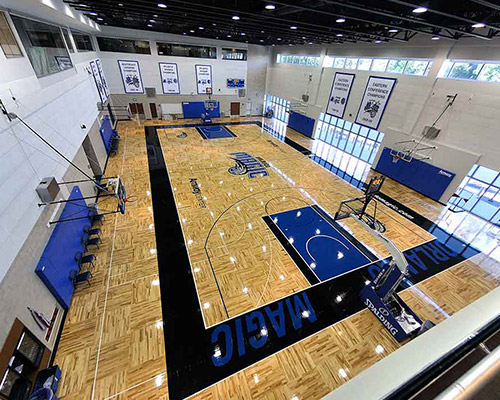
Electric Height-Adjustable Hoop
An electric system uses a powered actuator or motor to raise and lower the backboard and rim.
Possible advantages include:
- Fast adjustment
- Reduced manual effort
- Repeatable settings
- Convenient operation
- Suitability for frequent programme changes
The SRSC Competition Electric Height-Adjustable Mini Basketball Hoop has a published adjustment range of 2.35 to 3.05 metres. It uses a 1.65-metre extension arm, a 1200 × 800 mm tempered-glass backboard, an electric lifting mechanism, and a compact mobile base.
Manual-Crank Adjustable Hoop
A manual-crank system uses a handle and screw or geared mechanism.
Possible advantages include:
- No electrical supply required
- Straightforward controls
- Lower electrical maintenance
- Suitable for schools and training centres
- Controlled gradual adjustment
SRSC’s larger Manual Crank Height-Adjustable Basketball Hoop has a listed height range of 1.4 to 3.05 metres. Its current specification includes a mobile steel base, front padding, optional 300 kg cement ballast, and an extension arm adjustable between 0.6 and 1.1 metres.
Compact Manual Youth Hoop
A smaller manual model may be designed specifically for children’s programmes and space-controlled facilities.
SRSC also lists a compact crank-adjustable model with a 1.7 to 2.4-metre height range, an 800 × 1200 mm SMC backboard, mobile base, protective padding, and optional 100 kg ballast.
Basic Mobile Mini Hoop
A basic adjustable hoop may use a simpler manual mechanism.
The SRSC Adjustable Mini Basketball Hoop provides a published 2.0 to 3.05-metre height range, a 1200 × 800 × 6 mm tempered-glass backboard, mobile wheels, padded front area, and optional 250 kg cement ballast.
Electric vs Manual Adjustable Basketball Hoop
| Decision Factor | Electric System | Manual-Crank System |
| Adjustment effort | Low | Moderate |
| Adjustment speed | Generally faster | Slower |
| Electrical connection | Required | Not required |
| Control complexity | Higher | Lower |
| Frequent height changes | Highly suitable | Suitable |
| School maintenance | Electrical and mechanical | Mainly mechanical |
| Emergency operation | Backup procedure required | Manual control remains available |
| Initial investment | Generally higher | Generally lower |
| Outdoor use | Requires protected electrical parts | Simpler electrical requirements |
| Staff training | Control and emergency procedures | Crank and locking procedures |
Choose Electric When
An electric Adjustable Basketball Hoop may be suitable when:
- Height changes occur several times each day
- The venue has many age-group programmes
- Staff need quick court conversion
- The system is installed in a professional indoor facility
- Reliable electrical service is available
Choose Manual When
A manual system may be more practical when:
- Height changes are less frequent
- Electrical access is limited
- The facility wants simpler controls
- The budget is more restricted
- Maintenance staff prefer mechanical equipment
Do Not Choose Only by Convenience
The structure, stability, padding, backboard, locking system, and replacement-part support remain more important than adjustment speed alone.
Select the Right Height Range
A wide adjustment range is useful only when it matches the actual programme.
Full-Range System
A system adjusting from approximately 1.4 to 3.05 metres can support a broad range of users.
It may be suitable for:
- Large academies
- Schools with several age groups
- Community centres
- Coach-development centres
- Multi-purpose gymnasiums
Youth-Focused Range
A system adjusting from approximately 1.7 to 2.4 metres may suit younger children but will not reach the standard adult playing height.
This can be appropriate for:
- Primary schools
- Children’s activity centres
- Beginner academies
- Dedicated mini-basketball courts
Competition Transition Range
A system adjusting from around 2.35 to 3.05 metres can support youth competition, transition training, and standard adult use.
It may suit:
- Secondary schools
- Basketball academies
- Competition training halls
- University development programmes
Concept: Usable Adjustment Range
The usable adjustment range is the portion of the published range that matches the facility’s real programmes.
A very low setting provides little value when the venue serves only teenagers and adults.
Check the Height-Adjustment Accuracy
The hoop should be set to a measured height rather than an approximate label.
Height Indicators
Possible systems include:
- Mechanical scale
- Printed height marks
- Digital display
- Preset buttons
- Physical stops
- Manual measurement
Measure From the Finished Floor
Rim height should be measured from the final playing surface to the top edge of the ring.
Do not measure from:
- Unfinished concrete
- Base plate
- Wheel level
- Bottom of the rim
- Backboard edge
Check Both Sides of the Rim
The ring should remain level after adjustment.
Measure and inspect:
- Front edge
- Back edge
- Left side
- Right side
- Backboard alignment
Lock the Height Before Use
The mechanism should not rely only on the lifting motor or crank tension.
A secure playing position may use:
- Mechanical lock
- Safety pin
- Gear lock
- Hydraulic lock
- Structural stop
- Control-system interlock
Compare Tempered-Glass and SMC Backboards
Tempered-Glass Backboard
Tempered glass can provide:
- Clear visibility
- Professional appearance
- Consistent ball response
- Compatibility with competition-style rims
- Strong visual connection to adult basketball
SRSC’s electric competition mini hoop and its adjustable 2.0–3.05-metre model both use tempered-glass backboards.
SMC Backboard
Sheet moulding compound, or SMC, is a reinforced composite material.
Possible advantages include:
- Lower weight
- Resistance to moisture
- Reduced breakage concerns
- Suitability for youth and recreational equipment
- Easier movement on compact models
The compact SRSC manual-crank hoop uses an 800 × 1200 mm fan-shaped SMC backboard.
Backboard Comparison
| Feature | Tempered Glass | SMC Composite |
| Appearance | Transparent and professional | Opaque and practical |
| Ball response | Competition-style potential | Suitable for youth and recreation |
| Weight | Higher | Generally lower |
| Damage mode | Requires safety design | Less glass-related risk |
| Outdoor suitability | Needs secure frame and inspection | Strong moisture resistance |
| Typical project | Academy or competition training | School and community use |
| Cost | Generally higher | Generally lower |
Verify More Than the Material Name
Ask for:
- Backboard dimensions
- Thickness
- Frame material
- Rim mounting method
- Safety film
- Edge padding
- Replacement availability
- Packaging design
Review Extension Arm Length
The extension arm determines how far the backboard projects in front of the base.
Why Extension Matters
A longer arm can place the base farther from the playing area.
This may provide:
- Greater player clearance
- Better space behind the backboard
- More professional court geometry
- Reduced collision risk with the base
However, a longer arm can also require:
- Larger structure
- More counterweight
- More storage space
- Greater transport volume
- Stronger wheels
Compact Youth Systems
Smaller equipment may use a shorter arm because:
- Players are younger
- Court dimensions are smaller
- Dunking loads are limited
- Storage is restricted
- Equipment must move frequently
Mark the Complete Footprint
The buyer should mark the base, arm, backboard, wheels, padding, and movement route on the actual court plan before ordering.
Check Stability and Counterweight
An Adjustable Basketball Hoop must remain stable at every approved playing height.
Why Height Affects Stability
Raising the backboard changes the equipment’s centre of gravity.
The highest position may create different overturning demands from the lowest setting.
The stability system may include:
- Cement ballast
- Steel plates
- Floor anchors
- Wide base
- Retractable supports
- Outriggers
- Wheel locks
Compare Published SRSC Ballast Options
| SRSC Model | Published Optional Ballast |
| Large manual-crank model | 300 kg |
| Adjustable mini glass model | 250 kg |
| Compact SMC youth model | 100 kg |
The final ballast requirement must follow the exact product instructions. A buyer should not reduce the quantity to save freight or installation cost.
Ballast Must Be Secured
Loose blocks can move during transport or play.
Confirm:
- Block dimensions
- Retaining frame
- Access panel
- Internal movement control
- Installation sequence
- Inspection access
Competition Stability
FIBA’s current equipment rules require backstop structures to be secured against movement. Where floor anchoring is not used, sufficient ballast must prevent the support from shifting.
Evaluate the Wheel and Mobility System
Wheels make a basketball hoop mobile, but they must support the complete equipment weight.
Wheel Types
A commercial base may use:
- Fixed-direction wheels
- Swivel casters
- Retractable wheels
- Hydraulic transport wheels
- Locking casters
Check Floor Loads
Ask the supplier for:
- Total equipment weight
- Number of wheels
- Wheel diameter
- Wheel width
- Load per wheel
- Wheel material
- Turning radius
Heavy wheels can damage an unsuitable wooden or synthetic sports floor.
Define a Movement Route
The route should be:
- Flat
- Clean
- Free of cables
- Wide enough for turning
- Protected where necessary
- Clear of players
Never Move the Hoop in Playing Position
The equipment should be lowered or placed into the approved transport configuration before movement.
Inspect Padding and Player Protection
FIBA’s current equipment rules contain detailed padding requirements for competition backboards and support structures, including protection around the lower backboard and support areas.
A school Adjustable Basketball Hoop should also protect likely collision areas.
Padding Locations
Review padding around:
- Front upright
- Base box
- Extension arm
- Lower backboard
- Side edges
- Exposed brackets
Padding Characteristics
Ask about:
- Foam thickness
- Foam density
- Outer fabric
- Attachment method
- Cleaning
- Fire performance
- Replacement covers
- Custom logos
Half-Covered vs Full Padding
Some compact youth systems use limited or half-covered padding.
A professional venue may require more complete protection depending on:
- Extension length
- Player speed
- Court clearance
- Competition level
- Local safety requirements
Match the Hoop to the Facility
Primary School
Priorities may include:
- Lower height range
- Simple crank operation
- SMC backboard
- Compact base
- Full padding
- Lockable controls
- Stable ballast
Secondary School
A wider range reaching 3.05 metres may offer better long-term value.
The system can serve:
- Younger students
- School teams
- Physical education
- Community use
- Adult evening programmes
Basketball Academy
An academy may prefer:
- Electric adjustment
- Tempered-glass backboard
- Accurate height presets
- Competition-style rim
- Strong extension arm
- Frequent adjustment capability
Community Sports Centre
The equipment should balance:
- Different user groups
- Staff capability
- Storage
- Durability
- Maintenance cost
- Vandalism control
Outdoor Youth Court
An outdoor Adjustable Basketball Hoop requires additional review of:
- Corrosion protection
- Water-resistant seals
- UV exposure
- Drainage
- Wind
- Electrical enclosure
- Outdoor wheels
- Base anchoring
Indoor vs Outdoor Adjustable Basketball Hoop
| Requirement | Indoor Installation | Outdoor Installation |
| Corrosion exposure | Lower | Higher |
| Electrical enclosure | Standard protected indoor system | Weather-resistant system required |
| Drainage | Building-controlled | Must prevent standing water |
| Wind | Limited | Structural consideration |
| Wheels | Smooth sports-floor compatible | Outdoor surface compatible |
| Coating | Indoor protective finish | Enhanced outdoor coating |
| Storage | Often available | May remain exposed |
| UV exposure | Low | High |
| Fastener inspection | Periodic | More frequent |
Protect Outdoor Adjustment Mechanisms
Water can enter:
- Crank housings
- Screw threads
- Motors
- Switches
- Seals
- Cable connections
The supplier should explain how the lifting system is protected and maintained.
Prepare the Installation Area
Check the Floor
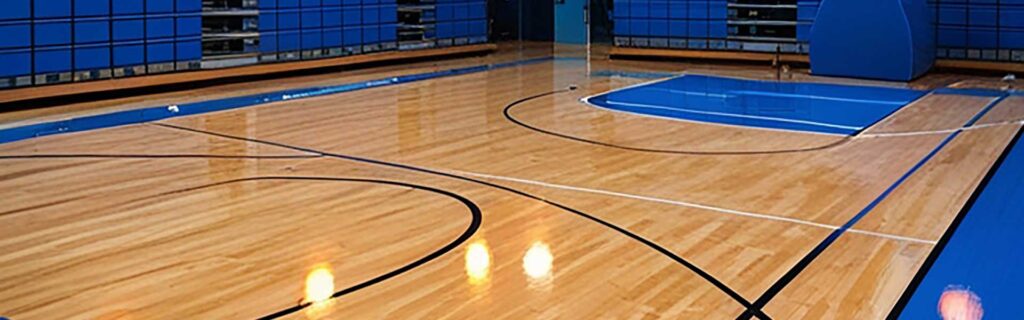
The playing area should be:
- Flat
- Stable
- Clean
- Dry
- Suitable for wheel and base loads
- Free from major cracks
Confirm Clearance
Measure:
- Court endline
- Base position
- Backboard position
- Wall clearance
- Player run-off
- Storage route
- Ceiling height
Install the Ballast Correctly
Follow the supplier’s specified:
- Quantity
- Material
- Block position
- Retaining method
- Access procedure
Complete Commissioning
After installation, test:
- Lowest height
- Intermediate settings
- Highest height
- Locking system
- Rim level
- Wheel retraction
- Base stability
- Padding
- Emergency lowering
- Return to storage
Adjustable Basketball Hoop Procurement Checklist
| Specification Area | Buyer Should Confirm |
| Target users | Children, teenagers, adults, or mixed |
| Height range | Lowest and highest rim positions |
| Adjustment type | Electric, crank, hydraulic, or telescopic |
| Height accuracy | Scale, presets, and locking method |
| Backboard | Material, dimensions, thickness, and frame |
| Rim | Basic, pressure-release, or approved model |
| Extension arm | Length and adjustment |
| Base | Dimensions, steel thickness, and coating |
| Counterweight | Material, quantity, and inclusion |
| Wheels | Quantity, load, material, and locks |
| Padding | Coverage, thickness, and replacement |
| Indoor/outdoor use | Environmental protection |
| Storage | Folded or lowered dimensions |
| Power | Voltage and emergency operation |
| Spare parts | Motor, crank, seals, wheels, nets, padding |
| Warranty | Structure, lifting system, and installation |
Inspect the Hoop Before Shipping
Structural Inspection
Check:
- Welds
- Steel profiles
- Alignment
- Base dimensions
- Coating
- Extension arm
- Pivot points
Height Test
Verify:
- Published adjustment range
- Smooth movement
- Height scale
- Mechanical stops
- Rim level
- Locking mechanism
Backboard and Rim Test
Inspect:
- Board dimensions
- Surface damage
- Frame
- Rim mounting
- Net attachments
- Protective edges
Mobility Test
Confirm:
- Wheels rotate smoothly
- Casters turn correctly
- Transport position works
- Locks engage
- Base remains stable
Request a Factory Video
The video should show the equipment moving from its lowest setting to the full 3.05-metre position and returning safely.
Maintenance of an Adjustable Basketball Hoop
Frequent Visual Inspection
Before use, inspect:
- Rim
- Net
- Backboard
- Padding
- Base
- Wheels
- Adjustment handle
- Electrical cable
- Visible fasteners
Monthly Mechanical Inspection
Check:
- Screw mechanism
- Gears
- Pivots
- Bearings
- Locks
- Wheel supports
- Ballast restraints
- Protective covers
Electric-System Inspection
Review:
- Control buttons
- Limit switches
- Motor
- Actuator
- Power cable
- Emergency stop
- Backup lowering method
Outdoor Maintenance
Outdoor systems may require more frequent:
- Cleaning
- Corrosion inspection
- Lubrication
- Seal checks
- Coating repairs
- Water removal
Keep a Height and Maintenance Record
Record:
- Equipment number
- Current height
- Inspection date
- Repairs
- Parts replaced
- Staff member
- Identified faults
Common Adjustable Basketball Hoop Buying Mistakes
Selecting Only by the Lowest Height
The hoop must also reach the highest height required by the facility.
Ignoring the Backboard Quality
An adjustable post does not compensate for a weak backboard or rim connection.
Ordering Without Counterweight
The equipment may arrive without the ballast required for safe operation.
Choosing Electric Adjustment Without Power Planning
The venue needs suitable power, cable protection, and emergency controls.
Forgetting the Storage Route
The base may not fit through the available doors or corridors.
Allowing Children to Adjust the Hoop
Height adjustment should be completed by trained staff.
Moving the Equipment While Raised
This can affect stability and place excessive force on the structure.
Assuming Every Model Is Competition Approved
Verify the exact rim, backboard, and backstop model through official documentation. FIBA maintains a searchable catalogue of approved backstop units.
Conclusion
An Adjustable Basketball Hoop can help schools and youth programmes create a more effective pathway from beginner basketball to adult-height play.
The strongest purchasing decision begins with the actual users. Buyers should identify the required height range, adjustment frequency, competition level, available court space, storage conditions, and staff capacity before selecting an electric or manual system.
The quotation should clearly define the backboard, rim, extension arm, base, counterweight, wheels, padding, adjustment controls, locking system, spare parts, installation, and warranty.
SRSC currently offers several height-adjustable basketball systems, including an electric competition mini hoop with a 2.35–3.05-metre range, a full-range manual-crank hoop adjustable from 1.4 to 3.05 metres, a compact youth model adjustable from 1.7 to 2.4 metres, and a mobile tempered-glass model adjustable from 2.0 to 3.05 metres.
These options allow schools, academies, clubs, and community facilities to compare compact youth equipment with systems capable of supporting both junior and adult basketball.
FAQ
What is the standard basketball hoop height?
The top of a regulation basket ring is 3.05 metres above the finished playing surface under the current FIBA equipment rules.
What height should young children use?
The correct height depends on the child’s age, physical development, ball size, coaching plan, and local programme. FIBA recommends using lower rings and child-appropriate equipment for Mini Basketball.
Is an electric or manual Adjustable Basketball Hoop better?
Electric systems are convenient for frequent changes. Manual-crank systems are simpler and do not depend on electric power.
Can one hoop serve children and adults?
Yes, when its adjustment range reaches both the required youth settings and the standard 3.05-metre adult height.
Is a tempered-glass backboard suitable for schools?
Yes, provided the glass, frame, padding, support structure, and operating procedure are appropriate for the facility.
Is SMC better for young children?
SMC can provide a lightweight and moisture-resistant option for youth and recreational equipment. The correct choice depends on performance expectations and venue conditions.
How much counterweight does an adjustable hoop need?
The requirement depends on the structure, extension arm, backboard, and height range. SRSC’s published models list optional ballast configurations from 100 to 300 kg.
Can an Adjustable Basketball Hoop be used outdoors?
Yes, when the structure, coating, adjustment mechanism, seals, wheels, electrical parts, and anchoring are designed for outdoor exposure.
Should students operate the height mechanism?
No. Trained staff should adjust, lock, inspect, and approve the equipment before use.
What information should I send to the supplier?
Provide the player ages, required height range, indoor or outdoor location, court dimensions, backboard preference, adjustment frequency, storage route, power supply, quantity, and delivery destination.