
BLOG
Padel Court Turf Infill Guide for Buyers and Operators
Recent Articles
Table of Contents
Key points covered in this guide:
- What Padel Court Turf Infill does inside an artificial-grass system
- Why the required sand quantity depends on the selected turf
- How sand shape, cleanliness, moisture, and particle size affect installation
- How to distribute infill without creating fast and slow court zones
- Why excessive sand can be as problematic as insufficient sand
- How to identify infill migration, compaction, and contamination
- What information buyers should request from a turf supplier
- How regular brushing and testing support consistent court performance
Artificial grass is one of the most visible parts of a padel facility, but the fibres alone do not create the complete playing surface.
Padel Court Turf Infill, usually made from selected silica or quartz sand, is distributed between the artificial-grass fibres. It helps support the fibres, stabilise the carpet, influence surface friction, and maintain more consistent playing conditions.
The correct amount cannot be determined by copying a figure from another project. Turf pile height, fibre structure, stitch density, backing, sand specification, installation method, climate, and intended playing level all influence the required quantity.
This guide explains how buyers and operators can select, install, inspect, and maintain turf infill without relying on one universal sand formula.
What Is Padel Court Turf Infill?
Turf infill is the granular material brushed into the artificial grass after the rolls have been positioned, joined, and secured.
In many padel systems, the selected sand settles around the lower part of the fibres rather than remaining as a loose surface layer.
Main Functions of Turf Infill
A properly specified infill system can help:
- Support artificial-grass fibres
- Stabilise the turf carpet
- Reduce uncontrolled carpet movement
- Influence player traction
- Affect ball speed and bounce
- Protect parts of the fibre base
- Distribute wear more evenly
- Maintain surface consistency
The current FIP Rules of Padel permit artificial grass and other suitable surfaces provided that the surface allows a regular ball bounce. They also require synthetic and artificial-grass systems to comply with the relevant FIP court-homologation requirements.
Concept: Fibre Support Layer
The fibre support layer is the zone where sand sits between the artificial-grass fibres.
When the level is reasonably uniform, the fibres can remain better supported. When the sand migrates or compacts unevenly, different parts of the court may feel and perform differently.
Is Sand Always Required for Padel Turf?
Many conventional artificial-grass padel systems use sand infill, but the exact requirement depends on the product.
Some newer turf designs may use a lower visible quantity, a more enclosed fibre structure, or a system-specific infill recommendation.
Follow the Turf Manufacturer’s Specification
Before ordering sand, request written confirmation of:
- Turf product name
- Pile height
- Fibre type
- Stitch density
- Recommended infill material
- Recommended quantity
- Particle-size range
- Installation procedure
- Brushing method
- Maintenance requirements
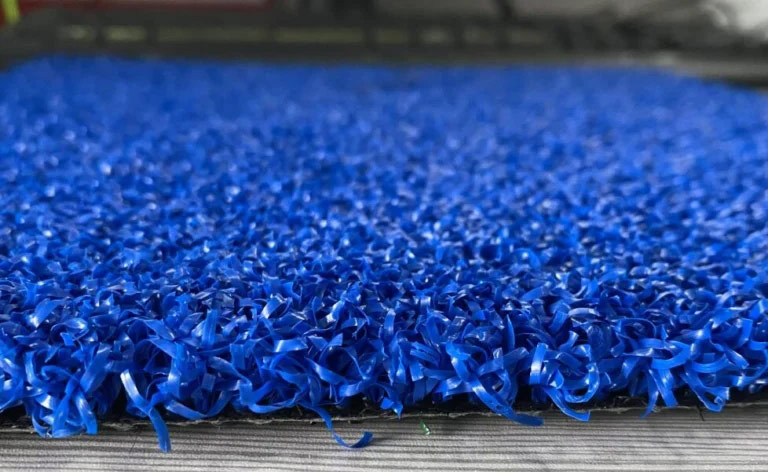
Do not assume that two blue or green turf products require the same sand quantity.
Avoid “No Sand” Assumptions
A turf may appear to use little or no sand because the infill sits below dense fibres.
Buyers should verify the specification rather than judging only from photographs or finished-court videos.
How Much Sand Does a Padel Court Need?
There is no single quantity suitable for every turf system.
SRSC’s existing artificial-turf guide describes example infill ranges of approximately 8–15 kg/m², depending on the selected system and playing requirements. These figures should be treated as preliminary references rather than a substitute for the turf manufacturer’s project-specific data.
Basic Quantity Calculation
The internal playing area of a standard doubles court is approximately:
20 m × 10 m = 200 m²
A preliminary sand calculation may use:
Turf area × specified infill rate = theoretical quantity
For example:
| Recommended Rate | Theoretical Quantity for 200 m² |
|---|---|
| 8 kg/m² | 1,600 kg |
| 10 kg/m² | 2,000 kg |
| 12 kg/m² | 2,400 kg |
| 15 kg/m² | 3,000 kg |
These figures do not include contingency, spillage, future replenishment, storage losses, or additional turf outside the internal playing area.
Why the Final Quantity May Differ
Actual demand can change because of:
- Turf-roll dimensions
- Fibre density
- Pile height
- Sand moisture
- Installation losses
- Uneven distribution
- Additional perimeter areas
- Supplier calibration
- Initial brushing results
Concept: Installed Infill Rate
The installed infill rate is the quantity that remains correctly distributed inside the turf after spreading and brushing.
It may differ from the total quantity delivered to the construction site.
Choose the Right Sand Specification
Not every construction sand is suitable for an artificial-grass sports surface.
Cleanliness
The sand should be free from excessive:
- Clay
- Dust
- Organic material
- Salt
- Stones
- Metal fragments
- Construction debris
- Colour contamination
Dusty material can migrate through the facility, affect appearance, and make brushing more difficult.
Particle Size
The specified particle-size range should match the turf system.
Material that is too fine may compact or produce dust. Material that is too coarse may remain visible, move less effectively into the fibres, or create an uncomfortable surface.
Particle Shape
Rounded or suitably processed particles are generally easier to distribute between fibres than sharp, irregular construction aggregates.
The final requirement should be confirmed through the turf supplier’s technical data.
Moisture Content
Wet sand can:
- Form lumps
- Spread unevenly
- Block application equipment
- Create temporary dark patches
- Make quantity control difficult
Sand should normally be stored dry and protected before installation.
Colour
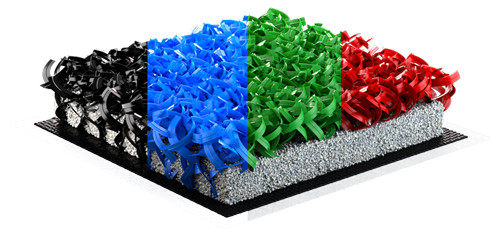
Light-coloured or natural silica sand is common because it is less visually dominant once brushed into the surface.
Coloured or coated infills should be reviewed for heat, wear, staining, compatibility, and maintenance implications.
Compare Common Turf and Infill Systems
The fibre design influences how easily the sand is held and how often it may need redistribution.
| Turf Type | General Fibre Structure | Infill Consideration | Typical Application |
| Fibrillated turf | Split-film fibres forming a network | Often retains visible infill effectively | Community and recreational courts |
| Monofilament turf | Individual extruded fibres | Requires accurate brushing and distribution | Commercial and performance courts |
| Texturised monofilament | Curled or textured fibres | May conceal and stabilise infill more effectively | Premium clubs and competition-oriented sites |
| Hybrid turf | Combination of fibre structures | Follow the exact system recommendation | High-use commercial facilities |
| Low-infill system | Dense or specialised fibre design | Lower quantity does not mean no maintenance | Selected modern installations |
Fibrillated Turf
Fibrillated fibres open into a network during use and maintenance.
This structure can help retain sand, but worn fibres may gradually lose their original form.
Monofilament Turf
Monofilament products use separate fibres rather than split film.
They can provide a clean and professional appearance, but the sand must still be distributed consistently around high-use areas.
Texturised Turf
Texturised fibres may curl around the infill and reduce the amount of loose sand visible at the surface.
The required quantity should still come from the approved technical specification.
The SRSC Artificial Turf Padel Court Guide provides a broader comparison of monofilament, fibrillated, and hybrid surface systems.
How Padel Court Turf Infill Affects Play
Infill is only one part of court performance, but incorrect distribution can create noticeable differences.
Ball Speed
Areas with exposed, flattened fibres may play differently from zones where fibres and sand remain evenly supported.
The result can be inconsistent ball movement across the court.
Player Traction
Too little, too much, contaminated, or compacted infill may affect how players accelerate, turn, and stop.
Footwear, turf construction, moisture, cleaning, and base condition also influence traction.
Ball Bounce
The FIP rules require the surface to allow regular ball bounce and require internal level differences to remain below 3 mm when checked with a 3-metre straightedge. The foundation and turf installation therefore remain as important as the infill itself.
Surface Appearance
Uneven sand may create:
- Pale patches
- Dark patches
- Visible lines
- Fibre flattening
- Accumulation beside glass
- Empty areas near gates
These visual signs often indicate that the court needs inspection and redistribution.
Prepare the Base Before Turf Installation
Sand cannot correct an unsuitable foundation.
Check Surface Flatness
Before installing the turf, inspect the base for:
- High points
- Low points
- Cracks
- Loose material
- Standing water
- Sharp edges
- Construction residue
- Incorrect slope
Verify Drainage
For surfaces without drainage, the FIP rules permit a maximum transverse evacuation slope of 1% from the centre toward the outer edges. The actual drainage arrangement should be coordinated with the approved court and civil-work design.
Clean the Surface
Dust, oil, adhesive residue, stones, and construction waste may affect turf bonding or create visible imperfections.
The base should be accepted before the turf rolls are opened.
Install the Turf Before Adding Sand
The artificial grass should be correctly positioned and joined before the main infill process begins.
Align the Rolls
Check:
- Fibre direction
- Roll orientation
- Court dimensions
- Line positions
- Perimeter cuts
- Gate areas
- Seam alignment
Different fibre directions can create visible colour changes even when the turf comes from the same batch.
Secure the Seams
Seam tape and adhesive should match the turf system and installation environment.
A poorly bonded seam may open after sand has been applied, making the repair more difficult.
Allow Adhesive to Set
Follow the adhesive manufacturer’s instructions for temperature, moisture, open time, and curing.
Do not begin aggressive brushing before the seams are ready.
How to Apply Padel Court Turf Infill
The sand should normally be added gradually rather than emptied in large piles.
Step 1: Confirm Dry Conditions
The turf and sand should be sufficiently dry for even spreading.
Outdoor installers should review the weather forecast before beginning.
Step 2: Divide the Total Quantity
Separate the specified quantity into several application passes.
This makes it easier to identify uneven areas and avoid overfilling one zone.
Step 3: Spread in Multiple Directions
Apply the sand consistently across the court rather than working only from one end.
A calibrated spreader can improve quantity control.
Step 4: Brush Between Passes
Brush the sand into the fibres after each layer.
The equipment should lift the fibres without damaging the turf or seams.
Step 5: Inspect High-Use Zones
Pay particular attention to:
- Service areas
- Net approaches
- Gate entrances
- Back-wall zones
- Corners
- Court centre
Step 6: Allow Settlement
After initial installation, playing activity and brushing may reveal areas that need limited adjustment.
Keep a documented amount of matching sand available for commissioning and early maintenance.
Concept: Layered Infill Application
Layered infill application means spreading several controlled layers instead of placing the complete quantity in one pass.
This method improves distribution and reduces the risk of buried lumps or overloaded areas.
Avoid Excessive Sand
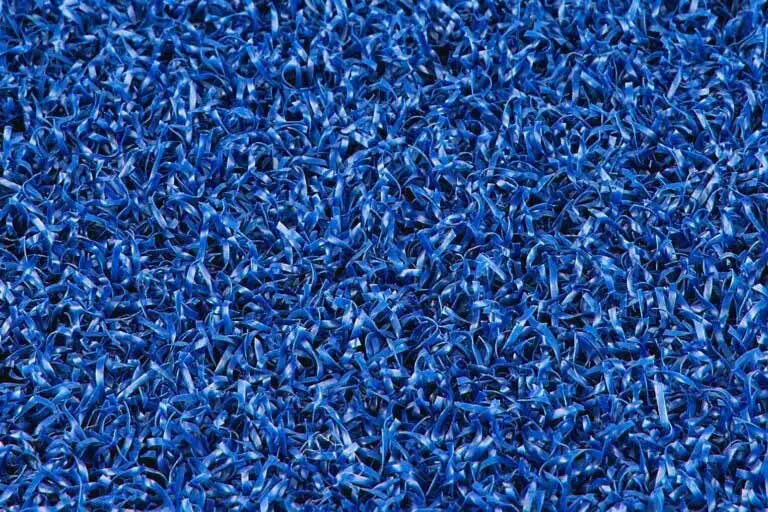
More sand does not automatically create a more durable surface.
Signs of Excessive Infill
Possible signs include:
- Loose sand visible above the fibres
- Sand collecting in shoes
- Heavy surface movement
- Slow or unpredictable play
- Accumulation against glass
- Difficult cleaning
- Reduced fibre visibility
Common Causes
Excess sand may result from:
- Applying the full theoretical quantity without calibration
- Failing to brush between passes
- Using wet material
- Copying another turf specification
- Adding new sand without redistributing existing infill
Before adding more material, inspect the entire court.
Avoid Insufficient Sand
Too little infill can also reduce surface consistency.
Signs of Insufficient Infill
Look for:
- Flattened fibres
- Exposed backing
- Carpet movement
- Rapid wear in service zones
- Visibly empty seams
- Different playing speeds
- Fibre instability after brushing
Confirm the Cause First
Flattened fibres do not always mean more sand is needed.
The problem may be:
- Incorrect turf specification
- Worn fibres
- Poor brushing
- Base movement
- Seam failure
- Contamination
- Water accumulation
Adding sand without diagnosis may hide rather than solve the problem.
Maintain Infill Distribution
Commercial courts should have a documented maintenance programme.
Routine Visual Checks
Inspect the court for:
- Sand migration
- Compact areas
- Fibre flattening
- Seam movement
- Debris
- Standing water
- Moss or algae
- Contaminated zones
Regular Brushing
The correct brushing frequency depends on usage, turf design, climate, and manufacturer guidance.
High-use clubs may require more frequent attention than private residential courts.
Brush in More Than One Direction
Repeatedly brushing in only one direction may push sand toward the same edges.
Use an agreed pattern that supports more even distribution.
Control the Equipment
Heavy or aggressive machinery may damage fibres, seams, lines, or the base.
Use equipment approved for the installed turf.
Why Sand Moves Around the Court
Infill migration is normal to a limited degree, but repeated major movement may reveal another problem.
Player Movement
Frequent acceleration and turning can move sand away from high-traffic zones.
Brushing Technique
Incorrect equipment settings may push material rather than redistribute it.
Rain and Drainage
Heavy rainfall or poor drainage can wash fine material toward court edges and low areas.
Cleaning Methods
High-pressure water or unsuitable vacuum equipment may remove or displace infill.
Wind
Open outdoor sites may experience surface movement when the infill is very dry and exposed.
Foundation Irregularities
Sand may accumulate in low areas, making an uneven base more visible over time.
When Should More Infill Be Added?
Do not use a fixed annual quantity without inspecting the court.
Add Sand When
Additional material may be appropriate when:
- Measured infill depth is below specification
- Fibres lack support after redistribution
- Material has been removed through cleaning or repairs
- New turf sections have been installed
- The supplier recommends commissioning adjustment
Redistribute Before Replenishing
Before purchasing new sand:
- Remove debris
- Loosen compacted areas using an approved method
- Brush existing sand evenly
- Reinspect the fibre support
- Measure remaining shortages
This helps avoid unnecessary overfilling.
Keep a Matching Sand Stock
A small quantity of approved material can simplify future maintenance.
Record the Product Details
Store information about:
- Supplier
- Product name
- Particle-size range
- Colour
- Source
- Order date
- Batch
- Quantity used
- Remaining stock
Protect Stored Sand
Keep it:
- Dry
- Covered
- Labelled
- Away from chemicals
- Above wet ground
- Separate from construction aggregates
An unidentified bag may not be suitable even when it looks similar.
Inspect a Newly Installed Infill System
The surface should be checked before commercial opening.
Handover Checklist
| Inspection Area | What to Check |
| Turf alignment | Rolls and fibre direction are consistent |
| Seams | Closed and securely bonded |
| Court lines | Straight and correctly positioned |
| Sand quantity | Matches the approved system |
| Distribution | No major high or low zones |
| Fibre condition | Fibres are reasonably upright |
| Surface flatness | No unacceptable depressions or humps |
| Drainage | Water follows the planned route |
| Cleanliness | No packaging, adhesive, or construction debris |
| Gate areas | Turf is secure and does not create trip edges |
| Documentation | Turf and infill records are complete |
Test the Complete Surface
A visual inspection should be combined with practical checks for:
- Movement
- Ball response
- Traction
- Surface consistency
- Water evacuation
- Seam stability
The court should be evaluated as a full system rather than assessing only the colour of the turf.
Padel Court Turf Infill Procurement Checklist
Ask potential suppliers to confirm:
- Turf manufacturer and product code
- Fibre construction
- Pile height
- Stitch density
- Backing
- UV performance information
- Infill type
- Particle-size range
- Recommended kg/m²
- Total sand quantity
- Sand packaging
- Installation procedure
- Brushing equipment
- Maintenance programme
- Spare turf quantity
- Warranty conditions
The SRSC Padel Court range includes classic, panoramic, super panoramic, indoor, outdoor, single, and roofed configurations with turf options for different projects.
Common Padel Court Turf Infill Mistakes
Ordering Sand Before Selecting the Turf
The infill specification should follow the approved turf system.
Using Ordinary Building Sand
Uncontrolled particle size, dust, moisture, or contaminants may affect installation and court performance.
Applying the Sand in One Pass
Large piles are difficult to distribute accurately.
Adding Sand Without Brushing
The material may remain above the fibres instead of supporting them.
Treating Every Bare Area as a Sand Shortage
Worn fibres, poor seams, or base problems may require another solution.
Ignoring Gate and Service Areas
These high-traffic zones often need closer inspection.
Failing to Keep Product Records
Future maintenance becomes harder when the original sand specification is unknown.
Conclusion
Padel Court Turf Infill should be selected as part of the complete artificial-grass system rather than purchased as an unrelated construction material.
The correct solution depends on the fibre structure, pile height, backing, playing level, installation method, foundation, drainage, climate, and maintenance plan. Buyers should request a written sand specification and calculate the quantity from the approved turf product.
During installation, the sand should be dry, clean, distributed in controlled layers, and brushed evenly into the fibres. After opening, operators should monitor migration, compaction, contamination, high-use areas, and surface consistency before adding more material.
SRSC provides artificial-turf options with classic, panoramic, super panoramic, indoor, outdoor, single, and roofed court systems. Buyers can explore the full Padel Court collection, read the Artificial Turf Padel Court Guide, review the Padel Court Materials Guide, or contact SRSC with the turf specification, court quantity, project climate, expected usage, and delivery destination.
FAQ
What type of sand is used on a padel court?
Many artificial-grass systems use clean, selected silica or quartz sand. The exact grading, shape, cleanliness, and quantity should match the turf manufacturer’s specification.
How much sand is needed for one padel court?
The quantity depends on the turf. Preliminary rates may fall within ranges such as 8–15 kg/m², but buyers should calculate the final amount from the approved product data rather than use a universal number.
Why is sand added to artificial padel turf?
It can support fibres, stabilise the carpet, influence traction, and help maintain more consistent playing conditions.
Can a padel court have too much sand?
Yes. Excessive loose infill can affect movement, appearance, cleaning, and court speed.
How often should turf infill be replaced?
There is no universal replacement interval. Existing material should usually be inspected, cleaned, loosened, redistributed, and measured before new sand is added.
Can new sand be mixed with the old infill?
It may be possible when the material is compatible and the existing sand remains clean. Confirm the grading and supplier recommendation first.
Why does sand collect beside the glass?
Player movement, brushing, drainage, surface slope, and cleaning methods can move sand toward the edges.
Should outdoor and indoor courts use the same amount?
Not automatically. Turf product, usage, moisture, drainage, cleaning, and environmental exposure can differ.
Does low-infill turf require no maintenance?
No. Even turf using less visible sand still requires inspection, cleaning, brushing, seam checks, and surface monitoring.