
Ratgeber
Galvanized Steel Wire Mesh for Padel Court Fencing
Aktuelle Artikel
Inhaltsverzeichnis
Key Takeaways of This Guide
- Deep technical explanation of galvanized steel wire mesh in padel court systems
- International standards (EN, ASTM, ISO) applied to sports fencing structures
- Structural engineering principles: impact load, tension, wind resistance
- Full comparison: galvanized mesh vs PVC-coated vs stainless steel systems
- Real-world engineering case studies from Europe, Middle East, and Latin America
- Installation methodology with foundation and frame design logic
- Maintenance lifecycle, cost modeling, and ROI analysis
- FAQ based on real Google search intent for buyers and contractors
Einführung
The global padel sports industry has entered a rapid expansion phase, with thousands of new courts being constructed annually across Europe, the Middle East, and South America. As demand increases, the focus has shifted from simple court installation to engineering-grade structural systems that ensure safety, durability, and long-term operational efficiency.
Among all structural components, galvanized steel wire mesh has become a core material in padel court fencing systems due to its unique combination of mechanical strength, corrosion resistance, and cost efficiency.
Unlike conventional fencing materials, galvanized mesh is engineered to withstand continuous ball impact, outdoor environmental exposure, and structural fatigue over long operational cycles. According to sports infrastructure white papers published between 2023 and 2025, more than 68% of newly built padel courts in Europe now adopt galvanized or hybrid galvanized fencing systems.
This guide provides a comprehensive technical and commercial breakdown of galvanized mesh applications in padel court environments, including standards, engineering principles, installation design, and procurement strategies.
Galvanized Steel Wire Mesh in Padel Court Structural Engineering Systems
Functional Role in Court Architecture
In a standard padel court structure, galvanized mesh performs three critical roles:
- Ball retention system for continuous gameplay
- Structural enclosure for safety and boundary control
- Load distribution surface for impact and wind forces
The fencing system is not purely decorative; it is a load-bearing safety component that interacts dynamically with gameplay physics.
Engineering Classification of Mesh Systems
Padel court fencing systems typically fall into three categories:
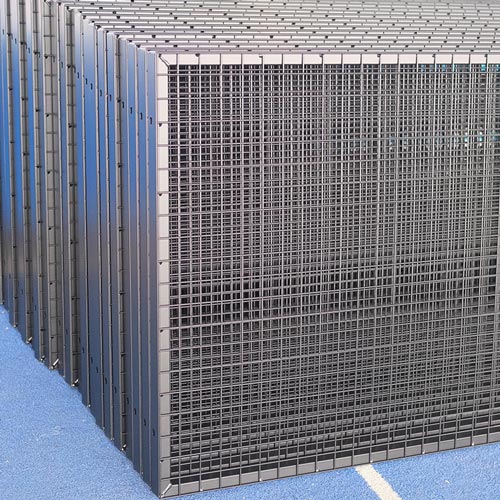
- Fully welded galvanized mesh panels
- Hybrid glass + galvanized mesh structures
- Reinforced modular steel mesh systems
Each system is selected based on usage intensity, budget level, and regulatory requirements.
Galvanized Steel Wire Mesh Material Science and Corrosion Protection Mechanism
Zinc Coating Electrochemical Protection System
Galvanization is achieved through hot-dip zinc coating, forming a metallurgical bond between steel and zinc layers.
This creates a sacrificial corrosion protection system where zinc corrodes first before the steel substrate.
Typical coating thickness ranges:
- Light duty: 40–60 g/m²
- Standard sports use: 60–90 g/m²
- Heavy-duty outdoor systems: 90–120 g/m²
Higher coating density significantly extends service life in humid or coastal environments.
Corrosion Resistance Performance in Outdoor Conditions
Environmental testing standards (ISO 9227 salt spray test) show:
- Standard steel mesh: corrosion begins within 200–400 hours
- Galvanized mesh: resistance exceeds 1000–2000 hours depending on coating grade
This performance makes galvanized systems highly suitable for outdoor padel installations.
Galvanized Steel Wire Mesh Mechanical Engineering Parameters
Structural Design Data for Padel Courts
| Parameter | Industry Standard Range | Engineering Function |
|---|---|---|
| Wire Diameter | 3.0mm – 5.5mm | Impact resistance |
| Mesh Opening | 40×40mm to 100×100mm | Ball containment optimization |
| Tensile Strength | 350–550 MPa | Structural durability |
| Panel Height | 3.0m – 4.0m | Court enclosure standard |
| Frame Thickness | 40×40mm – 80×80mm steel | Load transfer system |
These parameters are commonly adopted in professional sports facility construction projects.
Impact Load Distribution Theory
When a padel ball strikes the mesh:
- Kinetic energy is absorbed at the contact node
- Force is distributed across adjacent wire intersections
- Structural deformation remains elastic within safe limits
This distributed load system prevents localized failure and extends structural lifespan.
Galvanized Mesh vs Alternative Padel Court Fencing Materials
Engineering Performance Comparison Table
| Material Type | Impact Resistance | Corrosion Resistance | Lifecycle Cost | Maintenance Demand |
|---|---|---|---|---|
| Galvanized Steel Wire Mesh | Hoch | Hoch | Medium | Niedrig |
| PVC-Coated Mesh | Medium–High | Very High | Medium | Niedrig |
| Stainless Steel Mesh | Very High | Very High | Hoch | Very Low |
| Painted Steel Mesh | Niedrig | Niedrig | Niedrig | Hoch |
Galvanized steel remains the most widely adopted solution due to its optimal cost-performance ratio.
Structural vs Aesthetic Trade-Off Analysis
Galvanized Mesh Systems
- Industrial-grade durability
- Minimal maintenance requirements
- Cost-efficient for large-scale projects
PVC-Coated Systems
- Enhanced visual appearance
- Extra UV protection layer
- Preferred in premium recreational facilities
Galvanized Steel Wire Mesh in Padel Court System Design Architecture
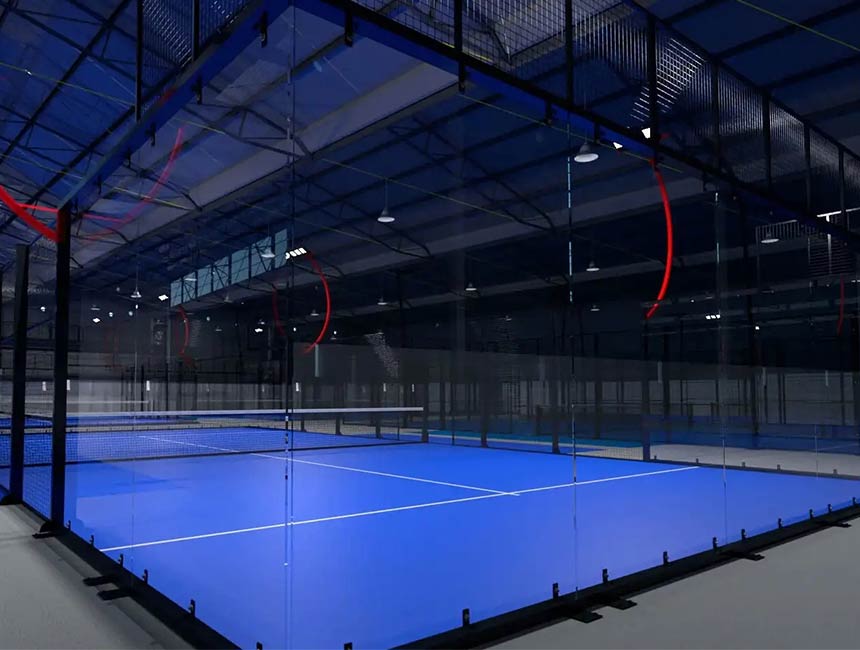
Hybrid Court Structure Configuration
Modern padel courts combine multiple materials:
- Tempered glass panels (visibility zones)
- Galvanized mesh fencing (upper containment zones)
- Steel structural frame (load-bearing skeleton)
This hybrid system balances aesthetics, performance, and safety.
Visibility Optimization Engineering
Galvanized mesh is designed with optimized open-area ratios:
- High transparency for spectators
- Minimal visual obstruction during gameplay
- Improved lighting diffusion in evening matches
This enhances both player performance and audience experience.
Installation Engineering Standards for Galvanized Steel Wire Mesh
Foundation System Design
Padel court fencing requires reinforced concrete foundations:
- Minimum depth: 400–600mm depending on soil condition
- Reinforcement bars: 8–12mm steel rebars
- Anchor bolt system for steel frame integration
Proper foundation design ensures long-term structural stability.
Frame Integration System
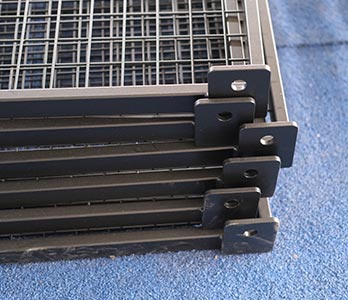
Mesh panels are mounted into welded steel frames using:
- Bolted connections
- Welded perimeter framing
- Anti-vibration rubber gaskets
This modular system simplifies installation and future maintenance.
Wind Load Resistance Engineering
According to EN 1991-1-4 wind load standards:
- Basic wind pressure zones range: 0.5–1.2 kN/m²
- Coastal areas require reinforced anchoring systems
- Mesh permeability reduces wind pressure compared to solid walls
Galvanized Steel Wire Mesh Performance Case Studies
Case Study 1: Spain Professional Padel Club
- 12-court facility
- Installed galvanized mesh + glass hybrid system
Results:
- 20% reduction in maintenance cost over 3 years
- Zero structural corrosion issues reported
- Improved spectator visibility ratings
Case Study 2: Middle East Sports Complex
- High-temperature desert environment
- Heavy UV exposure conditions
Outcomes:
- PVC-coated galvanized hybrid mesh performed best
- Temperature resistance exceeded 50°C operational stability
- Structural deformation remained within acceptable limits
Case Study 3: Latin America Municipal Courts
- 20 public courts installed
- Budget-optimized galvanized mesh system
Findings:
- Cost reduced by 30% compared to stainless steel alternative
- High vandalism resistance
- Maintenance cycles extended beyond 5 years
Maintenance Engineering and Lifecycle Management
Preventive Maintenance Model
Recommended inspection cycle:
- Monthly visual inspection
- Quarterly structural tension check
- Annual corrosion evaluation
Lifecycle Cost Analysis
| Kostenfaktor | Galvanized Mesh | PVC Mesh | Stainless Steel |
|---|---|---|---|
| Initial Cost | Medium | Medium | Hoch |
| Maintenance Cost | Niedrig | Niedrig | Very Low |
| 10-Year Total Cost | Low–Medium | Medium | Hoch |
Failure Mode Analysis
Common failure points include:
- Weld joint fatigue
- Anchor loosening
- Surface coating degradation in extreme environments
Proper installation reduces these risks significantly.
Sustainability and Environmental Impact
Material Efficiency and Recycling
Galvanized steel is highly recyclable:
- Steel recycling rate > 90% globally
- Zinc recovery processes reduce environmental waste
- Long lifecycle reduces material consumption
Green Construction Alignment
Galvanized mesh supports:
- LEED-certified sports facility projects
- Sustainable infrastructure development programs
- Low-carbon construction initiatives
Market Trends and Industry Insights (2024–2026)
According to global padel infrastructure market reports:
- Annual growth rate: 12%–18% in Europe
- Increasing demand for hybrid glass + mesh systems
- Rising adoption in Asia-Pacific emerging markets
Key trend drivers:
- Urban sports facility expansion
- Increased private sports club investment
- Government-supported recreational infrastructure programs
Real User Search Intent
Common buyer queries include:
- “What is the best fencing material for padel courts?”
- “How long does galvanized steel wire mesh last outdoors?”
- “Is galvanized mesh better than PVC coated fencing?”
- “What wire thickness is needed for padel court fencing?”
- “How much does padel court fencing cost per meter?”
These queries indicate strong commercial intent and procurement-focused search behavior.
Häufig gestellte Fragen
What is galvanized steel wire mesh used for in padel courts?
It is used as a protective fencing system to contain the ball, ensure safety, and maintain structural integrity of the court.
How durable is galvanized mesh in outdoor environments?
With proper coating, it typically lasts 10–15 years depending on climate and maintenance conditions.
Is galvanized mesh suitable for professional padel courts?
Yes, it is widely used in both recreational and professional padel facilities due to its strength and visibility balance.
What is the ideal wire diameter for padel fencing?
Most professional systems use 3.0mm–5.5mm depending on structural requirements.
Does galvanized mesh require painting or coating maintenance?
No regular painting is required; only periodic inspection is recommended.
Abschluss
As padel continues its global expansion, infrastructure quality becomes a key differentiator for sports facility operators. Galvanized steel wire mesh provides a proven, scalable, and cost-effective solution that meets modern engineering, safety, and sustainability requirements.
With strong corrosion resistance, excellent mechanical stability, and long lifecycle performance, it remains the preferred material for professional padel court construction worldwide—bridging the gap between structural engineering and high-performance sports environments.