
Ratgeber
Outdoor Padel Court Checklist: A Practical Buyer’s Guide
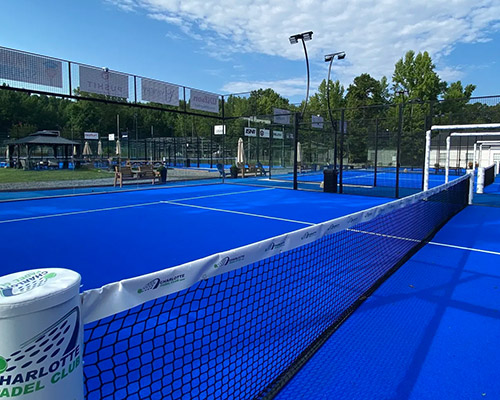
Aktuelle Artikel
Before ordering an Padelplatz im Freien, buyers should confirm more than the appearance and quoted price. Structural strength, drainage, glass safety, turf performance, lighting, shipping, and installation support all affect the court’s service life and operating costs.
Inhaltsverzeichnis
Why an Padelplatz im Freien Checklist Matters

A padel court is an integrated sports facility rather than a collection of steel posts, glass panels, and artificial turf. Every component must work together under repeated ball impact, player movement, wind, rain, sunlight, and temperature changes.
A detailed purchasing checklist makes supplier quotations easier to compare. It also reduces the risk of discovering missing components, unsuitable foundations, or local compliance issues after the equipment has already arrived.
Purchase Price vs Total Project Cost
The equipment price is only one part of the investment. Foundation construction, drainage, freight, customs clearance, lifting equipment, installation labor, electrical work, and future maintenance should all be included in the budget.
Buyers who want a more detailed cost breakdown can also read this padel court investment guide.
Check the Site Before Requesting a Quote
The first stage of an Outdoor Padel Court project should begin with the location, not the product catalog. Site conditions determine the foundation design, structural requirements, court orientation, drainage plan, and installation method.
Available Construction Area
A standard doubles court has internal playing dimensions of 20 × 10 meters. However, the complete project requires additional space around the structure for access, drainage, maintenance, circulation, and spectator facilities.
The current International Padel Federation rules specify a 20 × 10-meter internal court with a permitted dimensional tolerance. Buyers planning official competitions should check the latest applicable federation and local requirements before construction.
Space Around the Court
Do not use the internal playing size as the total construction footprint. Ask the designer to provide a complete layout showing the external structure, foundations, entrance areas, lighting columns, drainage channels, and any out-of-court play zones.
Ground and Foundation Conditions
A geotechnical or site assessment may be necessary if the ground is soft, filled, sloped, or exposed to seasonal movement. An uneven or unstable base can lead to turf deformation, poor drainage, cracked concrete, or misaligned glass panels.
The supplier should provide foundation drawings with anchor locations and load requirements. A local engineer should verify that the proposed foundation suits the soil, wind conditions, frost depth, and applicable building codes.
Court Orientation
For many outdoor projects, a roughly north–south playing orientation can help reduce direct low-angle sunlight in players’ eyes. The best orientation still depends on local latitude, surrounding buildings, prevailing winds, and operational hours.
A site-specific sun and shadow assessment is particularly useful for clubs that expect heavy use in the early morning or late afternoon.
Define the Intended Use of the Court
A private residential court and a high-traffic commercial facility do not have identical requirements. Buyers should tell the supplier who will use the court, how often it will operate, and whether it will host competitions.
Private and Community Use
Private, hotel, school, and community projects may prioritize ease of maintenance, controlled playing speed, and cost efficiency. A conventional structural layout can offer a practical balance between durability and investment.
Commercial Club Use
A club court may operate for many hours every day. It therefore needs durable turf, reliable lighting, corrosion-resistant steelwork, replaceable wear parts, and a maintenance plan that minimizes downtime.
Tournament and Showcase Use
Competition facilities may require specific clearances, illumination levels, access arrangements, and structural configurations. Panoramic designs can improve spectator visibility and create a stronger visual experience for events, photography, and broadcasting.
Compare Outdoor Padel Court Types
The right structure depends on the project’s climate, commercial positioning, viewing requirements, and budget. Buyers can review several available padel court configurations before selecting a model.
| Court type | Main advantage | Important consideration | Suitable projects |
|---|---|---|---|
| Classic court | Strong frame and practical cost | More structural posts around the enclosure | Schools, communities and entry-level clubs |
| Panoramic court | Improved visibility and modern appearance | Glass and frame engineering require careful verification | Commercial clubs and event venues |
| Super panoramic court | Minimal visual obstruction | Usually requires a higher structural specification | Premium clubs and showcase projects |
| Roofed court | Better protection from sun and rain | Roof loads, wind uplift and drainage need engineering review | Rainy, hot or high-use locations |
| Single court | Smaller playing footprint | Not the standard doubles format | Private or space-limited projects |
Classic vs Panoramic Design
A classic court uses a more visible steel framework around the enclosure. Its practical structure can be suitable for buyers who prioritize stability, straightforward maintenance, and controlled costs.
A panoramic design reduces visual obstruction around key glass areas. This option is attractive for premium clubs, but buyers should carefully compare structural calculations, glass support details, and wind resistance.
Open vs Roofed Outdoor Court
An open court has fewer structural components and may require a lower initial investment. Players, however, remain exposed to rain, strong sunlight, falling debris, and other weather conditions.
A roofed Outdoor Padel Court can extend usable hours in certain climates. The roof must be treated as an engineered system, with proper drainage, wind-load assessment, corrosion protection, and adequate playing clearance.
Inspect the Steel Structure
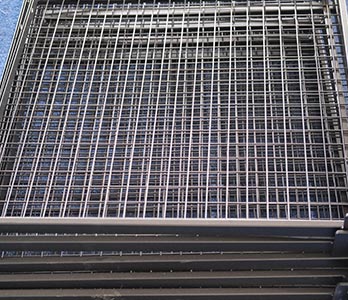
The steel frame supports the glass, mesh, lighting, gates, and impact loads. Its specification should be documented clearly in the quotation and technical drawings.
Steel Grade and Profile Dimensions
Ask the supplier to identify the steel grade, post dimensions, wall thicknesses, plate thicknesses, and reinforcement method. General descriptions such as “heavy-duty steel” are not sufficient for technical comparison.
Two frames can look similar in photographs while using very different material thicknesses. Request dimensional drawings and a bill of materials when conducting a serious supplier evaluation.
Wind and Structural Calculations
Wind exposure varies significantly between an enclosed urban club and an open coastal site. The structure should therefore be evaluated for the project’s location rather than sold under one universal wind rating.
The engineering review may consider wind speed, terrain category, court height, glass area, roof configuration, anchor loads, and local safety factors. Ask whether calculations can be supplied for review by a licensed local engineer.
Corrosion Protection
Outdoor steel is constantly exposed to moisture, ultraviolet radiation, pollutants, and sometimes salt. Galvanization and a properly applied powder coating can help protect the structure, but buyers should confirm the actual treatment process and coating specification.
Coastal and High-Humidity Locations
Coastal projects need particular attention because salt accelerates corrosion. Ask about upgraded surface treatments, stainless or suitably protected fasteners, sealed joints, drainage holes, and a recommended inspection schedule.
Verify the Tempered Glass System
Glass is part of the playing enclosure and receives frequent ball impact. It also influences player safety, court visibility, structural behavior, and maintenance requirements.
Glass Thickness and Tempering
Confirm the glass type, thickness, dimensions, edge treatment, hole positions, and tempering standard. The supplier’s padel court range includes systems using 12 mm tempered glass, but the final specification should always be confirmed for the selected model.
Request relevant test documents or conformity information instead of relying only on the phrase “safety glass.”
Edge and Hole Quality
Poorly finished edges or inaccurate holes can create stress concentration during installation. Check how the manufacturer controls cutting, drilling, tempering, inspection, and rejection of defective panels.
Fixing and Cushioning Components
Glass should not make direct, uncontrolled contact with hard metal. Gaskets, protective pads, sleeves, washers, and suitable fasteners help distribute pressure and prevent local damage.
Ask whether every fixing component is included in the shipment and whether spare gaskets and bolts are available.
Replacement Planning
A damaged panel can interrupt court operation. Commercial buyers should record the exact panel size and hole pattern and consider ordering a compatible spare panel, especially when international delivery times are long.
Review the Artificial Turf Specification
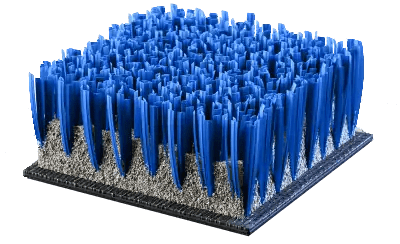
The playing surface affects grip, ball speed, bounce, drainage, player comfort, and maintenance workload. Turf should be selected according to the expected playing level and local climate.
Fiber Type and Pile Height
Ask about fiber material, pile height, stitch density, backing construction, UV resistance, water permeability, and the recommended amount of infill sand. Product color alone provides little information about performance.
Straight vs Textured Turf
Straight monofilament turf can support a faster style of play but often requires careful sand distribution and regular grooming. Textured or curled fibers can hold infill more consistently and may offer a more controlled playing experience.
| Turf feature | Straight fibers | Textured or curled fibers |
|---|---|---|
| Typical playing feel | Faster and more dynamic | Controlled and stable |
| Sand visibility | Often more noticeable | Usually better concealed |
| Grooming requirement | Regular redistribution may be needed | Infill may remain more stable |
| Best suited to | Fast-play clubs and experienced users | Multi-level and high-use venues |
Turf Drainage
Outdoor turf must work together with the concrete slab and drainage system. Permeable turf cannot solve standing-water problems caused by an incorrect base slope, blocked channels, or a non-draining foundation.
Ask the installer to explain how water moves from the surface to the final discharge point.
Check Drainage and Weather Resistance
Drainage is one of the most frequently underestimated parts of an Outdoor Padel Court project. Poor drainage can shorten turf life, interrupt bookings, encourage contamination, and create slippery areas.
Surface Slope
The foundation must support drainage without producing an uneven playing surface. The final slope and construction tolerances should be agreed with the court supplier and local contractor before concrete work begins.
Perimeter Drainage
Channels, grates, collection points, and discharge pipes should be sized according to local rainfall conditions. Make sure the drainage route does not direct water toward entrances, electrical equipment, neighboring property, or building foundations.
UV and Temperature Exposure
Ask whether the turf, coating, seals, mesh, and plastic components are designed for outdoor ultraviolet exposure. In regions with large temperature changes, expansion, contraction, and freeze-thaw conditions also need consideration.
Evaluate Lighting and Electrical Components
Lighting determines how effectively a club can use the court after sunset. A visually bright fixture is not necessarily a well-designed sports lighting system.
Illumination and Uniformity
Request a lighting layout or photometric calculation showing average illumination, uniformity, glare control, fixture positions, and mounting angles. The target should reflect recreational, club, or competition use.
SRSC’s court systems can incorporate outdoor-rated LED lighting. Buyers can discuss fixture specifications and project requirements through the company’s court design and installation services.
Outdoor Protection Rating
Check the ingress-protection rating, impact resistance, operating voltage, surge protection, driver quality, heat dissipation, and warranty. Electrical design and connection should comply with local regulations.
Maintenance Access
Fixtures should be accessible without placing technicians or glass panels at unnecessary risk. Ask how lamps, drivers, cables, and mounting brackets can be repaired or replaced after installation.
Examine Gates, Mesh and Safety Details
Smaller components often reveal the real quality of an Outdoor Padel Court package. Gates, welds, mesh edges, fasteners, and protective covers should be inspected as carefully as the main frame.
Entrance Gates
Check gate width, opening direction, hinges, handles, latches, clearances, and compatibility with wheelchair or facility-access requirements. Tournament projects may also need to consider authorized outside play.
Welded Mesh
The mesh should have consistent openings, secure welds, clean edges, and a durable protective finish. Poorly finished mesh can affect rebound behavior and create avoidable safety risks.
Exposed Fasteners
Bolts, nuts, and anchors should not leave dangerous projections in player-accessible areas. Protective caps and covers should be included where necessary.
Compare Supplier Quotations Correctly
The lowest quotation may exclude important items or services. Ask every supplier to price the same scope so the comparison remains meaningful.
What Should Be Included?
A complete commercial quotation should state whether it includes:
- Steel structure and welded mesh
- Tempered glass panels
- Artificial turf and infill sand
- Net, posts, gates, and accessories
- Lighting fixtures and mounting structures
- Anchors, bolts, gaskets, and protective covers
- Packaging and loading
- Foundation drawings and installation manuals
- On-site or remote installation support
- Freight, insurance, duties, and local delivery
- Spare parts and warranty coverage
Questions to Ask the Manufacturer
Do not ask only, “How much is a padel court?” More useful questions include:
- What wind conditions was this structure designed to resist?
- Can you provide foundation and anchor drawings before production?
- Which parts of the package are excluded from the quote?
- What standards apply to the glass, steel, turf, and lighting?
- How is the glass packed for international transportation?
- How many containers will the shipment require?
- Can the components be identified by installation sequence?
- What happens if a part arrives damaged or missing?
- Which maintenance tasks are required to keep the warranty valid?
Check Packaging, Shipping and Installation

An Outdoor Padel Court may travel thousands of kilometers before reaching the project site. Good manufacturing can still result in delays if the components are poorly labeled or packed.
Export Packaging
Tempered glass should be secured in appropriate crates, while coated steel parts need protection against impact, abrasion, and moisture. Small fasteners should be sorted, labeled, and matched to the installation drawings.
Container Loading Plan
Ask for the number and type of containers, package dimensions, gross weights, lifting points, and unloading requirements. This information helps the buyer book cranes, forklifts, storage areas, and installation labor in advance.
Installation Documents
A professional installation package should include foundation drawings, assembly drawings, component lists, wiring guidance, turf installation instructions, and bolt-tightening information.
On-Site vs Remote Support
Remote guidance may be sufficient for an experienced sports facility contractor. First-time installers or complex roofed projects may benefit from on-site supervision to reduce errors and speed up delivery.
Review Warranty and After-Sales Support
A warranty is only useful when its scope, duration, exclusions, and claim process are clear. Different components may have different coverage periods.
Component-Specific Coverage
Ask separately about the steel frame, powder coating, glass, turf, lighting, hardware, and workmanship. Normal wear, storm damage, incorrect foundations, poor installation, and missing maintenance may be excluded.
Spare-Part Availability
Confirm whether the supplier can reproduce glass panels, mesh sections, lights, turf, gates, and custom-colored structural parts. Record product codes and drawings so future replacements can be ordered accurately.
SRSC provides design, production, installation, and after-sales support for sports facility projects. Buyers can contact the project team with site dimensions, location, climate information, and intended use to obtain a more relevant proposal.
Outdoor Padel Court Final Inspection Checklist
Before approving production or shipment, complete a final document review.
| Inspection item | What to verify | Required evidence |
|---|---|---|
| Court layout | Dimensions, orientation and clearance | Approved layout drawing |
| Foundation | Slab, anchors, slope and drainage | Foundation drawing |
| Steel frame | Grade, profiles and corrosion treatment | Specification sheet |
| Structural safety | Wind and project loads | Engineering calculation where required |
| Glas | Type, thickness, dimensions and standard | Glass specification or test document |
| Turf | Fiber, pile, density, backing and UV resistance | Turf data sheet |
| Beleuchtung | Lux target, uniformity and weather rating | Lighting layout and product data |
| Hardware | Bolts, gaskets, caps and spare parts | Packing list |
| Packaging | Glass crates and labeled steel packages | Packaging plan or photos |
| Installation | Labor scope, drawings and supervision | Written installation plan |
| Warranty | Coverage, exclusions and claims | Warranty document |
| Shipping | Container count, freight scope and unloading | Commercial shipping schedule |
Abschluss
A successful Outdoor Padel Court project starts with careful technical and commercial verification. The site, foundation, structure, glass, turf, drainage, lighting, packaging, installation, and after-sales plan should be treated as one coordinated system.
Before placing an order, convert every sales promise into a measurable specification or written responsibility. A complete checklist helps buyers select a suitable court, control unexpected costs, and build a facility that remains safe, attractive, and commercially useful for years.
Häufig gestellte Fragen
What should I check before buying an Outdoor Padel Court?
Start with the site area, soil, drainage, wind exposure, permits, and intended use. Then compare the structural frame, glass, turf, lighting, installation scope, packaging, warranties, and total delivered cost.
How much space do I need for an Outdoor Padel Court?
The standard internal doubles playing area is 20 × 10 meters, but the complete project requires additional space. Allow room for the structure, foundations, drainage, entrances, maintenance access, player circulation, and any spectator areas.
Does an outdoor padel court need a concrete foundation?
Most permanent installations require a stable engineered base, commonly constructed from reinforced concrete or another locally approved system. The exact design depends on soil conditions, drainage, frost, structural anchors, and local building requirements.
How do I know if the court can handle strong wind?
Ask for structural calculations based on the project location and selected court model. A generic wind-resistance claim is less useful than a calculation that considers local wind speed, terrain, glass area, anchors, and any roof structure.
Is 10 mm or 12 mm glass better for an Outdoor Padel Court?
Glass selection should follow the engineered court system and relevant local standards. Thickness alone does not determine safety; tempering quality, panel dimensions, hole processing, edge finishing, supports, fixings, and installation are also important.
Which turf is best for an outdoor padel court?
The best option depends on desired playing speed, traffic, climate, maintenance capacity, and competition requirements. Compare fiber shape, pile height, density, backing, UV stability, permeability, and infill requirements instead of choosing only by color.
Should I buy a roofed court?
A roof can increase playable hours in rainy or very sunny climates, but it also adds structural loads and cost. Confirm roof drainage, wind uplift, playing clearance, permits, and local engineering requirements before ordering.
How long does installation take?
The schedule depends on foundation readiness, court type, crew experience, weather, equipment access, and the number of courts. Ask the supplier for a staged installation plan rather than relying on a fixed general estimate.
What documents should a padel court supplier provide?
Request technical drawings, foundation details, a bill of materials, product specifications, packing lists, installation instructions, warranty terms, and available test or compliance documents. Complex projects may also require structural and lighting calculations.
How can I compare two court quotations fairly?
Create one scope sheet and ask both suppliers to quote every listed component and service. Compare total delivered and installed cost, technical specifications, exclusions, warranty, spare parts, and after-sales support—not just the headline equipment price.