
Ratgeber
Padel Court Buyer Checklist: What to Verify Before Ordering
Aktuelle Artikel
Inhaltsverzeichnis
Key takeaways from this Padel Court buyer checklist:
- Define the court type, business model, location, and expected usage before requesting quotations.
- Confirm official dimensions, site clearance, foundation, drainage, wind resistance, and local permit requirements.
- Compare structural steel, tempered glass, fencing, artificial turf, lighting, and hardware specifications.
- Request drawings, material lists, test reports, installation instructions, and warranty terms in writing.
- Compare quotations by total delivered project scope rather than equipment price alone.
- Verify which costs are excluded, including civil work, unloading, installation, electrical work, and local taxes.
- Inspect the completed court against an agreed acceptance checklist before final payment.
- Select a supplier based on engineering capability, documentation, quality control, and after-sales support—not price alone.
Buying a Padelplatz is not the same as ordering a standard piece of sports equipment. It is a complete construction project involving steel structures, glass walls, fencing, artificial turf, lighting, foundations, drainage, electrical systems, shipping, and installation.
A quotation may look competitive while leaving out several major project costs. Buyers can also receive two proposals that appear similar but use very different structural designs, corrosion treatments, glass systems, turf specifications, and installation methods.
This Padel Court buyer checklist explains what club owners, investors, contractors, distributors, resorts, schools, and sports facility developers should verify before placing an order. It can also help purchasing teams compare different Padel Court configurations on a more consistent basis.
Define Your Padel Court Project Before Requesting a Quote
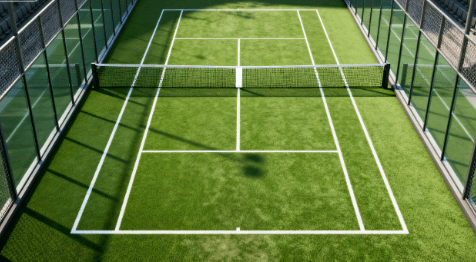
A supplier cannot prepare an accurate proposal without understanding the intended application. Before discussing materials or prices, define how the court will be used, where it will be installed, and what level of performance is required.
Identify the Main Commercial Objective
A private residential project has different priorities from a commercial club with several hours of daily bookings. Tournament venues may place greater importance on visibility, lighting uniformity, spectator experience, and out-of-court play.
Private and Residential Use
Private buyers may prioritize appearance, noise control, compact site planning, and low maintenance. Usage intensity is usually lower, but the structure must still be designed for local weather and ground conditions.
Commercial Club Operation
A commercial Padel Court normally experiences longer operating hours and more frequent player traffic. The buyer should therefore focus on turf durability, lighting efficiency, replacement-part availability, maintenance access, and long-term operating costs.
Tournament and Event Use
Tournament projects require closer attention to official playing dimensions, free height, access, lighting, viewing angles, and surrounding safety areas. The specification should be checked against the current International Padel Federation Rules of Padel.
Choose Between Indoor, Outdoor, and Roofed Courts
An indoor court is protected from rain and strong sunlight, but the building must provide enough clear height and suitable ventilation. An outdoor court requires stronger consideration of wind, corrosion, drainage, UV exposure, glare, and local weather.
A roofed Outdoor Padel Court can improve weather protection without requiring a fully enclosed sports hall. However, the roof introduces additional wind loads, foundation requirements, rainwater management, and permit considerations.
Padel Court Buyer Checklist at a Glance
The following table can be used during supplier discussions and quotation reviews.
| Inspection Area | What the Buyer Should Request | Main Risk if Ignored |
|---|---|---|
| Court dimensions | Dimensioned layout and official playing area | Non-compliant or uncomfortable play |
| Site footprint | External dimensions and safety clearance | Court does not fit the site |
| Foundation | Foundation loads and anchor layout | Settlement or structural movement |
| Drainage | Slope, outlets, channels, and discharge plan | Standing water and turf damage |
| Steel structure | Profiles, thicknesses, steel grade, and coating | Corrosion or excessive movement |
| Wind resistance | Project-specific structural calculation | Damage during strong winds |
| Glass system | Type, thickness, processing, holes, and certificates | Breakage or unsafe installation |
| Fencing | Wire size, opening size, weld quality, and finish | Poor rebound or sharp edges |
| Kunstrasen | Fiber type, pile height, density, backing, and infill | Inconsistent bounce and rapid wear |
| Beleuchtung | Lux study, uniformity, glare control, and IP rating | Dark zones and player discomfort |
| Hardware | Bolt grades, anchors, gaskets, and spare parts | Loose panels and difficult maintenance |
| Installation | Method statement, team responsibility, and schedule | Delays and installation errors |
| Warranty | Coverage, duration, exclusions, and claim process | Unexpected repair costs |
| Shipping | Packaging, container plan, unloading, and insurance | Transport damage and hidden charges |
Check Official Padel Court Dimensions and Site Space
Confirm the Playing Area
The official doubles court is a rectangle measuring 10 metres wide by 20 metres long internally. The current FIP rules also specify a minimum unobstructed height of 6 metres and suggest 8 metres for new facilities.
Do not assume that a 10 × 20 metre plot is sufficient. The playing area does not include the full structural footprint, foundation ring beam, access routes, drainage channels, maintenance clearance, spectator space, or possible out-of-court playing area.
Request an External Footprint Drawing
The supplier should provide a drawing showing:
- Internal playing dimensions
- External frame dimensions
- Foundation or ring-beam dimensions
- Door and access positions
- Lighting post positions
- Drainage locations
- Space between adjacent courts
- Safety and maintenance clearances
For reference, the UK Lawn Tennis Association guidance uses approximately 20.8 × 10.8 metres as the minimum external area for one court before adding an outer play area. Actual requirements must be adapted to local regulations and the selected structural system.
Measure Clear Height, Not Building Height
For an indoor project, ask for the lowest clear height above the playing surface. Beams, ducts, suspended lights, cameras, sprinklers, and roof braces can reduce usable space even when the overall building is high enough.
The FIP rules state that the minimum height should be free from obstructing elements such as spotlights. This detail should be shown clearly in the court elevation and building coordination drawings.
Inspect the Foundation and Drainage Design
The quality of the visible court depends heavily on the work beneath it. An attractive enclosure cannot compensate for an unstable base, poor concrete, incorrect anchors, or ineffective drainage.
Foundation Design
The supplier should provide structural reactions, base-plate dimensions, anchor locations, and installation tolerances. A local structural engineer can then design the foundation for the actual soil, wind zone, frost depth, seismic requirements, and local construction code.
Site-Specific Engineering
Avoid suppliers who present one universal foundation drawing as suitable for every country. Ground conditions and environmental loads vary significantly between projects.
The LTA construction guidance recommends that foundations and drainage be designed for the specific site, taking local wind and relevant structural loads into account.
Anchor Accuracy
Anchor bolts must match the steel base plates and court geometry. Incorrect spacing or elevation can make the enclosure difficult to align and may create stress in posts, fencing, or glass panels.
Drainage Performance
For an outdoor Padel Court, drainage should be considered before the turf is installed. The quotation should explain the surface slope, drainage channels, collection points, outlet sizes, and final discharge route.
The FIP rules require the surface to support regular ball bounce. They also specify tight surface-level tolerances and provide a maximum transverse evacuation slope of 1% for surfaces without drainage.
Questions to Ask About Drainage
Ask the supplier and civil contractor:
- Where will rainwater leave the playing area?
- Can the drains handle local rainfall intensity?
- Are channels accessible for cleaning?
- Will water collect near doors or steel base plates?
- Who is responsible for connecting the system to the final outlet?
- Is drainage included in the quotation or supplied by others?
Evaluate the Padel Court Steel Structure
The steel frame supports the glass, fencing, lighting, gates, and other components. Buyers should compare complete structural specifications rather than judging the court only by post appearance.
Steel Profile Details
Request a bill of materials showing profile sizes, wall thicknesses, steel grades, and component quantities. Specifications should distinguish main posts, corner posts, horizontal beams, mesh frames, light columns, and connection plates.
Wind Load
Wind resistance is not determined by the weight of the court alone. It depends on post spacing, steel profiles, connections, foundation design, glass area, mesh permeability, roof structure, and local wind conditions.
Ask whether the supplier can provide structural calculations for the project location. A vague statement such as “strong wind resistance” is not a substitute for engineering documentation.
Structural Deflection
A structure can remain standing while still moving too much under wind or player impact. Excessive movement may affect glass alignment, door operation, lighting stability, and long-term fastener performance.
Corrosion Protection
Outdoor and coastal projects require careful corrosion planning. Ask whether the structure is hot-dip galvanized, zinc-coated, powder-coated, painted, or protected through a combined system.
The preparation before coating is as important as the final colour. Buyers should request information about surface preparation, coating thickness, damaged-area repair, internal drainage holes, and corrosion protection for cut edges and welded zones.
Fasteners and Connections
Bolts, anchors, washers, clamps, and connection plates should be included in the material schedule. Confirm their material, grade, coating, quantity, and installation torque requirements.
A reliable supplier should also include spare fasteners and identify which components can be replaced without dismantling large sections of the enclosure.
Verify Tempered Glass and Fencing
Tempered Glass Panels
Glass is both a playing surface and a safety-critical structural component. The quotation should state the glass type, nominal thickness, panel dimensions, hole locations, edge treatment, heat treatment, markings, packaging, and applicable test documentation.
Der RR01 Panoramic Padel Court listed by SRSC PADEL uses 12 mm tempered glass panels within a 20 × 10 metre system. However, thickness alone should not be treated as proof of suitability.
Edge and Hole Processing
Poorly finished edges or incorrectly drilled holes can create stress concentration. Request smooth edge processing, accurate drilling, suitable tolerances, and protective separation between glass and metal hardware.
Glass Packaging
Glass should be packed for export transport with suitable racks, separators, restraints, moisture protection, and clear handling instructions. Confirm who carries the risk if panels break during shipping, unloading, or installation.
Metal Fencing
Fencing affects ball rebound, enclosure strength, player safety, visibility, and appearance. Ask for wire diameter, aperture size, panel dimensions, welding method, frame profile, coating system, and edge treatment.
The fencing should not contain sharp projections, exposed wire ends, or hardware that could injure players. The FIP regulations require a completely enclosed court and define the arrangement of walls and metallic fencing around the playing area.
Compare Artificial Turf Specifications
Artificial turf has a direct influence on movement, grip, drainage, ball speed, bounce consistency, maintenance, and visual appearance.
Fiber Type
Monofilament turf generally uses individual synthetic fibers, while fibrillated turf uses fibers that split into a mesh-like structure. Texturized or curled fibers may help stabilize infill and produce a visually dense surface.
There is no single turf that is ideal for every Padel Court. The selection should reflect usage intensity, climate, playing-speed preference, maintenance capability, and replacement budget.
Technical Data to Request
The turf specification should include:
- Fiber composition
- Fiber shape
- Pile height
- Stitch rate
- Tuft density
- Total weight
- Primary and secondary backing
- Roll dimensions
- Jointing method
- UV-resistance information
- Recommended sand type and quantity
- Drainage performance
- Product warranty
SRSC’s main court category describes a 12 mm curved-fiber artificial grass system with quartz-sand infill as one available specification. Buyers can review the site’s artificial turf Padel Court guide for a more detailed discussion of turf engineering and maintenance.
Sand Infill
The supplier should specify sand grading, dryness, cleanliness, quantity, and installation method. Too little, too much, or unevenly distributed infill can alter traction and ball response.
Initial Brushing
After installation, the turf normally requires staged infill distribution and brushing. Ask whether the quotation includes the required equipment, labour, final grooming, and maintenance instructions.
Check Padel Court Lighting Before Ordering
Lighting should be designed as a system rather than added as a fixed number of floodlights.
Lux Level and Uniformity
Average lux alone does not describe lighting quality. Buyers should also review uniformity, glare, vertical visibility, spill light, colour rendering, colour temperature, pole position, mounting height, and power consumption.
The LTA guidance lists 500 lux with 0.7 uniformity for national or international competition and 300 lux with 0.5 uniformity for regional competition and recreational use. These figures are useful references, but local regulations and the intended competition level must also be checked.
Request a Lighting Calculation
Ask for a photometric report showing:
- Average illuminance
- Minimum illuminance
- Uniformity
- Calculation grid
- Fixture positions
- Beam angles
- Mounting heights
- Glare considerations
- Total connected power
- Expected light spill
The FIP rules require artificial lighting to be uniform and positioned so that it does not create visual difficulty for players, officials, or spectators.
Fixture Protection
For outdoor courts, confirm the fixture’s ingress-protection rating, surge protection, operating temperature range, driver quality, cable routing, earthing, and replacement access.
For additional planning information, see the site’s guide to LED Padel Court lighting systems.
Compare Classic, Panoramic, and Roofed Padel Court Types
Different court designs serve different commercial and architectural goals. Buyers should compare visibility, structural complexity, installation conditions, maintenance, and total project cost.
| Gerichtstyp | Main Characteristics | Typical Buyer Priority | Points to Verify |
|---|---|---|---|
| Classic court | More visible framing around glass sections | Cost control and conventional design | Post layout, sightlines, coating |
| Panoramic court | Reduced visual obstruction around viewing areas | Clubs, resorts, premium venues | Glass support and structural stiffness |
| Super panoramic court | More open visual presentation | Events and high-end facilities | Engineering, glass system, price scope |
| Roofed outdoor court | Added weather protection | Rainy or high-sun locations | Roof loads, drainage, permits |
| Indoor court | Installed inside an existing building | Year-round operation | Clear height, ventilation, fire code |
| Single court | Narrower playing format | Space-limited or special projects | Local demand and non-standard dimensions |
SRSC PADEL currently presents panoramic, super panoramic, classic, single, and roofed outdoor models within its Padel Court product range.
A panoramic design may improve spectator visibility and create a premium appearance, while a classic model may be easier to fit within a controlled budget. The correct choice depends on site conditions and business goals rather than appearance alone.
Review the Supplier’s Technical Documentation
General Arrangement Drawings
The drawing package should show plan views, elevations, sections, component positions, dimensions, access points, lighting locations, and interface requirements.
A product image or three-dimensional rendering is useful for visualisation, but it cannot replace construction drawings.
Bill of Materials
The bill of materials should identify the major components and quantities included in the shipment. It helps the buyer compare quotations and check delivered goods.
Avoid Unclear Descriptions
Terms such as “premium steel,” “professional turf,” and “high-quality glass” are not measurable specifications. Ask for grades, dimensions, quantities, standards, and test documents.
Installation Manual
The manual should explain:
- Foundation tolerance
- Installation sequence
- Required tools
- Lifting requirements
- Bolt tightening
- Glass handling
- Turf installation
- Lighting connection
- Final adjustment
- Safety precautions
Quality-Control Records
Ask whether the supplier can provide welding inspections, coating checks, dimension reports, glass documentation, packaging photographs, and pre-shipment inspection records.
For buyers who cannot visit the factory, a live video inspection or independent third-party inspection can reduce procurement risk.
Compare the Total Padel Court Cost, Not Just the Quotation Price
The lowest equipment quotation may not result in the lowest completed-project cost. Before comparing suppliers, convert each proposal into the same scope.
The site’s Padel Court construction cost guide explains how land, ground preparation, drainage, lighting, labour, transport, and other site conditions influence the final budget.
Ask What Is Included
Confirm whether the quotation includes:
- Steel structure
- Tempered glass
- Fencing
- Turf and infill
- Net and posts
- LED fixtures
- Electrical cabinets
- Cables and conduits
- Anchors and fasteners
- Gates and locks
- Packaging
- Export documentation
- Installation supervision
- Spare parts
Identify Excluded Costs
Common exclusions may include:
- Planning and permit fees
- Soil testing
- Foundation engineering
- Excavation and concrete
- Drainage discharge
- Electrical connection
- Local labour
- Crane or forklift rental
- Customs duties
- Port charges
- Inland transportation
- Accommodation for technicians
- Waste removal
- Landscaping
Confirm the Shipping Basis
Clarify the Incoterm, loading port, container quantity, estimated cargo weight, insurance responsibility, destination charges, and unloading method.
A complete commercial comparison should show the estimated cost from the factory to an installed and usable Padel Court.
Plan Installation and Final Acceptance
Divide Responsibilities Clearly
The contract should state who is responsible for:
- Site measurement
- Foundation design
- Civil construction
- Anchor placement
- Container unloading
- Material storage
- Court assembly
- Glass installation
- Turf installation
- Lighting connection
- Testing and handover
Unclear responsibility can cause delays when the supplier, contractor, and buyer each assume another party will complete the same task.
Create an Installation Schedule
The programme should account for engineering approval, production, shipping, customs clearance, civil work, curing time, equipment arrival, assembly, electrical work, testing, and staff training.
Weather conditions can also affect concrete, coating repairs, glass installation, turf adhesive, and final infill distribution.
Use a Padel Court Acceptance Checklist
Before final handover, inspect:
- Court dimensions and line positions
- Post alignment
- Door movement
- Glass condition
- Glass-to-metal separation
- Bolt tightness
- Fence edges
- Net height and tension
- Turf seams
- Sand distribution
- Surface level
- Drainage
- Lighting operation
- Electrical safety
- Paint and coating damage
- Spare parts
- Manuals and warranty documents
The official net should be 10 metres long, 0.88 metres high at the centre, and 0.92 metres at the ends. This is one example of a measurable acceptance item that should be checked rather than assumed.
Check Warranty and Long-Term Maintenance Support
Warranty Coverage
Ask the supplier to separate warranty coverage for the steel frame, coating, glass, turf, lighting, electrical components, hardware, and installation work.
The warranty should explain its start date, duration, exclusions, claim process, required evidence, response time, and responsibility for freight and labour.
Spare-Part Availability
Obtain a recommended spare-parts list before shipment. Replacement glass fittings, bolts, mesh panels, LED drivers, turf rolls, net components, and door hardware may be difficult to source locally after several years.
Maintenance Requirements
A Padel Court needs periodic cleaning, turf brushing, infill redistribution, glass inspection, fastener checks, drainage cleaning, corrosion repair, and lighting maintenance.
Review the annual Padel Court maintenance cost guide and the site’s three-step maintenance guide when preparing an operating budget.
Warning Signs When Choosing a Padel Court Supplier
The Quotation Is Extremely Brief
A one-page price sheet may leave too many technical and commercial details undefined. A serious proposal should identify materials, quantities, scope, exclusions, payment terms, delivery conditions, and warranty.
No Project-Specific Questions Are Asked
A supplier should ask about location, indoor or outdoor use, wind conditions, climate, site dimensions, business purpose, required court type, and installation responsibility.
Without these questions, the proposal may be a generic package rather than a suitable project solution.
No Drawings Are Available
Do not place an order based only on photographs or renderings. Drawings are necessary to coordinate foundations, anchors, access, lighting, drainage, and building interfaces.
Specifications Use Only Marketing Language
“Best quality,” “professional standard,” and “heavy-duty” cannot be verified. Replace these phrases with measurable specifications.
Important Costs Are Discussed Only Verbally
Any important promise concerning materials, installation, shipping, delivery time, warranty, or free accessories should appear in the contract or technical attachment.
Final Padel Court Purchase Checklist
Before approving the order, confirm that you have received:
- A signed technical specification
- Dimensioned general arrangement drawings
- Foundation loads and anchor layout
- Structural design information
- Wind-load requirements
- Glass specifications
- Steel and coating specifications
- Fencing details
- Turf technical data
- Infill requirements
- Lighting calculation
- Electrical scope
- Detailed bill of materials
- Packaging plan
- Shipping terms
- Installation method statement
- Responsibility matrix
- Project schedule
- Inspection plan
- Acceptance checklist
- Warranty document
- Maintenance manual
- Spare-parts list
- Final payment conditions
A well-prepared checklist allows buyers to compare suppliers on the same basis and reduces the chance of unexpected work after production has started.
Abschluss
A successful Padel Court purchase begins long before the equipment is shipped. Buyers need to coordinate site planning, engineering, materials, lighting, drainage, logistics, installation, inspection, and long-term maintenance as one complete project.
The most reliable quotation is not necessarily the cheapest or the longest. It is the proposal that clearly defines what will be supplied, how the system is designed, who is responsible for each task, and how quality will be verified.
SRSC PADEL supplies several court configurations for indoor, outdoor, classic, panoramic, super panoramic, and roofed projects. Buyers preparing a new club, resort, school, residential, or commercial sports facility can contact the project team with the site dimensions, location, preferred model, and project requirements to obtain a more accurate technical proposal.
Häufig gestellte Fragen
What should I check first before buying a Padel Court?
Start with the site. Confirm the available footprint, clear height, ground conditions, drainage route, access for construction equipment, local wind conditions, and permit requirements before choosing a model.
How much land do I need for one Padel Court?
The official internal playing area is 20 × 10 metres, but the full project requires additional space for the structure, foundations, access, drainage, maintenance, and possible safety zones. Request an external footprint drawing for the selected model.
Is a panoramic Padel Court better than a classic court?
A panoramic court generally provides clearer spectator views and a more open appearance. A classic court may offer a more conventional structural arrangement and can be suitable for buyers prioritising budget and straightforward installation.
What glass thickness should I choose?
Glass selection should not be based on thickness alone. The buyer should review glass type, panel dimensions, processing, edge quality, hole locations, fixing system, structural design, and applicable safety documentation.
Does a Padel Court quotation normally include the foundation?
Not always. Many suppliers provide the enclosure and sports system while the buyer arranges local excavation, concrete, drainage, and electrical work. Every quotation should state the boundary of supply clearly.
Can I install the court with a local construction team?
Yes, provided the team receives complete drawings, instructions, tools, and technical support. Glass handling, structural alignment, turf installation, and lighting should be supervised by experienced personnel.
How do I compare two Padel Court quotations?
Create one comparison sheet covering court dimensions, materials, steel profiles, glass, fencing, turf, lights, hardware, packaging, shipping, installation, warranty, and exclusions. Do not compare only the final price.
How long does Padel Court installation take?
The installation period depends on the court type, number of courts, site readiness, labour experience, equipment availability, and weather. Ask the supplier for a project-specific schedule rather than a general estimate.
What hidden costs should Padel Court buyers expect?
Possible additional costs include soil investigation, engineering, permits, foundations, drainage, electrical connections, customs charges, inland transport, unloading, cranes, local labour, accommodation, and maintenance equipment.
How can I verify a Padel Court supplier before paying a deposit?
Review company documentation, project references, drawings, technical data, factory images, quality-control procedures, packaging methods, warranty terms, and export experience. A video factory inspection or independent inspection can provide additional verification.