
Ratgeber
Padel Court Spare Parts Guide: Reduce Downtime and Repair Costs
Aktuelle Artikel
Inhaltsverzeichnis
Key points covered in this guide:
- Which Padel Court Spare Parts clubs should keep in stock
- How to classify critical, routine, and special-order components
- Which parts require exact model or drawing confirmation
- How to avoid incompatible glass, lighting, gate, and net components
- How to create a practical spare-parts inventory
- When a component should be repaired or replaced
- What information to send when requesting replacement parts
- How spare-parts planning can reduce court closures
A missing net cable, gate fitting, LED driver, glass connector, or turf repair material may appear to be a small maintenance problem. However, when the correct replacement is unavailable, a minor defect can close an entire court for days or weeks.
A practical Padel Court Spare Parts plan helps clubs respond more quickly to wear, weather exposure, accidental damage, and component failure. It also reduces the risk of installing an incompatible part that affects safety, appearance, or playing performance.
Spare-parts planning should begin when the court is ordered, not after the first failure occurs.
Why Padel Court Spare Parts Matter
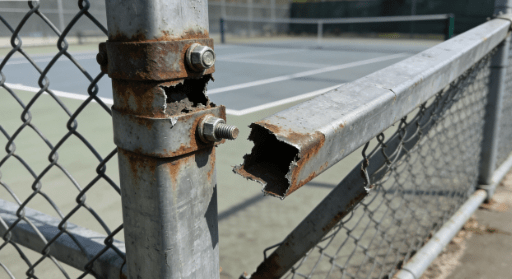
A Padel Court is made from several connected systems, including steel, tempered glass, metal mesh, artificial turf, lighting, gates, nets, fasteners, drainage, and electrical equipment.
The performance of one system may depend on several smaller components.
Reduce Court Downtime
A court may need to close when a damaged component creates a risk to players or maintenance staff.
Keeping suitable replacement parts on site can shorten the period between identifying a problem and completing the repair.
Protect the Original Court Specification
Using a similar-looking component does not guarantee compatibility.
Differences in dimensions, steel grade, coating, hole position, glass thickness, electrical rating, or connection design can create installation problems.
Improve Maintenance Budgeting
A spare-parts plan helps operators separate predictable replacements from unexpected repairs.
The budget can include routine components, planned stock replenishment, shipping, technical labour, and emergency orders.
Concept: Downtime Cost
Downtime cost is the financial and operational impact created when a court cannot be used.
It may include lost bookings, coaching cancellations, event changes, refunds, staff time, customer complaints, and emergency shipping.
Understand the Main Padel Court Spare Parts Categories
Not every component needs to be stored in the club’s maintenance room.
Spare parts can be divided into three practical groups.
| Spare-Part Category | Typical Examples | Recommended Approach |
|---|---|---|
| Critical stock | Net cable, gate hardware, selected fasteners, LED drivers | Keep a limited quantity on site |
| Routine consumables | Nets, protective padding, turf repair tape, cleaning materials | Review and replenish regularly |
| Special-order parts | Tempered glass, structural posts, large mesh panels | Keep drawings and supplier records |
| Electrical parts | Drivers, connectors, controls, selected fixtures | Match voltage and technical rating |
| Surface parts | Turf rolls, seam materials, infill | Store only under suitable conditions |
| Cosmetic parts | Caps, covers, signs, branding panels | Replace according to appearance needs |
Critical Spare Parts
Critical parts are relatively small components that can interrupt court operation when they fail.
They are usually affordable to store and easier to replace than large structural sections.
Routine Consumables
Routine consumables experience gradual wear or are regularly used during preventive maintenance.
Their use can often be predicted from inspection and service records.
Special-Order Components
Large glass panels, structural posts, custom mesh sections, and complete lighting poles are not always practical to store on site.
For these components, accurate drawings, identification numbers, packaging plans, and supplier contacts are more valuable than physical stock.
Build a Basic Padel Court Spare Parts List
The correct inventory depends on court type, quantity, environment, usage intensity, and local supply conditions.
Net System Parts
Useful net-related items may include:
- Replacement net
- Tension cable
- Cable end fittings
- Net-post caps
- Adjustment hardware
- Centre strap
- Protective post padding
- Approved fasteners
A damaged or incorrectly tensioned net can affect play and customer experience.
Replacement components should match the existing post and tensioning system.
Gate and Access Parts
Frequently used gates may experience gradual loosening or accidental impact.
Consider keeping:
- Hinges
- Latches
- Handles
- Door stops
- Rubber buffers
- Gate bolts
- Protective caps
- Access-control components
Check Gate Alignment Before Replacing Parts
A gate problem may be caused by a loose hinge, foundation movement, structural misalignment, or impact damage.
Replacing the latch alone will not solve the underlying problem when the complete gate is out of alignment.
Fasteners and Connection Hardware
Keep a labelled selection of original or approved:
- Bolts
- Nuts
- Washers
- Anchors
- Screws
- Glass fittings
- Mesh connectors
- Pole connections
Do not mix visually similar fasteners without confirming their dimensions, material, strength, and coating.
Protective Components
Small protective parts are easy to lose during maintenance.
These may include:
- Bolt covers
- Plastic caps
- Rubber seals
- Protective padding
- Edge covers
- Cable covers
- Drain covers
These components support appearance and can reduce contact with exposed connections.
Plan for Padel Court Glass Replacement
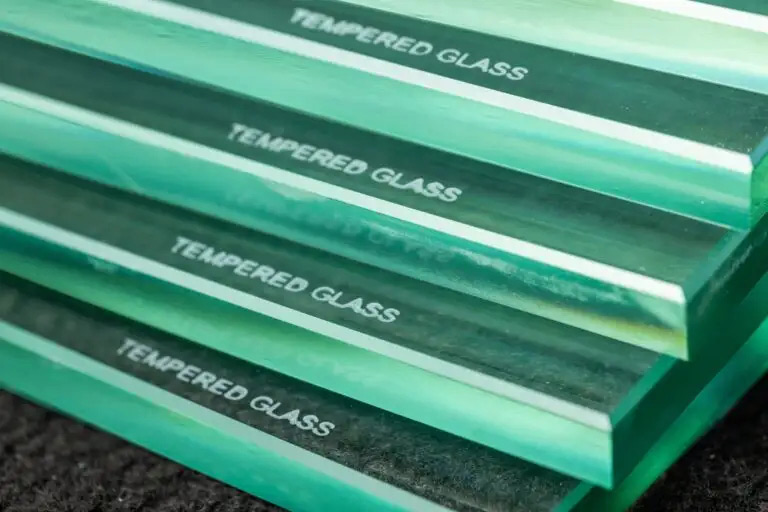
Tempered glass is one of the most important special-order court components.
A replacement panel should not be purchased based only on approximate height and width.
Confirm the Complete Glass Specification
Provide the supplier with:
- Court model
- Panel position
- Glass dimensions
- Glass thickness
- Hole quantity
- Hole diameter
- Hole spacing
- Edge finish
- Tempering requirement
- Markings or certification
- Photographs
- Original drawing number
Concept: Hole-Pattern Compatibility
Hole-pattern compatibility means that every fixing hole aligns with the original court structure and approved glass fittings.
Even a small difference can prevent installation or place improper stress on the panel.
Do Not Modify Tempered Glass on Site
Drilling, cutting, or grinding tempered glass after production is generally not a suitable correction method.
The replacement should be manufactured using the confirmed dimensions and hole pattern.
Store Glass Information Even Without Stocking Panels
Most clubs do not need to keep a complete replacement glass set on site.
However, the operator should maintain approved panel drawings and identify which panels are interchangeable.
Prepare Lighting Spare Parts
Lighting failures may reduce evening capacity even when the court remains physically usable during daylight.
Common Lighting Components
Depending on the system, spare parts may include:
- LED drivers
- Surge-protection devices
- Connectors
- Control switches
- Contactors
- Fuses
- Waterproof connection boxes
- Selected LED fixtures
- Mounting brackets
Match the Electrical Specification
Confirm:
- Input voltage
- Frequency
- Output rating
- Driver compatibility
- Fixture wattage
- Dimming system
- Ingress protection
- Connection type
- Local electrical requirements
A driver with the wrong rating may not operate the fixture correctly.
Use Qualified Electrical Personnel
Electrical maintenance should be completed according to applicable local regulations and site procedures.
In the United States, OSHA’s hazardous-energy guidance addresses procedures intended to control unexpected energization during servicing and maintenance. Clubs operating elsewhere should follow the requirements of their own jurisdiction. Review OSHA’s control-of-hazardous-energy guidance.
Include Artificial Turf Repair Materials
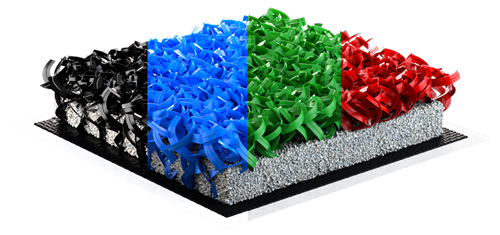
Artificial turf is not normally replaced because of one small local defect.
Suitable repair materials can help address limited seam or edge problems before they expand.
Possible Turf Spare Materials
Consider storing:
- Matching turf offcuts
- Seam tape
- Approved adhesive
- Line material
- Infill
- Edge-fixing materials
- Small repair tools
The material should match the installed turf as closely as possible in fibre type, pile height, colour, backing, and playing response.
Store Turf Correctly
Turf materials should be kept dry, clean, protected from chemicals, and away from uncontrolled heat.
Improperly stored adhesive may also become unusable before it is needed.
Record the Installed Turf Product
Keep the following information:
- Manufacturer
- Product code
- Colour
- Fibre specification
- Pile height
- Roll direction
- Infill type
- Installation date
- Batch information
SRSC’s Padel Court materials guide explains how turf, glass, steel, lighting, fasteners, and the base should be considered as a connected court system.
Prepare for Steel and Mesh Repairs
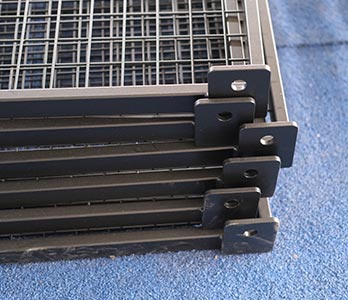
Small coating damage and loose mesh connections may be manageable through routine maintenance.
Bent structural components require a more detailed assessment.
Coating Repair Materials
Depending on the original finish, maintenance stock may include:
- Approved cleaning materials
- Surface-preparation tools
- Primer
- Matching repair coating
- Touch-up paint
- Corrosion-protection products
The repair process should match the original coating system and environmental exposure.
Mesh Panel Damage
Do not assume a badly deformed mesh panel can be pulled back into shape without affecting its connections.
Check:
- Panel dimensions
- Wire specification
- Opening size
- Connection points
- Coating
- Adjacent post condition
- Cause of damage
Structural Posts
A damaged structural post should be assessed using the original design and installation information.
Replacement may require temporary support, partial disassembly, lifting equipment, and professional installation.
Prioritize Spare Parts by Risk
The lowest-cost part is not always the highest priority.
Use risk, lead time, failure frequency, and operational impact to determine what should be stocked.
Priority 1: Immediate Closure Risk
These parts may affect whether the court can remain open:
- Selected glass fittings
- Gate hardware
- Net tension components
- Critical fasteners
- Electrical protection components
- Protective covers for exposed hazards
Priority 2: Reduced Service Quality
These parts may not close the court immediately but can affect the playing or customer experience:
- Nets
- Centre straps
- Lighting drivers
- Turf repair materials
- Protective padding
- Signage components
Priority 3: Appearance and Convenience
These parts may include:
- Decorative caps
- Branding panels
- Non-critical covers
- Equipment hooks
- Selected accessories
Concept: Lead-Time Risk
Lead-time risk is the possibility that a required component will take too long to manufacture, ship, clear customs, or install.
A low-cost part with a long lead time may deserve a higher inventory priority than an expensive part available locally.
Create a Spare-Parts Inventory Table
A simple inventory record can prevent parts from disappearing or remaining unnoticed after use.
| Information Field | Example Purpose |
| Part name | Identifies the component |
| Part number | Avoids similar-part confusion |
| Compatible court | Links the part to the correct model |
| Current quantity | Shows available stock |
| Minimum quantity | Triggers reordering |
| Storage location | Helps staff find the part |
| Purchase date | Supports stock rotation |
| Supplier | Speeds up reordering |
| Drawing or photo | Confirms appearance and dimensions |
| Last usage | Shows failure or replacement frequency |
Assign Inventory Responsibility
One employee or department should be responsible for:
- Receiving parts
- Labelling stock
- Updating quantities
- Checking storage conditions
- Reordering
- Recording installation
- Keeping removed components for investigation
Without assigned responsibility, spare parts may be used without being replaced.
Use Clear Part Identification
Descriptions such as “small gate bolt” or “old LED driver” are not sufficient for international procurement.
Create a Part Number System
A practical identification code may include:
- Court model
- Component group
- Position
- Revision
- Colour
- Electrical rating
For example, left and right gate components should not share the same number when they are not interchangeable.
Label Physical Stock
Use durable labels that remain readable in the storage environment.
Include the part number, compatible model, and quantity where possible.
Keep Photographs
Photograph:
- The complete component
- Connection points
- Product labels
- Maße
- Installed position
- Damaged area
Photographs should support technical information rather than replace it.
Confirm Compatibility Before Ordering
Padel Courts from different manufacturers may use different connection systems.
Courts from the same supplier may also change between models or production revisions.
Information to Send the Supplier
When requesting a quotation, provide:
- Original order number
- Court model
- Installation year
- Court quantity
- Part number
- Required quantity
- Installed position
- Clear photographs
- Measured dimensions
- Drawing
- Colour
- Voltage where applicable
- Delivery destination
- Required delivery date
Do Not Rely on Colour Alone
Two parts with the same black, blue, or green finish may use different dimensions or coatings.
Colour matching should be confirmed using the original specification or an approved reference.
Repair or Replace: How Should Owners Decide?
Not every worn component requires immediate replacement, but not every damaged component should be repaired.
Repair May Be Suitable When
- The damage is limited
- The original dimensions remain correct
- The component retains structural function
- An approved repair method exists
- The repair can be inspected
- The cost and downtime are reasonable
Replacement May Be Better When
- The component is cracked or seriously deformed
- Corrosion has reduced the section
- Repair quality cannot be verified
- Repeated failures occur
- The part affects glass or structural connections
- The replacement is inexpensive and readily available
Avoid Temporary Repairs Becoming Permanent
A temporary measure should include a clear review date and responsible person.
Court operators should not continue normal bookings indefinitely when a temporary repair has not been technically assessed.
Coordinate Spare Parts With Preventive Maintenance
Spare-parts inventory and maintenance records should use the same component names and identification numbers.
Inspection Data Supports Stock Decisions
When inspections repeatedly identify the same worn component, the club can increase its minimum stock level.
If a stored item remains unused for several years, the operator can reconsider whether it needs to remain on site.
Record the Cause of Each Replacement
Replacement reasons may include:
- Normal wear
- Corrosion
- Weather
- Accidental impact
- Incorrect adjustment
- Installation issue
- Electrical surge
- Vandalism
- Manufacturing defect
This information helps the operator address the cause rather than repeatedly replacing the same part.
Der Padel Court maintenance guide identifies turf, nets, posts, fencing, panels, drainage, coatings, and equipment as recurring inspection areas.
Verify Rules and Court Requirements
Replacement nets, posts, openings, and court accessories should remain consistent with the applicable project and competition requirements.
The International Padel Federation publishes its current rules and related documentation through its official documents page. Buyers preparing competition facilities should verify the latest applicable version rather than relying on an old drawing. View the FIP documents.
Local building, electrical, glass, accessibility, and workplace requirements may also apply.
Common Padel Court Spare Parts Mistakes
Waiting Until a Component Fails
Emergency ordering can increase freight cost and extend downtime.
Ordering From Photographs Only
Images may not show hole spacing, material grade, voltage, or internal dimensions.
Mixing Parts From Different Court Models
Similar-looking components may not be interchangeable.
Storing Parts Without Labels
Unidentified stock becomes difficult to use confidently.
Ignoring Electrical Ratings
Lighting components must match the installed electrical and control system.
Discarding Original Drawings
Drawings are essential when ordering glass, mesh, posts, gates, and custom connections.
Buying Too Much Stock
Large inventories can tie up money and create storage problems. Stock should reflect risk and lead time.
Häufig gestellte Fragen
Which Padel Court Spare Parts should a club keep on site?
Useful items may include net components, selected gate hardware, approved fasteners, protective caps, lighting drivers, turf repair materials, and routine consumables.
Should a club store replacement glass?
Most clubs do not need to store complete glass panels. They should keep accurate drawings, hole patterns, panel identification, and supplier information.
Can parts from different manufacturers be combined?
Only after technical compatibility has been confirmed. Dimensions, connections, materials, coatings, and electrical ratings may differ.
How should spare parts be labelled?
Use the part number, compatible court model, description, quantity, and storage location.
When should spare parts be ordered?
Initial critical stock should be ordered with the court. Inventory should then be replenished when it reaches the defined minimum level.
Can damaged court parts be repaired locally?
Some coating, turf, net, and minor hardware problems may be repaired locally. Glass, structural, and electrical work may require specialist assessment.
What should I send when requesting a replacement part?
Send the court model, original order number, part number, quantity, dimensions, photographs, installed position, colour, and delivery destination.
Does SRSC provide project and after-sales support?
SRSC describes its services as covering sports-facility design, production, installation, and related project support. Buyers should confirm the exact spare-parts and warranty scope for their order.
Abschluss
A reliable Padel Court Spare Parts plan reduces the risk that a minor component failure becomes a long and expensive court closure.
Operators should classify parts according to operational impact, lead time, failure frequency, compatibility, and storage practicality. Small critical components can be kept on site, while large custom parts should be supported by accurate drawings and supplier records.
The strongest approach combines spare-parts inventory with preventive inspections, clear part numbers, maintenance history, qualified repairs, and defined reordering levels.
Buyers can explore the complete Padel Court product range, review the Padel Court materials guide, learn about SRSC’s project services, oder contact SRSC with the court model, component photographs, required quantity, and delivery destination.