
Ratgeber
Step-by-Step Padel Court Installation Guide
Aktuelle Artikel
Blog Overview – Key Takeaways
- Comprehensive guide to padel court installation from planning to completion
- Choosing the optimal turf for performance and durability
- Professional installation of tempered glass panels for safety and aesthetics
- Mesh, posts, and net systems for structural stability
- Professional LED lighting setup for night play
- Sub-base preparation and drainage considerations
- Compliance with international standards for safety and quality
- Case studies and real-world examples of high-quality padel courts
- Maintenance strategies to extend the lifespan of your court
- FAQ addressing common installation and operational questions
Einführung

Padel has quickly become one of the fastest-growing racket sports worldwide, with professional competitions, clubs, and recreational courts expanding rapidly across Europe, the Americas, and Asia. The quality of padel court installation directly affects gameplay, player safety, and long-term durability.
Proper installation involves careful planning, high-quality materials, and compliance with international sports standards. When done correctly, it ensures consistent ball bounce, safe playing conditions, and minimal long-term maintenance, providing an optimal experience for players of all levels.
According to the International Padel Federation (FIP) Technical Report 2022, courts installed with professional-grade turf and tempered glass panels experience 30–40% fewer surface-related incidents than improperly installed or DIY courts.
Inhaltsverzeichnis
What is Padel Court Installation?
Concept of Padel Court Installation
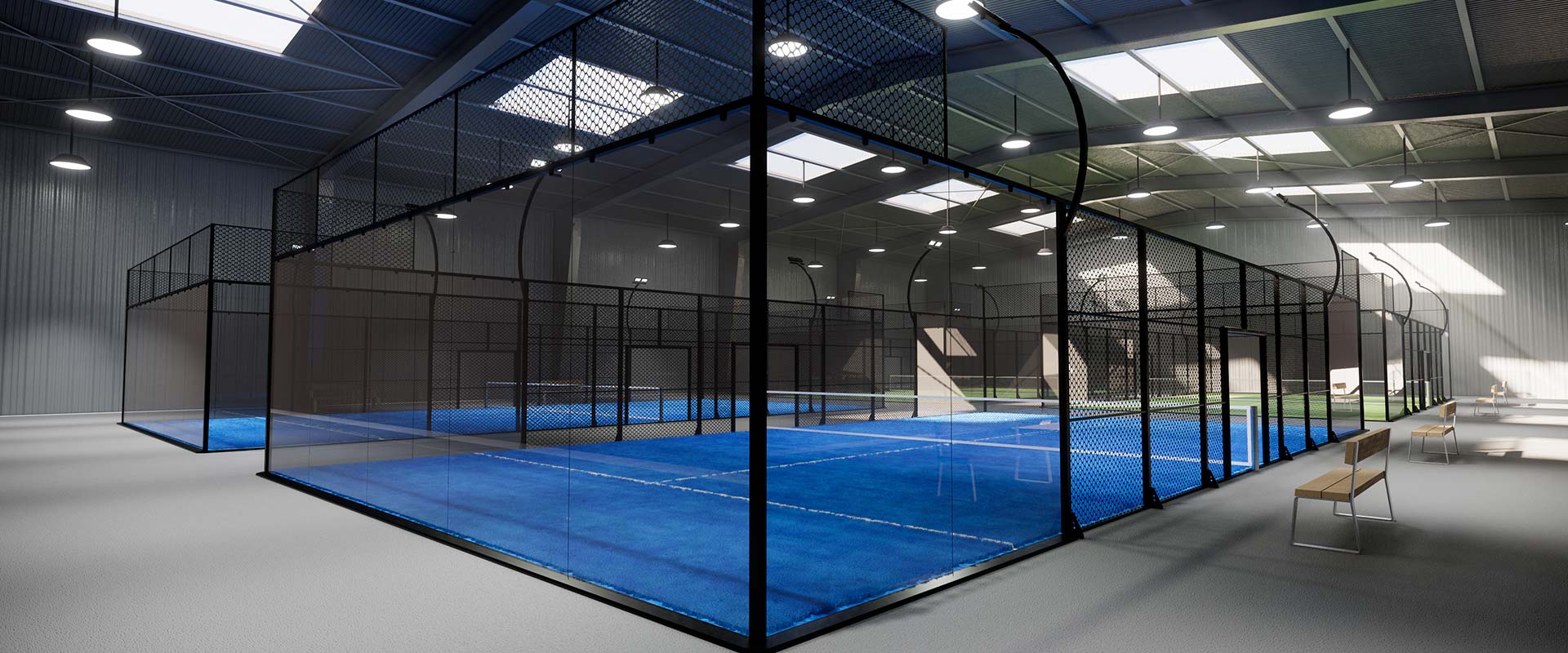
Padel court installation is the systematic process of constructing a court that meets professional standards, including sub-base preparation, turf laying, glass panel installation, mesh and posts setup, net installation, and lighting configuration. Proper installation ensures:
- Safety for players and spectators
- Optimal playability and ball response
- Compliance with international standards like GB/T 20394-2006, UNE 41958 IN, Und FIP Technical Regulations
- Long-term durability and low maintenance requirements
Importance of Professional Installation
Courts installed by experienced professionals are less prone to structural issues, uneven turf, or poor drainage, ensuring that the playing surface maintains its integrity under heavy use and adverse weather conditions.
Step 1: Selecting the Right Turf for Your Padel Court
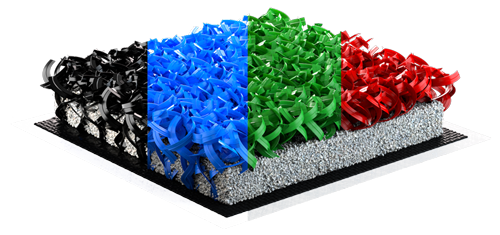
Turf Types and Specifications
The type of artificial turf significantly affects the court’s ball speed, bounce consistency, and player comfort. High-quality padel court turf should meet the following specifications:
- Fiber height: 12mm curved silk artificial grass
- Density: 63,000 stitches per m² for durability
- Backing: Triple-layer PP+PP+PU for strength and drainage
- Infill: Quartz sand to optimize elasticity and ball response (BPR >80)
- UV protection and weather resistance for longevity up to 8 years
- Color customization to match branding or club aesthetics
Fast-Game Turf
- Straight high-density monofilament fibers
- Higher ball speed and consistency
- Suitable for professional or competitive play
Balanced Turf
- Curled/textured fibers for grip and control
- Lower ball speed, emphasizing strategic play
- Ideal for recreational courts or multi-purpose facilities
Turf Installation Process
- Sub-base preparation: Compact sand or concrete ensures stability and proper drainage.
- Turf laying: Carefully align panels and secure seams.
- Infill distribution: Quartz sand improves elasticity and ensures consistent ball bounce.
- Final inspection: Check for flatness, seam integrity, and ball response.
Step 2: Installing Premium-Grade Tempered Glass Panels

Glass Specifications and Standards
Padel courts use 12mm tempered, explosion-proof glass panels to ensure safety and visibility. Each court typically includes 18 panels measuring 2m × 3m, packed carefully for transportation. Panels can also feature custom branding for professional clubs or corporate facilities.
- Safety compliance: CE certified, adhering to international sports standards
- Durability: Resistant to repeated impact from balls and players
- Aesthetic value: Clear panels enhance spectator viewing and modern court design
Benefits of Professional Glass Installation
- Reduces risk of injuries and breakages
- Ensures uniform surface with proper alignment
- Meets FIP and regional competitive standards for professional courts
Step 3: Mesh, Posts, and Net System

Durable Mesh Systems
- Galvanized steel mesh with dual zinc-polyester coating
- Grid size: 50mm × 50mm for impact resistance and visibility
- Frame: 50mm × 30mm × 2mm galvanized tubes for structural integrity
- Standard color black; custom colors available
High-Strength Padel Posts and Nets
- Hot-dip galvanized steel posts (100×100×3mm) with vertical deviation <1°
- Polypropylene net: 10m × 92cm, 3mm thickness, 45mm mesh
- Auxiliary stainless steel fittings for long-lasting performance
Concept: Structural Stability
Strong posts and mesh systems ensure the court can withstand intensive play, extreme weather, and impacts from balls and players without warping or structural damage.
Step 4: LED Lighting Installation

Specifications for Night Play
- High-efficiency 200W LED fixtures with IP66 waterproof/dustproof rating
- Beam angles of 60° and 90° for optimal illumination
- Eye-friendly 300 lux level, suitable for professional competitions
- Lifespan of ~8,000 hours, compliant with international sports lighting standards
Benefits of LED Installation
- Extends playable hours beyond daylight
- Energy-efficient and durable under outdoor conditions
- Provides uniform, glare-free lighting for professional-level competitions
Step 5: Sub-Base Preparation and Drainage
Importance of a Proper Sub-Base
- Ensures court stability and prevents uneven settling
- Facilitates effective water drainage to avoid puddles or turf damage
- Extends overall lifespan of the padel court
Recommended Materials
- Compacted gravel or crushed stone base for drainage
- Concrete slab in professional courts for maximum stability
- Perimeter drainage channels or French drains to manage runoff
Step 6: Compliance with International Standards
Key Standards for Padel Court Installation
- GB/T 20394-2006: Safety and material specifications for artificial turf
- UNE 41958 IN: Guidelines for installation and maintenance of synthetic courts
- FIP Technical Regulations: Official court dimensions, glass, net, and lighting requirements
- CE certification for materials, including tempered glass and turf
Concept: Compliance ensures legal, safe, and internationally recognized playing conditions, especially for tournament courts.
Step 7: Real-World Case Studies
Case Study 1: European Professional Club
- Court installed with high-density curled turf and tempered glass panels
- FIP-compliant lighting installed for night matches
- Positive feedback: consistent ball response and minimal maintenance over 3 years
Case Study 2: Community Recreational Facility
- Balanced turf for recreational play
- Mesh and posts installed with high corrosion resistance
- Result: increased community participation and durability under heavy use
Maintenance Strategies
Turf Care
- Regular brushing to maintain fiber orientation
- Periodic infill adjustment to preserve elasticity
- Seam inspection to prevent lifting
Glass and Mesh Maintenance
- Non-abrasive cleaning for glass panels
- Inspect mesh and posts for corrosion or wear
- Tighten posts and net hardware annually
Lighting Maintenance
- Clean lenses regularly for optimal illumination
- Check fixtures for water ingress or mechanical damage
Häufig gestellte Fragen
How long does professional padel court installation take?
Typically 2–4 weeks, depending on site conditions and weather.
Can I DIY padel court installation?
DIY is possible, but professional installation ensures compliance, durability, and optimal play conditions.
Which turf type is best for tournaments?
High-density straight monofilament turf provides fast ball speed, consistent bounce, and competitive control.
Are tempered glass panels safe?
Yes, 12mm explosion-proof tempered glass is used and complies with CE and FIP standards.
How often should a padel court be maintained?
Monthly brushing of turf, annual inspection of mesh, posts, nets, and lighting every 6 months.
Abschluss
Professional padel court installation requires careful attention to materials, standards, and assembly. From sub-base preparation to turf, glass, mesh, posts, nets, and lighting, each component contributes to safety, performance, and durability. Well-installed courts comply with international standards, provide consistent gameplay, and reduce long-term maintenance.
With proper planning, high-quality materials, and professional installation, padel courts can deliver years of optimal play, safe conditions, and player satisfaction, making the investment in quality installation essential for clubs, communities, and professional facilities.