
BLOG
Martial Arts Mats Guide: Judo vs Taekwondo vs Wrestling Mats
Recent Articles
Table of Contents
Choosing the right Martial Arts Mats requires more than comparing colors, thicknesses, and prices. Judo, taekwondo, wrestling, grappling, and mixed martial arts involve different types of movement, impact, footwork, throws, and ground contact.
A mat that performs well for fast kicking drills may not provide the same support required for repeated judo throws. Similarly, a modular EVA tile designed for flexible dojo layouts may not create the continuous competition surface expected for professional wrestling.
For schools, martial arts academies, sports clubs, universities, competition organizers, and commercial gym operators, the correct mat should be selected according to the sport, athlete level, installation method, maintenance capacity, and venue operating model.
Key Takeaways
- Different combat sports place different demands on the mat surface.
- Judo mats prioritize impact management during throws and falls.
- Taekwondo mats need stable traction for rapid footwork, kicking, and turning.
- Wrestling mats require a continuous, non-slip surface for grappling and ground movement.
- XPE roll mats are useful for large training areas and facilities that need fast installation.
- Thickness alone does not determine mat performance.
- Foam density, resilience, surface friction, connection design, and subfloor condition should be evaluated together.
- Competition facilities should confirm the current requirements of the relevant sports federation.
- Cleaning and moisture management influence mat hygiene and service life.
- Buyers should compare complete mat systems rather than only the price per square meter.
What Are Martial Arts Mats?
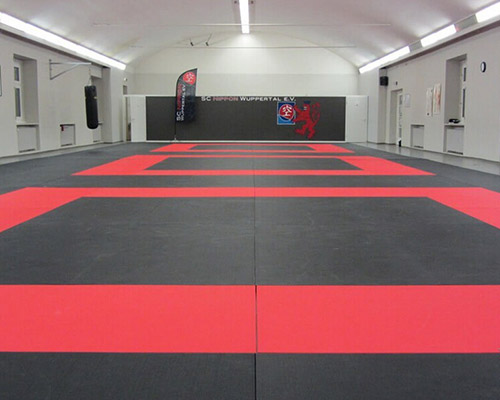
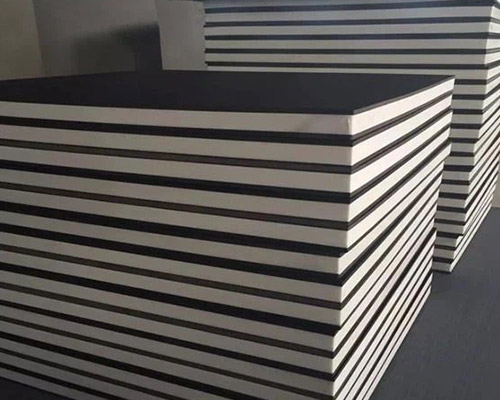
Martial Arts Mats are purpose-designed sports surfaces used for combat training, throwing, grappling, kicking, falling, and ground techniques.
They normally combine a foam core with a durable surface material.
Foam Core
The foam layer manages impact and provides controlled cushioning.
Common materials include:
- EVA foam
- XPE foam
- Polyurethane foam
- Multi-density foam systems
Surface Layer
The upper surface provides grip, cleaning resistance, wear protection, and visual definition.
Depending on the product, the surface may use:
- Vinyl
- PVC
- PU
- Carpet-style materials
- Textured foam
- Tatami-pattern finishes
Concept: Performance Balance
The objective is not simply to produce the softest possible mat.
Professional mats must balance:
impact absorption + stability + traction + resilience + durability
A surface that is too soft may reduce stability during footwork. A surface that is too hard may provide insufficient cushioning during repeated falls.
Why One Mat Does Not Fit Every Martial Art
Different combat sports use the floor in different ways.
Judo involves gripping, throwing, falling, groundwork, and controlled landing techniques.
Taekwondo places greater emphasis on dynamic kicking, fast footwork, turning, and rapid changes of direction.
Wrestling requires continuous grip and stability during takedowns, ground control, rolling, and close body contact.
Impact Type
Judo athletes may experience concentrated impact during a throw.
Taekwondo athletes need stable support when rotating, landing, and changing stance.
Wrestlers create continuous horizontal and rotational forces across the surface.
Movement Pattern
The mat should respond appropriately to the dominant movement pattern of the sport.
Buyer Question
Instead of asking:
“Which Martial Arts Mats are the thickest?”
ask:
“Which mat structure is most suitable for the movements performed in my facility?”
This question leads to a more accurate purchasing decision.
What Are Judo Mats?
Judo Mats are designed for sports involving repeated throws, falls, groundwork, and impact.
SRSC Competition Judo Mats use a high-density foam core with a durable vinyl covering intended for training and competition environments.
Impact Management
Judo athletes regularly practice throwing techniques.
The mat needs to manage impact while remaining stable enough for athletes to stand, grip, rotate, and move without excessive sinking.
Modular Panel Design
Individual panels can be arranged to create different training or competition areas.
This allows schools, clubs, and tournament organizers to adapt the installation to available space.
Tatami Surface
The word tatami originally refers to traditional Japanese floor mats.
In modern martial arts facilities, “tatami surface” commonly describes a textured sports-mat finish intended to provide controlled traction without feeling excessively sticky.
Suitable Applications
Judo mats may be suitable for:
- Judo clubs
- Martial arts academies
- School sports programs
- University training halls
- Competition venues
- Throwing and falling practice
- Selected grappling activities
What Are Taekwondo Mats?
Taekwondo Mats are commonly manufactured as lightweight interlocking foam tiles.
SRSC models use high-density EVA foam and are available in modular sizes, multiple thicknesses, different colors, and customized logo configurations.
Interlocking Construction
Puzzle-style edges allow individual tiles to connect without permanent adhesive.
This makes the flooring suitable for facilities that need:
- Flexible layouts
- Quick installation
- Section replacement
- Temporary events
- Color zoning
- Easy storage
Footwork Stability
Taekwondo involves fast steps, pivots, jumps, kicks, and directional changes.
The surface should provide sufficient traction while allowing athletes to rotate without excessive resistance.
EVA Foam
Ethylene-vinyl acetate, commonly known as EVA, is widely used in foam products because it can be produced in different densities, hardness levels, and cushioning characteristics.
The performance of an EVA mat depends on more than the material name. Density, thickness, cell structure, surface pattern, and manufacturing quality all influence the final product.
Suitable Applications
Taekwondo mats may also be used for:
- Karate
- Wushu
- Kickboxing training
- Boxing drills
- General martial arts classes
- Fitness rooms
- Children’s training areas
The selected specification should still match the actual intensity and activity.
What Are Wrestling Mats?
Wrestling Mats are designed for takedowns, grappling, rolling, groundwork, and continuous body contact with the surface.
SRSC Wrestling Mats use a high-density foam core with a durable PVC or PU surface and can be customized according to venue size and color requirements.
Continuous Playing Surface
Wrestling movements can cross large areas of the mat.
A professional installation should avoid gaps, raised joints, loose edges, or surface movement.
Non-Slip Performance
The surface needs to remain stable during:
- Takedowns
- Defensive movement
- Ground control
- Rolling
- Referee movement
Surface Grip vs Skin Comfort
A wrestling surface needs sufficient friction to support controlled movement.
However, an excessively abrasive finish can be uncomfortable during repeated skin contact.
Professional buyers should evaluate both traction and surface feel.
Suitable Applications
Wrestling mats can suit:
- Wrestling clubs
- School teams
- Universities
- Training centers
- Competition halls
- Grappling facilities
- Multi-purpose combat sports rooms
What Are XPE Material Roll Mats?

XPE Material Roll Mats use cross-linked polyethylene foam supplied in rollable sections.
They can cover large training areas while reducing the number of individual tile joints.
Cross-Linked Foam
Cross-linked polyethylene uses connections between polymer chains to change the material structure.
For sports mats, XPE foam can provide a lightweight combination of resilience, cushioning, moisture resistance, and dimensional stability.
Roll-Out Installation
The mat is unrolled across the prepared floor and neighboring sections are connected using tape or hook-and-loop systems, depending on the specification.
Fewer Joints
Large roll sections can reduce the number of visible connections compared with small interlocking tiles.
This can create a cleaner surface for wrestling, grappling, judo training, and other high-contact activities.
SRSC XPE Options
The current SRSC product range includes:
- Thicknesses from 2.5 cm to 5 cm
- Density options of 33 kg/m³ and 40 kg/m³
- PVC or carpet surface materials
- Customized colors
- Customized logos
- Tape or hook-and-loop connections
The correct specification should be selected according to the sport and required performance.
Judo Mats vs Taekwondo Mats vs Wrestling Mats
The following table provides a practical purchasing comparison.
| Factor | Judo Mats | Taekwondo Mats | Wrestling Mats |
|---|---|---|---|
| Main movement | Throws and falls | Kicks and footwork | Takedowns and groundwork |
| Typical format | Individual panels | Interlocking tiles | Roll or large sections |
| Main priority | Impact management | Stable footwork | Continuous grip |
| Surface style | Tatami or vinyl | Textured EVA | PVC or PU |
| Installation | Modular panels | Puzzle connection | Tape, hook-and-loop or fixed |
| Portability | Moderate | High | Moderate to high |
| Joint quantity | Medium | High | Lower with roll systems |
| Cleaning | Wipeable surface | Waterproof foam surface | Waterproof cover |
| Custom colors | Available | Widely available | Available |
| Typical buyer | Judo club | Taekwondo school | Wrestling center |
Which One Is Best?
There is no universal best mat.
The correct choice depends on:
- Primary sport
- Training intensity
- Competition level
- Athlete age
- Facility size
- Installation frequency
- Storage requirements
- Cleaning procedures
- Budget
Judo Mats vs XPE Roll Mats
Both can be used in facilities involving falls and groundwork, but their structures differ.
Individual Judo Panels
Traditional judo-style panels make it possible to replace selected damaged sections.
They also allow multiple color zones to be created around the activity area.
XPE Roll Mats
Roll mats cover larger areas with fewer main connections.
They are useful for facilities that need to install or remove a complete mat area efficiently.
| Factor | Judo Panels | XPE Roll Mats |
| Unit format | Individual mats | Large rolled sections |
| Replacement | Easy by panel | Section-based |
| Joint quantity | Higher | Lower |
| Storage | Stacked panels | Rolled storage |
| Setup | Panel-by-panel | Roll out and connect |
| Surface options | Vinyl/tatami | PVC or carpet |
| Custom layout | Highly flexible | Flexible by roll size |
| Best application | Permanent dojo | Large or temporary area |
Which Should a Judo Club Choose?
A dedicated dojo may prefer individual professional judo panels.
A multi-purpose facility that regularly removes the surface may value the convenience of roll mats.
Competition Requirements
Facilities hosting official events should check the current requirements of the relevant organizing body rather than assuming that any thick martial arts mat is competition-ready.
Taekwondo Mats vs Judo Mats
These products can look similar in photographs, but they support different movement priorities.
Taekwondo Tile
The interlocking EVA structure is relatively lightweight and easy to reorganize.
It supports fast footwork, kicks, drills, and multi-age classes.
Judo Panel
The denser panel system is more closely associated with throwing and falling.
Can Taekwondo Mats Be Used for Judo?
They may support light training activities depending on the thickness and specification.
However, buyers should not assume that every EVA puzzle mat provides the impact performance required for frequent high-level throwing.
For a dedicated judo facility, use a mat designed and evaluated for judo applications.
Wrestling Mats vs Judo Mats
Wrestling and judo both involve falls and ground contact, but the surface interaction differs.
Wrestling Surface
Wrestlers spend significant time sliding, rotating, pressing, and grappling on the mat.
A continuous, non-slip covering is important.
Judo Surface
Judo places greater emphasis on upright gripping, throwing, landing, and transitions into groundwork.
Marking Requirements
Professional wrestling competition mats may include defined central, passivity, and protection areas.
United World Wrestling publishes current rules and field-of-play requirements for official events through its official wrestling rules.
Training facilities do not always require the same printed layout, but competition organizers should confirm the current rules before ordering customized markings.
How to Choose Martial Arts Mat Thickness
Thickness is one of the first specifications buyers compare.
However, a thicker mat is not automatically safer or more professional.
Thin Mats
Thinner mats can provide a firm and stable surface for light drills, general exercise, and movement-focused activities.
Medium-Thickness Mats
These can provide a practical balance between stability and cushioning for mixed martial arts training.
Thick Mats
Thicker options are often considered for activities involving frequent falls and high impact.
Thickness Must Match Density
A thick low-density mat may compress more than a thinner high-density product.
Buyers should therefore compare:
thickness + density + resilience + test performance
rather than thickness alone.
How Foam Density Changes Mat Performance
Density describes the mass of foam within a defined volume.
It is one factor influencing support, compression, and durability.
Lower Density
Lower-density foam may feel softer but can compress more deeply.
Higher Density
Higher-density foam often provides firmer support and may resist long-term deformation more effectively.
Hardness Is a Separate Specification
Density and hardness are related but are not identical.
Two foams with similar density can still feel different because of their formulation and cell structure.
When comparing Taekwondo Mats, for example, buyers can review both density and Shore hardness rather than relying on one number.
Mat Resilience Explained
Resilience describes how effectively the foam recovers after compression.
Fast Recovery
A resilient mat returns toward its original shape after loading.
Permanent Compression
Poor-quality foam may develop low areas or lose support after repeated heavy use.
Buyer Inspection
Ask the supplier for information about:
- Compression testing
- Repeated impact performance
- Foam recovery
- Product warranty
- Recommended use intensity
High-density terminology alone does not prove long-term performance.
Surface Texture and Traction
The mat surface influences athlete movement and comfort.
Tatami Texture
Tatami-style textures provide multidirectional grip and are common in judo and martial arts facilities.
Smooth Vinyl or PVC
A smoother sealed surface can be easy to clean and suitable for wrestling or grappling.
Textured EVA
Interlocking Taekwondo Mats often use a molded texture on both sides.
Too Much Grip
Excessive friction can interfere with pivots and place additional stress on footwear or bare feet.
Too Little Grip
Insufficient traction can increase slipping during rapid footwork.
The correct surface should match the sport rather than maximizing friction.
Puzzle Mats vs Roll Mats
Installation format affects setup, storage, replacement, and appearance.
| Factor | Puzzle Mats | Roll Mats |
| Unit size | Small tiles | Large sections |
| Installation | Piece by piece | Roll out |
| Joint quantity | High | Lower |
| Replacement | Easy by tile | Larger section |
| Storage | Stacked | Rolled |
| Custom color patterns | Excellent | Good |
| Temporary setup | Excellent | Excellent |
| Large competition area | More assembly | Faster coverage |
| Risk of loose joints | Requires inspection | Requires seam connection |
Puzzle Mats
Puzzle tiles are particularly useful when the room has irregular dimensions or needs frequent layout changes.
Roll Mats
Roll systems can provide faster coverage of large rectangular areas.
Facility Size Matters
A small martial arts studio may find puzzle tiles more convenient.
A large wrestling hall or temporary tournament may benefit from roll mats.
Permanent vs Temporary Mat Installation
Not every gym operates in the same way.
Permanent Dojo
A dedicated martial arts academy may leave the mat installed throughout the year.
Priorities include:
- Long-term stability
- Edge restraint
- Cleaning access
- Consistent appearance
- Replacement availability
Multi-Purpose Hall
A school or community facility may remove the mats after each session.
Priorities include:
- Fast installation
- Portable sections
- Manageable panel weight
- Storage efficiency
- Clear numbering
Choose for the Operating Model
A mat that performs well when permanently restrained may not be the easiest product to install every weekend.
Buyers should explain how often the surface will be moved before selecting the connection system.
How to Prevent Martial Arts Mats from Moving
Mat movement can create gaps and inconsistent footing.
Wall-to-Wall Installation
A full-room installation can use the surrounding walls or perimeter restraints to limit movement.
Perimeter Frames
Purpose-built frames can hold the mat area together without permanently fixing each panel to the building.
Anti-Slip Underside
Some products use textured or high-friction undersides.
Tape or Hook-and-Loop Connections
Roll mats can be joined across seams.
Inspect Before Training
Coaches or facility staff should check:
- Gaps
- Raised edges
- Loose tiles
- Seam separation
- Surface damage
- Moisture beneath the mat
before athletes begin training.
Subfloor Requirements for Martial Arts Mats
The floor beneath the mat influences the complete installation.
Flatness
Large high or low points can create uneven support.
Cleanliness
Small stones, screws, dust, and debris can damage the underside or create raised areas.
Dryness
Moisture trapped beneath mats can create odor, hygiene, and material problems.
Structural Condition
The base should remain stable under repeated impact.
Concrete, Wood or Sports Floor?
Mats can be installed over different suitable subfloors, but the supplier should know the intended base.
Do not add unapproved soft layers underneath the mat because this can make the surface excessively unstable.
How to Plan a Martial Arts Training Area
The usable mat area should reflect class size and activity type.
Athlete Spacing
Throwing practice requires more separation than stationary drills.
Instructor Area
Coaches need sufficient room to demonstrate and supervise techniques.
Safety Perimeter
Keep suitable clearance around walls, columns, equipment, and other obstacles.
The International Judo Federation’s dojo guidance recommends protecting obstacles positioned close to the tatami and keeping the mat surface clean and undamaged. The guidance can be reviewed through the IJF Rules of the Dojo.
Think Beyond Mat Quantity
A room filled wall-to-wall with mats may still be unsuitable if:
- Columns interrupt activity
- Doors open into the training zone
- Equipment creates hard obstacles
- Spectators block emergency routes
- Ventilation is inadequate
Competition Mats vs Training Mats
Competition products often have more specific requirements for dimensions, markings, color zones, and federation approval.
Training Mats
Training facilities may prioritize:
- Durability
- Flexible layouts
- Easy replacement
- Controlled cost
- Multi-sport use
Competition Mats
Event organizers may prioritize:
- Official dimensions
- Required markings
- Consistent color
- Federation licensing
- Broadcast appearance
- Documented test performance
Verify the Exact Product
A supplier may manufacture both standard and competition-level products.
Ask whether the exact mat model being quoted has the relevant test report or federation approval.
Martial Arts Mat Customization
Customized colors and logos can improve facility branding.
Color Zones
Different colors can identify:
- Competition area
- Safety area
- Instructor zone
- Children’s area
- Separate training groups
Logos
Facility logos, school names, event graphics, and sponsor branding can be added depending on the product and printing method.
Custom Sizes
Roll mats and wrestling surfaces can be manufactured according to specific room or competition dimensions.
Branding Should Not Reduce Performance
Printed graphics should not create slippery or raised areas.
Confirm that the printing process maintains the required surface grip and durability.
Cleaning Martial Arts Mats
Mats receive sweat, skin contact, dust, hair, and other contaminants during training.
A clear cleaning routine is essential.
Daily Cleaning
Remove loose debris and clean the surface using methods approved by the manufacturer.
Disinfection
Use a compatible disinfectant at the recommended concentration.
The IJF’s dojo hygiene guidance states that the tatami should remain clean and free from damage and that blood contamination should be cleaned and disinfected appropriately.
Drying
Allow the mat to dry before intensive use or storage.
Avoid Excess Water
Water should not be allowed to enter seams or remain trapped beneath mats.
Excessive soaking may increase drying time and create moisture problems.
How Often Should Mats Be Deep Cleaned?
The frequency depends on:
- Daily class volume
- Athlete numbers
- Type of activity
- Facility ventilation
- Seasonal humidity
- Competition schedule
High-Use Clubs
Busy commercial academies may require daily surface cleaning and frequent detailed inspection.
Temporary Events
Mats should be inspected and cleaned before packing.
Clean Before Storage
Rolling or stacking damp mats can trap moisture and odor.
The surface should be clean and dry before long-term storage.
Martial Arts Mat Storage
Portable mat systems require dedicated storage planning.
Puzzle Tiles
Stack tiles evenly without bending the interlocking edges.
Judo Panels
Keep panels flat and protect corners from impact.
Roll Mats
Roll sections according to the manufacturer’s specified direction and diameter.
Storage Environment
The area should be:
- Dry
- Clean
- Protected from direct sunlight
- Free from sharp objects
- Away from chemical contamination
- Accessible for handling equipment
Shipping Martial Arts Mats Internationally
Sports mats can occupy substantial shipping volume even when they are relatively lightweight.
Compressed Packaging
Some foam products may be packed efficiently, but excessive compression can damage certain mat structures.
Roll Diameter
Roll mat dimensions affect container loading and local handling.
Panel Protection
Judo panels and puzzle tiles need protection around edges and corners.
Request Packing Details
Before ordering, ask for:
- Unit dimensions
- Unit weight
- Package quantity
- Carton or pallet dimensions
- Total shipment volume
- Container-loading plan
- Unloading method
This helps the buyer calculate freight, storage, and labor costs.
How to Compare Martial Arts Mat Suppliers
Use one technical comparison sheet for each quotation.
| Buyer Check | Information to Request |
| Primary sport | Intended application |
| Foam material | EVA, XPE, PU or other |
| Thickness | Actual finished thickness |
| Density | Test or product value |
| Hardness | Where relevant |
| Surface material | PVC, PU, vinyl, carpet or foam |
| Surface texture | Tatami, smooth or molded |
| Connection | Puzzle, tape, hook-and-loop |
| Mat dimensions | Standard or customized |
| Slip resistance | Test information |
| Impact performance | Complete-system data |
| Cleaning method | Approved products |
| Custom colors | Available options |
| Logo printing | Method and durability |
| Packing | Unit and shipment information |
| Competition approval | Exact model and document |
| Warranty | Coverage and exclusions |
| Replacement units | Future availability |
Common Martial Arts Mat Buying Mistakes
Choosing Only by Thickness
Foam density and resilience also matter.
Using One Mat for Every Sport
Different activities require different traction and impact characteristics.
Ignoring the Subfloor
An uneven or damp base can undermine a quality mat system.
Ordering Competition Markings Without Checking Rules
Federation requirements can change.
Forgetting Storage Volume
Portable mats still require significant space.
Selecting the Softest Mat
Excessive softness can reduce stability.
Ignoring Seam Design
Loose joints can affect movement and cleaning.
Buying Without Replacement Planning
Matching colors and dimensions may be difficult years later.
Martial Arts Mats Buyer Checklist
Before ordering, confirm:
- Primary martial art
- Training or competition use
- Athlete age range
- Class size
- Training-area dimensions
- Safety perimeter
- Foam material
- Thickness
- Density
- Hardness
- Surface texture
- Surface material
- Connection system
- Installation frequency
- Subfloor condition
- Custom colors
- Competition markings
- Logo requirements
- Cleaning procedure
- Storage method
- Package dimensions
- Shipping volume
- Test reports
- Federation requirements
- Replacement policy
- Warranty
FAQ About Martial Arts Mats
Which Martial Arts Mats are best for judo?
A dedicated Judo Mat with a stable high-density foam core and durable tatami or vinyl surface is generally more appropriate for frequent throwing and falling than a light exercise tile.
The final choice should reflect athlete level and competition requirements.
Can Taekwondo Mats be used for karate?
Yes, interlocking EVA Taekwondo Mats are commonly suitable for karate, kicking drills, general martial arts classes, and similar activities when the selected thickness and density match the training intensity.
What is the difference between judo and wrestling mats?
Judo mats commonly use individual dense panels and prioritize throwing and landing performance.
Wrestling mats usually create a larger continuous surface designed for takedowns, grappling, rolling, and prolonged ground contact.
Are puzzle mats suitable for professional competitions?
They may be suitable for certain sports and events when the exact product meets the organizer’s technical requirements.
Competition approval should be verified against the current federation rules and the exact mat model.
Are thicker Martial Arts Mats safer?
Not automatically.
Thickness, foam density, resilience, surface stability, installation, and subfloor conditions all affect performance.
What density should Martial Arts Mats have?
There is no single correct density for every sport.
High-density products generally provide firmer support, while lower-density products may compress more. Buyers should compare the complete mat specification.
Is EVA or XPE better?
EVA is widely used for interlocking training tiles because it is lightweight and available in many densities and colors.
XPE roll mats can provide strong resilience, moisture resistance, and efficient coverage of large areas.
The better material depends on the application.
How do I stop puzzle mats from separating?
Use correctly manufactured interlocking tiles on a flat, clean subfloor and consider suitable perimeter restraint.
Inspect joints regularly and replace damaged edge sections.
Can Martial Arts Mats be customized?
Yes. Depending on the product, buyers can request customized colors, dimensions, thicknesses, markings, and logos.
How should martial arts mats be cleaned?
Remove debris, clean with a compatible product, disinfect according to facility hygiene procedures, and allow the surface to dry.
Avoid chemicals that may damage the foam or reduce surface traction.
Can XPE Roll Mats be used for wrestling?
Yes, XPE roll systems can be suitable for wrestling and grappling when the thickness, density, surface material, seam system, and markings meet the project requirements.
What documents should I request before buying?
Request:
- Product specification
- Foam material
- Density and thickness
- Surface information
- Connection method
- Test reports
- Competition approval where required
- Installation guide
- Cleaning instructions
- Packing data
- Warranty
- Replacement policy
Conclusion
Choosing Martial Arts Mats is a sport-specific purchasing decision.
Judo facilities need stable impact management for throws and falls. Taekwondo schools require reliable traction for kicking and rapid footwork. Wrestling centers need a continuous surface that supports takedowns, grappling, and ground movement. Multi-purpose facilities may gain more flexibility from XPE roll mats or modular EVA tiles.
For B2B buyers, the most practical purchasing sequence is:
identify the sport → define the activity level → measure the venue → compare foam and surface systems → confirm installation → verify competition requirements → plan cleaning and storage
Do not select a mat only because it is thick, inexpensive, or described as multi-purpose.
Select a system that provides the right balance of impact management, stability, traction, durability, maintenance efficiency, and installation flexibility for the facility.
SRSC supplies several sports-mat solutions for schools, martial arts academies, training centers, universities, sports clubs, and competition venues:
By matching the product to the sport and operating model, buyers can create a training surface that is more practical to install, easier to maintain, and better suited to long-term professional use.